Why migration is ‘a massive class issue’











All the latest analysis of the day's news





An intelligent mix of culture, food, style and property, plus where to go and what to see.




In 1983, having fought with my stepfather, I spent a night beneath the stars. Having run away from Yorkshire to London with a few pounds I’d saved working, I slept in a bed and breakfast but soon ran out of money. When a policeman kicked me awake in Victoria Station, I decided the coast might be an easier proposition. So it was that one night, after hitching across Sussex, I curled up in a bush near a railway station called Three Bridges. I was 16. Though I had known homelessness as a toddler with my teenage mum – sleeping in tents, communes and squats – and would experience insecure housing over the following years, as far as I can remember, that was the only night I had absolutely no choice but to sleep rough.

This week's magazine
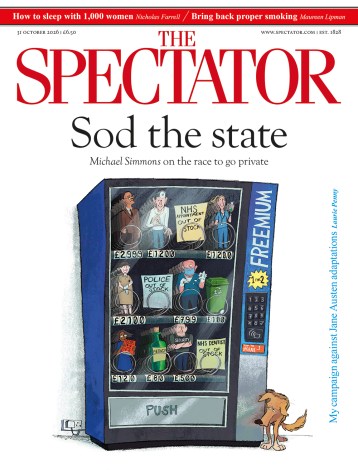
The race to go private
Postwar Britain can be defined by a bargain made with its middle class: pay for public services but benefit from them too. Private education has always been the choice of a very small minority; private healthcare was reserved for the wealthiest and those whose employers paid for it. Middle England was content to send their children to the same schools as everyone else and use the same GPs, hospitals and dentists. This is no longer true. State spending continues to grow, yet large parts of the population now pay privately to supplement what their taxes have already provided.
Postwar Britain can be defined by a bargain made with its middle class: pay for public services but benefit from them too. Private education has always been the choice of a very small minority; private healthcare was reserved for the wealthiest and those whose employers paid for it. Middle England was content to send their children to the same schools as everyone else and use the same GPs, hospitals and dentists. This is no longer true. State spending continues to grow, yet large parts of the population now pay privately to supplement what their taxes have already provided.
The good, the bad and the ugly in books, exhibitions, cinema, TV, dance, music, podcasts and theatre.
Authors hate it when reviewers refer to their book as a ‘weighty tome’ as it implies that the contents are going to be about as much fun as Deuteronomy. So I should make it clear that while Tim Hayward’s The Cocktail Hour (Quadrille, £20) is extremely weighty, that’s because the production values are off the scale. The monks at Lindisfarne could scarcely have put more effort into illuminating their work. And while the paper is heavy, Hayward’s writing is as refreshing as a perfectly made dry martini. There are hundreds of cocktail books out there, but none combine Hayward’s erudition, obsession and sense of humour. He is at once deadly serious and very, very funny. It’s the best book on the subject since Bernard DeVoto’s 1948 book The Hour.






Cartoon
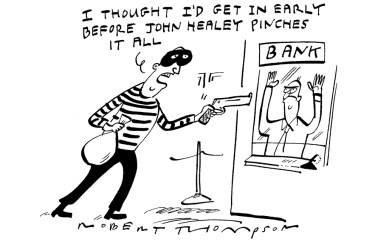
Cartoon

Cartoon