Matthew Lynn

Matthew Lynn is a financial columnist and author of ‘Bust: Greece, The Euro and The Sovereign Debt Crisis’ and ‘The Long Depression: The Slump of 2008 to 2031’

Burnham must resist the urge to tax banking profits

From our UK edition

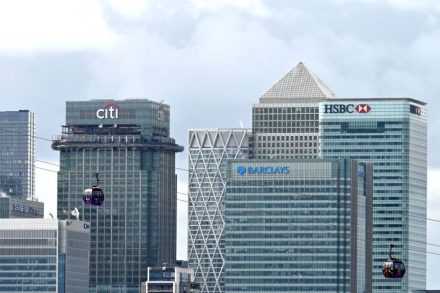
The cheaper bus fares will have to be paid for. So will the modest cut to electricity bills, along with the shelters to end rough sleeping. The new prime minister Andy Burnham has made plenty of extra spending pledges during his first few days in office, but, some creative accounting aside, has said very little about how it will all be paid for. Still, never mind. The major banks have helpfully reported bumper profits, and Barclays has even had the gall to pay out bumper bonuses to the people who made them. Burnham could just slap an extra levy on them. Problem solved. Except if he does so, he will also do huge damage to what remains of the British economy. It has been a good week for the banks. Today Lloyds reported £4.

Fifa should be allowed to sell off the World Cup

It will bring in outside investors, open the doors to global money, enrich a handful of inside executives and, perhaps most outrageously of all, might even involve the Trump family. The plans by Fifa, the governing body that controls the World Cup, to sell a stake in the competition, have drawn predictably condemnation, not least from the British Prime Minister Andy Burnham. But hold on. This is getting ridiculous. Football has become the preeminent global sport precisely because it has been so successfully commercialised – and it is too late to change that now.  The argument that football ‘belongs’ to the fans is even odder.

The sale of Harvey Nichols is proof of London’s decline

From our UK edition

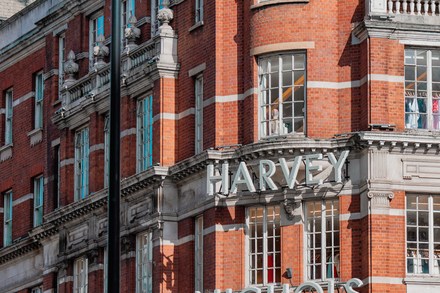
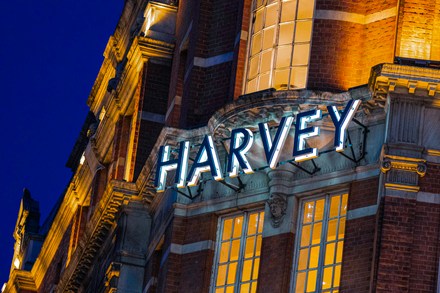
Harvey Nichols used to be one of the most glamorous department stores in the world. But now the business has gone up for sale – and it looks as if only the retailer Next and Frasers Group – owned by Mike Ashley of Sports Direct fame – are bidding on it. There is nothing wrong with either company. But the lack of interest in one of London’s most iconic retailers is a sad sign of the city’s economic decline.  In its heyday in the 1980s and 1990s, Harvey Nicks, as it was always known, was emblematic of the easy money, low-tax, globalised trading hub that London had become. Patronised by Princess Diana and popularised in the comedy series Absolutely Fabulous, it might have been a little brash. But it symbolised wealth and glamour.

There’s nothing stopping Gary Lineker from paying more tax

From our UK edition

There are bus fares to pay for, a rates cut for the pubs, and of course extra shelters for the homeless. In the few days since he became prime minister, Andy Burnham has announced a whole series of small increases in spending, while saying very little about how he is going to pay for them. But is Gary Lineker riding to the rescue? Today the football pundit has offered to help out with a demand that he pays higher taxes. But here's the catch: there is already nothing to stop Lineker paying more tax – he just doesn’t seem very keen to actually write out the cheque. Lineker was one of 120 ‘patriotic millionaires’, including the musician Brian Eno and the romcom writer Richard Curtis, who have written an open letter asking for some form of wealth tax.

Why aren’t American companies passing on tariff refunds?

Even for an economy as large as the United States, $70 billion still counts as a significant sum of money. After the first round of President Trump’s tariffs were ruled illegal by the Supreme Court, customs officials have already issued that amount in refund checks. Here’s the problem, however: none of it appears to have been passed on to consumers in the form of lower prices. In reality corporate America is pocketing the money – but it is also playing with fire by inviting retaliation from President Trump. Almost no major policy has ever been quite so chaotically implemented as the tariffs imposed by President Trump on the oddly named Liberation Day in April last year.

Tariffs

Andy Burnham’s savings drive is doomed to failure

From our UK edition

A pledge to end rough sleeping. A minor reduction to the VAT rate on electricity, and now a £2 cap on bus fares. We can all debate whether it really amounts to the ‘biggest change in British politics in forty years’ and an ‘end to neoliberalism’ as the new Prime Minister Andy Burnham has promised. One point is clear, however. The amount of money at stake is starting to add up, and the money will have to come from somewhere. But can Burnham really cut spending?  As Mrs Thatcher once remarked, 'the problem with socialism is that eventually you run out of other people’s money.' That was always going to be true in the medium term, but even she probably didn’t expect it to happen quite so quickly.

A wealth tax is bound to backfire on Andy Burnham

From our UK edition

They might threaten to head for Monaco, the Bahamas, or even Dubai if the missiles stop flying overhead. But in the end they will always stay. Steve Rotheram, the Mayor of Liverpool and a key ally of the Prime Minister-in-waiting Andy Burnham, this week dismissed the threat of people fleeing from wealth taxes. He also dropped heavy hints that some kind of extra levy is planned by the new administration. This is the kind of delusional blue-sky thinking you'd expect from a new administration on the cusp of power. But there is just one snag: there is plenty of evidence from around the world that wealth taxes drive out the rich, and more significantly, investment. Team Andy are likely to have a big shock if they try it.

Is the US heading for another oil shock?

It won’t be anything on the scale of 1973, when President Nixon imposed year round daylight saving time to reduce electricity consumption as well as a 50mph highway speed limit. Nor are we likely to see the thermostat restrictions, or the standby plans for rationing, that were introduced by President Carter in 1979.  The "oil shocks" of the 1970s were not just from a different era, they were of a different magnitude as well.  Trump may well step in with some form of oil export controls Yet that does not mean that the American economy is immune to another crisis, nor that we won’t see a dramatic response from the White House - because, in reality, the US could easily run out of oil later this year.

Oil prices

Britain can’t afford to lose easyJet

From our UK edition

With its garish bright orange livery and the ferocity with which its algorithm squeezes a few extra pounds out of you for every flight, easyJet is not a company for which anyone holds any huge affection. It doesn’t have the cachet of British Airways or one of the luxury Gulf carriers. Nor does it have quite the rough’n’ready, dirt-cheap vibes of Ryanair or one of the other ultra-budget airlines. And yet, with the American private equity giant Castlelake looking to take over the airline, one thing has become very obvious. Britain cannot afford to lose one of its most successful companies. EasyJet may not operate as an independent company much longer. The board has already rejected four offers from Castlerock, including one from the private equity firm today that was valued at £4.

Would Andy Burnham scrap the triple lock?

From our UK edition

As he prepares his government, prime-minister-in-waiting Andy Burnham has made plenty of expensive promises. He wants money for defence, for taking the utilities back under public control, for tax cuts for pubs and restaurants, and for the reindustrialisation that will, somehow or other, ‘end forty years of neoliberalism’. Now, his reported economic advisers have come up with a plan to pay for it all. They have, apparently, suggested that he scrap the ‘triple lock’ for pensioners. This is a good idea – but there is no way that ‘Our Andy’ is going to do anything that bold. The list of spending commitments racked up by Burnham on his march on No. 10 keeps growing ever-longer.

Appointing Miliband as chancellor would be a mistake

From our UK edition

There are plenty of solid arguments for Ed Miliband’s outriders to make about why he should be the chancellor when, and of course if, Andy Burnham's first cabinet is formed. Miliband has been one of Burnham’s most consistent backers, he is one of the most experienced ministers Labour has and he has shown he has the determination to drive through radical policies. There is one great risk, however: would appointing Miliband as chancellor trigger a market meltdown?  We don’t know much about what a Burnham government might look like. But one thing seems certain. The hapless Rachel Reeves will be dispatched to the backbenches. From Wes Streeting to Yvette Cooper to Pat McFadden or John Healey, a whole list of potential candidates are quietly positioning themselves for the job.

Could Thames Water be Andy Burnham’s first test?

From our UK edition

It is still a bit of a mystery to most of us – and possibly to the candidate himself – what Andy Burnham actually believes in. Still, amid all the waffle, one point has come through with complete clarity. He thinks utilities such as railways and water should be under public control. When asked about this earlier this month, he said: 'Public ownership is absolutely an option. I would say for Thames Water, that is what should be done.' That is all well and good. But it appears that Thames Water is likely to face a cash crunch in the coming months – and, should he become prime minister, Burnham and his administration will face its first big crisis as a result.

Rachel Reeves should scrap stamp duty

From our UK edition

A report published this week from the Housing, Communities and Local Government committee, made up of cross-party MPs, has been withering in its assessment of stamp duty – the tax everyone has to pay when they buy a home. The report argues that it stifles aspiration, jams up the housing market and slows down social, generational and geographical mobility. There is no choice but to get rid of it. Many in Britain will agree with the committee's assessment. Someone, though, who is guaranteed not to is Rachel Reeves: just last year, the Chancellor lowered the stamp duty thresholds. Now, with even her own MPs turning on her, that tax raid is spectacularly backfiring.  Stamp duty has turned into a microcosm of everything that has gone wrong with the British tax system.

Rachel Reeves represents Labour’s short-termism at its worst

From our UK edition

When Rachel Reeves became Chancellor, she made a lot of promises about improving the long-term prospects of the British economy. She was meant to be ‘fixing the foundations’ and ‘unlocking investment’ to boost growth. And yet as figures emerge showing almost three million workers will be hit by her tax raid on pensions, it turns out that the very opposite is true. Reeves has come to represent short-termism at its worst – and will make the task of her successors far harder.  In her last Budget, Reeves capped the amount that employees could put into ‘salary sacrifice’ schemes. Previously, people could stash money into their pension and therefore pay less National Insurance (NI) upfront.

Scrapping the fuel duty hike would teach Reeves a useful lesson

From our UK edition

It has been, to put it politely, a very long wait. But it is possible that Rachel Reeves may have finally discovered that it is possible to cut taxes as well as raise them. Later this week, she is widely expected to shelve the planned 5p rise in fuel duty. Who knows, perhaps she may finally figure out that when the state takes less out of the economy, it can grow faster?  Fuel duty was scheduled to rise by 5p a litre in September, ending a freeze on the tax first introduced by the last Conservative government. As part of a package of measures to address the rising cost of living due on Thursday, Reeves is now expected to scrap that.

Louise Haigh’s economic plan would hasten Britain’s decline

From our UK edition

The government is on the brink of collapse, ministers are openly fighting for the succession, and the bond vigilantes are already driving up the cost of Britain’s vast debts. Still, never mind. The soft-left Tribune group, which is likely to play a crucial role in any contest for the leadership of the Labour party, has helpfully today published a ‘plan’ to get us out of the mess. There is just one snag: it would most probably bankrupt the country and trigger a full-blown financial crisis.  Will we find out in the next few days, or even hours, whether Sir Keir Starmer can cling on to power? How likely is he to set out a timetable for his departure? Or face a leadership challenge over the summer?

A banking windfall tax would be a terrible idea

From our UK edition

Most people might think that the ability of Britain’s major banks to come through the turbulence of the last decade intact is something to be celebrated. They have survived the pandemic, dealt with leaving the European Union, and successfully switched from a financial system that was based on cash and branches to one that is mostly digital. At least, then, one of the country’s major industries is doing well. It appears, perhaps unsurprisingly though, that the trades unions don't want to celebrate. The TUC is calling for a windfall tax on the banks – even though it could kill them off.  After the big four high street banks reported combined profits of more than £14 billion in the last few weeks, the TUC has decided that the state is entitled to a slice of that money.

Reeves’s mansion tax has backfired before it’s even kicked in

From our UK edition

The Chancellor, Rachel Reeves, made plenty of bold promises for her planned mansion tax when she announced it last year. It would be a victory for social justice. It would create a fairer housing market. And it would raise the money the government needs to fund public services. How has that worked out in practice? It turns out that Reeves's levy on homes worth more than £2 million is already costing hundreds of millions before a penny of the new tax has even been collected. There shouldn’t be any surprise about that. Wealth taxes, which is what the mansion tax amounts to, always backfire. This is just the latest example.

The US is back in charge of the oil industry

The United States is getting sucked into a conflict in the Middle East, central banks are desperately trying to keep inflation under control and the world is facing an energy shock that may cripple the global economy. There are lots of ways the world looks very similar to the early 1970s. And yet, it is now clear that there is also one significant difference between now and then. Whereas half a century ago, the oil cartel OPEC was rising in power, with Tuesday’s shock decision by the United Arab Emirates to quit the group, it is clear that it is falling apart. In reality, the US is taking back control of the fossil fuel industry – and that is of huge geopolitical significance.

oil

‘Back to Petroleum’ has paid off for BP

From our UK edition

If the energy giant BP’s change of direction over the last year could be summed up in a single phrase, it would be ‘Back to Petroleum’. It has cut its investments in wind and solar power, scaled back its targets for renewables, and brought in new management more familiar with rigs and pipelines than climate change conferences. Today we see the first results of those efforts with a huge increase in profits for the company. BP's strategy, it seems, is paying off. A quarter of a century ago, under its former CEO Lord Browne, BP snappily rebranded itself as ‘Beyond Petroleum’. It seemed a smart enough move at the time.