Lloyd Evans

Lloyd Evans

Lloyd Evans is The Spectator's sketch-writer and theatre critic

Tim Shipman, Arabella Byrne, Alex Burghart & Lloyd Evans

From our UK edition

21 min listen

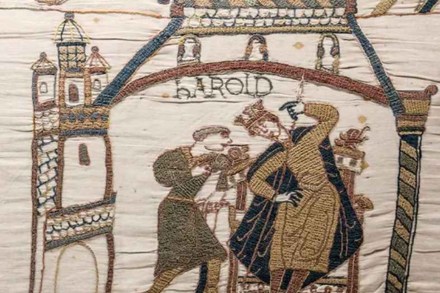
On this week’s Spectator Out Loud: Tim Shipman argues that politicians’ contempt for the press is really contempt for the public; Arabella Byrne asks if you have old money face; Alex Burghart says that Harold Godwinson has a touch of the Viking about him, as he reviews Harold: Warrior King by Tom Licence; and finally, Lloyd Evans reads his confessions of a dog hater. Produced and presented by Patrick Gibbons.

Tim Shipman, Arabella Byrne, Alex Burghart & Lloyd Evans

Confessions of a dog hater

From our UK edition

‘Do you like animals?’ asked the woman at the door, collecting for a zoo. ‘No, I hate them, they keep trying to kill me,’ I said. That got rid of her. I feel a little ashamed of my hostility to animals, which I inherited from my mother. She was raised in rural Ireland and she loathed the countryside and all its non-speaking inhabitants. To her, animals were either predators or ingredients, and she particularly despised geese, rats, mice, squirrels and dogs. ‘Vermin,’ was one of her favourite nouns. And she regarded the word ‘pet’ as a self-deluding fantasy. Which seems reasonable. Animals cannot be tamed but their owners can be deceived. Any beast will turn murderous when cornered. Dog-hate entered my soul. It festers there still.

The slow death of the Edinburgh Fringe

From our UK edition

The Edinburgh Fringe is getting bigger. Last year’s total of 3,893 shows is surpassed this year by 4,206 productions. More people are coming to Edinburgh in search of fame but the pressure of numbers doesn’t guarantee quality. Rival events are treading on Scotland’s turf. London produces two festivals in August that appear to challenge Edinburgh directly. The Camden Fringe offers 450 shows covering theatre, comedy, opera and dance, while the Greenwich and Docklands International Festival stages a mix of theatre, circus and street art. The Edinburgh Fringe used to hold a unique place in the world of British entertainment as an informal talent contest where newcomers were spotted, nurtured and launched as stars.

Zack Polanski reveals his instant soup politics

From our UK edition

Zack Polanski enjoyed a cosy conversation with Iain Dale at the Edinburgh festival yesterday. They sounded and acted like old friends. Dale began by inviting Polanski to enlarge on his experiences growing up gay in Salford. His parents divorced when he was 11 and his wayward behaviour at school attracted a special monitoring regime, ‘full report,’ which obliged teachers to give a written assessment of his conduct after each lesson. As a teenager he was inspired by the Channel 4 series, ‘Queer As Folk,’ written by Russell T Davies.  ‘I realised I should be unapologetic about who I am. And there’s so much power in that,’ said Polanski. ‘To sum up,’ added Dale, ‘Davies gave you licence to be a slut.

An enjoyable circus show masquerading as education

From our UK edition

Brainiac Live! is a ‘family science’ show based on a popular Sky TV programme. It’s ideal for children under 12 and for mums and dads who want an hour-long break from their normal parenting duties. The show is performed by a trio of lab-coated ‘brainiacs’, Ed, Ned and Raz, whose antics centre around loud bangs, naked flames, puffs of smoke and the destruction of props. The fun kicks off with a helmeted Ned preparing to dive into a sheet of cling film stretched across an empty doorframe. He runs. He leaps. He plunges through the transparent barrier which rips apart as he crash-lands on to a discarded mattress. Is that science? Not really. It’s a low-level stunt performed in conditions of extreme safety.

My friend the failure – and the star

‘Altogether Elsewhere.’ The title page of an unpublished travel book caught my eye during a recent clear-out. The author, Matthew Leeming, was a character who deserved to be famous but somehow never made it. He was imaginative, witty, fearless and greedy – wonderfully greedy. He inherited his father’s ceramics company and ran it for years with great success. He loved being rich. ‘Money,’ he used to say wistfully, ‘eases the pain of being alive.’ To pique women’s interest, he claimed to be off-limits. ‘I’m training for the Catholic priesthood,’ he confided He invented businesses out of thin air.

The Trainspotting musical is made for cruise ships

From our UK edition

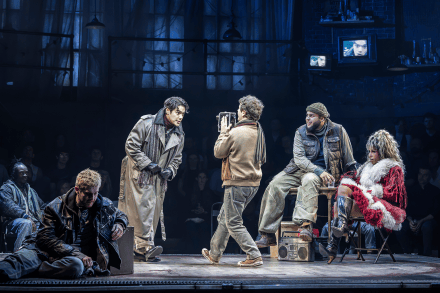
Plenty of critics have mocked Trainspotting – the musical (with lyrics and music by Irvine Welsh and Stephen McGuinness, respectively) but the producers know their audience’s mind. They want to see live theatre without taking the risk of a new play, which might be gruesome, and they prefer a dead-safe replica of a glamorous movie to something by Chekhov or Pinter. Reviewers admire novelty and inventiveness so they tend to punish theatre-makers who reheat leftovers. The show follows the book more closely than the film, where Renton was the central figure, and here he blends in with the community of wasters and criminals who mope around Edinburgh trying to raise cash for smack. The characters are reduced to simplistic gestures, as easy to read as hand signals. Begbie is a cocky thug.

This J. Edgar Hoover musical is destined for Broadway

From our UK edition

Here Comes J. Edgar! has a brash poster featuring a cross-dressing FBI agent in fishnet tights with his thighs splayed aggressively towards the viewer. He points a warning finger as if to say, ‘Enjoy this show or go to jail.’ The abrasive imagery aligns with the arrogant tone of most LGBTQ+ advertising but the show itself has a more humane and playful temper. Harry Shearer and Tom Leopold have written a superb tragicomedy about a powerful homosexual who wants to conceal his love life while hunting down America’s most notorious criminals. We first meet Hoover as he lies in a hospital bed flanked by two chain-smoking nurses who discuss his health while filling the room with tobacco fumes. This quietly amusing scene sets the mood.

How has Tower Hamlets really spent my council tax?

How does Tower Hamlets spend my council tax? I’ve been shovelling cash at them for 19 years so I strolled along to the new town hall to find out where the money goes. The new town hall cost a packet, clearly. Carved out of the Royal London Hospital, the spacious lobby looks cool, stylish and reassuringly anonymous, like a private bank in Zurich. Glass doors swish apart and I enter the debating chamber where the councillors sit at a curved mono-desk opposite the public gallery. Everything is slick and hyper-modern. The pristine floor glows beneath the recessed lights. I had expected an ordinary meeting but I seem to have stumbled on an important debate.

A funny, unorthodox Much Ado About Nothing

From our UK edition

You may need to do a spot of homework before attending Tilly No-Body at the Arcola. Acted and written by Bella Merlin, the play examines the sufferings and blunders of Tilly Newes, an actress born in 1886, who married the experimental German dramatist Frank Wedekind. At first sight the show looks like a lesson for newcomers but the content is bound to confuse anyone who lacks a working knowledge of German theatre in the early 20th century. The ideal viewer is a literary expert familiar with the whole of Wedekind’s dramatic output. Numerous lines from his plays are quoted, not always with intelligible citations. ‘Women are natural actors’, runs a typical aphorism, and ‘no woman can keep a man happy by behaving sincerely.

Springwood is a waste of time

From our UK edition

Springwood, set in June 1939, looks at a series of tricky meetings between the American president FDR and George VI at the Roosevelts’ family retreat in upstate New York. George and Queen Elizabeth are guests at the poky old house and although they complain to each other about their sleeping quarters they hide their dismay from their hosts. The writer-director, Richard Nelson, evidently despises the main characters apart from FDR (Robert Lindsay) who comes across as a genial old buffer addicted to whisky. The dialogue is divided into easy-to-handle segments. First, we get the history bit. FDR tells George that the US ought to join Britain in the coming war but pro-German sentiment is very strong and the majority of Americans may support Hitler. Then we get the therapy bit.

The day the bishop hit me in the face

From our UK edition

The bishop hit us in the face. That was the best thing about confirmation. When I was 12, along with every other boy in the school, I was formally prepared for the sacrament that marked our passage from infancy to adulthood. Confirmation lacks the festive atmosphere of a bar mitzvah where families enjoy booze, dancing and speeches along with the exchange of gifts. For us, it was a cheerless affair held in the vast, under-heated parish church where 200 fidgety 12-year-olds waited to receive the appropriate blessing from the bishop. He was called Cyril. We were familiar with his name from Sunday Mass when he was cited as an appropriate subject for our orations. ‘We remember our Bishop Cyril in our prayers,’ said the priest.

A Sinatra musical for hardcore fans

From our UK edition

Sinatra: The Musical dramatises the star’s career during a minor wobble in the early 1950s. After falling from grace, Sinatra stages a comeback and becomes an Oscar-winning film actor. Joe DiPietro’s script gives the impression that Sinatra’s world is ruled by wise, powerful and well-connected women. Billie Holiday teaches him how to sing with feeling: ‘Bend the notes at the end of the phrases.’ His mother explains the secret of a happy marriage: ‘One talks, the other doesn’t.’ When Sinatra punches and injures a photographer, his wife tries to restore his image by ordering him to play a priest in The Miracle of the Bells. Sinatra obeys. The film bombs so badly that his press agent, George, severs all contact with him.

The power of Glengarry Glen Ross

From our UK edition

The Old Vic presents an eccentric new version of David Mamet’s ultra-masculine play, Glengarry Glen Ross. Director Patrick Marber populates the show with middle-aged actresses. And why not? Devotees of Mamet may find it patchy but the play is so powerful that it can survive any amount of experimental tinkering. The visuals are pretty incoherent and the Old Vic’s configuration gives the cast no help at all. The playing area is surrounded by concentric rings of seats, cage-fighting style, which makes the actors feel unsure where to pitch their performance. It’s like trying to post a letter while doing a twirl on the doorstep.

Freddy Gray, Matt Ridley, Peter Parker & Lloyd Evans

From our UK edition

30 min listen

On this week’s Spectator Out Loud: Freddy Gray asks whether the Iran deal will destroy J.D. Vance; Matt Ridley argues that Britain must finally embrace gene editing; Peter Parker explains the problem with ‘queer art'; and finally, Lloyd Evans says the NHS treats everyone fairly – with contempt. Produced and presented by Patrick Gibbons.

Freddy Gray, Matt Ridley, Peter Parker & Lloyd Evans

The NHS believes in fairness – they treat everyone with equal contempt

Edward Gibbon was troubled by a swelling in his lower abdomen. I have the same condition. ‘Wow. That’s huge,’ said my GP as he gazed at the affected area. ‘Huge?’ I said, trying to sound nonchalant. ‘I wouldn’t know. It’s the only one I’ve ever seen.’ My cyst has been expanding steadily for decades and I was told a few years ago that its intentions were peaceful. My new GP was trying to scare me, obviously. I don’t blame him. It’s dull work staring at sick bodies all day and he was trying to amuse himself with a spot of scaremongering. ‘You’ll need a scan within two weeks,’ he added. ‘Cancerous perhaps?’ I asked. He nodded with a sly grin.

A play that shows Iranian society is like our own

From our UK edition

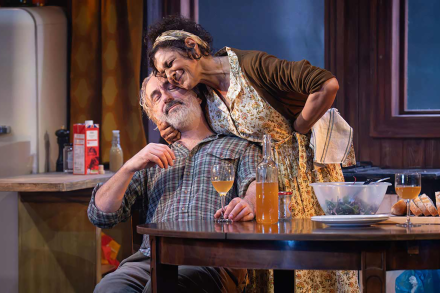
Under the Shadow is a timely drama set in Tehran in 1988 during the Iran-Iraq war. Saddam’s missiles are raining down on the city which puts an additional strain on the troubled marriage of Iraj and Shideh. Iraj is a doctor. Shideh is a part-qualified doctor. During quiet spells, they chat about humdrum stuff. Iraj wants Shideh to have another baby. Shideh prefers to leap around doing her Jane Fonda exercises. Her mother-in-law potters in and out and fusses over bits of crockery. Their daughter snuggles on a sofa with a rag doll. The low-energy dialogue flits from one issue to the next without any sense of direction. The characters tell each other jokes to pass the time.

Michelle Terry is ferocious in Brecht’s simplistic tutorial

Bertolt Brecht’s classic, Mother Courage, is about a female war profiteer who drags a wagon of supplies through no man’s land and sells them to bedraggled soldiers. During the story, she loses both her children and she discovers that war is not as marvellous as she previously thought. This spiritual journey evidently mattered to Brecht, who was born in 1898 in Augsburg, and who greeted the outbreak of the first world war with enthusiasm only to become disillusioned by the mechanised slaughter of the trenches. His play is aimed at wrong-headed militaristic numbskulls who believe that war is good rather than bad. If you already hold pacifist views, you may find his tutorial a little simplistic.

My new job at the Amazon packing factory

What will you do if it all goes wrong? I have a back-up plan. Working for Amazon. Its Luton warehouse offers tours to the public, and I went along to see what my future may hold. The vast hangar sits in a field of mega-sheds near the M25 where built-up London peters out into scrub and green farmland. I arrived at a bright-yellow security gate where I was greeted by Amin and Sophie who seemed thrilled to welcome our party. Six in all. Sophie asked us – or perhaps ordered us – to deposit our phones in a locker whose key she retained during our visit. Amin explained the rules. Follow me. Walk within the blue lines. Ascend staircases on the left. Use the handrail. Off we went.

Are we ready for the truth about Judy Garland?

From our UK edition

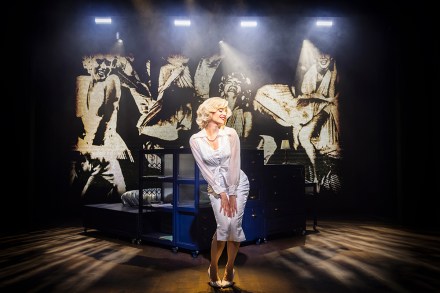
End of the Rainbow feels like a prison drama set in London in 1969. Judy Garland is about to give a string of solo shows in the West End and she’s preparing at the Ritz under the supervision of her cruel boyfriend, Mickey Deans, who doubles as her publicist and drug dealer. Her British pianist, a friendly queen named Anthony, tries to protect her from Mickey’s manipulative bullying. Judy, the captive, forfeits our sympathy straight away by complaining about everything. Her suite is too poky. She’s desperate for liquor to improve her mood. And she reacts with outrage when the Ritz manager asks for payment in advance so she forces him to back down by threatening to commit suicide. She rehearses the stunt by standing on a balcony and daring herself to dive into the street.