Culture

Culture

Dull, duller and Dulles – was Churchill’s jibe about America’s Cold War icon unfair?

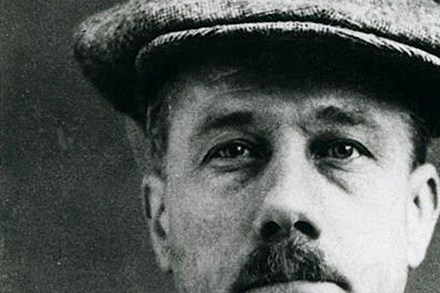
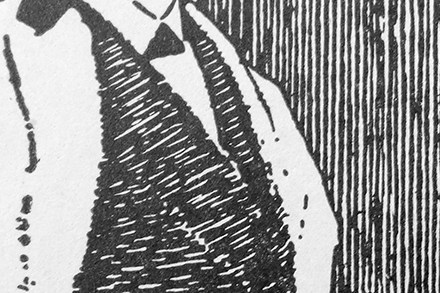
In the era of Trumpian foreign policy incoherence, a new intellectual biography of the American Cold War icon John Foster Dulles might seem welcome for hawks and doves alike. Indeed, Dulles’s tenure as secretary of state during the first six years of the Eisenhower administration could be viewed – even by the harshest left-wing critic of American imperialism – as a useful and reassuring point of reference, despite its narrow anti-communist dogma and too cavalier approach to the dangers of nuclear confrontation with the Soviet Union and China. After all, the Eisenhower administration extricated the United States from President Truman’s stalemated Korean War and started no major new wars before the end of Eisenhower’s second term in January 1961.

dulles

Why Yesteryear is the controversial bestseller of 2026

If you’ve spent more than five minutes on social media in the past couple of years, you will probably be familiar with the tradwife phenomenon that has grown up as a reaction against the harder-edged and more strident girlboss feminism that itself threatened to become the dominant form of discourse towards the end of the last decade. Tradwifery, a form of embrace of traditional domestic roles that concentrates on the woman as homemaker, mother and carer while allowing her husband (always a husband, never a "partner”) to fulfill masculine aspects of patriarch and hunter-gatherer, has been decried by some as a right-wing coded backwards step into submissiveness. Others have described it as a welcome return to common sense and social cohesion.

yesteryear Caro Claire Burke (Riley Haakon)

Alien fever shows no signs of abating

These two books are about aliens – intelligent beings who may or may not have visited our planet. Jonathan Caplan is a distinguished lawyer and believer; David Lavelle is a journalist and skeptic. Aliens have always been with us. For at least 4,000 years there have been reports of strange visitations assumed to come from heaven, hell or simply the universe. Angels and demons were commonplace, but they were eventually replaced by technology-based visions, most often flying saucers. These could be quietly ignored until 1947, when postwar alien fever was sparked in Roswell, New Mexico. Metal and rubber debris were found which the US Army initially claimed were parts of a “flying disc.

blood

There will be blood – the vital work of field transfusion units

Most conventional World War Two military histories focus on weapons, materiel and even the manpower needed for a decisive victory over Hitler and the Axis powers. Little has been written about blood as a strategic resource. However, a pioneering service of specially trained medics who worked dangerously close to the front lines, pumping blood into the veins of battle casualties, not only saved lives but contributed significantly to winning the war. They did this by returning men to the front line and boosting morale by persuading them that, if wounded, they had the maximum chance of life.

A trove of avian lore and history

I finished reading The Book of Birds by Robert Macfarlane and Jackie Morris, and leaned out of my attic window to smoke and think about it, when there among the tumbling spires of the apple trees was a spasm of fluttering and a flurry of notes: two spotted flycatchers! One held the air for a moment, hovering and looking me in the eye, and then darted back to its perch while the other called. It has been years since we have seen them, and straight to my bird books I went. The Book of Birds was no help because it does not include the spotted flycatcher and is not designed as a recognition guide. Instead, Macfarlane writes: "Ours is a field guide with a difference... It asks not 'What is that bird?' but 'Who is that bird?' The aim is to help readers identify with them.

birds
America

The making of America

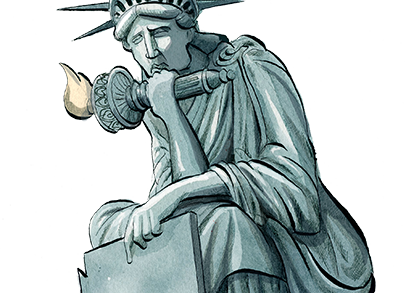
The story of the United States was determined from the start by the manner of its birth. The original 13 English colonies may seem lost in the distant past. Yet it was their diversity that was the key to their union. The creation of the US reflected the tensions of 17th-century England, pitting the Puritan republicans of Massachusetts against the landed gentry of Virginia, Quaker New Jersey against Catholic Maryland. The Founding Fathers resolved these tensions by instituting the concept of states’ rights. Their Constitution was a tissue of compromise, yet it was robust. What served to unite 13 colonies still holds together the mightiest nation on Earth.

The importance of fairy tales in testing times

In the realm of magic and imagination, human nature can be better understood than in the world of our everyday lives: “The best of our tales do not lie or die.” It is a bold claim, which the folklorist Jack Zipes explores across continents and class in a series of essays. He guides the reader from the origin of oral storytelling, through medieval writings, to 17th-century literary salons and finally to today’s cinema screens. In the course of this journey, he focuses on the specific genre of the “wonder tale,” in which “those who are naive and simple are able to succeed because they are untainted and can recognize the wondrous signs... They have not been spoiled by conventionalism, power or rationalism.

fairy tales
Robots

Will robots simply bore us to extinction?

A few years ago, when ChatGPT and Claude were beginning to take off, some tech leaders seemed to develop a curious interest in oceanography. Consider, for instance, Microsoft CEO Satya Nadella’s suggestion in 2023 that AI ought to be compared to a “tidal wave”; or Mustafa Suleyman’s book on AI, The Coming Wave (2024), in which the DeepMind cofounder talks urgently about an “impending deluge” (while repeatedly warning us that the “wave is coming,” and, even more alarmingly, “the coming wave really is coming.”) It didn’t take long for the analogy to spread. The IMF’s Kristalina Georgieva would liken the technology to a “tsunami hitting the labor market.

Wham! How George Michael shot to stardom straight from school

It turns out that the writer Sathnam Sanghera, “the boy with the topknot,” has been a besotted George Michael fan since the age of eight, when he started listening to his older sisters’ Wham! records. This was an unusual thing to be as a Sikh growing up in Wolverhampton and it got him teased at school. But he stuck with it. So when a friend suggested that he write something fun to compensate for the years of heavy historical research he’d put into his excellent book Empireland, he decided to set off on a sort of pilgrimage in search of his dead hero. First stop was Mondial Cars, a showroom in Northwood, north London, which used to be the Bel Air restaurant, where the teenage Michael worked as a DJ.

The Sun Also Rises is still a great American novel

To pinpoint the precise moment Ernest Hemingway came up with the idea for his first novel, The Sun Also Rises, which is celebrating its centenary this year, is not difficult. All we have to do is follow the trail back to Pamplona. In 1925, after a cold winter in Paris, a 25-year-old Hemingway was keen to return to the San Fermín bullfighting festival in the Basque town of Pamplona, near the northern coast of Spain. He had yet to make his mark as a writer, although he was surrounded by some of the heavyweights of expatriate literature: Ezra Pound, F. Scott Fitzgerald, Gertrude Stein and Ford Madox Ford, all of whom believed Hem had a future as a novelist.

How Rupert Murdoch destroyed the innocent enjoyment of watching sport in Britain

In July 2000, Rupert Murdoch’s Sky acquired an obscure online gambling brand called Surrey Sports. It was little remarked upon at the time but this deal would change association football forever. Two years later, Surrey Sports had become Sky Bet and, by 2004, people watching football on Sky Sports could bet on the game via their remote. And why not? After all, as the Sky Bet tagline reminded viewers: “It matters more when there’s money on it.” For football fans, nothing was ever quite the same again. “It’s difficult to overstate what the slogan did for the normalization of gambling in football,” writes Darragh McGee in his impressive study of how our national sport, seduced by profit, surrendered to the gambling industry.

gambling
Garibaldi

A weary trek in the steps of Garibaldi and his Redshirts

By the time he died in 1882 at the age of 74, Giuseppe Garibaldi had freed the Italian peninsula from its abhorred Habsburg and Bourbon rulers and united all Italy under the liberally inclined House of Savoy. With his whiskery good looks and wardrobe of red blouses, he was the ideal vehicle for romantic notions of free nationality. When he visited London in 1864, crowds flocked to greet the Risorgimento liberator as he got off the train at Nine Elms. A new football club, Nottingham Forest, adopted Garibaldi red as its color and a “squashed fly” biscuit was named after him. In Queen Victoria’s estimation, though, Garibaldi was an outlaw figure who threatened to subvert the established order. “Garibaldi – thank God – is gone!” she declared on his departure.

Where did all the funny Republicans go?

When did Republican writers stop being funny? Look around at the landscape of contemporary American literature – and, for that matter, TV and film – and you’d be hard pressed to find a genuinely funny literary voice who doesn’t lean liberal, or at least purport to. This isn’t to say that individual right-wing writers aren’t amusing. Often found in these pages, Rod Liddle, for one, is very funny, though I suggest he’d balk at being called a conservative. And Donald Trump is hilarious on Truth Social – his posts may have the subtlety of a bullhorn, but they usually land with a satisfying thunk. During his 2016 campaign and well into his first term, Trump succeeded in part because he understood that politics and entertainment run in parallel.

funny

Was Marcel Duchamp’s notorious ‘Fountain’ even his own work?

This slim volume has only one fault. It has no illustrations. So you’ll have to do some Googling or visit the current Duchamp exhibition at MoMA (until August 22) if you want to know what "The Bride Stripped Bare by Her Bachelors, Even" looks like. Otherwise it’s perfect – wittily written and packed with many fascinating characters besides the ever intriguing Marcel Duchamp. He didn’t actually arrive in New York until 1915, but when he did he found himself already famous. His "Nude Descending a Staircase, No. 2" had been included in the 1913 International Exhibition of Modern Art, alongside works by Picasso, Van Gogh, Gauguin, Matisse and Braque, and completely stole the show. Duchamp didn’t even know the painting was being exhibited.

duchamp

Meeting Jay McInerney, Manhattan’s sassiest social novelist

Since his debut novel Bright Lights, Big City appeared in 1984, Jay McInerney has been one of the best-known writers whose work is mostly grounded on the long, skinny, granite-bedrocked river isle the Lenape called Manahatta, “island of hills.” He has lived in town for most of the past four decades too, and currently divides his time between a Village penthouse apartment and Water Mill in the Hamptons. McInerney walks into the lobby of the Marlton Hotel on West 8th Street, just paces from Washington Square, and heads turn. Young lovelies on their laptops with Mission Control Center-sized cans over their ears and chic hairstyles look up and blink, appealingly. Waiters slide swiftly to his side.

lady chatterley

All the gossip about Lady Chatterley’s Lover

Lady Chatterley’s Lover was written in a villa outside Florence during the winter of 1927-28, two years after D.H. Lawrence was diagnosed with TB. Described by him as “a phallic novel, but good and sun-wards, truly sun-wards,” the tale is set in his native Nottinghamshire, which he left in 1912 when he eloped with his aristocratic wife Frieda von Richthofen, who was then married to his tutor. Frieda, who valued her freedom, was enjoying an affair with the Italian officer Angelo Ravagli, who became her third husband after Lawrence’s death in 1930. It is believed that Lawrence was impotent for the last years of his life. In the evenings he would read aloud his finished pages, in which the Lawrentian philosophy is expressed by Oliver Mellors, gamekeeper to Sir Clifford Chatterley.

They shoot horses: Boyhood, by David Keenan, reviewed

David Keenan’s seventh novel is quite the ride, but its plot is not always easy to disentangle. The author has said that its title is his favorite word, and the book’s clearest narrative thread concerns the abduction of a young boy outside a Glasgow football ground in 1979. The boy’s older brother, Aaron, is subsequently guided by an angel called the Precious Gift. Aaron meets the guardian angel during a run for charity in 1986, on the last day of his boyhood, or so he thought, because he could never imagine doing a sponsored run again after that, because he got into literature and smoking pot straight afterwards.

boyhood
elizabeth

The exquisitely dull life of Elizabeth II, expert on cap badges

The dogs, horses, diamonds, furs, full-length evening gowns of lace and pearls; private jets and limousines; the ever-present jostling retinue; the push and shove of photographers and the clamor of crowds – Elizabeth Taylor and Elizabeth II had a lot in common, each taking herself very seriously and needing to be seen to be believed. Whereas the Hollywood actress was majestic mainly in her vulgarity and brashness, however, the late Queen, as is evident in this pair of biographies, did her level best to be reticent, even nonexistent. The best known of her few recorded utterances are “Oh really?” and “Are you sure?” She had a tendency to stare at a person with “absolutely no expression,” or at best “an expression of controlled irritation.

Joe Biden’s memoir will humiliate him

Just before writing this piece, I saw Gary Oldman in a London production of Samuel Beckett’s Krapp’s Last Tape. For those unfamiliar, the play revolves around an old man listening to a series of tapes recorded by himself when he was younger, musing pompously on his hopes and dreams for the future. In his present, desiccated state, he can only scoff at his middle-aged self, before being overcome by the pathetic realization that it is all up for him and that he is doomed to a miserable, unhappy future. It is hard to think of ten people who will want to read the book, let alone ten million I suspect that much the same has been going on in Joe Biden’s household of late. If, of course he still knows what day of the week it is, or what his name is.

Biden

Life is a Cabaret: inside Liza Minnelli’s memoir

Though she may well have been “one of the world’s most celebrated, beloved and iconic performers,” who’d have wanted Judy Garland as a mother? When not remaining in bed “for days at a time, heavily drugged and in a deep state of depression,” she was, according to her daughter Liza Minnelli, slashing her neck with a razor blade because “she loved playing the victim… Hospitals are a way of life for her.” Judy died of a (possibly accidental) drugs overdose in 1969, aged 47. At the Frank E. Campbell Funeral Chapel on the Upper East Side, her corpse was prepared for public view by the very same make-up expert who’d worked years previously on The Wizard of Oz. Twenty thousand people filed past the open coffin – more than had come to gawp at Valentino.

liza minnelli

J.G. Ballard’s surreal fiction continues to resonate through the century

In 1951, when J.G. Ballard was 20, Pandora and the Flying Dutchman premiered in London. Directed by Albert Lewin and starring James Mason, Ava Gardner and a solid cast of English actors, it was filmed on the Catalan coast by Jack Cardiff in lush MGM color. Man Ray contributed designs based on the work of de Chirico. Set in an Anglo-Spanish colony, it featured a surrealist painter. a racing car driver and a toreador. All love the mysterious Pandora, who is unable to love anyone until the Dutchman drops anchor. To prove his passion for Pandora one suitor takes poison while another pushes his beloved car over a cliff.

j.g. ballard

The nightmare of filming A Hard Day’s Night

It would be easy to dismiss A Hard Day’s Night, the Beatles film made in 1964, as a throwaway period piece. The plot hurls the Fab Four into a meta narrative: they’re playing themselves while a director – a seething Victor Spinetti – panics as the boys are delayed on their way to a televised variety performance by mishaps, distractions and stampeding fans. The film was thrown together to fit the group’s breakneck schedule – scripted over a few weeks in January by Alun Owen, shot by Richard Lester by May and out in cinemas in July. In her absorbing, concise book, Samira Ahmed sees the film not as a cursory promo but as a watershed moment in British culture – “a kind of cinematic big bang.

Antony Gormley’s lonely figures transfer to paper

If there’s any consolation to be had in the prospect of AI bots filling the world with humanoids, it’s the look on their glassy faces when they realize that one of us has beaten them to it. The Turner Prize-winning sculptor Sir Antony Gormley, 75, has installed casts of himself from Crosby Beach in Liverpool to Gateshead, from Texas to the Netherlands and western Australia. He and his simulacra might not detain our new overlords for very long, of course (but in the meantime “The Gormleys versus the Bots” is the Doctor Who series I’m here for).

The decline of the royal biography

About a decade ago, with my writing career going nowhere fast, I received some savvy advice from my then-literary agent. “Write about the royal family,” he said. “There’s an endless appetite for books about them. They combine history, social commentary and gossip with old-fashioned fascination with the rich and powerful. You can’t go wrong.” I listened to his advice and wrote a trilogy of books about the Windsors: The Crown in Crisis, The Windsors at War and Power and Glory. The first two sold very well, and the third was barely noticed, but I was glad that I took my agent’s counsel, even if we had to part ways because he had practiced what he preached, and diversified from historical biography into his own career writing about the royals.

Is private equity secretly running your life?

Did you know that a secretive thing called private equity owns almost 10 percent of the UK economy? Did you know that it controls the jobs of several million people and may well own your local hospital, water supply, children’s school or even your home? No? Here is a book that aims to straighten you out on all that. Private equity is one of those things that you either know about or don’t. If you are in the finance business you know, because it is the story of the past quarter century. If you are not in that world, if leveraged buyouts and limited partners and debt pushdowns are all just business-page noise, then you are in the majority. And it turns out that means you may not know who is really running your life.

private equity
etna

Living in the shadow of Etna

The early Greek inhabitants of Sicily peered into Etna’s crater and declared the volcano to be full of monsters. Its “impenetrable darkness” reminded Samuel Taylor Coleridge of his opium addiction. Helena Attlee, whose hugely enjoyable The Land Where Lemons Grow (2014)won acclaim, brings to her portrait of Etna a softer, more admiring – yet respectful – eye. Unpicking its geological and human history and a landscape “cobbled together from the expressions of the Earth’s unrest” became for her a way of returning to the very beginnings of life. Mount Etna, at 11,200 feet in height, is Europe’s biggest volcano and one of the most active in the world, grumbling and spewing for many months at a time.

zac brettler russian london

The fate of the British teenager who posed as a Russian oligarch’s son

This story is little more than a brutal anecdote, which Patrick Radden Keefe has chosen to tell at excessive length. It has the kind of fact-checked gravity that indicates a star American journalist bent on perpetrating an entire book. (“Built in 1923 and originally known as the Empire Stadium, Wembley was the most iconic sporting ground in Britain.”) But it occurred to me more than once as I read it that it has the hallmarks of a particularly black London comedy by Charles Dickens or Ben Jonson or Joe Orton. A violent knave, his activities previously limited to cheating the police, murdering his equally appalling criminal rivals, doing underhand deals and ripping off the rich, acquires an associate.

Meeting Karl Ove Knausgård

On a winter’s morning, outside the Three Lives bookstore in New York’s West Village, Karl Ove Knausgård has just finished signing copies of his latest novel, The School of Night. His features are familiar from the dustjackets – the gray-blue eyes, the grizzled beard – but he is surprisingly tall and his signature silver mane is now cropped short around the ears. Gone, too, are the cigarettes, traded for a vape. The School of Night is the fourth novel in Knausgård’s “Morning Star” series. It takes its name from a secret society of Elizabethan poets and scientists, which included the explorer Sir Walter Raleigh and the play-wright Christopher Marlowe.

karl ove knausgård

Tales of quiet intensity: The News from Dublin, by Colm Tóibín, reviewed

Colm Tóibín is a master of understatement, his work characterized by great emotional intelligence coupled with redoubtable restraint. This is his third anthology of stories, following Mothers and Sons (2006) and The Empty Family (2010). Within a few pages, he fills the gaps between words – the things he doesn’t say – with as much meaning as the prose. Familiar themes emerge. There is the Irish diaspora in the US (as in Brooklyn and Long Island); the Catalan Pyrenees (the setting for “The Long Winter” in Mothers and Sons); and Argentina (as in the novel The Story of the Night). Feelings of exile and being an outsider are aroused, while Catholicism still taps on the shoulders of those long lapsed.

colm Tóibín