Spectator Life

Spectator Life

An intelligent mix of culture, style, travel, food and property, as well as where to go and what to see.

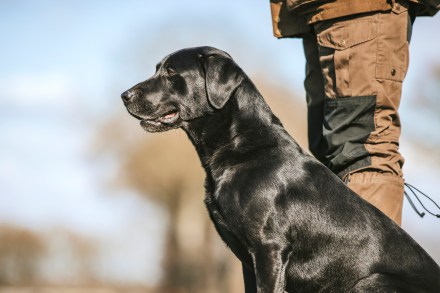
Is your dog right-wing?

It’s as good an indicator as you’ll find of this government’s asinine attitude to rural Britain that you’re reading a piece in which a Spectator writer semi-seriously considers the far-right credentials of various dog breeds. How right-wing is your dog? in itself sounds like one of Alan Partridge’s increasingly desperate pitches for a new TV show.    Pity the poor black Lab, for it’s these harmless thickos of the dog world that have aroused Labour’s ire.
Testosterone-maxxing is the latest affront to masculinity

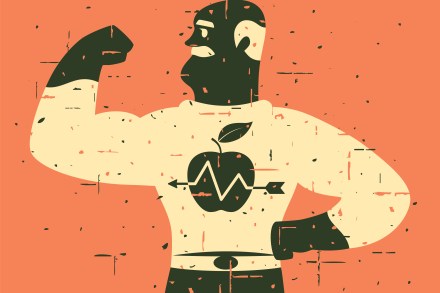
A report in GQ recently suggests that British men are now having testosterone injected directly into their vocal folds in an attempt to lower the pitch and increase the resonance of their speech. This is the latest frontier of ‘T-maxxing’ – a movement built around optimising male biology through an obsessive regimen of blood tests, supplements and prescription hormones.  The treatment is being offered by Chadwan Al Yaghchi, a consultant ENT surgeon at the London Voice and Swallowing Clinic, who says that earlier this year he became the first doctor in the UK to perform the procedure on an otherwise healthy man.

How TikTok began a new chapter for independent bookshops

Ten years ago, Britain had reached its nadir when it came to independent bookshops. There were only 867 across the United Kingdom, which sounds like a decent enough number but when you consider that we were a country of 65 million back then, it’s not an especially impressive amount. However, it isn’t hard to see why many shops were shuttering. Ever since Amazon had begun to make its presence felt in the bricks-and-mortar bookselling trade, independent shops were simply unable to compete with that online behemoth on the one hand and the Waterstones group on the other. This left the indies stranded in the middle without, apparently, much hope for a renaissance.   Well, somewhat surprisingly this renaissance has now taken place.

Beware the private school con

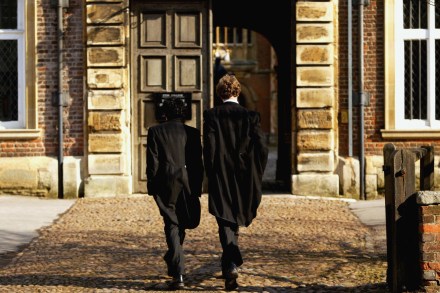
Harry Potter, the poor little orphan, can’t afford Hogwarts these days, now he has to pay VAT. James Bond, another orphan, can’t manage Eton’s £65,000 school fees. And he won’t join MI6, either – no civil servant, licensed to kill or not, can afford to live in central London any more. Now only the super-rich can afford them, private schools have become little more than gilt-edged finishing schools, with parents determined for their children to become their mini-clones as hedge-funders and private-equity tycoons.   In the last 30 years, as school fees have rocketed, so the nature of private schools and their pupils has changed for good.

Inside the church of pipe smoking

I am a smoker. I can never be sure of the reaction I will get to those words nowadays, though I have hope that Spectator readers are more receptive than most. Anyway, in my case it’s somewhat of an understatement: I worship the goddess Nicotiana. Or, as J. M. Barrie put it: ‘My Lady Nicotine’. Compton Mackenzie had it, simply, as ‘Sublime Tobacco’. And for any vegetarians among you, there’s always Frank Zappa’s ‘my favourite vegetable’.   I enjoy many forms of tobacco consumption, but having recently read Thomas Sydenham’s description of a tobacco smoke enema, I am convinced that not all methods are created equal. Cigars? Enjoyable, but exorbitantly expensive. Cigarettes?

The happy hinterland of a service station

When I want a reminder of gentler, slower times I find them next to a motorway. In a world of haste, of apps and hustle, service stations are a soothing throwback to childhood trips, when I’d get a rush of excitement as Dad turned the car off the motorway and into the slip road leading to one of these temples of capitalism. As I returned to the back seat I would be chomping triumphantly on the chocolate bar I got from the shop or sucking the lollipop I was handed at the end of the Little Chef meal.   Perhaps we never entirely grow out of that feeling.

Bring back Michaelmas

The berries on the elder are ripe, falling and staining both city streets and country fields alike with their purple-black juice; the last tomatoes are ripening while the plants let their leaves die off, putting all their energies into their final fruit. Dahlias and sedum - and Michaelmas daisies - flower in borders where half the pleasure comes from the russet and brown of decay. There are more hours of darkness than of light. ‘That strain again! It had a dying fall.’ Today, September 29, is Michaelmas, the Feast of St Michael and All Angels. Coming shortly after the autumn equinox, it is one of the quarter days inherited from the Middle Ages, dates which long ordered life.

Rock stars shouldn’t be role models

Three things are eternal: death, taxes, and Oasis. No matter how many times they break up, they get back together. As well as announcing a new tour for next year, the band have just released a documentary sanitising the snark and brotherly in-fighting that made them what they were. ‘The little things that used to annoy us about each other,’ smiles Noel Gallagher at one point, ‘have all gone away.’ Most fans don’t want preaching to Those who want their musicians to mellow with age, and maybe become an award-winning cheesemaker like that chap from Blur, will be delighted by the film. I say, no. Turn the prickishness back to eleven. To all rockers, young and old, I implore you: stay loud, loutish and dangerous to know.

Rural France is fighting a boar war

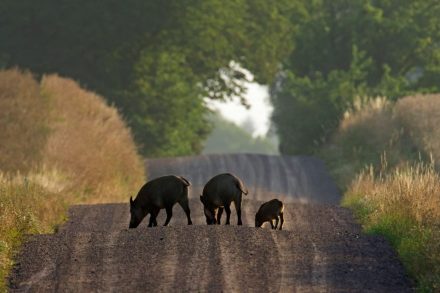
The hunting season began in Burgundy last Sunday. The first couple of weeks are dedicated to the pursuit of small game: pigeons, partridges and hares. Call it the hors d'oeuvre to the main course: the hunting of wild boar, which gets underway in earnest at the start of October. My neighbour, a farmer, hunts, and so does his son and most of their friends. They spent much of Sunday blazing away in the adjacent fields. I felt like I was in the gunfight at the O.K. Corral. Not that I mind. I was a townie in another life but now I’m what the French call a plouc (yokel), and in rural France hunting is sacrosanct. It’s also imperative, specifically the culling of wild boar. Their numbers have exploded in recent years and the damage they do is immense.

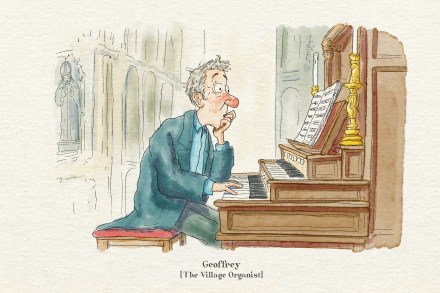
The Village Organist

Geoffrey has a merit in Grade 7 piano (taken 52 years ago), a distinction in Grade 1 recorder (59 years ago) and no qualifications whatsoever on the organ. Regardless, this makes him the most talented churchgoing musician under the age of 75 in the parish of Nether Marsham. As such, he has been the village organist for the worse half of the last decade.    It happened quite by accident one Christmas Eve. Geoffrey’s sister-in-law wasn’t the only reason he had spent three hours in the Fox and Hounds before Midnight Mass; it was also his first Yuletide since taking early retirement and he was in a generally ebullient mood.

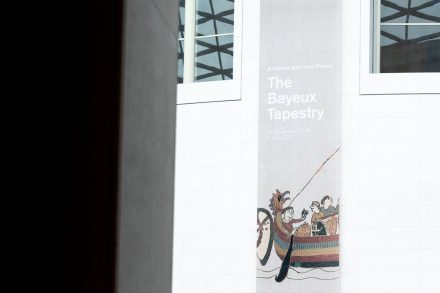
Viewing the Bayeux Tapestry is a miserable experience

There is no denying the wonders of the Bayeux tapestry. Seeing the Norman Propaganda in the flesh, rather than on a smartboard in a history lesson, is an arresting experience. You notice, perhaps for the first time, the fables and strange beasts of the lower margins giving way to a brutal carpet of dead bodies – decapitated bodies, severed limbs and blood – as the Normans win at Hastings.  Unfortunately, the British Museum appears to be doing everything in its power to prevent the public from actually looking at it. Most art critics and journalists will have first visited the embroidery at a press evening or media breakfast. Consequently, most reviewers have successfully traversed the ‘Bayeux Tapestry Experience’ without incident.

Looking on the bright side of life with Eric Idle

Provence ‘Would you like to meet Eric Idle? Don’t worry, he and his wife Tania are smashing.’ This was 2009. I was visiting my old art teacher from school, Frank Docherty, and his wife, Chrissie, in the village of Montfort-sur-Argens. Eric had a house nearby, they said. They’d got to know one another a few years before when Eric had begun buying Frank’s surrealist paintings. I was too wee for early Python but as a teenager knew every line of The Life of Brian. And all the voices. I apologise now to anyone who was on late-night double-decker buses from Paisley to Glasgow in 1982.

Don’t feel guilty for shopping on Vinted

Earlier this year, I did one of the most adult things possible within my financial grasp: I renewed my passport. Murderous-looking photo aside, the renewal was notable because I did not really feel the £102 when it left my bank account. And for that, I have Vinted to thank.  This is a technology that has turned the contents of our wardrobes into a vast, national marketplace: we can sell things we no longer want, buy things we do, haggle with strangers, find bargains that would never have existed on our local high street and turn a pile of unwanted clothes into cold hard cash.   No wonder we are flocking to it. An estimated 17.4 million Britons use Vinted, making it the country’s third-largest fashion retailer, behind only Primark and Next.

I, Claudius is the original royal thriller

Sex, tragic, premature death, adultery, frenetic plotting for the throne, exile, obsession with status and security, lust for money… If you think Charles Spencer’s new dissection of the Royal Family is pretty gory, try watching I, Claudius.  50 years ago, on September 20, 1976, the first of 12 episodes were aired in the BBC’s adaptation of Robert Graves’s I, Claudius (1934). They’re all on BBC iPlayer now. The Windsors have got nothing on the Julio-Claudian dynasty, the first Imperial dynasty of the Roman Empire. The first five emperors - Augustus, Tiberius, Caligula, Claudius and Nero - are made for TV.

How I became a middle-aged gym bunny

Perhaps my new-found interest is the result of decades of conditioning by the media When I was a schoolboy, you'd have been unlikely to find the words ‘sporting prowess’ and ‘Philip Womack’ uttered in the same breath. Bar a brief moment aged 13, when, being lankier than my peers, I could win sprints without too much effort, I was always much happier loafing about with my copy of J.K. Huysman’s decadent novel, A Rebours, than I was getting stuck into scrums on the freezing rugby pitches. Always picked last, I would hover by the lines, oblivious to the cries of ‘Catch!’ or whatever else came hurling my way.  My lack of interest in games was certainly not hereditary.

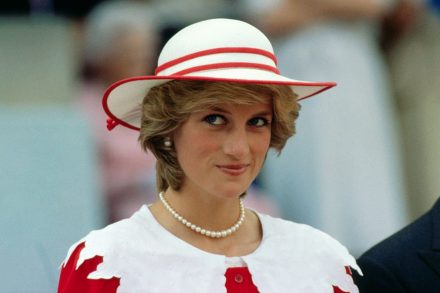
We have forgotten Diana

We need to discuss Diana. Or we might ‘forget her soon enough’. So gasped the past week's front pages as the Earl of Spencer sparred with King Charles in the latest War of the Wilting Roses. While news alerts played ping-pong between what the princess’s brother and ex-husband had or had not said, a second Diana story was racking up views on TikTok. Trending under the ‘Princess of Wales’ were clips of her little black ‘revenge dress’, on display at Sotheby’s in London before it goes under the hammer in New York. ‘Diana was such a baddy!’ posted one user with a clip of the 1994 cocktail dress. ‘This ICONIC dress belongs in a museum!’ commented another. ‘Don’t sell it to Kim Kardashian!’ waded in several more. Are we honouring the People’s Princess?

AI is turning the world into slop

It seems AI is not just making everyone sound the same, but now everything must look the same too. I haven’t been able to walk into a pub, cafe or shop this summer without noticing the uncanny, slightly unreal sheen of an AI-generated poster. From caricatured cartoon children on a nursery advertisement to an abnormally glistening burger on a food menu, every billboard, flyer and sign now seems to have been regurgitated from the same ChatGPT printing press. We are hurtling ever closer to a flattened future in which everything converges towards the average, the mediocre, the visual mean There are many telltale signs that a sign is generic AI-slop.

French cinema has stopped being chic

Amongst many men of my acquaintance, this season’s biggest blockbuster is not The Odyssey, but the new French epic De Gaulle. The first part, entitled Résistance, was released in British cinemas last month and has immediately become a cause célèbre with the kind of people who grumble that there hasn’t been a great war movie since the halcyon days of Where Eagles Dare and The Great Escape, and that the recent vogue for downbeat revisionism has meant that stirring and heroic tales of national fortitude have gone out of vogue. The second part of the story, Liberté, was released on 18 September. Presumably it, too, will find a ready-made audience, ready to thrill to the battle scenes and psychological duel between Simon Akbarian’s De Gaulle and Simon Russell Beale’s Churchill.

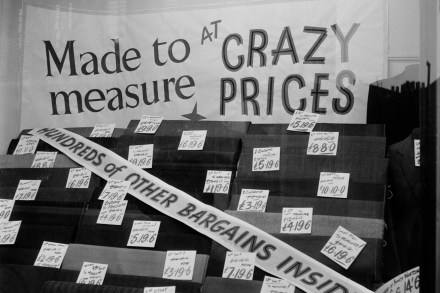
What’s gone wrong with men’s trousers?

Pity us poor blokes when it comes to shopping from the waist down. Never has the American axiom, ‘we all put our pants on one leg at a time,’ proved less true. Trousers, once the great leveller of society, are fast becoming a fashion minefield.  Baggy trousers are now the order of the day and if you are putting together your autumn wardrobe you might have noticed the same. Men’s trousers have ballooned, quite literally. On a recent trip to Marks & Spencer to buy some straightforward office clothes, I was instead met with rails of pantaloons which could happily double as wind socks.

Meet the adult toddlers who play with toys

A colleague of mine has a sizeable collection of sportscars. He has, he notes, every expression of his favourite, the Lotus Esprit. He lovingly cleans them, occasionally changes up the way they’re displayed. What he might then jokingly add is just how easy this is. The biggest of his cars is just a few inches long. They’re models, of the kind that small children might push over the carpet making ‘brrm, brrm’ noises, once they’ve passed out of what the toymakers call the ‘bash and crash’ phase, when motorway carnage is the name of the game.   What might appear strange to an older generation - overlooking their own love of train sets - is that this mid-life interest in toys is not unusual.

Give me Spain over France any day

This year, I had a hybrid holiday. I had booked to go to Catalonia, to Saint Antoni de Calonge, a gorgeous little town on the rocky coastline of northern Spain. Four of us had booked a villa, set back from the seaside promenade, which was perfect for people watching – anyone who knows Spain knows about el paseo – where people of all generations put on something smart and embark on a leisurely stroll, through streets, along the sea front, or across squares as a prelude to dinner.   Everything was perfect, from the morning swim in the almost still sea, weaving around groups of older women enjoying animated gossip sessions, to the coffee and tiny custard doughnuts served by smiling waiters.

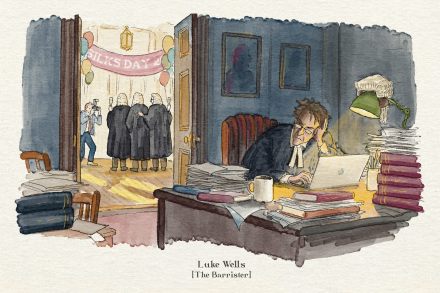
The Barrister

Luke Wells looks like he has it all. High-ceilinged, late-Georgian chambers overlooking the Walks in Gray’s Inn, now catching the last of the evening light. Tall bookcases crammed with planet-brained case law. Dark grey suit on his back – from a little gem of a Soho tailor who does the best cutting for Savile Row. Wig and gown hanging off his panelled door – handy for the quick sprint to Court Number One at the Old Bailey to rescue that battered glamourpuss, wrongly accused of murdering her lover, currently splashed all over page three of the Telegraph.  Well, that’s what Luke thought he would be doing after reading law at Lincoln College, Oxford, and bar school.

The troubling rise of Japan’s ‘baby hatches’

The San-ikukai hospital in Tokyo’s Sumida ward is much like any other in the Japanese capital, save for one special feature. It has had, since March of last year, a small room on the first floor with a cradle (and nothing else), where mothers can anonymously deposit their babies, never to see them again. The hospital accepts babies up to four weeks old. They are then cared for until foster families or infant homes can be found. In July, the hospital announced it had just received its twentieth baby, most of whom had been left within 24 hours of birth. The scheme is the first in the capital but not the first in Japan.

We don’t need more Austen adaptations. Or do we?

It’s a shame that Jane Austen can’t profit from selling the adaptation rights to her novels. In her own lifetime, she made but a modest living as a writer. Today, she would be fabulously wealthy.   As it is, the copyright has long expired, so it’s all fair game. In the last three decades alone, Austen’s stories have spawned over a dozen adaptations.

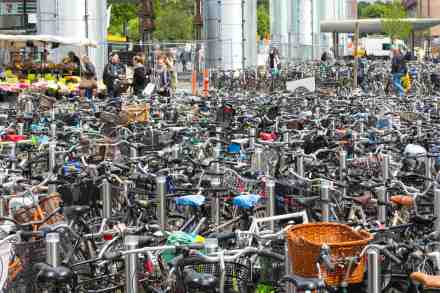
The mad genius of Copenhagen’s bike culture

Copenhagen’s obsession with cycling is evident from the moment you arrive. Walking out of the cavernous Central Station, on my first visit to the Danish capital a couple of weeks ago, the first thing I saw was bikes - hundreds of the things parked in a tangled mass of metal and rubber. The closer to the centre I got, two-wheelers started appearing with greater frequency, driven at high speed alongside roads largely denuded of four-wheelers. Clearly, this was a city designed for and ruled over by cyclists. I couldn’t wait to get out and join them.   The statistics about Copenhagen’s cycling culture are insane.

Sydney Sweeney is hot. Who cares?

When I was asked to write this article, I was told that I shouldn’t make it ‘too horny’. Some writers have strong personal brands; apparently, I have acquired one. Sydney Sweeney has hit the headlines, again, for an advert, again. In what may seem like a tedious re-run of the last round of Sydney Sweeney discourse – because it is – she has appeared in an advert with no clothing. I wish there were something meatier to the story – careful now – but that’s it. Yet, as Paul Burke has written in The Spectator, ‘In so doing, she’s driven some men wild and some women even wilder – but for very different reasons.

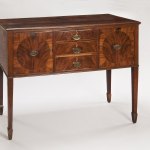
Brown furniture isn’t dead

Throw out your grandfather clocks, the naysayers said, and banish your commodes to the scrapheap and junkshop. Brown furniture - invented in the Georgian and Regency eras and popularised for the mass market in the Victorian period - has been decreed by those tastemakers in the know to be as dead as Jacob Marley – a man who undoubtedly would have cherished those heavy mahogany bed frames and cabinets that were synonymous with his age – and showing even fewer signs of returning, even in spectral form.   The reasons for the apparent demise of brown furniture are less to do with a rejection of sturdy, well-built items that were once the pride and joy of any household and more because we are living smaller lives, in all senses.

Why I love the English

When I first moved to Britain to study at university as a gangly, nervous Swede who had lived in Asia most of my life, my mother gave me a primer to prepare. It was a book called Watching the English: The Hidden Rules of English Behaviour by Kate Fox. Its pages unveiled a strange world of ironic garden gnome ownership, Byzantine pub-based etiquette and a clinical-level national mania for weather commentary. With each page, the text made me fall even deeper in love with Blighty.  Two decades on, I adore you chaps more than ever — and yes, I know such overt declarations of love make Brits deeply uncomfortable. You are, after all, a nation who shuns Mother’s Day cards that say ‘I treasure you’ in favour of ‘Cheers for being my mum and all that’.

Podcasts are making us stupider

The most insufferable person you know is a Podcast Person. They’re on the tube each morning, sat with a smug smile on their face, AirPods thrust into their earlobes and a performative Metro – it won’t be opened – on their lap. They’re probably tuning into The Rest is History, preparing to bore every colleague they meet at the tea station with a glowing review of Dominic Sandbrook and Tom Holland’s dissection of battles and monarchs of centuries past.‘I did a History degree at Durham, you know, and I’m still learning SO MUCH! SO MUCH!’, they’ll drone on, unknowingly intent on making you abandon your mug and jump out of the nearest window.