Ross Clark

Ross Clark

Ross Clark is a leader writer and columnist who has written for The Spectator for three decades. He writes on Substack, at Ross on Why?

Andy Burnham’s plan to reverse Thatcherism is a little ridiculous

From our UK edition

Why not blame Herbert Asquith or Lord Aberdeen? Andy Burnham’s line about reversing ‘40 years of neo-liberalism’ – i.e. since the Thatcher government’s reforms – is beginning to grate somewhat. ‘Britain took a series of wrong turns in the 1980s,’ he told us, while accepting the Labour leadership. We ‘surrendered control’ of water and electricity, while ‘large parts of Britain were deindustrialised’. It might have been an appropriate line for Labour when fighting the 1997 general election. For Burnham to deliver it today is a little ridiculous, given that Labour has been in power for 15 of those past 40 years. Indeed, Burnham himself was in the cabinet for three of those years.

Nationalising British Steel is not the worst idea

From our UK edition

Keir Starmer won’t leave much of a legacy, but his last week has brought one thing which will be seen as a totemic achievement in Labour circles: he has completed the nationalisation of British Steel. Not only will that warm the cockles of his party members, but Starmer has stolen a march on Nigel Farage, who had also proposed to nationalise what remains of the steel industry. It would be easy to dismiss this as a 1970s tribute act, or a socialist dream of driving towards full collective ownership of the means of production. But in truth, taking British Steel into government ownership – at least on a temporary basis – can beto be a pragmatic policy, essential for national resilience and security.

A land value tax would be disastrous

From our UK edition

Earnings are taxed too highly, Andy Burnham has hinted, and wealth too little. I don’t hold much hope for a cut in income tax, but I think we can pencil in higher wealth taxes, on property especially. This could possibly take the form of a new Proportional Property Tax such as that proposed by the ground Fairer Share, which would replace council tax and stamp duty with an annual levy of 0.48 per cent of a property’s value (that percentage being chosen because in Fairer Share’s calculations it would raise the same revenue as stamp duty and council tax currently does). But there is also an intriguing possibility that Burnham could resort to an idea he has backed in the past: a land value tax.

Is Ed Miliband really changing his tune on North Sea oil?

From our UK edition

I’m a little sceptical of reports that Ed Miliband is prepared to back down and accept new drilling for gas in the Jackdaw field in return for being made chancellor. Last time that Miliband was reported to be on the point of granting permission for new oil and gas licences in the North Sea it turned out not to be true. He dug in his heels, and a hapless Keir Starmer let him do so. Maybe Miliband’s ambition to be chancellor, and his desire to inflict a deeply left-wing fiscal policy on Britain, really does trump his net-zero zealotry But maybe Miliband’s ambition to be chancellor, and his desire to inflict a deeply left-wing fiscal policy on Britain, really does trump his net-zero zealotry.

Badenoch would be wrong to boot net zero backers from the Tories

From our UK edition

No-one has spent more time opposing Britain's net zero target than me. I wrote a whole book on it as well as dozens of columns. I have addressed many audiences, on radio, TV and in the flesh. Net zero is a disastrous policy, the most consequential law of modern times, and yet it was nodded through the Commons after a mere 90 minutes of praise – I won't call it a debate – as a departing Theresa May fought to achieve some kind of legacy. The MPs who failed to debate it had no sense of how it could be achieved nor what it would cost, relying on fantasy figures from the Climate Change Committee, which did not take into account the fact that many of the technologies which would be required to achieve it have yet to be invented.

What is Farage’s game?

From our UK edition

It is a mark of Nigel Farage’s position on the nation’s consciousness that he has succeeded in pushing the judgement in the Prince Harry vs Associated Newspaper’s legal case – an absolute cataclysm for Harry which on any other day would dominate the airwaves and has huge implications for the future of royalty – into second place on the news. Did he deliberately choose to go head to head with Mr Justice Nicklin in order to test his power and influence over national life? If he did, he has won hands-down. Farage has taken a huge risk in resigning his Clacton seat and fighting to regain it in a by-election on an ‘us vs the establishment’ ticket. Yet there will be an enormous prize if he wins.

Do doctors think tax rises shouldn’t apply to them?

From our UK edition

‘Only the little people pay taxes,’ New York hotel tycoon Leona Helmsley was once reputed to have said. She later discovered, as she was jailed for tax evasion, that that wasn’t quite true. But her ethos still lives on, in the British Medical Association’s (BMA) campaign for a rise in consultants’ pay. Consultants now seem to think that they ought to be compensated for the tax increases which are paying their salaries and pensions. This week, consultants voted to strike by a margin of 76 to 24 per cent – albeit on a turnout of just 51 per cent. This gives the union the right to call repeated strikes for the next 12 months.

Only bad parents will let their kids skip school after the England game

From our UK edition

Is Thomas Tuchel a secret agent sent by Friedrich Merz’s government to ruin the UK economy and education system so as to make life easier for German exporters? I know the answer to that is probably no, but I ask only because of the England manager's extraordinary call on parents to allow their children to play truant after staying up to watch his plodding footballers muff their chances against Mexico early on Monday morning. “Write an excuse and let them watch football,” he said. “There’s so much school to go to, but the World Cup is every four years.” The last thing workshy Britain needs is an outsider egging us on to do less work The last thing workshy Britain needs is an outsider egging us on to do even less work.

The problem with Burnham’s ‘cost of living populism’

From our UK edition

Is Andy Burnham plotting to base his premiership around a policy of 'cost of living populism'? That is what is being reported following the publication yesterday of a poll by Persuasion UK – and part-funded by the left-wing Global Fund for a New Economy – which claimed that Labour could win the next election on the back of a programme of measures to target the cost of living. Carry on as it is going, claims the poll, and Labour would be reduced to 19 per cent of the vote and 95 seats in the next general election. Introduce a package of cost of living measures, on the other hand, and it could win 34 per cent of the vote – exactly what it won in 2024 but this time translating to a lower majority of 66 seats.

Is Andy Burnham really ready to become prime minister?

From our UK edition

Andy Burnham is not prime minister yet, but he has already outdone John Major. Whoever thought of putting him in a grey outfit against the backdrop of a grey door for this morning’s speech in Manchester certainly wasn’t thinking of injecting a bit of colour into national life. It was like watching Harold Wilson: the last PM before colour TV was introduced to Britain. Burnham’s big mission for the country – to devolve power to the regions and localities – also wasn't exactly calculated to set pulses racing. Rightly or wrongly, few things can be relied upon to provoke a yawn in British life than local government. Just look at the turnout in local elections and the increasing tendency for the electorate to use them as little more than a referendum on national government.

Prime minister Andy Burnham spells trouble for the southeast

From our UK edition

Andy Burnham is not giving much away as to what a government led by him would look like. Given that it seems unlikely there will be a leadership election, we are probably not going to find out very much before he takes office, either. But there is one way to shed light on the matter. East Germany has a similar socio-economic structure to that of northern England, where a few large cities are doing very well Two years ago, Burnham published, jointly written with Liverpool mayor Steve Rotheram, a manifesto entitled Head North: A Rallying Cry for a More Equal Britain. Anyone who lives in the South East of England might want to look away now. It lays bare Burnham’s plan for regional redistribution of wealth on a grand scale.

Why aren’t conservatives more excited about Kemi Badenoch?

From our UK edition

Is the Right ready to take advantage of a fractious Left in the increasingly unlikely scenario that Andy Burnham will call a general election if he becomes Prime Minister? It is hard to see it is, given the showing of Kemi Badenoch at the Alliance for Responsible Citizenship (ARC) conference in London today. Where is the enthusiasm for the Tory leader? Where is the enthusiasm for the Tory leader? If there ever was a friendly audience for a Conservative leader, ARC ought to be it. The conference – which was co-founded by Sir Paul Marshall, proprietor of The Spectator – is nothing if not a staunch platform for social conservatism, and has attracted large audiences for the likes of Jordan Peterson.

Streeting’s surrender is bad for Britain

From our UK edition

Government bonds haven’t had a great few days, but there is one asset which has plummeted far quicker in value this morning: all the Wes Streeting-themed web domain names which had been registered in the hope that the former health secretary would run for the top job. Just try putting up ‘wesforleader.com’ or ‘wes4pm.org’ for sale now that Streeting has abandoned his own leadership ambitions and put his weight behind Andy Burnham. In a party of fiscal fantasists, Streeting held the one flickering beacon of reality True, he probably didn’t have a lot of choice given the number of Labour MPs who seemed prepared to sign Burnham’s nomination papers. But how utterly depressing at the same time.

How much is PM Burnham going to cost Britain?

From our UK edition

The Makerfield by-election – in which Andy Burnham swept to victory overnight – has been presented as a fight for the soul of Britain, but in a few years’ time we will look back upon it as a quaint sideshow in a long-lost world. As Britain spirals towards fiscal disaster, the days of having the likes of Andy Burnham trying to buy the electorate by showering them with spending promises are rapidly drawing to a close. Just how much could Burnham cost us if, as expected, he challenges Keir Starmer and goes on to become prime minister? Social housing: Burnham has promised to relocate £39 billion earmarked for social and affordable housing to purely new social homes, to be funded by borrowing.

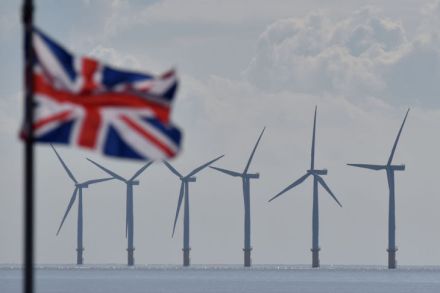
Britain will never be the ‘Saudi Arabia of wind’

From our UK edition

If you thought that Net Zero couldn’t get any sillier, it just has. Remember how, according to Boris Johnson, Britain was going to become the ‘Saudi Arabia of wind’, exporting massive amounts of abundant power? Actually, we are importing record amounts of electricity: a net 330 terawatt-hours’ worth in 2024, equivalent to over 10 per cent of that consumed in Britain in 2024. This comes via subsea cables from France, the Netherlands, Belgium and Norway. UK households are also subsidising energy consumers abroad But, as the energy company Octopus pointed out before a House of Lords committee on Tuesday, even when we do export electricity we are often doing so at a loss, with UK households effectively subsidising their counterparts in France and other countries.

Will the Hinkley C nuclear power station ever open?

From our UK edition

It was 20 years ago last month that the then Prime Minister Tony Blair announced that nuclear power was “back on agenda with a vengeance”. His white paper proposed to generate 40 per cent of Britain’s electricity in this way, double the proportion then made up by nuclear. It was on the advice of the then Chief Scientific Adviser, David King, who saw nuclear power as a big part of the battle against climate change. The company has already spent £700 million on measures to reduce its impact on wildlife, including a ‘fish disco’ Two decades on, an alternative scenario is beginning to look more and more likely: that Britain will have to spend a few years, at least, with zero nuclear power.

How Labour ruined the labour market

From our UK edition

So, is an open labour market a good thing or not? There is little point in looking to the government for guidance on this. A few weeks ago, ministers were praising themselves for having reduced migration – legal migration, that is, not the illegal kind, which continues to grow. The government – or rather Rishi Sunak’s government, which introduced the rules now taking effect – has achieved this partly by making it difficult and expensive for employers to offer jobs to foreign workers. Salary thresholds have been increased. Costs and bureaucracy have been loaded onto the process. It can cost thousands of pounds to obtain a work visa. In April, a Skilled Worker Visa was increased in price by £75 to £1,235; a Global Business Mobility visa has been put up £114 to £1,865.

Andy Burnham is doing himself no favours with the bond markets

From our UK edition

If we have learned anything from the Makerfield by-election campaign it is what a slippery character Andy Burnham is. Last September, in an interview with the New Statesman, you may remember, he said that 'We've got to get beyond this thing of being in hock to the bond markets.' The bond markets themselves responded immediately by reminding Burnham that governments spite them at their peril. Yields rose sharply as investors, who were already taking Burnham seriously as a potential prime minister, feared that a government under his control would borrow recklessly and lose control of public finances.     And now? Burnham claims that it was all a horrible mistake; he was misunderstood.

If only Peter Mandelson were still in government

From our UK edition

The Mandelson files have produced a truly damning revelation about Keir Starmer's government. But it is one which will be of little interest to many people because it doesn't reflect badly on Lord Mandelson. On the contrary, it shows why we would be a lot better off if the Labour party had more people who occupy the same centre political ground that he does. The revelation comes in the form of a WhatsApp exchange between Mandelson and Pat McFadden in which the latter opines: Every meeting I have is 'Who can we tax in order to pay benefits to others?'. They're asking the wrong questions. McFadden is the Work and Pensions Secretary. That he thinks Labour is being far too generous on benefits and too gungho on taxes is truly seismic.

Did ‘neoliberalism’ really wreck Britain?

From our UK edition

Andy Burnham thinks Tony Blair is missing something, and he is being too polite to say it is a few screws. He thinks that the former prime minister's essay published on Wednesday morning fails to take account of the declining living standards that many people have experienced since the financial crisis of 2008/09. It is this frustration, he says, which is driving anger on the streets of Makerfield and elsewhere, and you can't win an election unless you understand that. Burnham asserts that Britain has been on the wrong, neoliberal path for the past 40 years; a period which of course includes Blair’s own time in office. But Burnham himself appears to be missing something, too.