Spectator Briefings
Sponsored content
Sponsored content
More than a dram: the Hebridean island rethinking whisky cask ownership
On the Isle of Raasay, a different approach to whisky cask ownership is taking shape, rooted in island life, craftsmanship and the pleasure of watching something mature over time. Some occasions call for something out of the ordinary. A milestone birthday, a wedding, the arrival of a new generation. On the Isle of Raasay, there’s a rather special way to mark them: owning your own cask of single malt Scotch whisky and becoming part of the island’s story. Whisky cask ownership is often talked about in terms of investment and potential returns, but Isle of Raasay Distillery has a different take. It’s about creating something personal, enjoying the experience and getting to know the place and people behind your whisky.

Britain’s new wave
How long would it take to copy your local coffee shop? A fortnight? An espresso machine, some distressed furniture and a barista who can explain the moral superiority of oat milk. Now try copying Burberry. The factories, products and distribution network might take £1 billion and seven years to replicate. Its heritage could take 30 years, £30 billion in marketing and the strategic marriage of one’s daughter into a celebrity dynasty. Tricky. At Kernow, we look at businesses and ask a simple question: how would we copy them? The market is full of rabbit holes. Most contain rabbits. Some companies take weeks to replicate. Others would take a lifetime. Occasionally, we cannot even work out what the business does. Those are often the ones we bet against.

A rather beautiful view
As a child, I would disappear down to the beach in Cornwall and spend hours investigating rock pools. From above they looked empty. Get down on your knees and suddenly there were fish, crabs and entire worlds. The UK stock market is rather like that. The ice cream in Cornwall was pretty good too. Years later, I met Edward Hugo. Smart, relentless and the sort of man you trust. He was waiting in a coffee shop. The rain was biblical. London was miserable. And yet, I had spent years dreaming about this moment. Now I just needed Ed to say yes. In 2019, we founded Kernow. A contrarian investment manager specialising exclusively in UK equities. The timing was terrible. Everyone seemed to agree about Britain. Unloved.

Penhaligon’s: perfumes that tell timeless stories
A seemingly respectable patriarch hiding ‘brandy-soaked secrets’. His alluring wife, ‘dangerously charming’ on the outside while plotting revenge on the inside. A handsome young Duke who sets hearts aflutter, and a captivating, anything-but-innocent Duchess. Add the rebellious, rule-breaking Constance, a newly arrived Baroness who’s long been pulling the strings behind the scenes, and Mr Thompson, the butler who sees everything, and you’ve got an aristocratic cast of characters as mesmerising as any created by any Victorian playwright or modern TV scriptwriter. But look closely and you’ll find one among their number whose story is perhaps even more captivating than fiction.

We still can’t agree how big Britain’s illegal tobacco problem is
Britain has an illegal tobacco problem. Our research found that 31 per cent of adults say they have been offered illegal tobacco, 85 per cent have heard of it and 82 per cent think not enough is being done to stop it.[1] Nicky Small, Corporate Affairs and Communications Director, JTI UK In the UK, legal duty-paid tobacco volumes have fallen by 52 per cent since 2021, on HMRC’s own figures[2]. Smoking rates have fallen too, but far more slowly. As shown in the Smoking Toolkit Study, tobacco smoking prevalence fell from 16.9 per cent in 2021 to 14.9 per cent in 2026, representing a 2 percentage point reduction, or an 11.8 per cent relative decline over the period.

Croatia. I hear it’s beautiful
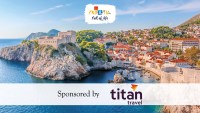
Titan Travel has been creating travel adventures for almost 50 years and its Croatia tours are designed to show you the best of this remarkable country. When it comes to the cities you’re spoilt for choice. Explore Zadar, home to a host of excellent museums and galleries. Along with Roman ruins and the historic Sea Gate, the town has a flight of stark white steps descending into the sea. These are perforated, creating a so-called ‘sea organ’ which seems to sigh and whistle with the motion of the waves. Or tour Diocletian’s Palace, an incredible palace built at the turn of the 4th century, which sprawls across the historic heart of Split.

Individual journeys, extraordinary futures
Clayesmore possesses a quiet magic – a rare combination of warmth, ambition and opportunity that empowers every child to flourish. At its heart is a deep belief that every child should have the confidence and freedom to discover their own path. Academic ambition sits alongside creative, sporting and personal excellence, with opportunities such as Clayesmore’s unique LEX programme, Model United Nations, Young Enterprise and the Duke of Edinburgh Award developing character, leadership and resilience. Here, pupils are encouraged to explore widely, challenge themselves and discover talents they never knew they had.

Where ambition has no glass ceiling
For nearly 300 years, James Allen’s Girls’ School (JAGS) has been a pioneering force in girls’ education, empowering generations of students to thrive through a forward-thinking approach to learning, opportunity and access. While renowned as London’s oldest independent girls’ school, JAGS continues to look firmly to the future. What began in 1741 in the back room of a Dulwich pub has grown into one of the country’s leading schools, while remaining true to James Allen’s original mission to challenge inequality and expand opportunity. The enduring value of outstanding girls’ schools remains clear The decision to educate girls was a radical one in its day; three centuries later, that spirit continues to shape the school.

Recovering a sense of purpose
The independent school world is changing at pace. Hardly a week passes without news of another closure or merger. The narrative is unrelentingly negative: we blame a hostile government, take defensive action and hope it will all work out, without really believing it will. Managed decline. John Moule There is another way. We should look to ourselves and tell a better story. Practically, we must seize the opportunities that come with challenge and be confident about what we can achieve. Fundamentally, we must remind ourselves what charitable independent education has been — and should be — about. We are assailed by taxation and regulation.

Natural England shouldn’t be above the law
A High Court ruling has found that conditions imposed by Natural England (NE) on game shoots were ‘irrational’ and ‘misinterpreting the scope of their powers’. The British Association for Shooting and Conservation (BASC) brought the case, arguing that approach had created significant uncertainty for shoots – even forcing some to close. Handing down judgment at the Royal Courts of Justice, the Court found NE had acted unlawfully by adopting an interpretation of ‘release’ that exceeded the meaning of the legislation enacted by Parliament. The Court ruled that NE cannot impose conditions preventing the keeping of gamebirds on site prior to release.
How to watch the World Cup with ExpressVPN
For football fans keen to soak up the atmosphere of the 2026 Fifa World Cup, it’s hard to beat being there. But if travelling to the US, Canada and Mexico is off the cards, there’s a trick to help you get the next best thing at home. With ExpressVPN – an official supporter of the Fifa World Cup – you can watch local coverage of the tournament from anywhere in the world, without leaving the UK. Enjoy America’s commentators, Canada’s half-time discussions or Mexico’s post-match analysis, with no flights, tickets or sky-high hotel bills to deal with. Most broadcast and streaming services are geo-blocked, meaning they can only be accessed from specific locations.

Ettinger’s guide to packing the essentials
A long weekend is a peculiarly British art form: just enough time to escape, but not quite long enough to justify overpacking. The seasoned traveller knows that restraint, paired with the right accessories, is the key to arriving both prepared and unburdened. The secret lies not in how much you bring, but in how well you choose it. Start, as ever, with the bag. A proper weekend holdall sets the tone, and few do it better than the Ettinger Cotswold Weekend Bag. Crafted with a reassuring solidity and understated elegance, it encourages discipline. Its capacity is generous without being cavernous, which is precisely the point — it gently insists that you edit your wardrobe to the essentials.

Join KYN at their exclusive London events
For those seeking something beyond the conventional, KYN offers a transformative approach to post-surgery care and later-life living. With residences that feel like private homes, and a philosophy rooted in dignity, autonomy and warmth, KYN sets a new benchmark in care. KYN’s pioneering approach to care is built on a foundation of clinical excellence, holistic wellbeing and advanced nutrition. This is elevated through a life enrichment and wellbeing programme, innovative technology and beautiful, homely interiors delivered with unobtrusive hospitality. Spectator readers are invited to attend one of KYN’s refined and informative specialist events this summer.
Building the future, grounded in the past
While Sherborne Schools have thrived in our honey-coloured buildings for 1,300 years, we have always felt slightly ahead of the curve, happily steering away from any short-term, educational fads. We have educated tens of thousands of forward-thinking pupils, from actors, generals and musicians, to scientists, business leaders and global figures, male and female. But we are especially proud this year to be celebrating the 100th anniversary of the arrival at Sherborne of Alan Turing, who, thanks to his pioneering work in computing, did as much as anyone to influence the world in which we live. To honour him and to further Sherborne Schools Group’s reputation as a first mover in education, we are launching an initiative in Turing’s name to nurture the next generation of technologists.


How a family-owned tailor created fashion’s most famous street
As Henry Poole & Co celebrates its 220th anniversary, we reflect on the people, patronage and craftsmanship that have shaped our house since 1806. James Poole was born in Shropshire, around 1782. In January 1806, he arrived in London at a moment of national mourning. The funeral of Horatio Nelson had just taken place, and the capital was filled with the splendour of naval and military dress. Establishing himself in Everett Street behind Bloomsbury Square as a linen and mantua draper, he quickly turned his attention to military uniforms. The exquisite quality of his work brought him to prominence, and he became known for producing finely cut, regulation-perfect uniforms at a time when precision and presentation were paramount. Henry Poole & Co.

We’re delivering a smoke-free future, today
At Philip Morris International, our mission is clear: To reduce smoking by replacing cigarettes with better smoke-free alternatives for legal-age consumers. Learn more at PMI.

Digital IDs and how ExpressVPN can protect your privacy online
Britain is gearing up for the age of the digital ID. While the government recently backtracked on plans to make digital ID mandatory for everyone working in the UK, the £1.8 billion scheme hasn’t gone away: planning is ongoing for a ‘voluntary’ programme to be rolled out by 2029, with a public consultation expected to take place this year. The government claims that ‘digital identity systems can offer efficiency, fraud reduction and privacy protection’. But critics have warned that they come with significant risks, including data breaches, surveillance, user profiling and function creep (where a ‘voluntary’ digital ID becomes compulsory in more scenarios than expected).
Latest from Coffee House
‘Live by the vibes, die by the vibes’ – Burnham’s first rebellion
10 min listen
Andy Burnham is facing his first rebellion as Prime Minister, with almost 100 Labour MPs urging him to block drilling at the Rosebank oil field. With energy bills set to rise and the Treasury banking on the revenues from Rosebank, can Burnham afford to appease his backbenchers? And is this the first real test of his political leadership? Oscar Edmondson speaks to Tim Shipman and James Heale about the rebellion, the limits of governing by vibes and what we can expect from Burnham’s much-anticipated ten-year plan.

Is Healey’s banking profits tax about to backfire?
In his first Budget, an extra levy on the banks may have seemed like a clever wheeze to Chancellor John Healey. It would punish the greedy bankers with their lavish bonuses. It would make the economy fairer. And perhaps most of all, it would raise an extra £1.5 billion to keep the spending juggernaut going. But there is one thing it seems that Healey did not anticipate: that it looks like this levy could be about to be passed on to consumers – at the worst possible time. In a Budget that was otherwise mercifully free of major tax rises, Healey did impose one significant increase. The corporation tax surcharge on the banks was doubled from 3 per cent to 6 per cent.

The National Trust is desecrating Britain’s great houses
If ever you wanted an example of how the National Trust appears to be run by history-hating fools, take a visit this Christmas to Hughenden Manor in Buckinghamshire. When, oh when, will they go back to this noble, obvious mission – that originally guided them for decades? This late 18th-century gem, refashioned in the 19th century, was home to possibly the greatest Conservative prime minister of all, Benjamin Disraeli. Extraordinarily, the house remains as a time capsule to Dizzy’s time there – and he’s buried in the neighbouring church. Well, it did remain a time capsule, until the latest moronic makeover by the Trust, who now own the house and estate.

Rubio and the NeverVance coalition
The sort of people who supported Nikki Haley in the 2024 Republican primaries are eager to pit one Trump administration cabinet member against another in 2028. The nominee they want next time is Secretary of State Marco Rubio, but they love him much less than they hate J.D. Vance. What was once a NeverTrump movement is now NeverVance. The Secretary of State is more pro-war than Vance, given what each has said about the Iran conflict The movement consists of three elements. The first is the neo-neoconservatives: warhawks with no plausible plan to win in Iran, or anywhere else, but a burning desire to fight anyway. Bonded with them in a Frankenstein-like fusion are those libertarians who care more about open borders and free trade than ending, or not starting, foreign wars.

The toxic mess of Scotland’s NHS
If you think public services are sometimes badly run in England, it’s occasionally worth looking north to Scotland, where public services seem to be pretty much always badly run. Scotland’s NHS is no exception. Yesterday, the country’s chief medical officer, Gregor Smith, resigned from his post because he did not ‘currently enjoy the good mental health necessary’ to continue in the job. Covid and its aftermath, he said, had ‘taken its toll’. Just 24 hours before, he had been questioned by a Holyrood committee. Smith has been under pressure after a surgeon from NHS Grampian, Dr Mohammed Habib, called for a corporate homicide probe into his health board.

Marine Le Pen feels under threat
It’s been a difficult week for Marine Le Pen. Two opinion polls found that she has dropped a couple of percentage points, and that was before a series of minor scandals rocked her National Rally party. She remains the frontrunner in the presidential polls but picking up the pace behind her is David Lisnard, the man I described last month as the closest the French have to a Tory. This week, the conservative Le Figaro went even further, hailing Lisnard as “Thatcher in a suit.” He probably liked that description, as did many of his growing number of supporters, social conservatives and economic liberals who are terrified at the prospect of a second round run off between Le Pen and the far-left's Jean-Luc Melenchon; when it comes to economics, they’re as left-wing as each other.