Max Jeffery

Max Jeffery

Max Jeffery is The Spectator’s writer-at-large.

People loved Russell Brand because he was so vile

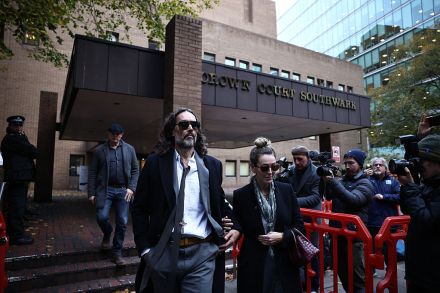
Russell Brand was sentenced in Southwark Crown Court yesterday to the sound of laughter and the smell of strawberry vapour. Not in Courtroom 1, of course, where the actual proceedings were happening soberly among lawyers, credentialed journalists, Brand, his family and victims, but in Courtroom 16, where the unwelcome public were kettled and watching him on television. The man who sat to my right wolf-whistled when Mr Justice Bennathan called Brand ‘a sexual predator’, sniggered when he detailed the rape Brand committed, and toked an e-cigarette throughout the remarks. He even recorded bits of the sentencing on his phone, before eventually being dragged out of the room by security.
Harry Cole, Max Jeffery, Lisa Haseldine, Lord Sumption & Nicholas Lezard

From our UK edition

20 min listen

On this week’s Spectator Out Loud: Harry Cole traverses America during the US midterms; Max Jeffery dissects the problems caused by the early release scheme; Lisa Haseldine explains how to cope with ruinous hen dos; and Jonathan Sumption and Nick Lezard talk through their favourite books of the year.   Produced and presented by Abigail Brierley.

Harry Cole, Max Jeffery, Lisa Haseldine, Lord Sumption & Nicholas Lezard

The prison early release scheme is already a disaster

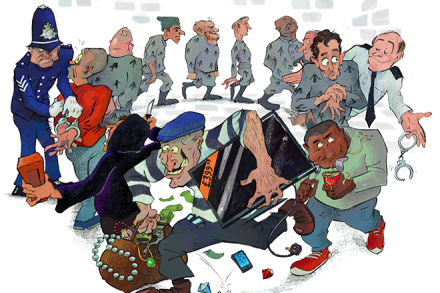
Four days after he was released from HMP Wandsworth, Michael Bogle was back inside. The 38-year-old had served 11 of 32 weeks in prison for stealing before he was freed last month via the government’s early release scheme. He strolled out of jail, told reporters he would ‘hopefully not’ shoplift again, then stole from a Sainsbury’s a few hours later. The early release scheme was meant to increase prison capacity. But it isn’t working. Since it began two years ago, 80,000 people have been freed, yet there are just 1,000 extra prison spaces. Last week, the Ministry of Justice revealed that more offenders were recalled to jail in the first half of this year (25,531) than were let out (25,255).

Nick Love, brute of British cinema, on the beauty of crime

From our UK edition

Nick Love makes irresponsible films – that’s what people say. When he did The Football Factory in 2004, the BBC said that Love had ‘glamourised’ hooliganism, the Guardian that he’d ‘legitimised’ football violence. There were correct ways to make films about depravity – keep it bleak, puerile, disapproving. Love did not agree. After The Football Factory he made The Business, a happy-ender about a drug boss on the Costa del Sol, and following that, Outlaw, which argued that an AK-47 delivered better justice than the Crown Prosecution Service. Two decades on and this brute of British cinema suddenly finds himself in vogue. Love is receiving praise for the sensitivity of his upcoming film, Animol. He wrote the screenplay and Ashley Walters from Adolescence directed it.

Alastair Campbell would like your attention

From our UK edition

Please, one last indulgence, implored Alastair Campbell. The previous two hours had been bad enough, sitting through Campbell being ‘interviewed’ by former Today host Mishal Husain about his godawful new self-help book. And the hours before had also been painful, trying to read that book, Persevilience, which is somehow both superficial and incomprehensible. Yet, as the launch event inched to a close, Tony Blair’s old spin doctor wanted still more attention. In fact, no, he wanted more than still more attention. He wanted to masturbate. Would you mind, he asked, standing in front of a giant projection of his own face, if I played ‘Ode to Joy’ on the bagpipes? It was precisely 9:34 p.m.

Danny Kruger: ‘Reform are not revolutionary. We are trying to restore’

From our UK edition

In swoops Danny Kruger. He is a late replacement for Zia Yusuf, who has pulled out due to diary commitments, but he is received in the Spectator lounge at Reform’s conference in Birmingham like he was always on the billing. The room is full. The man who wrote David Cameron’s ‘hug a hoodie’ speech and served as Boris Johnson’s political secretary is accepted by Reformers. No Conservative gambled as much as Kruger in leaving the party. He was the first proper Tory (one whose career was on the up) to switch sides. Reform members appreciate that. It is almost a year since Kruger left the Conservative party, and he has spent the last 12 months making preparations for what Reform will do in power. Michael Gove begins a live recording of the Quite Right!

Oldham’s fight to get its own Eton

From our UK edition

What is Eton? OK, fine, a school. What else? To some, it is a refuge. Prince William said he felt like ‘just another student’ there. To others, it is a chore. Ian Fleming left a year early, removed over an illicit dalliance with a woman. To a few people, some more fictional than others, Eton means everything. Captain Hook’s last words were ‘Floreat Etona’, ‘May Eton flourish’, the school’s motto. And in many, it provokes envy. Etonians are ‘completely detached, deliberately detached’ from reality, LBC’s James O’Brien said recently. He only went to Ampleforth. Eton has long been defined by other people: by its alumni and their reputations, and by its critics. Now the school wants to tell its own story.

William T. Vollmann: bard of the American empire

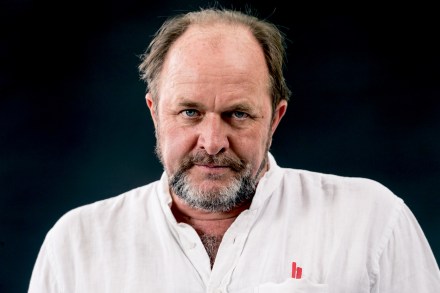
William T. Vollmann’s subject is 9/11. Always is, always was. Even before the attacks happened, they were somehow his thing. An Afghanistan Picture Show, Vollmann’s debut, was advertised as a Cold War memoir of a 22-year-old’s adventure battling the Soviets with the mujahideen. But it was really an inadvertent introduction to people and a place that were destined to become the enemies of America. Vollmann has spent his career writing around that day in 2001 – the first and main event of the 21st century – dissecting with retractor and forceps the American empire built before 9/11 and the country that the attacks created. Now, in his new novel, Vollmann faces the subject straight on. “A Table for Fortune is about September eleventh,” he writes to the reader at the start.

Send the emergency alert to Whitehall

From our UK edition

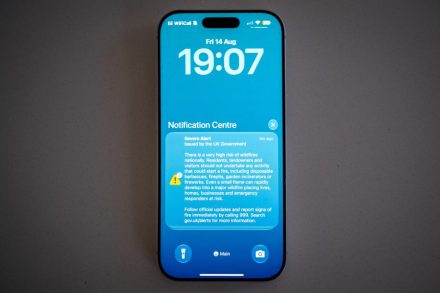
In Great Missenden we were affixing the last details to our Friday Effigy when the alert came. It’s a new tradition we villagers have started – weekly, ritualistic burnings of the Guilty Men of ‘High Speed Rail 2’, the groundwork for which has recently begun blighting our pretty green hills. This Friday, a big dolly of former transport secretary Andrew Adonis was going to be torched. We’ve done Andrew a few times, and he always pulls a crowd. His resemblance would be staked over a bonfire in Buryfields Park. There would be fireworks and food served al fresco to the mobbers, cooked on disposable barbecues which we would frequently leave unattended. The ‘Severe Alert’ killed our plans.

Starmer’s Britain is ineffectual and sinister

From our UK edition

The phrase ‘Starmer’s Britain’ was first articulated three years before he got power. At 6:28 p.m. on 9 May 2021, a figure named ‘scrambled egg localist [rose emoji] [Union Jack emoji] [stars emoji]’ tweeted: ‘In Starmer’s Britain there will be no rich people or trains, leopard print will be abolished, and every woman will be pregnant and barefoot’. Recent events had shown Starmer at his most gormless. On 6 May, Labour was mauled by the Conservatives in the Hartlepool by-election, and on 9 May, Starmer tried to respond. He replaced ‘Anneliese Dodds’ with ‘Rachel Reeves’ as shadow chancellor, and attempted to sack Angela Rayner (wearer of the leopard print) but ended up making her ‘shadow first secretary of state’.

Gen Z’s surprising nostalgia for the old high street

From our UK edition

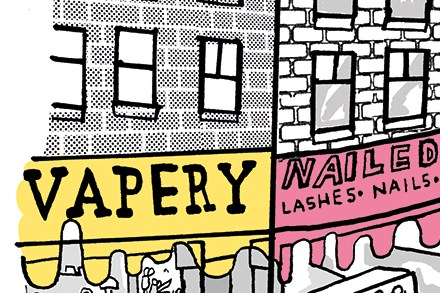
Dave and Lynne are remembering the good old days when kids had their baths in galvanised tubs in front of the fire. ‘No inhibition,’ says Dave. ‘Straight with your clothes off. Straight in there. Mum’ll throw a bucket of water over you. Wash yourself. Another bucket of water.’ Dave manages the E. Langston hardware shop, but it isn’t a real business. Not anymore. Some years ago, its premises were transposed from Piper’s Row in Wolverhampton to the Black Country Living Museum. Its life is happier here. There’s not much left on Piper’s Row today: an off licence, a bus stop, a cheap hotel. The Black Country Living Museum was founded in 1978 to teach people about life during the Industrial Revolution.

Max Jeffery, Gavin Mortimer, James Delingpole, Aidan Hartley & Angus Colwell

From our UK edition

28 min listen

On this week’s Spectator Out Loud: Max Jeffery explains the truth about how the British Empire is taught in schools; Gavin Mortimer asks why Giorgia Meloni is courting Emmanuel Macron; James Delingpole reviews the World Cup; after 25 years, Aidan Hartley bows out as the Spectator’s Wild life columnist; and finally, the Spectator’s new restaurant critic Angus Colwell ponders how much discount you should get, if your father almost chokes to death on a lamb kleftiko. Produced and presented by Patrick Gibbons.

Max Jeffery, Gavin Mortimer, James Delingpole, Aidan Hartley & Angus Colwell

The truth about how the British Empire is taught in schools

From our UK edition

William Dalrymple says that children ‘don’t learn’ about the British Empire at school. It is an ‘elephant in the room’, he claimed on the Green party leader Zack Polanski’s Bold Politics podcast last week. This isn’t true. I learnt about the Empire at school. Studying A-level history a decade ago, we spent a year covering the Raj. The Indian Mutiny, 1857. The Amritsar Massacre, 1919. On viciously cold mornings, my teacher, Ms Pearmain, would open the windows and say that boys’ brains were slowed by comfort. It kept her lessons in my head. It would have taken Dalrymple a few seconds to do some research and realise his error. In schools which follow the national curriculum, lessons about the British Empire are prescribed by the government.

The lesson of Belfast’s riots

From our UK edition

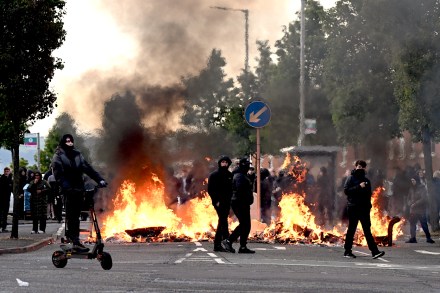
On Ardoyne Road on Wednesday afternoon, the original conflict resumed. Two loyalists passed a couple of nationalists, and they exchanged hostilities. ‘Go on then, come here and do something!’ said one of the nationalist kids. The young loyalists – recognisable in black tracksuits and balaclavas – continued up the hill as a third nationalist wheelied past them on a motorbike. On Tuesday, the first night of the disorder in Belfast, Ardoyne seemed to be taken by a providential Christian comradeship. In one of the city’s harshest ‘interface areas’, Catholics and Protestants came together in protest against the knife attack on Stephen Ogilvie. Less than 24 hours later, however, things had returned to normal. Night one of rioting was won by the most extreme participants.

Why don’t you agree with William Dalrymple?

From our UK edition

‘In Xanadu records the impressions, prejudices and enthusiasms of a very young, naive and deeply Anglocentric undergraduate,’ William Dalrymple confesses in the Folio Society’s 25-year anniversary edition of his 1989 debut. Xanadu retraces Marco Polo’s journey from Jerusalem to China. The author, an Ampleforth and Cambridge educated 21-year-old, pretends he is Robert Byron. In 2015, books like this needed apologetic preambles. Dalrymple couldn’t let anyone think he sympathised with this younger, lesser man.  No, modern Willie is an enlightened guy. Yesterday, he was in a London Bridge theatre addressing a conference of the Britain Palestine Project. He is its new patron. Dalrymple is a latecomer to the Palestinian cause, but is now going for it with fervour.

My day with the Schöffels of Badminton

From our UK edition

The first arrest of the weekend at Badminton Horse Trials occurred at 7.17 p.m. on Saturday. Fight, separation, removal, detention, escape, capture, arrest. Things had accelerated in the preceding hours on the Duke of Beaufort’s estate. With the day’s eventing over, there was nothing to punctuate the drinking and the drugs. Attendees gathered at Lakeside – an enclosed boozing zone on the grassy, tented banks of a 600-foot-long pond – and consumed until nightfall. ‘Badminton is the best event of the year,’ said Ollie, a late-teen boy familiarising himself with the attractions. ‘Fanny, beer, horses – what else do you want?

The new age of transgender rage

It’s a year since the Supreme Court ruled that gender means biological sex – and not much has changed. The Equality and Human Rights Commission (EHRC), which is advising the government on how to apply the judgment to law, has spent a long while drafting guidance. But last week, word arrived that Bridget Phillipson, the women and equalities minister, wants the EHRC to ‘tone down’ its advice, leading to further delays. Why the hold-up? My guess is that it has something to do with a new era we are entering. An era of ‘TRANS RAGE’. That’s not my expression. It’s from Bash Back, a recently formed anonymous collective going after people and organisations it believes frustrate the transgender experience.

Apart from Mandelson, who is Labour’s biggest freebie lover?

From our UK edition

Keir Starmer is Labour’s king of freebies. He promised to clean up politics, but has accepted more free stuff than all his party’s leaders since 1997 combined: more than £100,000 in tickets, accommodation and clothing. In 2024, the Prime Minister said it was ‘right to repay’ the cost of some freebies, and stumped up for six Taylor Swift tickets, four tickets to the races and some clothes for his wife (total value: £6,000). Where Starmer has led, his MPs have followed – including those who now might hope to succeed him. Eleven other Labour MPs (and Ed Davey) accepted Taylor Swift tickets courtesy of football clubs and music companies. Seven cabinet members took money from Lord Alli. Few have not watched a football match from complimentary box seats.

A day with Bristol’s van dwellers

From our UK edition

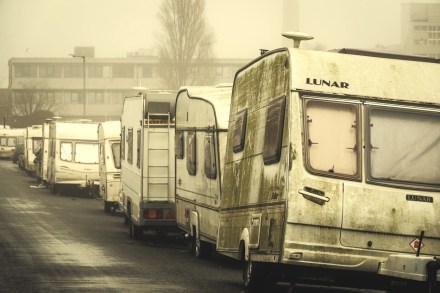
Four weeks since a caravan was torched on Goodneston Road in north-east Bristol, and still no one has bothered to clear the debris. The black carcass of the caravan remains, dressed with yellow tape reading ‘CRIME SCENE DO NOT CROSS’ and sitting among expired syringes, used laughing gas canisters, a shopping trolley of indiscriminate electrics, and unmarked bottles of off-coloured liquids. The caravans settled on this street some time ago. They brought drugs and left faeces on the pavement and made many local people unhappy. Police think the fire was started deliberately. By luck, nobody died. In Bristol, caravans are everywhere. They squat on residential roads and outside parks and under bridges and right in the city centre.