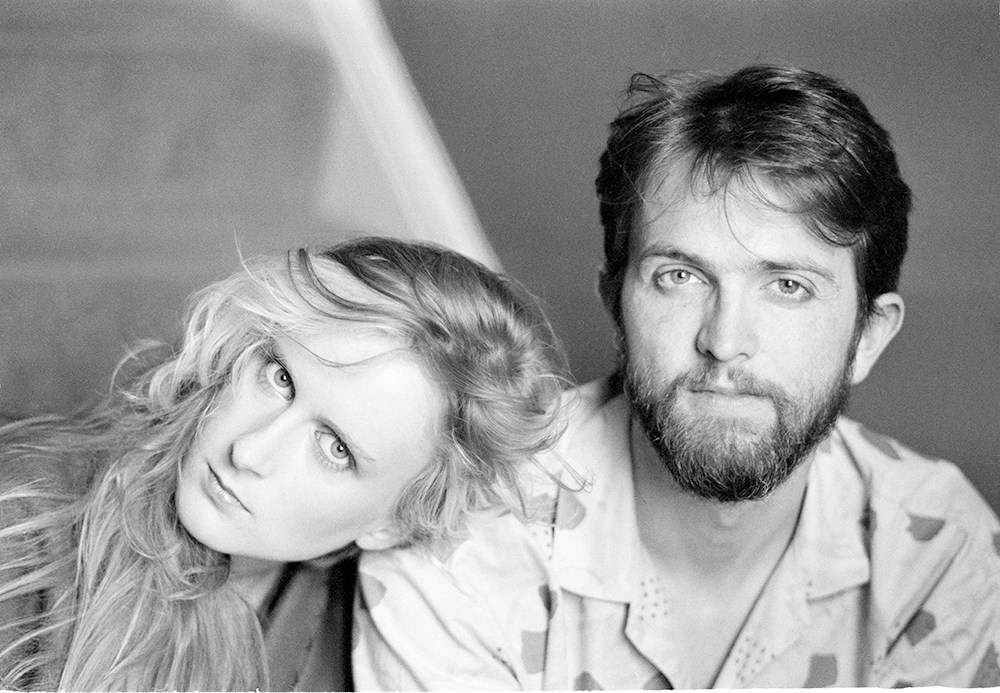
‘One for the heads’ is the phrase that traditionally covers the more outré elements of a band’s career: the outtakes, the triple live album or the B-sides collection designed to appeal to those who have already wrung every drop of pleasure from the main catalogue. The expression also covers a genre of music writing that Nige Tassell is increasingly making his own.
In his previous music book, Searching for Dexys Midnight Runners (2024), Tassell set out to interview every musician who had ever been part of that band, however briefly or tendentiously. It wasn’t a unique approach. Back in 2008, Dave Simpson’s The Fallen attempted the even larger project of tracking down everyone who had ever been in the Fall, up to and including the stand-in drummer who played one 45-minute set with them in the John Peel tent at the 1999 Reading Festival. (Step forward Nick Dewey.) Tassell’s Dexys book wasn’t without its pluses, but its main flaw (and to be fair, one the author made no secret of) was that the key player in the story – Dexys main man Kevin Rowlands – was absent. What you inevitably ended up with was a sense of Hamlet without the Prince. And so it goes with Truly Gifted Kids, written without the cooperation of Prefab Sprout’s reclusive singer-songwriter-guitarist Paddy McAloon.

In his introduction, Tassell references Joan Didion’s White Album and states that his book will not be a ‘traditional biography’ of Prefab Sprout – that it will not ‘totter along to the usual, expected rhythm’, but rather be ‘patchwork’, a ‘collage’ and ‘impressionistic’. Of course, few of us are Didion. And the raw material for the White Album was the 1960s itself: revolution and alienation and Charles Manson. Tassell’s material is a little more prosaic: the fragmentary lore of a much loved but minor rock band’s career and afterlife.
So what the reader gets is a series of vignettes, as the author tracks down significant locations, objects and players in the Prefab Sprout story. Or he tries to, at any rate. An attempt to find the actual Triumph motorcycle which the band straddled on the cover of 1985’s Steve McQueen album putters out. Similarly, Tassell’s efforts to enter Room 551 in Kensington’s Royal Garden Hotel – the room where, in 1999, McAloon recorded Yvonne Connors, a friend of his wife, performing the spoken word element for his own ‘for the heads’ project, I Trawl the Megahertz – also seem doomed. But at the last moment, in a scene that’s a little bit The Bourne Identity by way of Mr Bean, Tassell manages to give a cleaner the slip and get into the suite in question. However, the success is short- lived. In the next paragraph we’re told:
Later that afternoon I learn that the Royal Garden Hotel has had two major renovations since Paddy and Yvonne’s assignation. It turns out there’s a very strong chance that what was Room 551 in 1999 is not, 25 years later, actually Room 551 at all.
It is difficult not to imagine the voice-over here in full Alan Partridge. But this is cruel. For there is pleasure enough in the book for the diehard Prefab Sprout fan as Tassell pootles down the B-roads of the band’s career or roots around in the attics and dusty drawers of their sidelines. And there are genuine journalistic ‘gets’, such as an at-home interview with Muff Winwood, the CBS A&R executive who signed Prefab Sprout to the label in September 1983, just as the Clash, Winwood’s other big UK success story, was beginning to fall apart.
Winwood is revealing on McAloon’s desire to have hits: ‘Paddy understood straight away. “Do you want me to make this song a bit shorter? Do you want the chorus to come a bit earlier?” He was open to the understanding of what a single meant.’
Winwood is touching, too, on his 1980s trips up to McAloon’s home in County Durham: ‘It was wonderful – going up there to listen to his stuff in his little room. I used to love that. There was always some catastrophe going on in my life with one act or another, so the next day I’d get on the train and go and see Paddy.’
For those who have a burning desire to hear stories like these, or to be taken on a guided tour of the band’s early homes and schools, there’s plenty to be getting on with here. But it is very much one for the heads. Or, to put it in Prefab Sprout terms, it’s all rather more I Trawl the Megahertz than From Langley Park to Memphis – a description you can imagine the author taking some pride in.




Comments