Monica Porter

Monica Porter is a journalist and author. Her latest book is A History of Europe in 12 Cafes.

The secret of Hungary’s genius

From our UK edition

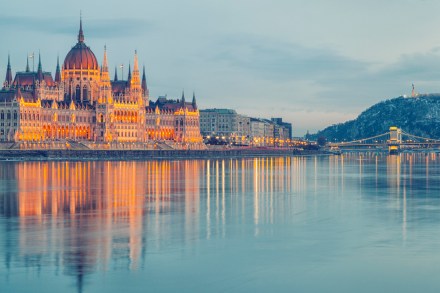
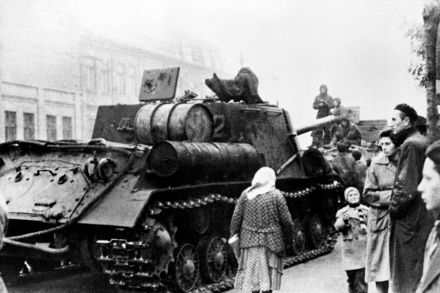
Hungary, the country of my birth, takes a lot of flak these days – and with good reason. How nauseating that the nation which suffered Soviet oppression for nearly half a century – and whose 1956 Revolution was so savagely crushed by the Soviet army – now cosies up to a Russian president who reveres Stalin and bemoans the dissolution of the USSR. The maverick Hungarian prime minister, Viktor Orbán, once his country’s outspoken champion of freedom, is emphatically not on the side of Ukraine in its existential fight against Vladimir Putin’s invasion.

The generosity and graciousness of Jilly Cooper

From our UK edition

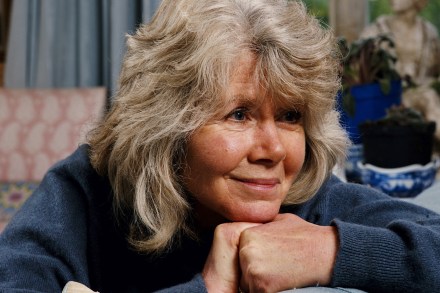
Over many years as a journalist, writing for newspapers as well as authoring books, I’ve dealt with a sizeable number of celebs. And believe me, the majority are not exactly likeable. Well, no doubt their chums find them so, but their fame and money and ‘specialness’ tend to imbue them with haughtiness and self-importance, traits they bestow on those they regard as ‘the little people’. Their genial public personas are, I’ve often discovered, merely flimsy facades. The most shining exception to this general rule was Jilly Cooper, whose death at the age of 88 was just announced. I was deeply saddened to learn of it. We never met in person, and yet I feel I knew her well.

Will my neighbours please shut up?

From our UK edition

For the past decade I have suffered from noisy neighbours in the flat below mine. First it was the stream of student tenants, thundering up and down the communal staircase day and night, banging doors, shouting to each other, playing their guitars. Then at last the flat was bought by a middle-aged owner-occupier, who completely gutted and refurbished the place; the deafening noise and pervasive dust from the months-long building works was almost unbearable. Now that his works are over, I have to put up with the day-to-day clatter and clamour of a neighbour with a lot of Gen Z house guests and a penetrating voice. Noisy neighbours are a plague for those who work at home. Naturally, I find it most maddening when I am in the middle of writing a book or article.

Am I cursed when it comes to my pets?

From our UK edition

You could say my unfortunate track record with pets began in the cradle. At the time of my birth my Hungarian parents had a dachshund named Herr Doktor (because of the serious expression he always wore), or Doki for short. He was very put out by my arrival, as I received much of the attention previously afforded to him, and because my fastidious mother wouldn’t allow him into the nursery. So he upped sticks and moved in with the family next door. But as Doki was unfamiliar with the terrain there, one day he darted on to their driveway at the wrong moment and was run over and killed. While I obviously wasn’t to blame for Doki’s sad demise, I did play a role in it. And in time the incident seemed to fit into a pattern in my life.

I fear for New York

From our UK edition

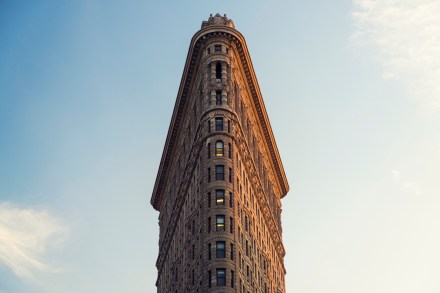
As a kid growing up in the Bronx and afterwards in the suburbs to the north, I loved New York. To me it was like the Emerald City in The Wizard of Oz – vast, glittering and full of promise. It was where my family settled after escaping the nightmare of communist dictatorship, in the aftermath of the crushed 1956 Hungarian revolution. It was where we found freedom, democracy – what they used to call the American Dream. In later life, after I had left America and come to London, I made occasional return visits to New York and noted the changes wrought by time – mostly for the worse. But my affection for it never wavered because it held so many fond memories.

The shadow of communism still looms over the Balkans

From our UK edition

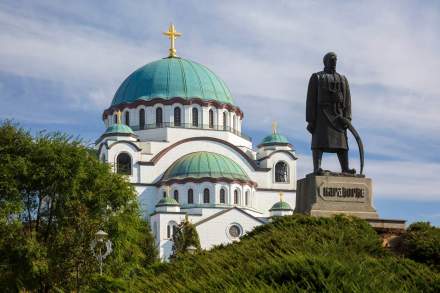
Our Serbian guide Zoran is a jovial fellow and as we rumble through the streets of Belgrade in our minibus he regales us with a joke about the difference between the various nationalities of the former Yugoslavia, all now with countries of their own. ‘We Serbs are rude,’ he says, ‘but the Croatians are self-centred, the Bosnians are thick, the Montenegrins are lazy and the Macedonians are just Serbs with a speech defect. As for the Slovenians, they are so polite they must be gay!’ Joking about each other is a definite improvement on fighting each other, as per so much of their history. The countries on my Balkan tour – Serbia, Romania and Bulgaria – have been struggling for more than three decades with their post-communist problems. But they do like a laugh.

The black cab is dying out. Good.

From our UK edition

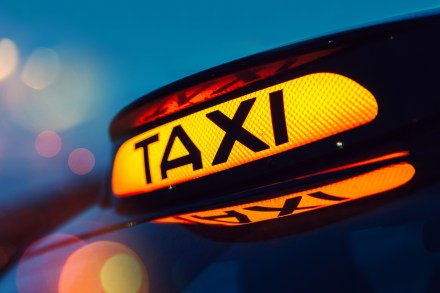
A recent study by the Centre for London thinktank claims that the city’s black cabs could disappear forever, unless something is done to reverse the decline. Thanks to Uber, the ubiquitous satnav which devalues the cabbies’ hard-earned Knowledge of London’s streets, and the Mayor’s anti-motorist measures, there are ever fewer black cabs rumbling around the capital. The number dropped from more than 23,000 in 2014 to just under 14,500 last year – down by a third. Only a hundred licences were handed out last year. At this rate, we are told, they will vanish altogether by 2045. Well, tough. I’ve been a Londoner for half a century and have had enough bad experiences with our black cabs to feel that their disappearance wouldn’t bother me a jot.

Elon Musk is wrong about Radio Free Europe

From our UK edition

The termination of US government funding for the two venerable radio stations Radio Free Europe (RFE) and Radio Liberty (RL) by Elon Musk’s Department of Government Efficiency (Doge) shows how blindly fanatical the Tesla owner's axe-wielding has become. Musk claims RFE/RL is run by ‘radical left crazy people talking to themselves while torching $1 billion a year of US taxpayer money’. But that is an ignorant distortion of the truth. For 75 years these beacons of open journalism have provided a lifeline for millions trapped inside dictatorial regimes – a necessary pro-democracy corrective to lies, propaganda and censorship.

What Labour can learn from the glory days of British Rail

From our UK edition

The Department for Transport has just launched an eight-week consultation to determine the shape of its much-vaunted Great British Railways – our renationalised railway system. Will it, I wonder, be anything like the earlier nationalised incarnation, British Rail (BR)? I do hope so. Because, although BR was disparaged for being old-fashioned and a bit creaky, inefficient and loss-making, I was very fond of those trains of yesteryear. John Major’s privatisation of the railways in the 1990s was meant to introduce competition, improve services and reduce costs. It didn’t work out that way though, did it? Trains today have never been so unreliable or so expensive. Not to mention overcrowded.

I’m a ruthless declutterer. It has cost me

From our UK edition

There are two types of people: the hoarders and those who are always chucking things out because they hate clutter. I fall into the latter category. In my view, a well-ordered environment makes for a well-ordered mind. So you’ll not see my desk buried beneath the usual office detritus, nor my car strewn with apple cores, empty crisp packets, and scrunched-up receipts. In moments of boredom, I enjoy going through a drawer or cupboard to weed out items no longer required. However, my long-standing urge to jettison useless stuff has led to trouble. One episode still haunts me. I was in the kitchen with my mother, who was cooking an elaborate meal.

Why Hungary owes a special debt to Jimmy Carter

From our UK edition

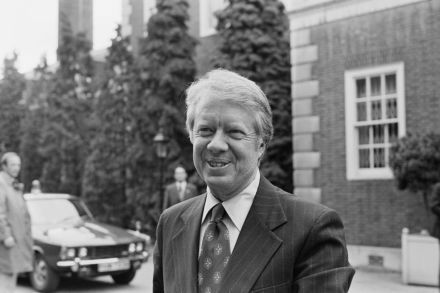
President Jimmy Carter, who died earlier this week, has been praised for his humanitarian instincts. Not for nothing did he receive the Nobel Peace Prize in 2002, long after his presidency, for his continuing work in promoting human rights around the world. But as a Hungarian-born writer, my warm feelings towards him will always be associated with one of his lesser-known acts of international diplomacy: the return to Hungary of its most valued symbol of Hungarian nationhood, the Crown of St Stephen. The golden jewel and enamel-encrusted crown, topped with its distinctive tilted cross, was crafted in the Byzantine capital of Constantinople. According to legend, Pope Sylvester II gifted it to the devout Christian, Stephen I, Hungary’s first king, for his coronation in the year 1000.

Hungary’s most important day

From our UK edition

The 23 October is Hungary’s most important annual public holiday, as it marks the outbreak of the Hungarian Revolution in 1956. It is called Nemzeti ünnep, or National Day. Each year when the date comes around, I quietly salute it. The revolution, after all, was the world event that determined the course of my life. Its crushing by the Soviet Union was the reason my family fled Hungary and why I became, in time, a British citizen and British writer. The date date is full of meaning for me, but this year its significance is greater than usual. I’ve recently returned from Hungary, where my children’s novel – set in Budapest during the revolution – was published last month.

The truth about the wild Sixties

From our UK edition

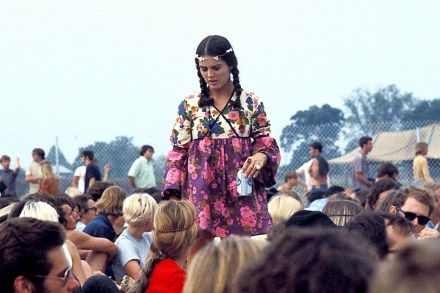
I grew up in the America of the 1960s, an era renowned for its kaftan-wearing hippies, its ethos of free love and hallucinogens, and demos against the Vietnam War. This was something that caught the imagination of my two London-born, English sons, once they were old enough to have acquired some knowledge of recent social history. And they naturally assumed I’d been part of that whole scene, with flowers in my hair and love beads around my neck, smoking pot and blasting out Jimi Hendrix records from a bedroom hung with Che Guevara posters. They took it as read that I was at the legendary Woodstock music festival and danced all night in a muddy field. This image of their youthful mum appealed to them, so they convinced themselves it was real.

Will Angela Rayner really water down the right-to-buy scheme?

From our UK edition

Housing Secretary Angela Rayner is said to be planning on watering down the right-to-buy scheme which enables council tenants to purchase their homes from local authorities at a significantly reduced price. The policy, famously introduced by Margaret Thatcher in 1980, has helped many thousands of families become home-owners, giving them greater security and a stake in their local communities. But councils are keen to cut the cost of Thatcher's flagship policy. As a result, Rayner – who once blasted her opponents as Tory 'scum' – is considering axing the scheme for newly built council houses and cutting the discount offered to existing tenants.

Why an unhappy childhood is good for you

From our UK edition

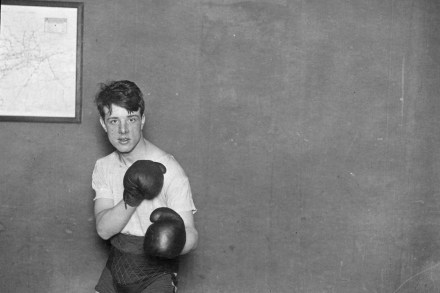
Many years ago I wrote a book called Dreams and Doorways, a collection of interviews with well-known people – writers, actors, politicians, sports personalities – about their childhood. I wanted to find out how their early experiences helped to turn them into the high-achieving adults they later became. And in almost every case, some kind of deprivation or anguish or obstacle was a key factor; they’d been motivated by a determination to overcome adversity. My days were a little less happy. My mother didn’t believe in the permissive child-rearing policy of liberal American moms For boxing champ Henry Cooper, it was extreme, ‘bread-and-dripping’ poverty in South London.

The glory of the Encyclopedia Americana

From our UK edition

It’s a painful process many of us must go through: culling a big book collection, amassed over a lifetime, before moving home. You know it makes sense, as you’ve struggled to house all your books – thousands of them – and they include quite a few you frankly wouldn’t miss. This chore awaits me at some point in the near future, but I do know that my 20-volume Encyclopedia Americana and its sister publication, the 20-volume children’s encyclopaedia called The Book of Knowledge, will be coming with me. Everything about its concept and design was aimed at fostering curiosity They were published by The Grolier Society of New York in 1957.

What would Reagan make of Trump?

From our UK edition

If the Donald Trump-JD Vance ticket is successful in November and the pair head to the White House, there is a former US president who would surely turn in his grave: Ronald Reagan. While Reagan saw the importance of American involvement in Europe, Trump and his running mate Vance seem in favour of adopting a more hands-off attitude. It's an approach that could unpick Reagan's hard-fought legacy in eastern Europe. What a different world it was back in the Eighties when Reagan was US president and the epitome of Western power and influence. In June 1987, he stood before the Brandenburg Gate in West Berlin and gave a historic speech, one line of which was to become famous: ‘Mr Gorbachev, tear down this wall!

The London of my youth is gone

From our UK edition

I fell in love with London when I arrived here as a teenager at the start of the 1970s. Straight out of an American suburban high school, I’d dreamed of the great metropolis of Shakespeare and Dickens, and I vowed never to leave. Why would I, when, as Dr Samuel Johnson famously declared, ‘He who is tired of London is tired of life’? If I am to depart this city which no longer feels entirely like home, where to go? Half a century on, I regret to say that leaving the capital is the very step I’m now considering. I’m not sure I love it anymore and, to be frank, I am rather tired of it. I’m a lifelong aficionado of big, bustling cities and for a long time London was the best. Countless corners of it hold memories for me.

How Viktor Orbán plans to ‘Make Europe Great Again’

From our UK edition

Hungary has just begun its presidency of the Council of the EU, as part of the member states’ six-monthly rotation process. Unsurprisingly, prime minister Viktor Orbán is all keyed up for the challenge. For years the bureaucrats of Brussels have tried to force the stubbornly contrary PM to change his ways, withholding billions of euros as punishment for his administration's ‘democratic backsliding’. But sticking to his guns, Orbán has declared that, on the contrary, it is he who will ‘take over Brussels’ and change the EU. Hubris indeed. After all, David Cameron with his emollient charms was unable to get the EU to alter its entrenched culture, which ultimately led to Brexit.

Patience is running out with Nato in the Baltic states

From our UK edition

You can’t miss the vast banner emblazoned on the high-rise building overlooking central Vilnius. It reads: PUTIN, THE HAGUE IS WAITING FOR YOU. Not one to mince their words, the Lithuanians. And neither are the Latvians or Estonians. In the face of an increasingly menacing Kremlin, the Baltic states – on Nato’s front line against Russian aggression – display an in-your-face bravado, which nevertheless overlays a palpable unease about the future. Many thousands disappeared into its bowels, never to be seen by their families again The threat posed to them by Russia was the issue which dominated much of the debate in the Baltic countries during the lead-up to the European Parliament elections.