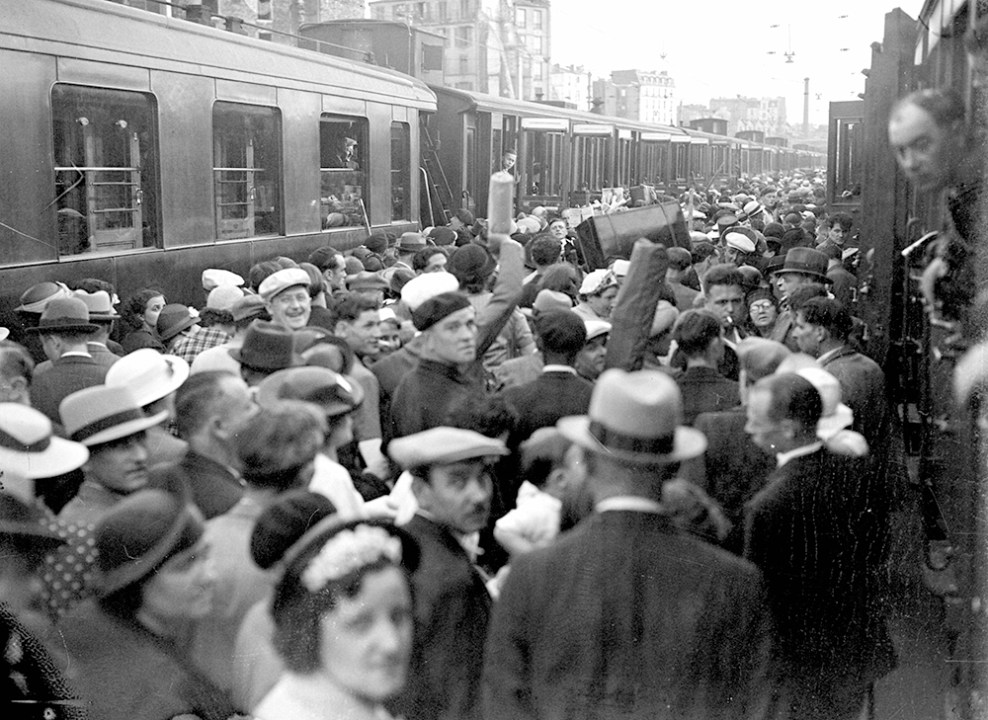

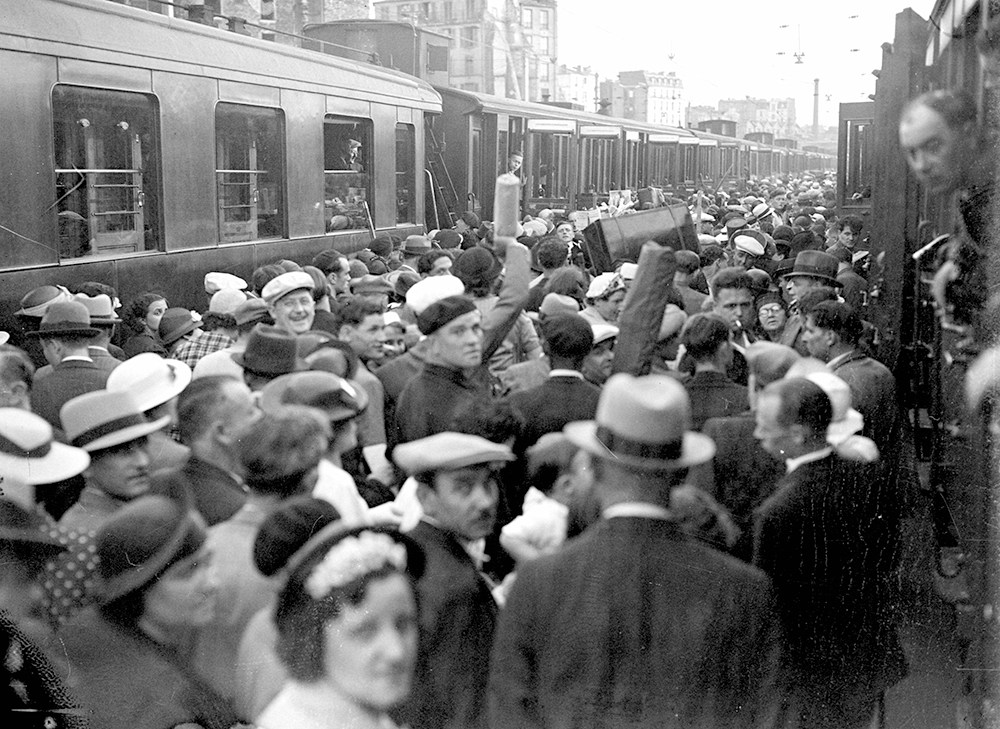
The Piano Teacher of Montparnasse is from Heather Morris, whose 2012 novel The Tattooist of Auschwitz began the vogue for the trivial and insidious ‘Holocaust’ novels so beloved by reading groups. There are questions at the end of this one, including: ‘What was your overwhelming feeling when finishing the novel? Was it one of hope?’ Really? These are not Holocaust novels, of course: if they were, book clubs would not want them. Holocaust novels are about death, and Morris, who writes with singsong vapidity, takes rescue and survival as her subject. Survival tales are soothing, though not representative if you understand that 90 per cent of Polish Jews were murdered. They expiate non-Jews from the truth that they colluded in the slaughter.
The book is slightly based on a true story – always necessary should the writer be accused of grave-robbing for money. In the first scene, the child Josie’s mother and brother are taken from their home in Paris and deported to Auschwitz. The reader inhabits this fear at a safe distance, for no one will gas their children. Eleven-year-old Josie flees to Andrée, her piano teacher, and is swiftly adopted into a loving home; her family is erased, as if they were never real.

Josie is a slight presence in the book: an idealised victim, placatory and grateful. Her Jewishness is also erased, as is customary – see Anne Frank – because it is alienating. Though there is a Hannukah ceremony, we never learn that the child whom Josie is based on is a Greek Jew. As is also customary, the non-Jew and her imperatives take centre stage. There is boring, repetitive speculation about whether the French Resistance fighters, of which Andrée is one, will be caught, to which the answer is: some will be, some won’t. It doesn’t much matter. Morris lacks the ability to make you care either way. At the end, when Josie learns her family are dead, she gets90 words to grieve. I counted. Andrée’s frostbite gets almost twice that.
Morris is a terrible writer, who specialises in. very. short. sentences. I once asked ChatGPT to write me a synopsis of a ‘Holocaust’ novel as an experiment and it gave me Even in the Ashes: ‘The snow fell on Lodz like a second occupation.’ And it was better than this. Here is an example of Morris’s prose: ‘The war grinds on. The occupation persists. But so does the Resistance. So does the music.’
Why does it matter if people read these books – so moronic that even John Boyne, whose ‘fable’ The Boy in the Striped Pyjamas implies that the chief victim of the Holocaust was the son of the commandant of Auschwitz, has criticised them? Because they obscure various truths. The Nazi attempt to massacre European Jewry won collaborators in every country in which it happened, and this anti-Semitism was centuries in the making. Jews have a very particular history and culture, which is entirely absent here, and an essential part is the longing to return to Zion; non-Jews have fictionalised Jews since the gospels, which do it rather better than this. Nor are we as passive as Jews in ‘Holocaust’ fiction; but if we were less passive we might outshine the lifesavers as they perform their (often) fictional rescues.
Without the truth, which connects the Jews of then to the Jews of now, Jews are vulnerable. We await the next massacre, and, no doubt, the next round of self-exculpatory novels. I will not be here to read them; even so, I hope they will not be as poor as this one.




Comments