Bartek Staniszewski

Bartek Staniszewski is a senior researcher at Bright Blue

The point-scoring over the Krakow shooting has already begun

From our UK edition

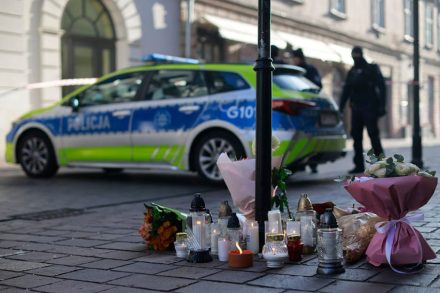
Yesterday at 2:59 p.m., the first shots rang out of a black Subaru as it drove onto an intersection just before the main square in Kraków, Poland’s second-largest city. On CCTV footage, several people can be seen falling to the ground immediately; others start running. The Subaru drives off. Over the ensuing minutes, the Subaru made its way around the main square and through Kraków’s Old Town. It then crashed by a crossroads leading into Kazimierz, Kraków’s old Jewish quarter. The police car chasing it stopped, and two policemen – senior constables Jakub Kulik and Artur Morański – emerged pointing handguns at the driver. A 24-year-old man with a rifle got out of the car and fired at the policemen: one of them was hit once, the other three times.
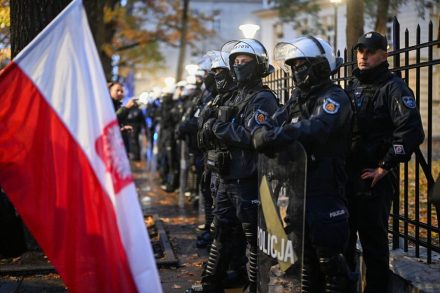
Has Poland become a banana republic?

On Friday evening, policemen descended upon 12A Johann Christian Schuch Alley in Warsaw – the inconspicuous address of the constitutional tribunal, Poland’s chief judicial authority on constitutional law. Dressed in riot gear, they surrounded the tribunal to force through a solution to a constitutional crisis which has been unfolding since 2015. But far from solving it, this ham-fisted attempt to finally bring the situation to a close has only deepened it instead. First, some context. Back in 2015, the governing coalition – which included current Prime Minister Donald Tusk’s party, Civic Platform – elected five judges to Poland's constitutional tribunal when there were only openings for three.

Andy Burnham’s plan to end rough sleeping will fail

From our UK edition

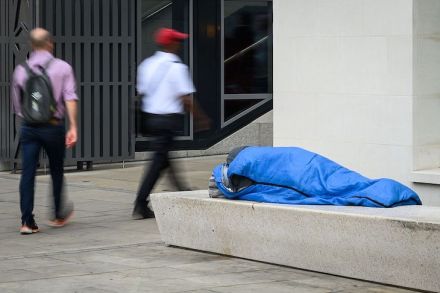
Andy Burnham has gone further than any of his predecessors have in years in attempting to address rough sleeping in Britain. A large sum of money and a focus not just on housing but also some of the underlying causes of homelessness is as good as this kind of policy usually gets. Alas, even this attempt by the Prime Minister is doomed to fail, as it misses a critical ingredient: what to do about those rough sleepers who refuse help. Some rough sleepers are fairly well-organised, some are coerced into crime by gangs, some are able criminals in their own right Though only a small proportion of those classed by the government as ‘homeless,’ rough sleepers are still fairly numerous, and visible beyond their numbers.

How Poland and Ukraine can repair their broken relationship

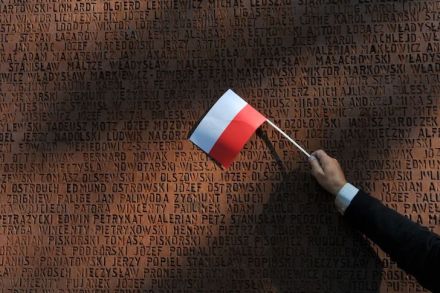
Poland was once a staunch ally of Ukraine. But president Zelensky's decision to name a unit of the Ukrainian Special Forces after the “Heroes of the UPA” appears to have shattered the relationship for ever. Help may be at hand, though: in the form of the humble British historian. Others want Poland to go further: there are calls to close the border with Ukraine While Polish and Ukrainian politicians have their own agendas and aren't trusted by the other side, some British historians have near-mythological status in eastern Europe.

Red tape has broken Britain

From our UK edition

The overwhelming smell of weed wafting down the street; heaps of decomposing litter floating in local canals and rivers; the noise of a dozen video calls and TikTok videos blasted through loudspeakers on the train. Many Britons are exhausted with the tide of anti-social behaviour that all too many of us have become accustomed to. The obvious remedy, it might seem, would be to crack down on this behaviour – for the authorities and the public to enforce Britain’s rules with renewed vigour. To do so, however, would only reinforce the problem. It is in fact the plethora of patronising dictats issued from the top down that is behind the collapse in Britain’s social order. The solution is to get rid of them.

Autists are the answer to Britain’s worklessness crisis

From our UK edition

The UK’s worklessness problem is a well-documented crisis. Over six million people in the UK – almost a sixth of the working-age population – are on out-of-work benefits, a number that has nearly doubled in the last seven years. The government’s attempt to begin to address this with the Universal Credit and Personal Independence Payment Bill ended in fiasco. Diagnoses for the spectacular rise in worklessness vary from the long-term effects of the pandemic through to a lack of well-paid jobs to the perverse incentives within the welfare system. But one notable culprit seems to have escaped the attention of policy wonks: autism.

Why conservatives should embrace their Christian heritage

From our UK edition

The heydays of Christian influence over European politics may seem long gone. In the UK, after the most recent general election, four-tenths of all MPs took secular affirmations – up from less than a quarter in 2019 – while in Europe, parties with explicitly Christian foundations often seem embarrassed about their religious heritage as they tumble down the polls. Yet Christians have not stopped turning up for those parties. To play to its strengths and resolve its identity crisis, the centre-right should embrace its Christian inheritance.

What Karol Nawrocki’s triumph means for Poland

From our UK edition

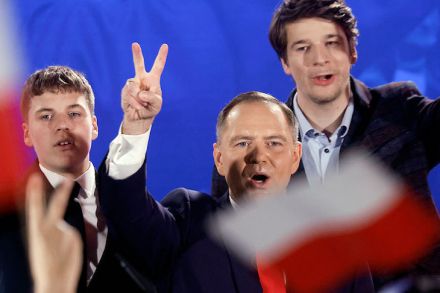
Karol Nawrocki – the Law and Justice candidate – is the winner of Poland’s 2025 presidential election following a dramatic turn of events. Despite the final exit poll declaring Civic Platform’s Rafał Trzaskowski to be the winner by a margin of 0.6 percentage points, as the votes started coming in over the night, it was Nawrocki who ended up ahead with 51 per cent of the vote. The Law and Justice candidate managed to overcome the odds to become President, but the result will likely be a political standstill that will leave both sides unhappy. The two parties have been at each other’s throats History does not repeat itself, but it sure loves to rhyme.

Britain’s adoration of the NHS is nothing to celebrate

From our UK edition

'The NHS is, rightly, the biggest reason most of us are proud to be British,' Jeremy Hunt said in his Budget this week. The Chancellor isn't wrong: according to polling from last year, the health service is the top reason to be proud to be British among 54 per cent of British citizens; far more than our history (32 per cent), culture (26 per cent) or let alone democracy (25 per cent). But this is not something to be celebrated; instead, it is illustrative of the malaise that today affects British national identity. It is a sad reflection on how feeble British national identity has become Traditionally, there are two ways to look at national identity. One of them is ethnic. According to ethnic nationalists, a shared ancestry is what makes a nation’s people who they are.