Economy

  • AAPL

    213.43 (+0.29%)

  • BARC-LN

    1205.7 (-1.46%)

  • NKE

    94.05 (+0.39%)

  • CVX

    152.67 (-1.00%)

  • CRM

    230.27 (-2.34%)

  • INTC

    30.5 (-0.87%)

  • DIS

    100.16 (-0.67%)

  • DOW

    55.79 (-0.82%)

Nigel Farage has inherited Boris Johnson’s Red Wall problem

The thing about white working-class voters, as Boris Johnson discovered in 2019 and Nigel Farage is finding out now, is that there are a lot of them. They way outnumber the other voting blocs who often grab more attention, such as students, middle class muesli munchers, Muslims and so on. Tap into the white working class and you enter a fast track to power. But having won over such voters, Farage now has the same problem as Johnson had in 2019. His voters have an expectation of high public spending, at a time when fiscal reality is demanding a sharp contraction in the size of the state. On many issues Farage

Spotlight

Featured economics news and data.

Cutting Britain’s giant welfare bill would be an act of kindness

Does having money really matter that much? There are those, usually with quite a bit of it, who want us to care less about materialism. But, unequivocally, money really does matter – not because of any status it supposedly brings, but for the freedom it buys: freedom to choose how we live and how we look after others. Considering this, it seems that the deep disillusionment with mainstream politicians in recent years stems from a protracted and ongoing period of stagnant living standards over which they have presided. But the truth is that the average person has not got poorer since the global financial crisis. They have got a little

Don’t feel sorry for the business leaders who backed Labour

Just what were business leaders expecting when so many of them sucked up to Labour before the 2024 general election? Only Keir Starmer’s party, 121 of them declared in an open letter, could deliver Britain’s full economic potential. They swarmed around Rachel Reeves like drones around a queen bee. Richard Walker of Iceland even turned up to the party’s manifesto launch to praise it for its economic plans. They are not cheering now. Only 17 of the 121 who signed the 2024 letter are currently prepared to restate their support for Labour. The rest are moaning – many of them anonymously – that they are being killed off by hikes in employers’

Reeves’s mansion tax has backfired before it’s even kicked in

The Chancellor, Rachel Reeves, made plenty of bold promises for her planned mansion tax when she announced it last year. It would be a victory for social justice. It would create a fairer housing market. And it would raise the money the government needs to fund public services. How has that worked out in practice? It turns out that Reeves’s levy on homes worth more than £2 million is already costing hundreds of millions before a penny of the new tax has even been collected. There shouldn’t be any surprise about that. Wealth taxes, which is what the mansion tax amounts to, always backfire. This is just the latest example. 

Making homes more affordable won’t solve London’s housing crisis

Centre for London research, presented last week at the London Housing Summit, argued that the main cause of London’s home ownership crisis is ‘affordability, not shortage’ – and the claim was widely reported. There is clearly a housing crisis in London, especially in home ownership. But it’s a crisis of supply. Last year, work started on only 5,547 private-sector homes, down 84 per cent in a decade, and on around 4,500 affordable homes. Between 2001 and 2021, the proportion of homes that were owner-occupied fell from 57 per cent to 47 per cent, while the proportion that were privately rented almost doubled to 30 per cent. Greater London’s population has also increased by around 2.7 million.

Did European rule in Asia and Africa really make colonised people poorer?

Few questions in economic history generate more heat than the one that seems, on the surface, most straightforward: Did European rule in Asia and Africa make colonised peoples poorer? The intuitive answer – of course it did – has animated a long tradition of scholarship stretching from Eric Williams’s Capitalism and Slavery (1944) to Walter Rodney’s How Europe Underdeveloped Africa (1974). At its core, this tradition advances a surplus-transfer thesis: that imperial powers systematically extracted value from subordinated territories, concentrating wealth in the metropole while deepening poverty at the periphery. If true, this would neatly invert the predictions of economic convergence theory, which holds that poorer countries should, over time,

Is Reform brave enough to be a pro-family party?

Nigel Farage told Radio 4 this week that he had ‘made a mistake’ in trying to pursue pro-family policies, concluding that this is simply ‘impossible in modern Britain’. The Reform leader might be forgiven for thinking so. The moment Reform moved into this territory with a pledge to end the two-child limit (among working British families it was later clarified), the politics curdled. Britain has, in practice, built a ‘hostile environment’ for family life Voters have long suspected any proposed softening of the cap introduced in 2017, and quite rightly on the grounds of fairness. But still more so at a time when welfare budgets are running away and working

Russia is running out of workers

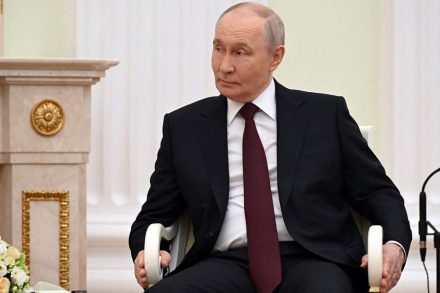
Vladimir Putin likes good statistics. At a government meeting on 15 April, even as he acknowledged that growth was slowing, he pointed proudly to Russia’s unemployment rate: 2.1 per cent, a record low. Proof, he suggested, that the economy remains fundamentally sound despite everything the West has thrown at it. The Russian president would do better to worry. A record low unemployment rate is not, in normal circumstances, cause for alarm. In Russia’s case it signals something closer to a slow-motion emergency. For the first time in its post-Soviet history, Russia has run out of workers. The governor of Russia’s Central Bank Elvira Nabiullina said as much the day after

The Bank of England holds interest rates – for now

In a relief for mortgage holders, anyone with a job and the government, the Bank of England’s Monetary Policy Committee (MPC) has voted 8–1 to hold interest rates at 3.75 per cent. That is despite rising inflation thanks to the Iran war, which is likely to hit Britain worse than almost anywhere else. Had it not been for the war and the disruption to energy supplies through the Strait of Hormuz, April was to be the month when the Bank of England finally met its 2 per cent inflation target. Instead, prices are shooting in the wrong direction as energy costs feed through to the wider economy – most notably

Polanski slams the ‘war on drugs’ – here’s why he’s wrong about legalisation

Britain has recorded the highest drug deaths in Europe. Green Party leader Zack Polanski has declared that this means the so called ‘war on drugs’ is not working, and favours a more liberal approach of legalisation. Michael Simmons is joined by John Power to look at the numbers and show why Polanski would likely make drug deaths rise under his policy. This episode is brought to you by Artemis Fund Managers, for more information on our fund range please click here https://www.artemisfunds.com/ .

Polanski slams the 'war on drugs' – here's why he's wrong about legalisation

I’ll dare to say what Andy Haldane doesn’t 

A sandwich with Andy Haldane, the former Bank of England economist, now president of British Chambers of Commerce, is the intellectual equivalent of a lunchtime workout with an ultra-fit personal trainer – or so I imagine, having never submitted to the latter experience. When his BCC role was announced in February, Haldane spoke of ‘a fighting chance’ that UK growth would beat expectations for the coming year. But that was before the closure of the Strait and the resurgence of global demons. The purpose of the sandwich was to find out if he had tempered his upbeat tone. The Iran conflict is ‘the last thing anyone needed, least of all

The UAE’s Opec exit is about much more than oil

The decision by the United Arab Emirates (UAE) to quit Opec, the Organisation of Petroleum Exporting Countries, is a seismic blow to the oil cartel. Opec is already reeling from the energy shock of the Iran war and Tehran’s closure of the vital supply line through the Strait of Hormuz. There will be worries now that other member countries could depart, triggering chaos in the oil bloc. There is one winner in all this: Donald Trump, who has accused Opec of “ripping off the rest of the world” by inflating oil prices. The US President will be pleased that Opec has been weakened and hope that this leads to a drop

The state should keep its hands off your pension

The worst thing about the government’s plans to force pension providers to invest their money in particular assets is that ministers and MPs themselves don’t have to worry about it. They, of course, are members of a gold-plated pension scheme that is underwritten by the taxpayer. They will receive their index-linked pensions whatever the economic performance of the country or of any particular assets. As for the rest of us, how well we do in retirement very much depends on how investments perform. That is why it is so obnoxious that the government is trying to force pension funds to invest some of their funds in UK assets and in

‘Back to Petroleum’ has paid off for BP

If the energy giant BP’s change of direction over the last year could be summed up in a single phrase, it would be ‘Back to Petroleum’. It has cut its investments in wind and solar power, scaled back its targets for renewables, and brought in new management more familiar with rigs and pipelines than climate change conferences. Today we see the first results of those efforts with a huge increase in profits for the company. BP’s strategy, it seems, is paying off. A quarter of a century ago, under its former CEO Lord Browne, BP snappily rebranded itself as ‘Beyond Petroleum’. It seemed a smart enough move at the time.

Politics is making us more unhealthy

Wes Streeting has said women have been treated like ‘second-class citizens whose voices don’t matter’. ‘The blunt reality is the NHS is failing women and girls on even the most basic measures of healthcare,’ he added. The Health Secretary’s new women’s health strategy promises £72 million. The problem is that his new men’s health strategy promises £79 million. The gap is small, but quite enough to put him in trouble. Athena Lamnisos, CEO of a gynaecological cancer charity, has deployed herself across an eager press to protest the inequity. ‘Acknowledgement is not enough,’ she has said. ‘Ring-fenced funding is what we need.’ £7 million is an NHS rounding error, but

Net zero and the myth of German efficiency

Losing one energy source may be misfortune. Losing two is carelessness. And losing three is alarming if you’re the world’s third biggest industrial nation. But to endanger your fourth energy source, the one that’s supposed to replace the first three, seems akin to a death wish. Amazingly, this is where Germany is now heading with its bungled energy transformation, or Energiewende, which some Germans still bizarrely insist is a model for the world. In the mad rush for net-zero by 2045, nobody gave much thought to back-up conventional power plants The first energy source to be axed was Germany’s nuclear fleet, which used to supply over 30 per cent of

Don’t believe the headline: the truth about unemployment data

Unemployment unexpectedly fell to 4.9 per cent this week. Some in government may been using this to mark a healthy economy but don’t believe the headlines. Whilst unemployment may be down, economic inactivity is up. And figures show its predominately graduates who are struggling to find work. Michael Simmons looks at the data and explains why youth employment is in crisis, and why the government can’t blame AI.

Don't believe the headline: the truth about unemployment data

Britain must learn from its energy crises

During my career in the energy industry, I have been through seven major supply disruptions. Each time nations vow to learn lessons, revisit strategy and reduce risk. Yet when the war in Iran sent wholesale gas prices surging by more than 65 per cent, the British government scrambled for responses. The harder question, the one nobody in Whitehall wants to answer, is why, after years of climate pledges, net zero targets, and energy security reviews, the United Kingdom found itself just as exposed to expensive gas as it was in 2021. The answer is uncomfortable: Britain does not have an energy strategy. It has a collection of incoherent policies, and