Spectator Life

Spectator Life

An intelligent mix of culture, style, travel, food and property, as well as where to go and what to see.

Is Music, Fashion, Film really the best Charli xcx can do?

Of the three creative pursuits that give Charli xcx’s eighth album its title, the English pop star seems least interested in the first. She admits as much on “Camera,” the best song on Music, Fashion, Film, which makes clear her obsession with acting and a desire to pursue it more fully. “Do I want to make music?” she asks herself. “Am I being fucking stupid if I try to be a girl on the screen and I’m turning 34?” Even without this clue – which, like much of the album, is presented via the singer throwing out rhetorical spiel more or less unexpurgated – it is no great stretch to surmise that the pursuit of making music is struggling to fully hold her attention.

brat
tivat

Welcome to Tivat, the ‘Monaco of the Balkans’

“Quiet luxury” is all the rage these days, the social media algorithms tell me. On Instagram and TikTok, Americans inform their followers that clothing with no visible branding is a true status signifier, before extolling the virtues of Barbour jackets and Loro Piana shoes. Aspirational people shouldn’t drive flashy new cars, they argue; instead, they should drive a 30-year-old Range Rover – as if the inevitable engine rebuild wouldn’t cost more than most people would spend on a car. When decorating, millennial gray is wrong, garish and uninteresting; everything must be sage green with brass accents. There is nothing more quiet and luxurious than the B&Q color-matching desk.

Why I need literary Viagra

“No man is a success to himself” wrote Graham Greene. I am feeling this acutely, as I turn 60 on September 1st and enter the Decade of Reckoning for uncomfortable life truths. As somebody whose literary ambition was only wanting to be a bestselling English social novelist, it’s been creeping up on me that if one hasn't written that Big Novel by one's sixth decade, then perhaps throwing in the quill is the only dignified thing to do.   In a desk drawer in my study, there is a cream envelope, postmarked September 1987. That August, I found myself sitting two tables from the Graham Greene in Chez Feliz, a fish restaurant just inside the walls of the old Antibes port.  He was 82, and lunching with his mistress Yvonne Cloetta.

FIFA should be allowed to sell off the World Cup

It will bring in outside investors, open the doors to global money, enrich a handful of inside executives and, perhaps most outrageously of all, might even involve the Trump family. The plans by FIFA, the governing body that controls the World Cup, to sell a stake in the competition, have drawn predictably condemnation, not least from the British Prime Minister Andy Burnham. But hold on. This is getting ridiculous. Soccer has become the preeminent global sport precisely because it has been so successfully commercialized – and it is too late to change that now.  Soccer is about the most commercialized activity on the planet. A few outside investors will hardly change that The plans to sell a stake in FIFA are more complex than the offside rule as reviewed by VAR.

soccer

The horror of a French heatwave

It’s a sweet little town, Arcachon. Clinging to the long French Atlantic coast, adorned with Victorian villas and pretty flowerbeds, it reminds me oddly of the English town of Bournemouth. By which I mean: Bournemouth before it was ruined. As such, it’s the kind of place that usually calls for a return visit. I am sure for many French people it is a holiday regular – “ahh, shall we do Arcachon again? Mais oui, we can try that new oyster cabin.” But right now I seriously wonder if anyone will want to return to Arcachon, ever.  The reasons are twofold. Firstly, the news is full of searing images: of people fleeing the wildfires on Cap Ferret, and being ferried, like wartime evacuees, across the bay to Arcachon after a summer of repeated heatwaves.

The greatness of Sam Neill

The recent death of the actor Sam Neill, at the age of 78, was greeted with a mixture of surprise, sorrow and, in many quarters, unexpected grief. It is likely that Neill would have regarded the lavish tributes paid to him by actors, filmmakers and politicians with a mixture of embarrassment and quiet pride, because although he was a brilliantly versatile actor who managed to make a deep impression in virtually every role that he undertook over his five-decade-long career, he was also someone instinctively uncomfortable with the limelight.

sam neill

Dear Mary: how should I have dealt with a seat thief?

Q. When guests are leaving our house they sometimes ask: “Would you like me to strip my bed?” The truthful answer is often: “No, because you are very clean and only stayed one night and I may decide to reuse your bed for one of the hulking slob friends of my son who stay.” But if I say this, the guest might wonder if they went into “pre-used” sheets. Worst-case scenario, they do not ask and turn up downstairs with an armful of bedding. What should I do? – C.W., Stoke Abbott, Dorset A. When asked by a guest if they should strip the sheets, reply: “Please don’t. Our daily has such little self-esteem as it is, she would really mind if you cheated her of the whole job.” Q.

seat
therapy speak

Therapy speak is turning us into sissies

As one who’s always been keen on putting their hand up and admitting to their faults (a perverse form of boasting, I suspect) I was always suspicious of the medicalization of character flaws which apparently render us helpless in the clammy hands of Fortuna. It was bad enough when friends who’d generally always seemed highly capable jumped on the ADHD bus in later life, suddenly flinching at loud noises when they’d spent a good deal of their lives dancing to ear-splitting techno.

evil british

British men should lean into their evil reputation

I was about 19 years old and threatening to kill myself with a Bic disposable razor (not easy: I was bluffing) when I realized that Women Love Bastards. The revelation arrived like this. I was a heartbroken student, having been dumped by, ah, let's call her Emilia. For months I mooned about, bereft, wondering why Emilia had chucked me when I was so NICE – attentive, gift-giving, loyal. Then a good female friend – bless her wicked heart – took me aside and said: "Sean, girls don't like nice. They like a guy with swagger. Stubble. Slightly mean." She sighed. "I think we prefer bastards, if I'm honest." Putting down the razor, I picked up her advice, and I have used it ever since. I’m happy to say it works.

ballet

Three cheers for Britain’s most unabashedly elitist school

As we ponder the ups and downs of the UK’s sporting record this summer, it might be worth noting their unquestioned prowess when it comes to the demands of classically based dancing. The Royal Ballet is consistently more than a match for any comparable company in the world, and its chief feeder, the Royal Ballet School, currently celebrating its centenary, is similarly and solidly rated as one of the two or three best of its kind anywhere. Both these institutions are deeply beholden to tradition, and the RBS might well be the most unabashedly elitist educational establishment in the country. It receives globally more than 2,500 applications a year. All these will lead to an audition, the number finally whittled down to 30-odd offers of a full-time place.

Christian soldiers in retreat – the disastrous Fifth Crusade

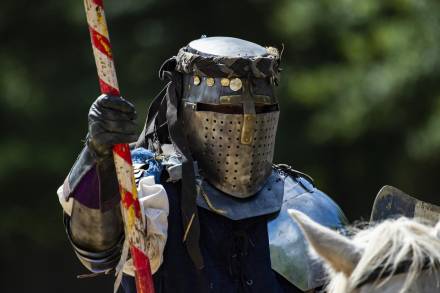
The Fifth Crusade, which was fought between 1217 and 1221, marked a new direction for the crusading movement of the Middle Ages. Instead of invading Palestine, as the first three crusades had done, and the Fourth Crusade might have done, the crusaders decided to attack Egypt. That was not the original idea. The formidable Pope Innocent III, who launched the Fifth Crusade, had envisaged a repeat of the old strategy of marching on Jerusalem from the sea. The invasion of Egypt was decided on the initial wave of forces after they had reached the Levant. There was a sort of logic behind the decision. The crusading kingdom of Jerusalem had been destroyed in 1187, when its army had suffered a crushing defeat at the hands of Saladin at the Horns of Hattin above the Sea of Galilee.

outsiders

Why do political elites insist on posing as outsiders?

The American political elite have developed a peculiar habit of styling themselves as outsiders. The closer they stand to power, the less likely they are to claim it as their own. In fact, power always seems to be in the hands of someone else, someone located just out of sight. So where exactly does it reside in this late-stage republic? Nobody seems quite certain. Two new political memoirs, one seeking to clarify the past, the other aimed implicitly toward the future, share this bewilderment. Surprisingly, they also share a good deal else. There is a common obsession with European heritage, Jill Biden through her Italian roots, and J.D. Vance through his love of Great Britain and his adopted Roman Catholicism.

My quest for the perfect muffuletta

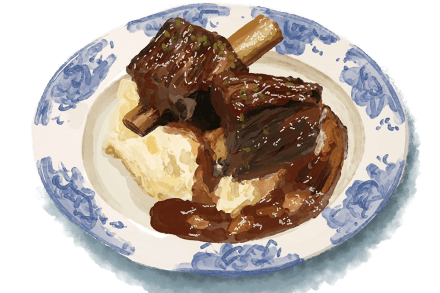
Everyone knows the story of the Earl of Sandwich: keen not to interrupt a late night card game at his club, he asked for roast beef to be sliced and put between two slices of bread, to allow him to eat it with his hands without stopping his game. And lo, the sandwich was born. But perhaps less familiar to us is that 140 years later, some 4,500 miles away from the Earl’s cribbage game, another problem was being observed, and was solved in a strikingly similar way. The turn of the 20th century saw an influx of Sicilian immigrants to New Orleans; almost 300,000 arrived in the city between the 1880s and 1920s, setting up shop (literally) in the French Quarter, in an area that became known as Little Palermo.

muffuletta

Are you a party bore?

Some years ago, I managed to get an invitation to a very exclusive party. One of the guests was Prince Philip, consort to Elizabeth II, and some way into the evening he drifted over in my direction. He used the classic royal conversation opener: “Hello, what’s been keeping you busy?” “I work in marketing,” I replied. “Oh dear,” he said. He turned away and went to find someone more interesting. I was officially boring. That’s fine, because I have made it my lifetime’s work to seek out the boring at parties. Those who drone on, those who tell the same story over and over, and those with that odd nasal monotone that makes most people desperate to escape their company. I am not alone in this. C.S. Lewis did the same thing.

bores

Confessions II gets thrillingly close to vintage Madonna

There comes a point in the career of any established artist when looking backward seems to be the only possible way to move forward. Madonna was a great pop star until she wasn’t. Confessions on a Dance Floor, released in 2005, was her last really successful record; “Hung Up,” from that album, her last truly unforgettable single. Ever since she has been chasing musical trends with increasingly diminishing returns, the heavy-handed concepts and contrived personae – Madame X, anyone? – no longer supported by anything approaching a properly decent song. Ms Ciccone seems to have belatedly remembered that Madonna is, and always has been, the concept So Confessions II is an act of both commercial and creative necessity. Its reclamation of the past is twofold.

Did girls win the gender reveal wars?

I am currently six months pregnant with my second child, and it feels like a rather strange time to be so. Partly because these unexpectedly long spells of warm weather have rendered me umbilically tethered to a fan at all times, which has done terrible things to my electricity bills. Partly because every morning I seem to wake up to a new maternity scandal and must navigate between newsfeeds in which women trauma-dump their horrendous birth stories or hypnobirthing experts chanting that my “body was made to do this”.   Another reason I feel discombobulated is that I am pregnant with my second son, and yet everywhere I turn, there seems to be a preference for baby girls over baby boys.

The uncertainty principle: The Interpreter’s Secret, by Andrew Rosenheim, reviewed

You can’t really make this stuff up any more, political reality having long since outpaced fiction, but thank goodness there are people who continue to try. Recent history has supplied more than enough intrigue, misinformation, diplomatic doublespeak and sheer zone-flooding mad shit to challenge even the most inventive writer of political thrillers, but fortunately Andrew Rosenheim is more than up for it.

andrew rosenheim interpreter secret

Persistent gossip about Brian Epstein’s death risks defining his life

We know the facts about Brian Epstein’s death. The Beatles’ manager died in bed at his Belgravia home on August 27, 1967, six years after he struck gold in a Liverpool cellar, a month before his contract to manage the Beatles was due to end and four weeks after homosexual acts between men were partly decriminalized. At the time of his death, the 32-year-old Epstein was addicted, adrift and depressed – not least as a result of a long effort to hide his sexuality and the low-level anti-Semitism he encountered everywhere. One moment he was manically active, the next he was in despair, according to those around him. He had overdosed in the past and had been treated at a psychiatric hospital. On the day he died, his blood contained alcohol, antidepressants and barbiturates.

brian epstein

Spain has reinvented soccer

There is something intimidating about sporting royalty in the stands. At many great clubs, retired legends seem almost gargoyle-like, perched high above the pitch, judging those sent to inherit their legacy. Manchester United have long played beneath the watchful gaze of Sir Alex Ferguson; other clubs have their own ghosts. Spain’s World Cup triumph offered a different spectacle. As the Spanish greats of the past – from David Villa to Iker Casillas – watched Lamine Yamal, Rodri and co defeat reigning champions Argentina, they resembled something more saintly; a reassuring reminder of Spanish supremacy. It was a far cry from the shaking head of Ronaldo watching yet another Brazilian disappointment or protestations of England’s World Cup alumni.

spain

AI has taken my job

This week I was replaced by AI. I saw it coming, but it didn’t make the news any easier to deal with. To be honest, it terrifies me for the future of our species. If that sounds a bit over the top, hear me out. I am a writer. Not only that, I am a commercially successful one. Although you probably haven’t heard of me, I’ve published more than 300 short stories in women’s magazines over the past 15 years. From ghost stories in Woman’s Weekly to tales of romance in Take a Break Fiction Feast, I write them all. Sorry – wrote.  “Dear Geoff,” the email said. “Going forward, our in-house team will be using AI tools to compile future editions, but we thank you for your many contributions to the magazine over the years. Kind regards, Rebecca.

I’m proud of my utterly insignificant association with NASA

Even though my career has been almost entirely in front of the camera, rather than behind it, I’ve long been obsessed with film equipment. How, then, can I resist a party in LA for Cine Gear, a trade show for new film kit? It’s a good place for the “creatives” to meet the technical guys. The director Dan Trachtenberg is there, and we handle the latest Cooke glass. Cooke has been making lenses in Leicester since 1893, and they are still the best cine lenses in the world. I bought my set of Cooke Speed Panchros in the 1980s, when nobody wanted them because they were “slow,” but now they are back in fashion. They have a warmth and softness that modern lenses strive to emulate because their coatings involved radio-active elements that are not permitted in manufacturing now.

nasa

How Volkswagen drove its own demise

I moved on from most of my father’s automotive prejudices. He refused to buy from the Japanese “who treated our prisoners so cruelly,” French and Italian cars would “always let you down in the end” and Fords were gaudy creations of “big-headed Americans.” Instead, it was Volkswagen (VW) I never trusted. Stupidly stuck in a bygone era, I couldn’t get over that infamous 1938 photograph of Adolf Hitler, smiling with childlike delight, leaning over a miniature Beetle. Beside him, in a smart civvy suit, SS Colonel Ferdinand Porsche gleefully shows off the prototype. The foundation of Volkswagen is the definitive portrait of a dictator and his sycophants. OK, it’s 88 years later and I don’t like hearing about people losing jobs, even at VW.

volkswagen

Bringing Homer into the home: how the Iliad and Odyssey became widely available

Homer’s ghost is particularly busy, popping up in the dreams of pretty much every poet going. In fact if you are a poet and haven’t been visited by Homer, you may find yourself wondering why you’ve been left out. The cultural reach of the two major poems that appear under Homer’s name – the Iliad and the Odyssey – is undeniable. I teach my creative writing students that there are only two stories: the siege and the journey, and there they are, right at the beginning of literary history. They’ve been read continuously for centuries. On my shelves is an edition of Alexander Pope’s Iliad which belonged to my great-great-great-grandfather, in which are still bits of paper put in by subsequent family members.

homer

Sorry, I won’t try to remember your name

As if there wasn’t enough apocalyptic news to keep abreast of, studies show that forgetfulness is on the rise. A cocktail of causes is to blame: microplastics clogging the brain, post-Covid symptoms, Dickensian air quality... whatever the culprit, our memories are taking a pummeling. Call me an inveterate optimist, but I’m glad to have the company. I had name amnesia before it was cool, as the kids say. Place me in front of a new neighbor or colleague, and I can glad-hand, smile and make friends with the best of them. What I can’t for the life of me do is recall that person’s name. (Too busy being paranoid about leaving specks of spit on their tie, or hiding the Mark Rothko installations of my armpit stains.

The Odyssey is shallow and tiring

The Odyssey is Christopher Nolan’s relentless, deafening three-hour take on Homer’s epic poem, and while it is technically impressive filmmaking – IMAX cameras; massive mechanical puppets, minimally pimped up by CGI; thousands of extras – it is set piece after set piece which becomes rather tiring. Even if weariness is part of the point of the Odyssey, it’s no excuse for the film being tiring. Even if weariness is part of the point of the Odyssey, it’s no excuse for the film being tiring What we get is an action blockbuster, without significant depth, although there is some heft to the final act – everybody’s favorite act, surely. Who doesn’t love it when Odysseus finally makes it back to Ithaca disguised as a beggar and no one recognizes him?

Drop the wacky wedding stunts

Picture the scene: it’s midsummer, a bucolic wedding is mid-flow, the bride is radiant, the groom pristine. They stand above their guests in a doorway while caterers ascend the stone staircase carrying the ceremonial wedding cake. But wait! One of the caterers is wobbling! The cake is slipping! The caterer reaches for it but it falls from his hands and tumbles to the ground: splat. A dog appears from nowhere and begins to eat the crumbs. And all of it, every excruciating moment, is captured on camera. Is this one of my night terrors? Well, yes, but it was also the wedding of Anna Boden – the eldest daughter of Boden clothing founder Johnnie – to her now husband Oliver last week.

Chinese puzzle or matryoshka doll – the complexity of Sino-Russia relations

China and Russia are twins. Both are great Asian land empires; both are continental, multi-ethnic powers that expanded by pushing forward their borders rather than by crossing oceans; both have a deep tradition of autocracy that survives to this day; and both (more plausibly in China’s case) believe that their social contract, ideology and system of government is a universal one superior to all others. In Entangled Empires, the German historians Sören Urbansky and Martin Wagner explore the convoluted story of Russo-Chinese relations from the moment in the mid-17th century that roving Cossack bands bumped up against Siberian tribes who owed fealty to Beijing up to the latest performative amity between Vladimir Putin and Xi Jinping.

russia
movie movies

A century of movie magic: how cinema has changed the way we think

The making of films is a process often on an industrial scale, and among the thousands of professionals contributing there are dozens whose practice might constitute a solid history of the artform. The great stars and directors are the usual routes into the history of film; but the roles of studio executives, producers, costume designers (Edith Head! Givenchy!), composers of scores, cinematographers and editors would make compelling narratives, too. A history of cinema audiences could also be interesting – ranging from those who are supposed to have fled in terror as a filmed express train came hurtling towards them in the 1890s; to the yobs who slashed the seats in cinemas showing 1950s rock’n’roll movies (but why?