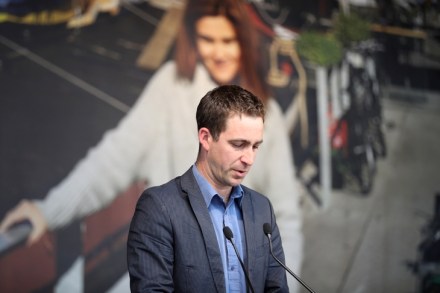
Mark Piggott

Inside the world’s first museum of homelessness

From our UK edition

I’m sitting in a small, cramped room with 20 other people staring at a stick. Not just any stick, mind: it’s been customised with gaffer tape and paint so it looks like a punk shillelagh. The stick has a range of purposes, says the young black woman giving the presentation: comfort, protection, and its primary purpose, support. She recounts how, disembarking from a bus one night she forgot her crutches, and plucked the stick from a garden. It’s been a source of support ever since. ‘I can’t tell you that. We just call him Man with a Stick’ I’m confused. The young woman doesn’t seem in need of a crutch, nor does she look the type to assault potential assailants with a stick, painted or otherwise.

Are people with Alzheimer’s being denied justice?

From our UK edition

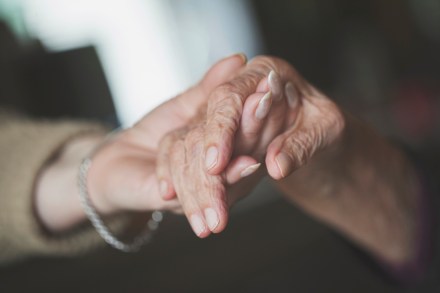
My mother, aged 75, has advanced Alzheimer’s. This is heart-breaking enough – she is now at a stage where she has terrifying visions, and keeps asking me, her only son, where her son Mark is. But twice in the past five years we have been denied justice in cases where people were suspected of taking advantage of mum because of her vulnerable state.  Until last October, mum was able to live with a modicum of independence with the help of care from a local authority team. Support workers came to visit twice a day, helping her with everyday essentials such as cleaning, eating, and shopping, and mum developed a real rapport with the team.

The surprising appeal of Sweden’s second largest city

From our UK edition

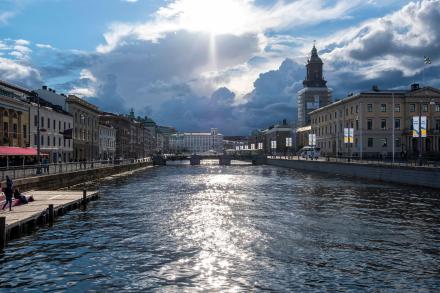
Sweden is often overlooked as a holiday destination by Brits due to lazy misconceptions about the Scandinavian weather and prices. Yet Swedish summers are arguably more predictable than our own, with average temperatures in the low 20s throughout June, July and August and the food, whether dining at a seaside café or grand hotel, is almost invariably of excellent quality, using local produce, and at prices similar to those back home. Sweden's second largest city Gothenburg has typically sat in the shadow of Stockholm as far as international tourists are concerned, but it has much to reward those who are prepared to venture off the beaten track.

Spare a thought for ‘Generation Sandwich’

From our UK edition

Sunday was fairly typical. The police picked up Mum, 73, wandering in distress near Halifax bus station, cold, disorientated and lost. Son, 15, was walking with a friend in north London when two older boys stopped them and demanded to know if they were dealing drugs before scrolling through their phones to check. Daughter, 18 was determined to go see her boyfriend despite feeling ill and Dad, 77, sat in a pub on the Yorkshire Moors nursing a pint of ale and a failing heart. While all this was going on, I was mopping floors, cleaning dishes, hanging out washing, and trying to write a book. When Son, 15 arrived home panting because he’d run all the way home, my wife and I spent some time calming him down and reassuring him that such incidents are rare.

What do Extinction Rebellion have against a free press?

From our UK edition

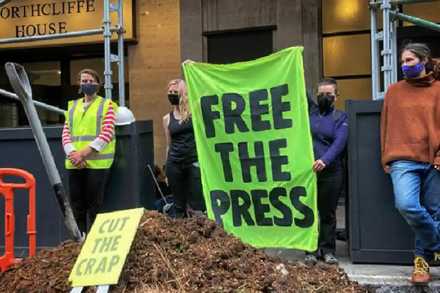
One can only hope that the profound political thinkers of Extinction Rebellion took care not to dump cow manure on the wrong steps when they descended en masse to Kensington this week. According to the group, which used the somewhat confusing ‘#Freethepress’ slogan, the target of their protest was Northcliffe House, home of the Daily Mail. Annoyingly for the eco-warriors though, the paper is based in the same building as the Independent, which unfortunately shares pretty similar beliefs to XR: that we are all doomed and will shortly be fried to a crisp by the sun, unless rising sea levels drown us all first.

Why I can’t forgive the man who destroyed my childhood

From our UK edition

How do you forgive the person who put you through hell as a child? That’s the question that will be running through my mind when I watch footballer turned pundit Ian Wright's documentary tonight on domestic violence. Wright says he has made peace with the stepfather who subjected him and his family to physical and psychological abuse. He has also made amends with his his mum, a victim herself, who he recalls saying she wished he’d been terminated. But forgiving the man who tormented me is not something I can bring myself to do. I don’t have much in common with Ian Wright.

Brexit and gender are off limits for aspiring authors

From our UK edition

When a small US publisher accepted my first book for young adults, 'Crosstrack', it wasn't long before things went pear shaped. The novel follows two teenage athletes, one a middle class American, the other a young Syrian refugee. Apart from cycling ability, they have another thing in common: both are trans.  I’d anticipated a backlash at having the temerity to describe someone outside my own experience, and expected it to involve the Middle Eastern migrant (a la Jeanine Cummings). Yet when my publisher passed the book to a new editor for a final edit, she took exception to some of the views expressed by the other main character, and in particular a comment where she refers to 'trannies'.

The tragedy behind every Covid death

From our UK edition

On a grey January morning, at a small, sparsely attended ceremony in a chapel in North London, we said goodbye to my granddad, one more statistic in this vile pandemic. Jack Brown grew up in poverty in Ipswich and performed heroically in the Navy during world war two; twice-sunk, once by an enemy torpedo, once by a collision with an Allied boat (the family joke is that Uncle Albert from Only Fools was based on his experiences). He went on to father six children, and had a 40-year career as a station-master. As granddad’s coffin was wheeled in, draped in a Navy flag, it was hard to dismiss the thought that Covid-19 had done what the Nazis had failed to do: see him off. Except it’s not that simple.

Dementia brings a unique pain to the misery of lockdown

From our UK edition

Three days into 2021, an aunt texts to inform that my grandfather has died. In November he was admitted to hospital after a fall at the London flat where he has lived alone since the death of my grandmother in 2008. Just before New Year’s Eve he was tested for Covid-19 then sent home, only to be urgently readmitted when the test came back positive. By then my aunt and her husband had been in contact and were urged to isolate, causing a huge knock-on effect for the family. Whether it was the virus that finally saw off this 97-year-old former station master, war hero and lifelong Stalinist is unclear, but as he’d tested positive a few days before dying that’s what will be recorded; just another statistic from a virus that keeps on giving.

In defence of Millwall

From our UK edition

Were Millwall fans wrong to boo players who knelt in support of Black Lives Matter? Yes, according to the assembled pundits who are paid a fortune to talk about football.  'Let’s be fair,' wrote Gary Lineker, 'it only appears to be a small minority of Millwall fans that didn’t boo the players taking the knee'. 'Reality is Millwall fans booing players taking a knee doesn’t surprise many!!!,' said Trevor Sinclair, the ex-footballer who pleaded guilty in 2018 to a racially aggravated public order offence after he abused a police officer.

What has Ted Hughes’s ancestor got to do with his poetry?

From our UK edition

Scandalously, we never studied Ted Hughes at school. As the Poet Laureate is arguably the finest British poet of the 20th century this would be a scandal wherever I attended ('studied' would be pushing it) but I attended Calder High in Ted’s home town of Mytholmroyd. Though the grand total of my published poems stands at seven, we share connections, Ted and I. When my first novel was published — set in a fictionalised version of the Calder Valley — I was a guest of the Ted Hughes Festival. As a teenager in the 1980s, I tended Sylvia Plath’s grave. By then Ted was already a bogeyman for some of the area’s more dour feminists, blamed as he was for Plath’s suicide.

Why is the free school meals debate so toxic?

From our UK edition

My childhood in 1980s West Yorkshire wasn’t a clichéd mash-up of a Hovis commercial and Kes. For most of my youth we had an indoor toilet, for instance, and though we lived in a cramped terraced house it wasn’t a back-to-back – which meant we could hang our washing in the back alley rather than out front. I did conform to stereotype in one sense, though: until the age of 14 I was on free school meals. I still remember how at my comprehensive school we had to line up separately on one side of the corridor. Unfairly, our dinner tickets had a special mark so that unlike the ‘other half’ we couldn’t flog them for the price of a chip butty.

Why bending the law is sometimes the right thing to do

From our UK edition

Shortly after booking a train ticket from London to West Yorkshire to accompany my mum to the doctor, I received a letter explaining that due to Covid-19 the appointment would now take place over the phone. Having booked the time off work, I decided to visit her anyway – despite the fact she and my dad, who separated 50 years ago, both still live in a small town surrounded by Covid-19 hotspots. Indeed, it was possible my visit would infringe the latest lockdown regulations, as well as putting my parents at risk. It’s a chance I decided to take.

Can we stop with the VE Day moral relativism?

From our UK edition

Fantastic news that the 75th anniversary of the end of hostilities in Europe will be a more sombre, sober affair this year due to our current mortal foe, coronavirus. Three days of celebrations had been planned, including processions, street parties and church services, almost all of which have had to be postponed. A good thing, too, according to the Guardian – because celebrating the end of war has become 'toxic' and 'divisive'. Whether seeing a bunch of old soldiers meeting up for what will probably be the last time is as toxic and divisive as world war two is, of course, open to question. It’s mind-numbingly predictable to find such self-loathing in the Guardian, for whom anything which smacks of national pride is automatically condemned.

There’s much more to Islington than Corbyn and Ocado

From our UK edition

News that Islington’s yummy mummies are up in arms about a proposed Ocado refuelling centre near a local primary school has caused much mirth and merriment in the media. How hypocritical, that the very people who use Ocado deliveries most – when not driving their 4WDs with Greenpeace bumper stickers to the Nags Head branch of Waitrose – should be jumping up and down in their ethically sourced hemp sandals at the possibility their little darlings might have to inhale the same fumes as common folk in Barnsley and Brixton. Few of the contributions have taken note of the fact that air pollution around Yerbury, where the Ocado depot is being built, is appalling and a great leveller – lung disease doesn’t discern between those who own or rent their homes.

Renter’s paradise

From our UK edition

On turning 50, I realised I’d never own my own home. What bank would agree to give a mortgage to someone with no regular source of income? Even if I did somehow hold down a job, I would have just 15 years until retirement age. For a while, I was depressed. Owning your own home is the British dream. Why else would all those property shows I drool over be so popular? I won’t have anything to hand down to my kids. What sort of loser am I? Then I remembered: I live in a five-bedroom Victorian terrace in Islington, which is owned by the council. At £650 per month, our rent is far less than what private tenants might pay for a flea-infested bedsit in the same area.

The destructive culture of perfection

From our UK edition

In the past week, two very different stories have highlighted our innate desire to generalise people, to raise them up as heroes, ciphers for the things we believe in, then bring them crashing down when they no longer keep to those high standards we probably don't reach ourselves. There can't be many compassionate people who haven't been saddened by the news about Brendan Cox, husband of murdered MP Jo Cox. Whatever happened at Harvard back in 2015 – and it must have been fairly bad, even though he denies the more serious allegations – it's depressing indeed that he has now stepped aside from two charities he set up following his wife's ghastly murder at the hands of a disgusting, sad little fascist.

Men and women of the world, unite!

From our UK edition

I've worked in several warehouses unloading stock and I've also worked in supermarkets stacking shelves. I'd have to say the latter is marginally harder. Not that there's much in it: both are physically hard, mentally untaxing, and probably undervalued – but then, don't we all feel undervalued at work? Warehouse jobs are more of a laugh. When unloading boxes that all looked the same, some were much heavier than others. If you were on the van you'd make out the heavy ones were light and vice versa. Oh, the japes we had... Best of all, there was usually an unloaded pallet you could hide behind for a nap. Whereas on the shop floor, surrounded by members of the public, with some tetchy manager in a cheap suit on your case, there were fewer opportunities for mayhem.

In defence of extreme moderation

From our UK edition

Reading Melanie Phillips in this morning’s Times made me really cross. Nothing unusual in that – except I’m cross because I agreed with every word she had to say about free speech, and the lunatic attacks on Canadian academic Jordan Peterson by activists who have the gall to call themselves progressive. Peterson, in case you didn’t know, has argued against proposals that Canada introduce new laws insisting personal pronouns be changed to ze and zir at the request of the addressee concerned. As someone who still thinks of himself as 'left wing' (Left and Right being, as I have said here before, somewhat outmoded), I hate agreeing with Melanie Phillips.

London’s crime map tells a damning tale of two cities

From our UK edition

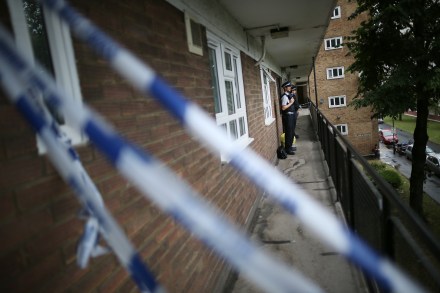
It’s just a few metres from Bartholomew Court, EC1, where a young man was one of four stabbed to death over the New Year, to trendy Hoxton, famous for its cereal bars and hirsute hipsters. It would be easy to say these two worlds – those of the trendy media types lampooned by 'Nathan Barley' and 'Its Grim up North London' and the large nearby estates – are separated by an unbridgeable gulf, but it would also be inaccurate. Areas like Hoxton became popular in part because of this edginess, this picturesque urban decay, where drugs can be bought cheaply from local youths and consumed in the safety of the adjacent wine bars and gated communities.