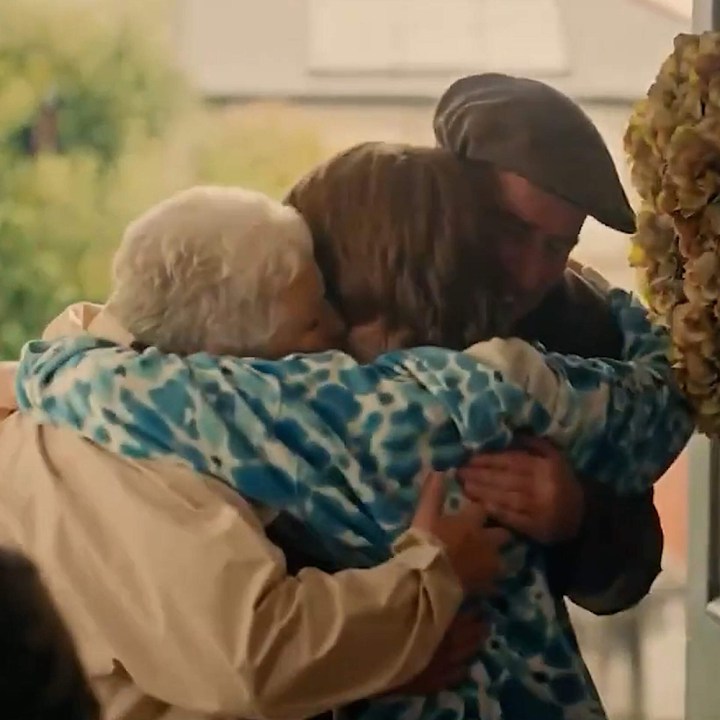


Few horror films are more chilling. A child stands, shaking, rooted to the spot. An elderly Irish couple advance on her in slow motion, puckering their lips. Before we reach the terrifying climax, the screen cuts out with the message: ‘Not everyone wants a hug. Even from the people who love them.’
This is Dublin Rape Crisis Centre’s new campaign, ‘we-consent’, funded by Ireland’s Department of Justice. Its goal was to inform grandparents that giving their grandchildren a spontaneous hug without properly obtained verbal consent could be harmful, traumatic or maybe even reminiscent of sexual assault.
The advert was met by mockery and outrage online. Jim O’Callaghan, Ireland’s Minister for Justice, was so appalled by the ‘inappropriate and demeaning’ suggestion that grandparents pose a threat to their own families that he had the video removed.
You are not permitted to trust your own knowledge of your toddler
At first glance, the ad seems like a momentary dip into insanity by an activist charity. But in truth it is the culmination of a decades-long campaign across the English–speaking world to extend the language of sexual consent into entirely ordinary and innocent social interactions.
The maddest example first: Deanne Carson, an Australian ‘sexuality expert’ and CEO of Body Safety Australia, advises parents to ask their infant child’s permission before changing his or her nappy in order to set up a ‘culture of consent’. The correct protocol, apparently, is to say to your baby: ‘I’m going to change your nappy now, is that OK?’ Carson concedes the child is not actually going to respond. But she thinks that ‘if you leave space and wait for body language and wait to make eye contact then you are letting that child know that their response matters’. Incredibly, this is not a fringe view; the Victoria government’s website gives similar official childcare guidance, instructing educators changing a nappy to make sure the baby’s ‘body autonomy is respected’.

In Britain, a school in Lancashire advises parents to ask their children if they may have consent to sit beside them while they read a book together or help the child put a jacket on. Early years teaching advice proposes a teaching game in which children ask for consent to call their friends ‘buddy’. (I hope an enterprising child in one of these lessons has informed their teacher that they do not give consent for the setting of homework, or for being asked to return from playtime.)
Such consent overkill isn’t confined to childhood. Simon Fraser University’s Sexual Violence Support and Prevention Office instructs students to find ways to ‘consensually share space’. This involves ‘check-ins with people around you, even if you don’t know them’ and ‘asking for your neighbours’ consent before you bust out a potentially harmful snack’. The university defines consent as ‘an ongoing commitment to asking people what they need’. It all sounds very warm and fuzzy, but there is something quite insidious about a principle designed to protect people from sexual assault becoming a set of instructions on how to eat peanuts on a bus.
Melissa Fabello, an American feminist educator with a PhD in Human Sexuality Studies, went viral on Twitter back in 2019 for arguing that friends should routinely seek consent before asking for ‘emotional labour’ from others. She proposed that we all start using the pro-forma template, ‘Do you have the emotional/mental capacity for me to vent about something medical/weight-related in a few minutes?’ before unloading your baggage on to those who love you.
If you don’t fancy hearing about your friend’s problems, Fabello suggests that you simply reply with: ‘Hey! I’m so glad you reached out. I’m actually at capacity/helping someone else who’s in crisis/dealing with some personal stuff right now, and I don’t think I can hold appropriate space for you. Could we connect [later date or time] instead?/Do you have someone else you could reach out to?’ Based on this advice, I am forced to conclude that Fabello doesn’t actually have any friends in real life.
The people preaching this stuff must surely know that the rituals they recommend cannot survive contact with reality. Jordan Palmer, a TikTok-famous non-binary hairdresser, has gone viral for asking all clients: ‘Do I have consent to touch you?’ It is never clear what would happen if someone came to a haircut expecting not to be touched.
Don’t think all this is limited to humans or the living. The Humane Society Silicon Valley recommends practising ‘consent petting’ with cats, advising owners to stroke their pets for three seconds before pausing to establish whether the animal has consented to further physical affection.
Meanwhile, in the same week that the anti-hugging video was taken down, two museums in Glasgow removed the remains of ancient Egyptian mummies due to the ‘absence of consent from the deceased individual’ to be displayed.
It is tempting to dismiss these campaigners as ludicrous virtue signallers. (It is no surprise that many have nonsense degrees in feminism, gender or sexuality.) But beneath the surface lurks a more pernicious goal. When a rape crisis centre warns grandparents that they might traumatise their own grandchildren merely through the act of physical affection, they reframe the innocent as villains. Assault is no longer an act committed by a minority of devious individuals – it’s something that anybody could be unwillingly guilty of.
The solution, as they would have it, is to welcome the language of HR into every aspect of our lives. You are not permitted to trust your own knowledge of your toddler. Instead, your interactions should be guided by a pamphlet from a consent expert. Even a grandmother’s love is threatening.






Comments