Michael Simmons

Michael Simmons

Michael Simmons is The Spectator's economics editor. Contact him here.

Unemployment has fallen – but not in a good way

From our UK edition

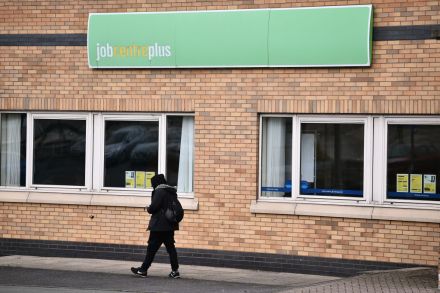
On the face of it, the Office for National Statistics (ONS) have just released great news on unemployment. The rate – against all expectations – has fallen from 5.2 per cent to 4.9 per cent. Radio 4’s Today programme welcomed the ‘surprising’ news. But this is no good news story. To be classed by statisticians

How the leasehold mafia screwed a generation of homeowners

From our UK edition

Buying a flat in Britain has increasingly become a fool’s errand, driven in part by the leasehold system trapping homeowners into flats. When Labour wrote their manifesto they promised reform to the leasehold system, but it remains a sticking point in Westminster due to heavy lobbying. Michael Simmons is joined by Harry Scoffin, founder from

How the leasehold mafia screwed a generation of homeowners

Britain’s economy is growing – but not for long

From our UK edition

It must be bittersweet being Rachel Reeves. Figures just released by the Office for National Statistics (ONS) show the economy grew by 0.5 per cent in February. That is significantly better than economists had expected and, coupled with the fact that January growth has been revised up, it marks probably the first piece of seriously

The IMF growth downgrade is more bad news for Rachel Reeves

From our UK edition

Rachel Reeves lands in Washington tonight to be greeted with bad news. The International Monetary Fund (IMF) – whose spring meeting the Chancellor is attending – has just handed Britain the largest GDP downgrade of any G7 country.  In the freshly released update to their world economic outlook, the IMF forecast growth for the UK

Is Britain losing its sense of fairness?

From our UK edition

49 min listen

Has Britain become a freeloader’s paradise, asks the Spectator’s economics editor Michael Simmons in our cover piece this week. Michael analyses ‘the benefits of benefits’, at a time when Britain’s welfare bill is burgeoning and most households are struggling with cost of living. For example, while a family of four can expect to pay £111

Is Britain losing its sense of fairness?

Benefits treats: how Britain became a freeloader’s paradise

From our UK edition

Plastered around Westminster this Easter were adverts for the Tower of London. ‘The perfect place for troublemakers – pre-book now,’ the poster read. ‘Members go free.’ So too – near enough – do those on Universal Credit (UC). Easter-holiday treats can be expensive for hard-working families. For those on benefits they’re a breeze. A trip

Could the Iran war wreck your mortgage?

From our UK edition

What has the war in Iran got to do with Britain’s house buyers? Michael Simmons takes a look at conflicting predictions from economists and the markets on the impact rising oil prices could have on interest rates. 2026 was expected to be one of the best years for first-time buyers to finally get on the

Could the Iran war wreck my mortgage?

Why is Britain so exposed to rising energy prices?

From our UK edition

The IMF has warned Britain is particularly vulnerable to another spike in energy prices, and is more exposed than many of its European neighbours. Why is that the case? And does the government have any real plan to shield households and businesses from the fallout? With the Tories and Reform calling for the government to

Why is Britain so exposed to rising energy prices?

Energy crisis: are we in 1973 territory?

From our UK edition

10 min listen

The panic has set in around the cabinet table about this energy crisis, and fears of history repeating itself. Tim Shipman writes in the magazine about the comparisons being made to 1973 and the Opec oil shock, with the government preparing for oil prices to reach £150 a barrel. What levers are available to the

Energy crisis: are we in 1973 territory?

Reeves’s energy bailout risks solidifying Britain’s welfare trap

From our UK edition

This week Rachel Reeves ruled out a blanket energy bailout to manage the fallout from the Iran war. That’s the right approach. But her targeting of a bailout – reportedly to those on benefits – risks solidifying Britain’s welfare trap. When the Chancellor gave her economic update to the Commons on Tuesday following an emergency

Why is Britain so ill-equipped to deal with economic shocks?

From our UK edition

The Organisation for Economic Co-operation and Development (OECD) has just confirmed what we already knew: Britain will be hit harder than almost anywhere else by the economic fallout triggered by the war in Iran. Updated OECD forecasts released today slashed predictions of UK growth for this year to just 0.7 per cent from the 1.2

To drill or not to drill, that is the question

From our UK edition

15 min listen

In the final Prime Minister’s Questions before Easter recess, Kemi Badenoch pushed Keir Starmer to commit to new oil & gas drilling licences. The Conservatives spot an easy win here – cost of living concerns are rising as America’s war with Iran continues. Plus, with a burgeoning welfare bill, the trade-offs are even trickier for

To drill or not to drill, that is the question

Inflation stalls before the energy shock hits

From our UK edition

Prices rose by 3 per cent last month – the same rate as the month before. Figures just released by the Office for National Statistics (ONS) show that – ironically – falling petrol costs were one of the main things keeping the Consumer Prices Index (CPI) from climbing. This data was, of course, collected before

Energy bailout? Why Britain can’t afford a cap on household bills

From our UK edition

22 min listen

Today Rachel Reeves promised ‘support for those who need it most’ as she updated MPs on measures the government is taking as the Iran war risks increasing energy bills. Michael Simmons is joined by Spectator writer Ross Clarke to discuss why energy bailouts won’t work, why Reeves is unfair to pile the blame on Liz

Energy bailout? Why Britain can’t afford a cap on household bills
Should we brace for another financial shock?

Should we brace for another financial shock?

From our UK edition

Britain’s response to the conflict in Iran is dominating Westminster – but is Keir Starmer really keeping the country out of war? After a tense Liaison Committee appearance exposed divisions over defence spending, pressure is also mounting on the government’s economic strategy. With energy prices rising, mortgage products disappearing and fears of inflation returning, how

Britain’s borrowing splurge is not sustainable

From our UK edition

After a record tax take and surplus in January, normal service has resumed. Britain experienced its second-largest February borrowing splurge since records began, according to figures just released by the Office for National Statistics (ONS). Last month we borrowed some £14.3 billion, which was £2.2 billion more than a year before and the second highest

Brace yourself: inflation is coming

From our UK edition

In a surprise to no one, the Bank of England’s Monetary Policy Committee (MPC) has voted nine-zero to hold interest rates at 3.75 per cent. The unanimous decision is the first time the MPC have been in complete agreement since September 2021. Before Trump and Israel’s bombs rained down on Iran, the markets had been

Britain may have finally turned a corner on jobs

From our UK edition

Finally, some good economic news: Britain may have turned a corner on jobs. Figures just released by the Office for National Statistics (ONS) show the unemployment rate remained flat at 5.2 per cent in January. On payrolled jobs there was positive news too: employees on PAYE payrolls in February grew at their fastest rate since

Britain can have AI or Net Zero – but it can’t have both

From our UK edition

8 min listen

Yesterday Rachel Reeves gave her Mais lecture and said UK would achieve ‘fastest AI adoption in the G7’. Today govt is publishing its position on AI rules that are crucial for keeping AI startups in the UK and not losing them abroad. Michael Simmons uncovers the data that shows just how costly of Britain’s energy

Britain can have AI or Net Zero – but it can’t have both