In 1983, having fought with my stepfather, I spent a night beneath the stars. Having run away from Yorkshire to London with a few pounds I’d saved working, I slept in a bed and breakfast but soon ran out of money. When a policeman kicked me awake in Victoria Station, I decided the coast might be an easier proposition. So it was that one night, after hitching across Sussex, I curled up in a bush near a railway station called Three Bridges. I was 16.
Though I had known homelessness as a toddler with my teenage mum – sleeping in tents, communes and squats – and would experience insecure housing over the following years, as far as I can remember, that was the only night I had absolutely no choice but to sleep rough. Even if a hostel had been available, I wouldn’t have known about it; and if I had known, I wouldn’t have risked it, because then the police or my stepfather might find me.
We need to be more tolerant of those who, for whatever reason, find themselves living lives that most of us would find unbearable
Over the following years, I lived for a year in a basement, a year sharing a windowless room above an Indian restaurant, three crazy, exciting years with hobo-boho friends in an Archway terrace marked for demolition, and periods ‘sofa-surfing’ – which sounds more glamorous than it actually is. Then, a lucky break: someone told me Peabody Trust were offering single men secure tenancies, then, as now, practically unheard of. At 24, I received the keys to a lovely flat in Farringdon and my troubles were finally over – or so I thought.
Unfortunately, I found living alone difficult. When the loneliness became overwhelming, I would hang round the streets or ‘The Slab’ outside King’s Cross, sometimes sleeping rough or with people I really shouldn’t have. I realise now I was quite ill, damaged by certain childhood experiences, and angry; the flat made life a bit easier, but on its own wasn’t enough: you also need purpose, support structures and regular employment.

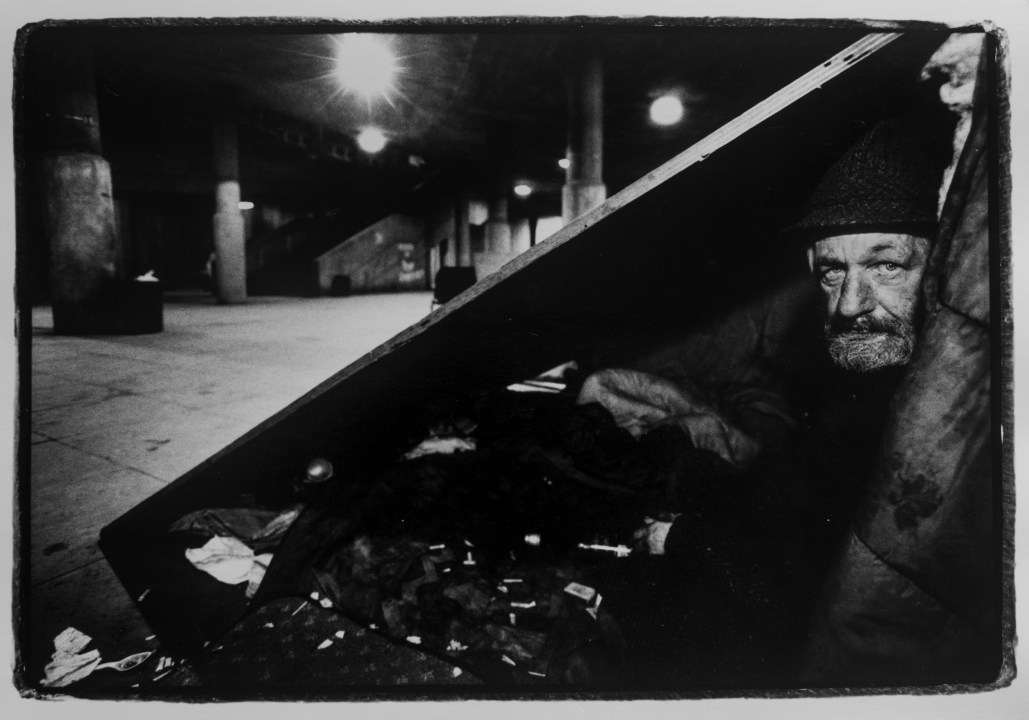
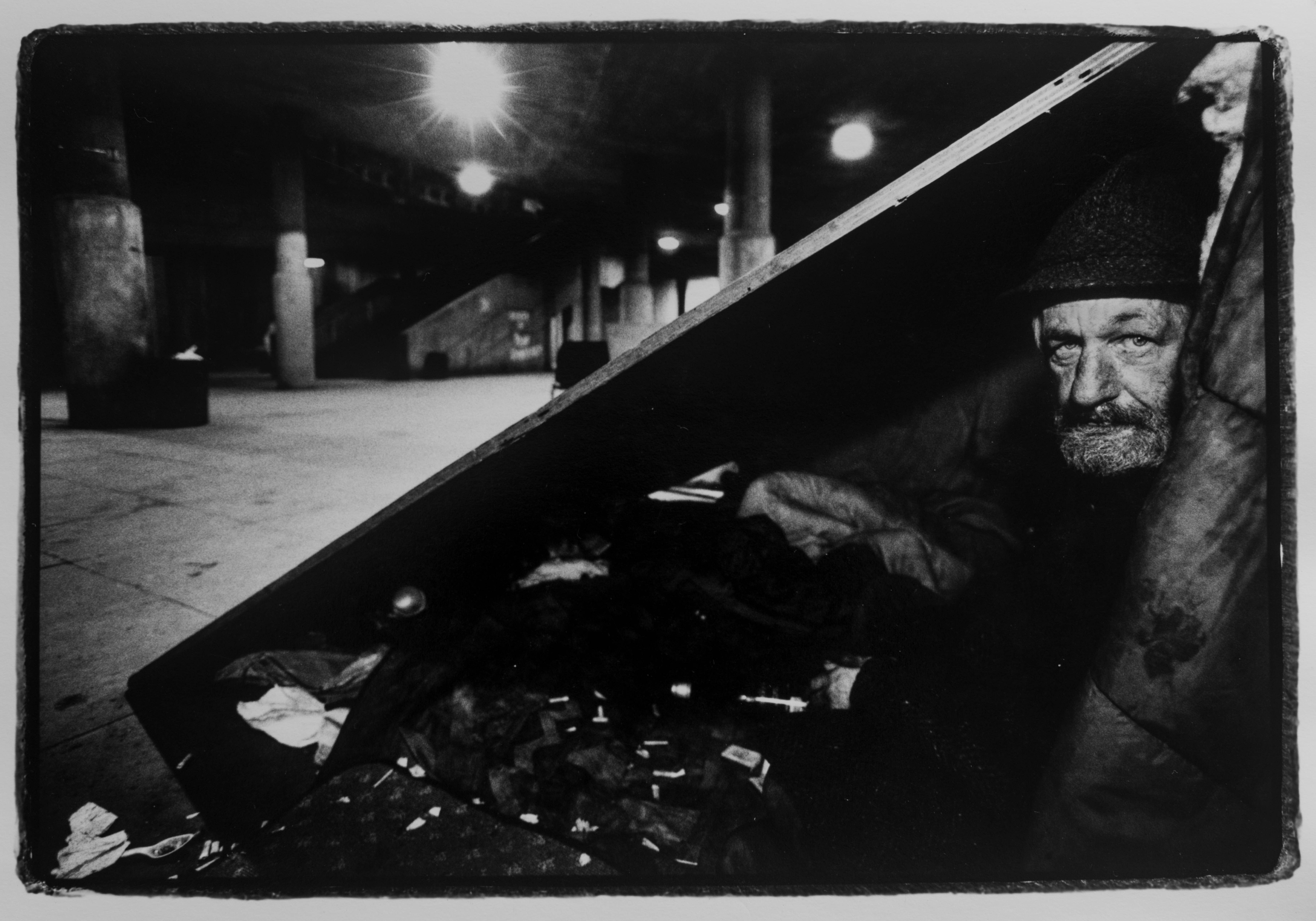
By my late twenties I had begun to turn things round, realising that if I was to make any sense of my life I must become a writer, and enrolled for a degree to complete the education I had been missing. In my final year I chose ‘homeless fiction’ for my dissertation, viewing it as a symbol of, natch, the ‘postmodern condition’. Around the same time I was asked to help with a Crisis project by Danish photographer Martin Toft: he had been working with London’s street community, including rough sleepers, hostel-dwellers and the inhabitants of the Bull Ring in Waterloo, who erected cardboard ‘bashes’ now long gone.
I discovered that many of our ‘subjects’ had been in my position, finding it impossible to cope on their own in a sterile flat, far away from friends. Others had been unlucky, unwell or unfaithful; one well-spoken chap claimed to own his own Scottish island, yet preferred to sleep beneath bridges. Many, though not all, were addicted to drugs or alcohol, mentally ill; some had been through the care system, left prison or the services, or experienced childhood abuse. The homeless ‘community’ – if it qualifies as such – is in truth composed of people straddling every class, race and background. If asked to identify a common trait, I would have to say the one to which I had always been prone, which manifests itself in drug use, violence and self-harm: self-loathing.
As part of my dissertation, it was suggested by my tutor that I include the works of John Healy, author of The Grass Arena. Coincidentally, John was involved in celebrations at the Globe Theatre to celebrate the 30th anniversary of Crisis; Martin provided some of his homeless portraits, blown up to poster size; I wrote the captions. John and I hit it off: he invited me to his flat in the Cally for tea, and for years afterwards phoned to read me extracts from his next book, The Glass Cage, which recently found a publisher. (John took issue with my description of The Grass Arena as being ‘about’ homelessness; for him the book was about being an alcoholic, damaged and angry.)
For additional research for our project, I visited the Crisis Christmas shelter in East Dulwich. Rather than take up a precious mattress, I stayed awake, talking to the ‘guests’, aware that if you were in a shelter at Christmas you really had no other choice. I spoke to bewildered old Jamaicans, smack heads from Somerstown, young Asians and Geordies, each with their story I dutifully recorded for our project – wondering, occasionally, which side of the line I was on.
The shelter closed before New Year’s Eve: everyone disgorged back onto the streets, back to the danger, excitement and chaos. I returned to my little flat to complete my degree and our project – which never found a publisher, despite Martin’s wonderful photographs. Not long after, I almost died; that was the night I resolved to change. I was lucky; perhaps I always had other options. According to the ONS, the average lifespan for a man on the streets is 47, 43 for a woman. I’m guessing many of the subjects of Martin’s project are now dead.
Andy Burnham’s ambition to get every rough sleeper off the streets by Christmas is a laudable aim. Unfortunately, it’s doomed to failure. Not everyone wishes to be found; not everyone wants to sleep in a hostel with druggies and lunatics; not everyone would rather sleep in a Lewisham tower block than a Waterloo ‘bash’. There is no single solution to the problem of rough sleeping (which is of course also a problem for those forced to witness it). We need more support for people with mental health problems, with addictions, for those leaving the institutions – care, the army, prison – and for those who experience or witness domestic abuse. We need better jobs, and to get a grip on illegal migration: years ago, most rough sleepers were Scottish, Irish or from the north, whereas now many have foreign accents.
We need to make some hostels drug- and alcohol-free, with single-sex options for those who need them, and double rooms for couples, often forced apart by the brutality of life on the street and by pointless if well-meaning regulations. We need cheaper housing, more flexible housing and temporary housing for those who need it – rather than erecting shelters, which would soon become magnets for low-life, I suggest mobile homes or Japanese-style pods that move on a regular basis.
We also need to be more tolerant of those who, for whatever reason, find themselves living lives that most of us would find unbearable. Because homelessness can happen to anyone – even you, dear reader. Even, as I discovered beneath that bush in Three Bridges, to people like me.






Comments