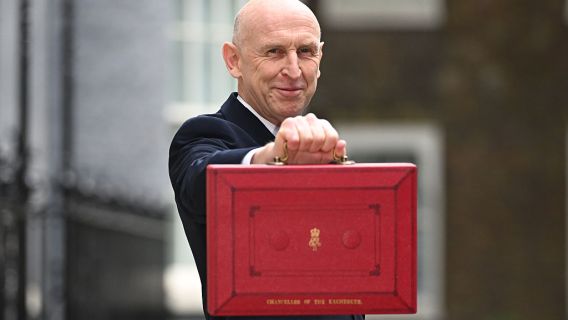
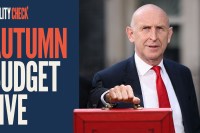
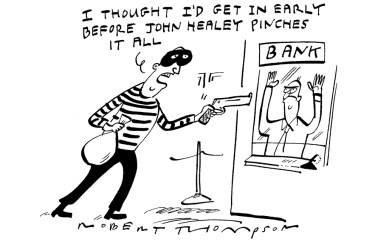
Healey’s Budget: ‘swirling uncertainties’ and 4p off gherkins









All the latest analysis of the day's news



An intelligent mix of culture, food, style and property, plus where to go and what to see.


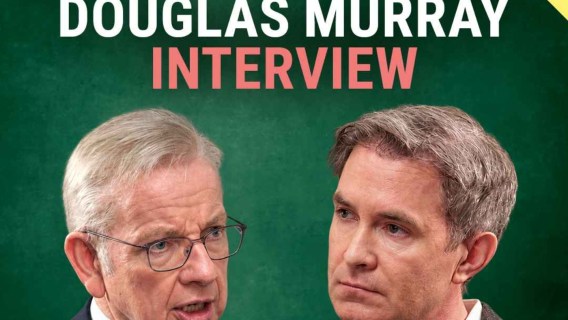
By the age of 13, Alex Wood was a virtuoso violinist, though he was later sentenced to seven years in prison for fraud. He is now a renowned expert on cybercrime, money laundering and illegal betting operators. Oh, and for good measure, he is a Fellow of the Society of Arts. Just the sort of chap you want in your corner. Recently, as an experiment, he and I opened a black-market betting account together. I say ‘together’ because we used my identity and his credit card. The unlicensed bookmaker could not have been more helpful. They didn’t care how old we were, whether we had any addiction issues or the fact that our personal and financial details didn’t match. But their attitude soon changed when we struck a winning bet: they wouldn’t send us our winnings.

This week's magazine
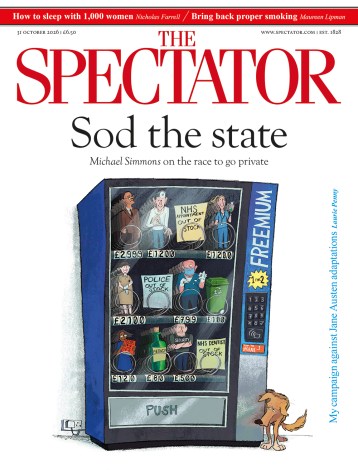
The race to go private
Postwar Britain can be defined by a bargain made with its middle class: pay for public services but benefit from them too. Private education has always been the choice of a very small minority; private healthcare was reserved for the wealthiest and those whose employers paid for it. Middle England was content to send their children to the same schools as everyone else and use the same GPs, hospitals and dentists. This is no longer true. State spending continues to grow, yet large parts of the population now pay privately to supplement what their taxes have already provided.
Postwar Britain can be defined by a bargain made with its middle class: pay for public services but benefit from them too. Private education has always been the choice of a very small minority; private healthcare was reserved for the wealthiest and those whose employers paid for it. Middle England was content to send their children to the same schools as everyone else and use the same GPs, hospitals and dentists. This is no longer true. State spending continues to grow, yet large parts of the population now pay privately to supplement what their taxes have already provided.
The good, the bad and the ugly in books, exhibitions, cinema, TV, dance, music, podcasts and theatre.
Authors hate it when reviewers refer to their book as a ‘weighty tome’ as it implies that the contents are going to be about as much fun as Deuteronomy. So I should make it clear that while Tim Hayward’s The Cocktail Hour (Quadrille, £20) is extremely weighty, that’s because the production values are off the scale. The monks at Lindisfarne could scarcely have put more effort into illuminating their work. And while the paper is heavy, Hayward’s writing is as refreshing as a perfectly made dry martini. There are hundreds of cocktail books out there, but none combine Hayward’s erudition, obsession and sense of humour. He is at once deadly serious and very, very funny. It’s the best book on the subject since Bernard DeVoto’s 1948 book The Hour.






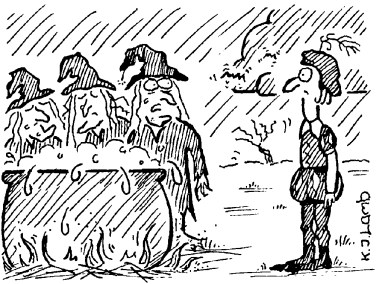
Cartoon
Cartoon
Cartoon