Rory Hanrahan

Rory Hanrahan is originally from Ireland. He now lives in Oxfordshire, where he manages three village pubs with his wife.

Will Gerry Adams let truth prevail?

From our UK edition

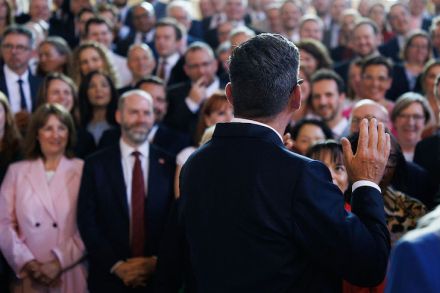
Picture Gerry Adams in a dimly lit courtroom, one hand raised in statesmanlike denial, the other twitching like Dr. Strangelove's infamous Nazi salute, struggling to contain the contradictions of his many roles. Peacemaker? Politician? Bearded bard? Or something darker, as my late father always insisted: the architect of republican violence, a figurehead for the IRA and Sinn Féin, like 'two cheeks of the same arse', to borrow George Galloway's colourful phrase? Adams has always denied involvement with the IRA. Starting today, Adams will face a civil trial in London's High Court accusing him of IRA membership and involvement in bombings that scarred innocents between the 1970s and 1990s. This could be Adams's last chance to fully confront the past.

Can Nigel Farage save the great British pub?

From our UK edition

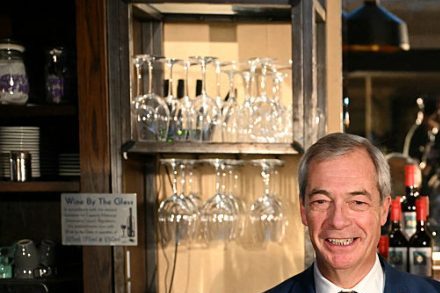
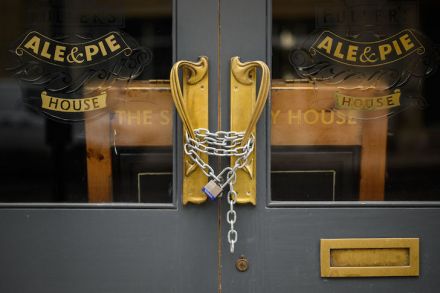
Good morning from behind the bar, where the beer is still pouring – just. So far this year I have been involved in the sad, and probably permanent, closure of three family-owned pubs. The choice was stark in each case: bankruptcy or fold up. Three families almost ruined, three perfectly good business that employed over a dozen staff and three villages that had already lost their churches, their post offices and – the final nail in the coffin – their pubs. I watched Nigel Farage and Lee Anderson, pint in hand, holding a live-streamed conference from behind a pub bar on Wednesday.

Starmer’s war on pubs shows he was never serious about growth

From our UK edition

To a landlord in a draughty Victorian boozer staring at his latest business rates bill, it will read more like a ransom note from the mafia than a letter from HMRC. In 2026, under Keir Starmer’s ‘growth-first’ regime, this chap’s rates have rocketed. While Starmer is strutting the stage at Davos or waxing lyrical or at some CBI luncheon about ‘unleashing Britain’s potential’ and ‘building a brighter future’, delivering drivel so vacuous that it would make even Tony Blair blush, his government is unleashing policies that are throttling the engines of economic growth. The changes to business rates are exhibit A, a perfect storm of outdated valuations, inflationary hikes and half-hearted reform.

Social media visa vetting would protect Britain’s Jews

From our UK edition

You don’t need to be a fervent admirer of Donald Trump to recognise that, on matters of national security and cultural cohesion, he hits the bullseye our establishment prefers to evade. His administration’s recent proposal – requiring travellers from visa-waiver countries, including Britain, to disclose five years of social media history as part of the Electronic System for Travel Authorization (ESTA) – has drawn the usual transatlantic sneers: an assault on privacy, a chilling of free expression, another Maga excess. Yet recent events show social media vetting can expose troubling views. If Britain wants to protect its Jewish citizens – especially young scholars besieged on university campuses – it should follow suit without delay.

Why pubs shouldn’t ban Labour MPs

From our UK edition

In Britain's public houses, a rebellion is brewing. Landlords, hit hard by the Labour government's fiscal measures – higher employer National Insurance, slashed business rates relief, and policies that threaten closures – have started discussing boycotts. The plan: bar Labour MPs from the premises as a protest against the erosion of the hospitality sector. As a pub manager approached to join this effort, I've considered it carefully. Yet I must reject it. Such a ban, however appealing in frustration, is anti-conservative and undermines the pub's role as a neutral space. The plan: bar Labour MPs from the premises as a protest against the erosion of the hospitality sector The facts are stark. This government's policies risk catastrophe for pubs.

It’s no surprise that the Bondi Beach attackers are related

From our UK edition

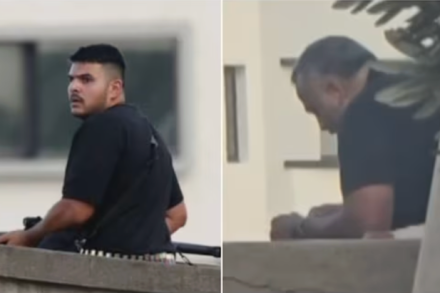
The sun had barely set over Sydney’s Bondi Beach, when horror unfolded at the Hanukkah celebration. A father and son, armed with licensed firearms, opened fire on a crowd of hundreds gathered for the Jewish holiday, killing at least 15 people and injuring more than 40 others. The perpetrators have been identified as Sajid Akram, 50, who was killed by police at the scene, and his 24-year-old son Naveed Akram, who remains in a critical condition in hospital after being shot by police. The father-son dynamic here is no coincidence; it speaks to how hatred is often inherited The attack is Australia’s deadliest mass shooting in nearly three decades, a stark anomaly in a nation with stringent gun laws.

Dublin is quietly becoming a Jew-free city

From our UK edition

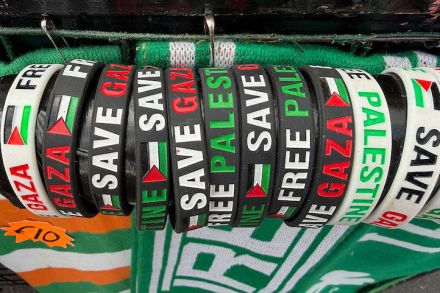
Dublin's councillors have seen sense – for now. They were due to vote today on a proposal to rename the city's Herzog Park. Chaim Herzog – the Belfast-born, Dublin-raised, British officer who helped liberate Bergen-Belsen, and became the sixth president of Israel – was set to be be airbrushed away in a ritual of performative righteousness. Some even proposed 'Free Palestine Park', a slogan as empty as it is vicious, as its new name. But late last night, Dublin City Council boss Richard Shakespeare said he was proposing to withdraw the report that could have led to the renaming of Herzog Park, on a point of legislative technicality. He apologised for 'administrative oversight'. This will offer little reassurance to Dublin's worried Jews. This is not about a park.

Rachel Reeves may have just killed the Great British pub

From our UK edition

It is just after tea-time on Budget day, and my pub is already half-empty. A few hours ago, Rachel Reeves stood up and, in the name of 'fiscal responsibility', drove the final nail into what remains of Britain's hospitality industry. By failing to address the devastation that Labour's decision to hike employers’ National Insurance did to pubs, restaurants and hotels, it could be game over for hundreds of beloved locals. Reevesageddon is not just a Budget. It is a requiem. Raise one last pint while you still can There was little in the way of good news for us publicans in the Budget, but there was plenty to make us worry. Alcohol duty will rise in line with inflation, making the cost of a pint – already too much for many drinkers – even greater.

Britain has imported Ireland’s sectarian strife

From our UK edition

At times, I still hear my late father, Sean O’Callaghan’s, voice echoing in my mind. Sean died in 2017 but there's no doubt what he'd make of Britain today: that the sepsis of sectarianism is slowly, but surely, poisoning our bloodstream. We're entrenching extremes and sidelining moderates. Northern Ireland’s lesson is stark: entrench extremes, and moderation dies; let sectarianism fester, and democracy becomes zero-sum The ugly scenes outside Villa Park this week as pro-Palestinian and Israeli protesters faced off are a shameful reminder of how British politics is changing for the worse. Britain's new Islamo-socialist alliance is gaining ground: from Corbyn's Your Party, to pro-Gaza independents.

Why Jeremy Clarkson’s pub, The Farmer’s Dog, is thriving

From our UK edition

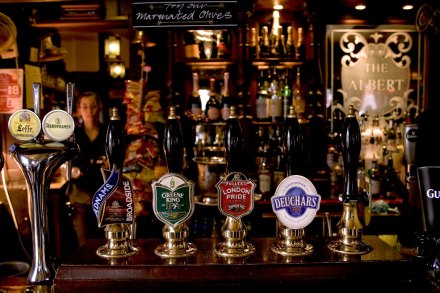
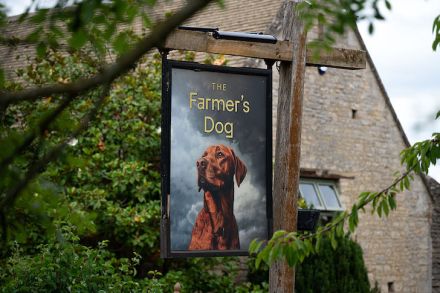
The tale of the death of the British pub has been well told. Around eight boozers a week are serving last orders for the final time. But some pubs are bucking the trend, the most famous of which is The Farmer’s Dog in Oxfordshire, Jeremy Clarkson’s latest success story. What is its secret? Running a pub, Clarkson says, is harder than farming. He's right It's not hard to see the appeal of this pub, a welcoming brick building with a spacious terrace overlooking the rolling Cotswold hills. When I visited a few weeks ago, the pub felt alive, bustling without descending into chaos. It's a far cry from the boarded-up boozers I’ve lamented in these pages.

Charlie Kirk could have been president

From our UK edition

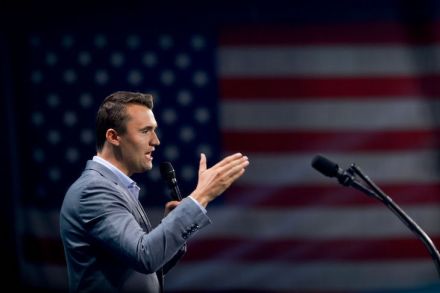
As with so many political assassinations across the Atlantic – the Kennedys, Martin Luther King –Charlie Kirk's killer is likely to be some deranged individual, a lone wolf driven by fevered delusions, perhaps, or a sick, mentally ill person. His murder, though, is anything but mundane. Kirk was not just another talking head; he was a phenomenon, a young firebrand, a brilliant, charismatic, honourable man who believed in discourse over violence, who repeatedly warned us that, when we stop talking with those we disagree with, civil wars start. That he was also a young husband and father, whose children will never get to know their dad, is heartbreaking.

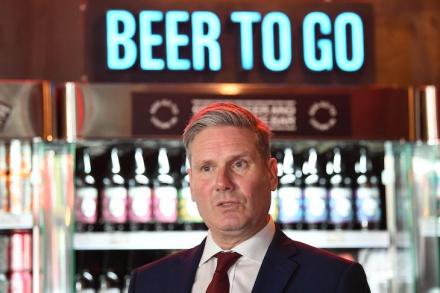
Let’s raise a pint to BrewDog – and hope it bounces back

From our UK edition

BrewDog is in trouble. Its beers have been axed by nearly 2,000 pubs. Punk IPA – once a craft beer titan – has vanished from bars across Britain. The firm is closing ten of its own pubs, including its flagship bar in Aberdeen. Last month, co-founder Martin Dickie left. There's little doubt that BrewDog has lost its shine; it's no longer the cool brand it was. But the firm's troubles are nothing to celebrate. James Watt and Dickie, the two Scottish lads who founded the firm, are heroes of mine. They took on the beer giants and built an empire from a shed with raw cheek and grit. Their success is a tale of a British triumph that shook an industry, riled the PC mob. Now, BrewDog fights to stay afloat.

The great British pub is not dead yet

From our UK edition

My Oxfordshire taproom used to sing on Fridays: carpenters, teachers and office clerks, knackered from the week’s graft, would elbow for pints in a natural democracy of nods and grins. The bar was a grand leveller – toff or tiler, all waited their turn and banter stitched the room together. Post-pandemic, that tune has gone quiet. Now, working from home has throttled the after-work scrum and business limps across midweek evenings. The pub trade has troubles, no question. Energy bills, up a fifth in a year, are choking profits. National Insurance hikes, the return of the full charge of VAT and rocketing business rates (some landlords face £20,000 a year) make pouring pints costly.

Norman Tebbit, forgiveness and my father, the IRA bomber

From our UK edition

Norman Tebbit, who died this week at the age of 94, embodied a sterner Britain. His political career was remarkable but it paled in comparison with his unyielding love for his wife Margaret, whom he wheeled through life for four decades after the IRA’s Brighton bomb paralysed her body in 1984. Tebbit never forgave those who nearly killed him and left his beloved wife in pain for the rest of her days. My dad met Tebbit several times, earning his 'hero of the week' nod in his Sun column for exposing the IRA My father, Sean O’Callaghan, was an IRA bomber who turned against his comrades and, in doing so, saved countless lives. He thwarted a bomb plot in 1983 aimed at Prince Charles and Princess Diana.

Red tape is ruining Britain’s pubs

From our UK edition

Takings were falling. Regulars were drifting away. Our pub was in a bad way. It was clear that things needed to change. But, paralysed by fear of an employment tribunal in a legal system tilted against employers, we felt trapped. If we sacked the managers and replaced them, we could find ourselves embroiled in a messy legal case that could cost us everything. So, drowning in paperwork, warnings, hearings, improvement plans, and risk assessments, we endured. Running a pub felt less like hospitality than surviving a siege of bureaucracy. That was when I saw it. This wasn’t just one bad incident. Our beloved pub was being strangled in red tape. We're not alone. It's as if publicans can't be trusted to behave like adults. No wonder so many pubs are closing.

The sad death of the English pub

From our UK edition

It was a drizzly Tuesday evening in the 17th-century Oxford village pub I manage, the kind of night when regulars huddle close to the bar, pints glowing amber under low lights. An old chap in a flat cap, nursing his third ale, grumbled about the council’s latest parking scheme. The village curate, leaning on the bar, sparred with the local councillor over the steep cost of saving the church roof. A young couple, new to the area, weighed London against Oxford, sneaking glances at the football on the telly. For a moment, the pub hummed with life – a microcosm of England, where strangers turn mates and the day’s weight lifts in shared chatter. At their best, pubs are living rooms for the nation.

Why do some Irish people hate Israel so much?

From our UK edition

It was a quiet lunch shift at the pub in Oxford where I work, the kind of day when the bar feels more like a confessional than a business. A lone customer, a woman with a light accent I took for Dutch, had just finished her meal and approached to pay. Playing the host, I made small talk. How bad have things become for Israelis here? “Where are you from?” I asked, expecting the usual tourist’s reply. Her face tightened, her voice dropped to a near-whisper. “Israel,” she said, bracing herself as if I might leap over the bar and chase her out into the street. I reassured her – I support Israel, I said, and I’m ashamed of how Jews are being treated in Britain today.