Lisa Haseldine

Lisa Haseldine

Lisa Haseldine is The Spectator's online commissioning editor - foreign affairs.

Ukraine is having fun attacking ‘Russia’s Amazon’

From our UK edition

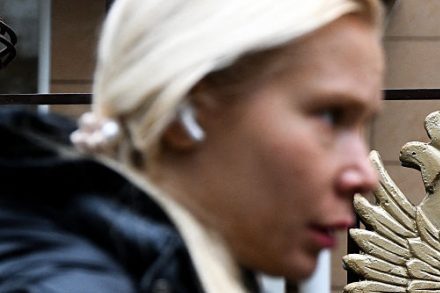
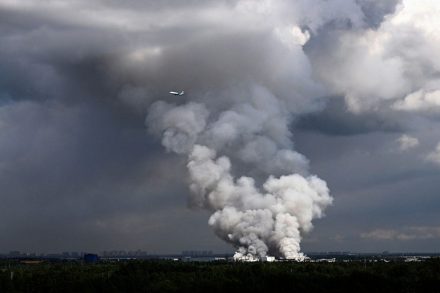
Have you ever wondered how much it costs to buy a drone, body armour, a combat helmet, a body bag or an AK assault rifle magazine in Russia? Not on the dark web, but on the open internet. To buy these items on Wildberries – the Russian answer to Amazon – would cost you (in order) as little as the equivalent of £41.95, £220, £90, £6.10 and a cheap and cheerful £5.50. It’s for this reason that the online retailer, owned by Russia’s richest woman Tatiana Kim, has become the latest target for Ukraine in its effort to fend off Russia’s invasion. Starting on 18 July, the Ukrainian army has begun sending drones into the country to attack warehouses and logistics centres belonging to Wildberries on a near-nightly basis.

What can Europe expect from America’s ‘Nato 3.0’ review?

From our UK edition

The moment many European leaders had been awaiting with nervous anticipation arrived yesterday evening when the American Under-Secretary of War, Elbridge Colby, announced that the US would, at long last, be undertaking a review of its military presence on the continent as part of its commitment to Nato. Colby said: ‘This will be a real review, designed to ensure that Nato is moving fast and irreversibly toward Europe taking primary responsibility for its conventional defence.’ The US Department of War has been threatening to launch this review for much of this year so far. Secretary of War Pete Hegseth used a meeting of Nato defence ministers in June to confirm that the review would be going ahead imminently.

Burnham’s support for Ukraine is off to a positive start

From our UK edition

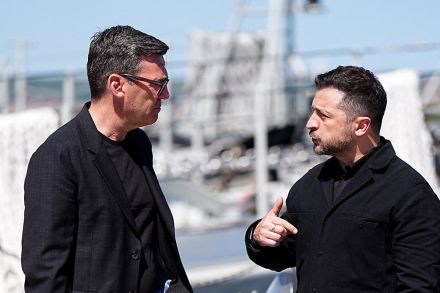
Andy Burnham has given precious little away on his approach to foreign and defence policy since taking office last week. Today, however, we got a small glimpse of one aspect of what that might look like. This afternoon Volodymyr Zelensky, the Ukrainian president, became the first foreign leader to be hosted by the new prime minister in Britain.  The pair met at Portsmouth naval base to inspect the 200-odd Ukrainian soldiers currently completing maritime exercises there. Burnham afterwards confirmed that the pair had also discussed the question of supplying anti-ballistic missiles to Ukraine ahead of the winter to allow it to better protect its critical infrastructure.

Trump has not forgotten about Greenland

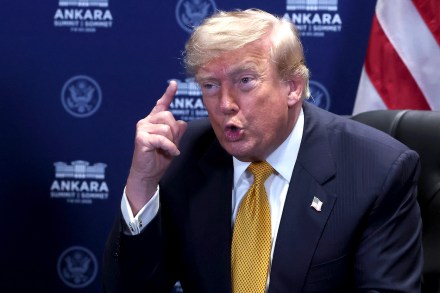
If European leaders had a bingo card of all the fights Donald Trump could pick with them, at this week’s Nato summit in Ankara they would have won a blackout. Starting as he meant to go on, Trump used a joint briefing with Nato chief Mark Rutte this morning to reheat his litany of grievances with fellow members of the alliance. Trump today declared that he was ‘not happy with Nato because of what they did with Greenland’ and their refusal, as he sees it, to help the US with the war in Iran. Greenland, the President said, was a ‘big problem for us’, going on to claim – falsely – that ‘it’s not important for Denmark’.

The defence investment plan is Starmer’s sad swansong

From our UK edition

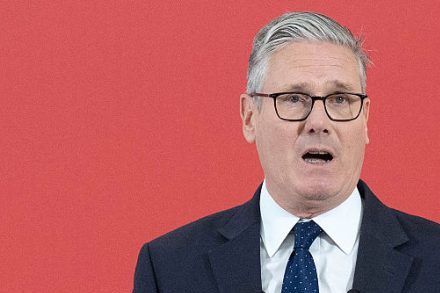
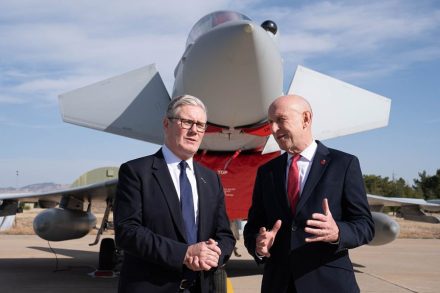
With just a few weeks until he is expected to step down as prime minister, Keir Starmer chose a drone factory in Berkshire as the location from which to deliver his swansong: the Defence Investment Plan (DIP). Starmer was joined at the venue by Defence Secretary Dan Jarvis – in the job for less than three weeks – and, unexpectedly, Chancellor Rachel Reeves to present the headlines of the DIP, published today after a delay of more than seven months. Reeves confirmed that the Treasury is handing the Ministry of Defence (MoD) £15 billion over the next four years as part of the DIP.

The Defence Investment Plan won’t save Starmer’s legacy

From our UK edition

Despite resigning as prime minister and leader of the Labour party on Monday, Keir Starmer is determined to publish the much-delayed defence investment plan (DIP) ahead of the Nato summit in Turkey on 7 July. Speaking at a conference in London yesterday, Defence Secretary Dan Jarvis confirmed that he was ‘working to finalise and publish the DIP before I travel to Ankara with the Prime Minister' in less than a fortnight. The fact that Starmer is still determined to publish the DIP is surprising. Most presumed after his resignation that the defence spending blueprint, along with any other unfinalised policies and projects, would be put on ice, ready for his successor – expected to be the former Manchester mayor Andy Burnham – to review, drop or push through.

Why did a Russian warship fire at a British yacht in the Channel?

From our UK edition

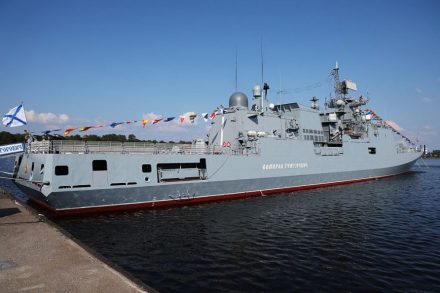
As the fallout from Keir Starmer’s defence funding row continues, Britain has been served a timely reminder of the importance of being prepared for a fresh escalation of tensions with Russia. A Russian warship, the Admiral Grigorovich, fired warning shots at an unarmed British civilian yacht in the Channel shortly before lunchtime yesterday. The circumstances around the incident – which took place 20 nautical miles off the Isle of Wight, outside British waters – remain somewhat unclear. The owners of the 40-foot British yacht, Jane and Alan Kelvey, claim they came no closer than 500 metres (0.3 miles) to the 409-foot Admiral Grigorovich. The Russian warship then sounded its horn a number of times before firing its guns, they said.

Starmer has left Europe in quiet despair

From our UK edition

Foreign diplomacy is usually a refuge for Keir Starmer. But as the Prime Minister touched down in Evian-les-Bains, France for this week’s G7 summit, the warm greetings and firm handshakes couldn’t hide the tension that has bubbled up between Starmer and the summit’s other attendees over the past week or so. With Thursday’s Makerfield by-election hanging over him like an impending political death sentence, Starmer had been hoping to sweep into Evian and talk up Britain’s support for Ukraine, show willing on keeping the peace in the Strait of Hormuz and, generally, demonstrate that he is the right prime minister – and, crucially, ally to Europe – to face the defence and security threats on the continent’s horizon.

Will John Healey’s resignation make Starmer listen on defence?

From our UK edition

After a week of government paralysis, it appears something has finally broken the deadlock: John Healey has resigned as Defence Secretary. In a withering letter to Keir Starmer, Healey accused the Prime Minister of being ‘unable’ and the Treasury ‘unwilling to commit the resources that the nation needs to defend the country at this time of rising threats’. The Defence Investment Plan (DIP), he said, ‘falls well short’ of what Britain’s defences need. In his letter, Healey revealed that he was first given sight of the final DIP settlement on Monday, which revealed that support would be backloaded and rise to just 2.68 per cent of GDP in 2030. This falls well short of the 3 per cent by 2030 that Healey has been pushing Starmer and Chancellor Rachel Reeves to commit to.

Lisa Haseldine, Michael Simmons, Patrick Smith & Toby Young – with Nigel Farage

From our UK edition

29 min listen

On this week’s Spectator Out Loud: Lisa Haseldine reports from Armenia; Michael Simmons argues neoliberalism has never really been tried; Patrick Smith explains why he takes frog poison; and finally, Toby Young wonders why Nigel Farage cares if he has been banned from Desert Island Discs. Plus: the Reform UK leader reveals – exclusively to James Heale – what he would choose if he went on the show. Produced and presented by Patrick Gibbons.

Lisa Haseldine, Michael Simmons, Patrick Smith & Toby Young – with Nigel Farage

Russia is relying on drones to bring it victory in Ukraine

Earlier this week, Ukraine was subjected to one of the largest aerial assaults by Russia since the start of Vladimir Putin’s invasion over four years ago. Overnight from Monday into Tuesday, Russia sent 73 missiles and 656 drones into Ukraine, killing at least 21 and injuring dozens across the country. According to the Russian Ministry of Defence, this strike was retaliation for a Ukrainian attack on a vocational school in the occupied region of Luhansk on 22 May. But, as the Kremlin’s war grinds on well into its fifth year, it also appears to signal a step change in how the Russian armed forces are choosing to fight.

Russia won’t give up Armenia without a fight

From our UK edition

Since January, Karapetyan, leader of the Strong Armenia party, has been unable to leave his hilltop mansion to campaign ahead of Armenia’s parliamentary elections on Sunday. Last year, he waded into a fight between the Armenian Apostolic Church and the country’s prime minister, Nikol Pashinyan, leader of the Civil Contract party. His call for Pashinyan to stop pursuing clergymen critical of Pashinyan’s efforts to establish peace with neighbouring Azerbaijan was interpreted as a call to overthrow the government. Karapetyan was arrested, interrogated and spent six months in pre-trial detention before his sentence was commuted to house arrest. He denies the charge. How do you fight an election if you’re under house arrest?

Was Donald Trump’s great-uncle a Nazi?

From our UK edition

Donald Trump has long claimed to be proud of his German ancestry. But the American president might be wise to reconsider. Christ was one of the Nazi party’s Alter Kämpfer – loyalists who had joined in the party’s pariah years At the end of last month, the US National Archives published the files of millions of Nazi party members online. The documents had been saved from the Nazi party’s headquarters in Munich in April 1945 by the owner of a local paper mill, who had disobeyed orders to destroy them ahead of the American advance on the city. Instead, he hid them, handing them over to US troops who, in turn, used the files to prosecute former Nazis in the aftermath of the second world war.

Putin’s paranoia was plain to see at Moscow’s Victory Day parade

From our UK edition

Thanks to Donald Trump, Vladimir Putin could enjoy his Victory Day parade in Moscow safe in the knowledge that no Ukrainian drones would come hurtling onto Red Square while he was inspecting the Russian troops. Taking to Truth Social last night, the American president declared that he had requested that Moscow and Kyiv observe a three-day ceasefire, starting today and lasting until 11 March.  ‘This ceasefire will include a suspension of all kinetic activity, and also a prison swap of 1,000 prisoners from each country,’ Trump said. At the time of writing that truce is still holding, with both Putin and his Ukrainian counterpart Volodymyr Zelensky stating that they would stick to the agreement.

Why is maternity care in Britain getting worse?

From our UK edition

Chelsea and her partner had been trying for a baby for two years. Following several miscarriages, she became pregnant again last spring. ‘We were overjoyed,’ the 26-year-old says. ‘We thought this time everything would finally be different.’ Joy rapidly turned to worry when Chelsea began to suffer headaches and visual disturbances and made several trips to Worthing Hospital, part of University Hospitals Sussex NHS Foundation Trust. Eventually, foetal distress was picked up during a scan; after a transfer to another hospital and an emergency Caesarean, Bonnie was born in September at just over 26 weeks’ gestation. She had suffered a brain bleed and had chronic lung disease. ‘I knew something wasn’t right,’ Chelsea says.

Trump’s missile cut has left Germany exposed

It has been a choppy 12 months for transatlantic relations since Friedrich Merz was sworn in as chancellor of Germany a year ago today. Fittingly, he is marking one year in office by dealing with the fallout of a spat with Donald Trump which has resulted in very real consequences for German – and potentially European – defence. On Friday, the Pentagon announced that 5,000 American troops would be withdrawn from German soil over the coming six to 12 months. Additionally, contrary to an agreement struck between Merz’s predecessor Olaf Scholz and Joe Biden, no new intermediate-range missiles would be stationed in Germany in the immediate future.

Gwyn Jenkins: ‘Russia remains the gravest threat to our security’

From our UK edition

With Donald Trump’s noisy war on Iran about to enter its third month, it can be easy to forget that another conflict is going on much closer to Britain’s shores. Vladimir Putin’s war on Ukraine is creeping towards a grim milestone of its own: by the beginning of June, it will have gone on for longer than the First World War. Today, Navy chief Sir Gwyn Jenkins issued a timely reminder that the danger posed by Moscow extended far beyond eastern Europe. ‘Russia remains the gravest threat to our security,' he warned. Speaking at the Royal United Services Institute (RUSI) think tank in London, Jenkins, First Sea Lord and Chief of the Naval Staff, revealed that incursions by Russian ships and submarines into British waters had jumped by almost a third in the last two years.

How does Starmer plan to secure the Strait of Hormuz?

From our UK edition

Despite usually being a fan of escaping domestic trouble with travel abroad, Keir Starmer would be forgiven for thinking his trip today was terrible timing. The Prime Minister was in Paris this afternoon for a summit hosted by president Emmanuel Macron tackling the thorny issue of how to make the Strait of Hormuz safe again. Starmer joined Macron alongside approximately 50 representatives of other countries for the meeting – named the ‘Strait of Hormuz Maritime Navigation Initiative’. While many leaders, including those from Australia, Canada and South Korea, dialled into the meeting virtually, Starmer and Macron were joined in person by their German and Italian counterparts Friedrich Merz and Giorgia Meloni. Notably, no representative from the US was invited.

Even dirty Russian tricks might not save Viktor Orban

From our UK edition

With a week to go until Hungary heads to the polls, Prime Minister Viktor Orban is fighting to save his political skin. Unusually for a set of Hungarian parliamentary elections, on 12 April, eyes across Europe and beyond will be glued to this set of results. Whether or not Orban remains in power will have widespread ramifications, not just for Hungary but also for the EU – and even Ukraine and Russia. After 16 years in power, Orban’s Fidesz party is trailing in the polls with roughly 39 per cent compared to the approximately 49 per cent of his opponent and former Fidesz colleague Peter Magyar’s party, Tisza – relaunched under his leadership just two years ago.

Lisa Haseldine, Matthew Parris, Damian Thompson, Peter Pomerantsev, Chas Newkey-Burden & Catriona Olding 

From our UK edition

41 min listen

On this week’s Spectator Out Loud: Lisa Haseldine reports from Svalbard; Matthew Parris reflects on the Iran crisis during Holy Week; Damian Thompson assesses how Pope Leo XIV is quietly reshaping the Vatican; Peter Pomerantsev reviews Jack Watling’s Statecraft; Chas Newkey-Burden provides his notes on marathons; and finally, from Provence, Catriona Olding reflects on comfort and companionship. Produced and presented by Patrick Gibbons.