Melanie McDonagh

Melanie McDonagh

Melanie McDonagh is an Irish journalist working in London.

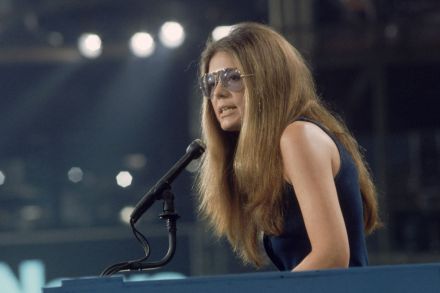
Gloria Steinem made feminism slick – and dishonest

So, it’s farewell to Gloria Steinem at the astonishing age of 92: the feminist whose most striking attribute to those outside the movement was that she was terrifically easy on the eye. It didn’t endear her to the ugly sisters of the movement who complained about her unholy glamour, but it was an advantage she put to good use when she became a Playboy Bunny Girl in 1963 so as to write for Stage magazine about the sheer disagreeableness of life in that bit of Hugh Heffner’s porn kingdom.

Gloria Steinem
Has Reform UK lost its magic? – and why Middlesbrough’s young men don’t care

Has Reform UK lost its magic? – and why Middlesbrough’s young men don’t care

From our UK edition

34 min listen

Lara Prendergast is joined by The Spectator’s political editor Tim Shipman, columnist and journalist Melanie McDonagh, and the Daily Mail’s parliamentary sketchwriter Quentin Letts. This week: has Reform UK lost its magic? Ahead of the party’s conference, Tim reveals its plans for the first 100 days of a Reform government – and asks whether Nigel Farage can persuade voters that his party is ready to govern after a turbulent summer. Also: what is happening in Middlesbrough? The panel discuss rising gang violence, the decline of visible policing and a generation of young men who appear increasingly indifferent to the law. Is social breakdown to blame – or has Britain simply lost its respect for authority? Plus: what can Britain learn from Norway’s royals?

Want to get on in society? Read an etiquette guide

From our UK edition

A few weeks ago, an Irish Times columnist, Fintan O’Toole, wrote about receiving a copy of a 1930s book of etiquette issued by the Christian Brothers – a religious teaching order once notorious for the liberal use of the strap – called Christian Politeness and Counsels for Youth. He had fun mocking the strictures intended for the benefit of working-class Catholic boys. Indeed, he added his own: ‘Boys subject to physical or sexual abuse by Christian Brothers should remain silent on the subject and avoid at all costs giving scandal.’ Ha ha.

The tragedy of Jason Arday

Simon Baron-Cohen, the distinguished Cambridge autism specialist, has been speaking movingly about his friend, Jason Arday, in a BBC radio interview. Baron-Cohen said the last contact he had with Arday was hours before he was found dead at an address in south London yesterday afternoon: “He really wasn't coping. He was being subjected to relentless scrutiny...ridicule, discrediting every detail of his life... He wasn't coping with the loss of his career, the loss of his reputation. He felt he couldn't go on.” Jason Arday was a victim, but not in the way that his political champions suggest Baron-Cohen went on to talk about him as “an incredibly kind and gentle and caring and generous man”.

Has the hounding of Andrew Mountbatten-Windsor gone too far?

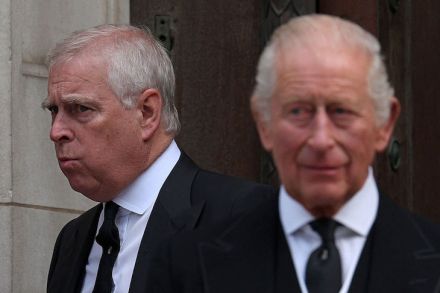
God, the avenging Furies had nothing on the Jeffrey Epstein industry when it comes to the pursuit of its quarry. The latest instalment in the ongoing excoriation of Andrew Mountbatten-Windsor is the revelation in the Mail on Sunday that the former Prince may, when he dies, receive a royal funeral. That is to say, it has learned that the King’s brother “remains on a secret government list of royals who will receive high-profile funerals, even though he became a private citizen following revelations of his friendship with paedophile Jeffrey Epstein”. Alas, there are no further details. The paper however surmises that it may involve a funeral service at St George’s chapel, Windsor, and burial at Frogmore cemetery along with other members of his family. What do we actually want?

Bring back the old Tube seat designs!

From our UK edition

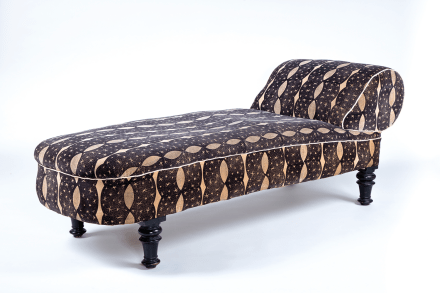
Enid Marx once pondered ‘whether postage stamps are fine or industrial art. In my view the question rests on the quality of a design rather than its purpose. It is generally agreed, for example, that the work of Thomas Bewick is fine art, even when it is merely the engraving of a “trade card”.’ Marx was a textile designer, book illustrator, lino-cutter, wood-engraver, poster illustrator and, yes, postage-stamp designer (‘The calling card of a nation’, as she put it) and in all these things, the quality was unquestionable. Her unique, memorable designs were absorbed, unknowingly, by any number of people. Her best-known work was the sturdy moquette fabric she designed for seats on London Underground in the 1930s.

Therapy is a silent haircut

From our UK edition

You know what I want with a haircut? Silence. I want the hairdresser to keep his or her eyes on the scissors and not get distracted by conversation. I want to know that, during the crucial period when it could all go horribly wrong, the man or woman at the back is concentrating. I like having a conversation with hairdressers, who are generally interesting people, but I just don’t want it while they’re working. I was rather impressed by Leslie Cavendish, The Beatles’ hairdresser, who was on Michael Berkeley’s Private Passions series recently and made clear that at Vidal Sassoon’s salon in the 1960s, the Trappist approach was preferred during cuts.

They don’t make broadcasters like Ed Stourton any more

From our UK edition

There’s something more poignant about the death of Ed Stourton, which was announced today, than the passing of a decent man. He was that of course, but what I’ll miss especially is the silencing of a mellifluous broadcasting voice, that of an educated and civilised Englishman. Stourton, who was 68, was famously cut by the bigwigs of the BBC's Today programme in 2008 Stourton, who was 68, was famously cut by the bigwigs of the BBC's Today programme in 2008, making space for more women, more regional accents, and the less posh, after ten years in the programme. But he was really good at the job. He cut to the chase; he ignored the superficialities. He was genial but merciless in identifying the main point at issue and pursuing it.

Is forced adoption any more barbaric than abortion?

From our UK edition

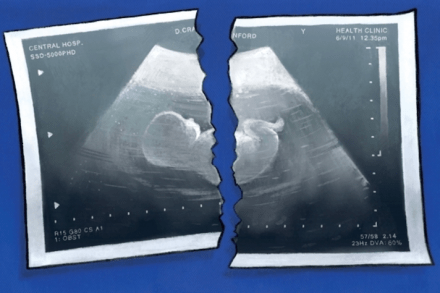
There was a moving and unusual display of unity in the Commons on Thursday when the Prime Minister apologised on behalf of the nation to the mothers – some of whom were in the public gallery – who had been forced to give up their children for adoption on account of not being married. Reform MP, Sarah Pochin, spoke movingly about how her own mother was obliged to put her half brother up for adoption. Unity and sympathy all round. Our solution to the problem of unwelcome pregnancies is abortion In fact, none of this should come as a surprise.

Andy Burnham’s half-baked Catholicism

From our UK edition

‘Catholic by upbringing but not particularly religious’ is how Andy Burnham described his religion to the Huffington Post in 2015. He will be, if he wins the leadership ballot, the first cradle Catholic PM. At the annual summer party for the Catholic weekly, The Tablet, its editor, Brendan Walsh, observed that Burnham still goes to mass ‘occasionally’ but that’s about as far as anyone goes to suggest he is actually practicing. His much-quoted observation from a Guardian interview in 2009, that ‘Three things are important in my life, apart from family. Everton FC, the Labour Party and the Catholic church - in that order’ is historic.

Did fears about homophobia prevent Preston Davey from being saved?

From our UK edition

Poor baby Preston didn’t have much of a start in life. His mother Sarah, now 42, was jailed aged 14 for the 1998 torture and murder of a pensioner. Preston was, justifiably, taken from her after birth. Given these unpropitious circumstances, it was the job of the state – here Oldham council – to give him a fair start in life. To begin with, that’s what happened; a decent foster family looked after him. Preston’s birth grandmother suggested that worries about homophobia may have skewed the judgment of those who were meant to be supervising him It was when he was given to the care of Jamie Varley, 37, and his boyfriend, John McGowan-Fazakerley, 32, that he was subjected to sexual torture, fear and pain over the course of four months that ended his life.

Three cheers for the new illustration museum

From our UK edition

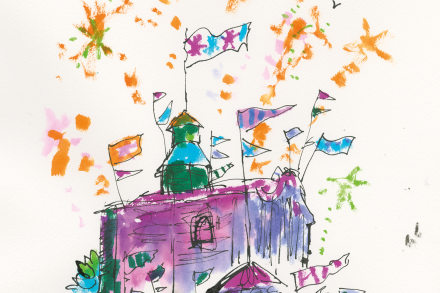
In the artistic pecking order, illustration long languished behind what were seen as the fine arts, even though it was the one art form that most of us would come across every single day. Not unrelated to the status issue, illustration came to be regarded as art for children, young children at that. In the 19th century adult books would be routinely illustrated (Dickens’s illustrators such as Phiz were as much a part of the deal as the novels themselves), but in the 20th the field gradually narrowed. Still, up to the 1970s, even books for teenagers as a rule had pictures. Now, apart from graphic novels, they’re mostly confined to drawings for the tiny tots.

What have they done to Tom & Jerry?

From our UK edition

Time was you knew where you were with Tom and Jerry. He chases the mouse; catches the mouse; the mouse gets away; Tom is flattened, gets up dazed but determined; and then it’s back to the chase. The tone changed over time – Tom was originally more scary than he became later – but essentially the fun was in the rivalry that would never cease; the plot’s piquancy was that of David and Goliath, the little mouse always getting the better of the big cat. I can only hope the Chinese audience buys it because I couldn’t But the old Hanna-Barbera scenario that began in 1940 has evolved and the franchise has passed into new hands.

Monte Carlo isn’t glamorous

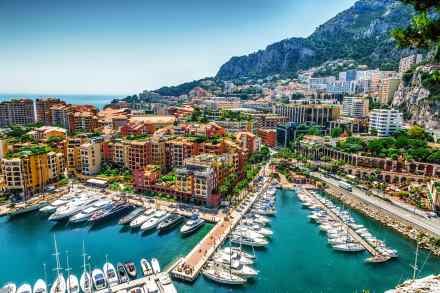
What does Monte Carlo conjure up? A glamorous casino where fortunes can be won and lost, but mostly lost? Men in evening dress at baccarat tables with beautiful women standing by? A tax haven for the glitzy rich on the Cote d’Azur? Fabulous Belle Epoque buildings? A refuge for Edwardian English invalids to escape the cold? Grace Kelly? The Grand Prix?  It was here that Max de Winter met the girl who became the second Mrs de Winter at the beginning of Daphne du Maurier’s Rebecca. ‘What do you think of Monte Carlo, or don't  you think of it at all?’ he asked her.

The art of flowers

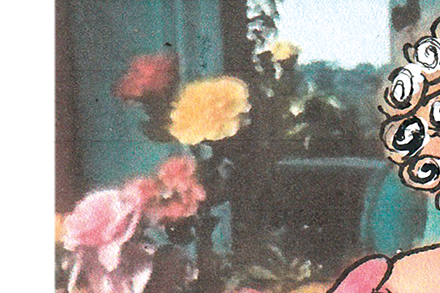
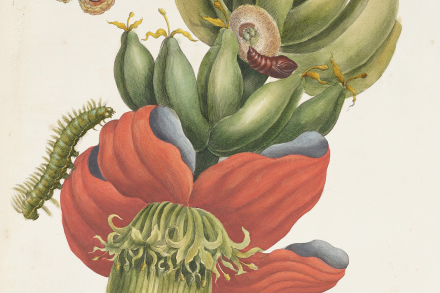
Multi-sensory exhibitions are old hat, but in the case of In Bloom – How Plants Changed Our World at Oxford’s Ashmolean Museum, it feels just right to sit in a space given over to flowers with the sound of gurgling water in the background, mingled with the cries and chirrups of birds. At intervals there are scent stations where you can smell damask rose or green and black tea from flower-shaped chalices. From the ceiling hang swathes of green muslin. I could have stayed here all afternoon. Right in front of me were also two delicious studies of tulips to illustrate the Dutch craze of the 1630s. Frankly, if it came to a choice of two-tone tulips or Bitcoin as a way of squandering money, I know which I’d prefer.

Oxford’s grand new building reveals the university’s misplaced priorities

From our UK edition

The Schwarzman Centre for the Humanities in Oxford is well and truly open; there was an Open Day this weekend. It’s the product of a big donation of £185 million from Stephen Schwarzman, CEO of the Blackstone Group. It’s an ambitious development close to the old Observatory on the Radcliffe site. There’s a large and airy central atrium with cafes. As well as libraries and lecture rooms, there’s a concert hall and theatre and cinema and high tech exhibition spaces. The place is designed with the University's net zero carbon emissions policies in mind on the principles of Passivhaus; the building is ultra energy-efficient.

It’s little surprise that an Israeli soldier was caught desecrating a crucifix

There’s something apposite, I suppose, about the desecration of a crucifix. In this case, it was an Israeli soldier in southern Lebanon who took a sledgehammer to one on private property and smashed the Jesus figure on the cross. The original crucifixion, as anyone who heard the gospels over Easter will recall, was marked by the humiliation of Jesus; this attack on the figure of one who took on suffering willingly was another humiliation, through the image. Mind you, if the charmer with the sledgehammer had reflected that the Christ-figure is, in Christian belief, not just God-made-man but God-made-Jew, he might have eased off a bit.

Is it any wonder people don’t send letters?

From our UK edition

Was there some failure of communication, do you think, when the Czech billionaire Daniel Kretinsky bought Royal Mail (with the full support of government and opposition) last year? I only ask because it seems to have been taken aback by the full extent of its obligations – to deliver mail to every part of the UK and in the case of a first-class stamp, to do so, with some exceptions, by the next day. If you increase the cost of a service sixfold and reduce the level of service, it shouldn’t be a complete surprise if the number of people using it goes down This week we see the price of a second-class stamp go up 4p to 91p and first-class stamps increase by 10p to £1.80.

London’s St James’s is losing its soul

From our UK edition

London is full of little ecosystems: areas that are distinctive by virtue of their purpose or history and where individual elements make up a sum greater than the whole. St James’s is like that: a patch south of Piccadilly where the pleasures of a walk down the street are all to do with being able to look at the windows of the art galleries. There’s a succession of independent dealers selling paintings – Old Masters in some cases – drawings, objects d’art and art books. You probably can’t afford to do more than look, but there’s pleasure in fantasising like a Dorothy Parker character about what you might buy if you only could.

Sarah Mullally makes me grateful to be a Catholic

Granted, I was not the most obvious person to appreciate the installation of Sarah Mullally in Canterbury, even though I think her a splendid Christian pastor and indeed, an exemplary Christian. Her kind, homely face radiates charity and good will; the simplicity of her speech speaks of sincerity. But as a bolshie Catholic, it’s not possible to spend long in Canterbury cathedral during this very Anglican celebration without the subversive thought surfacing that this cathedral is, by rights, Catholic, the Reformation being an unfortunate blip in the great scheme of things.