Madeline Grant

Madeline Grant

Madeline Grant is The Spectator’s assistant editor and parliamentary sketch writer.

The Victorian moralising of the Home Office’s migrant rape advice

From our UK edition

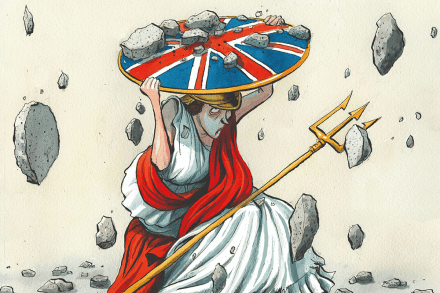
The legacy of the Victorians is everywhere; we depend on them for our sewage disposal, our railway networks, much of our infrastructure and housing stock. Even the hooded eyelids of our Royal Family mark them out as descendants of Victoria herself. The right often dwells on how far we’ve fallen from Victorian greatness – painting modern Britain’s existence amongst the physical debris of Victoriana as akin to living in the ruins of a superior civilisation, like mud-smeared Visigoths prowling around the remains of the Colosseum. Less discussed is how the Victorians are still very much with us.  ‘In the UK, both people must say “yes” to sex’, scolds one of the posters, which were handed out to asylum seekers. ‘This is called consent’.

Bond’s identity crisis mirrors Britain’s

From our UK edition

Sometimes I wake up in the night disturbed by dreams of James Bond. Surely, you might say, that’s the point of him; a man of such raw sex appeal that he can break the somnial boundary of women all over the world. But these aren’t sexy dreams about Bond’s past; they’re nightmarish visions of his future – Bond in the modern British public sector. Picture it, 007 walks in for his briefing with M. The process is not the quick-witted sparring of classic Bond but a long PowerPoint presentation complete with a quiz at the end to show he’s been listening. Miss Moneypenny doesn’t ‘feel comfortable’ booking Bond flights because of the carbon output, so he finds himself on a rail replacement bus service.

What Clacton taught us about Nigel Farage’s path to power

From our UK edition

The Clacton by-election was finally over. Even by the standards of August news stories, it had grown pretty stale pretty quickly. The result was never in doubt, nor were the entrenched responses of the key players. Reform figures took to the airwaves to insist all questions about Nigel Farage’s finances had been answered by the ballot box. Those who opposed him took to the airwaves to insist the opposite was true. Back at the count, the media were having to make do with increasingly contorted attempts to pretend Binface was amusing In Clacton itself, Mr Farage was essentially playing a game of cat and mouse with the media circus.

How Project Spire will hurt England’s parishes

From our UK edition

In this week’s episode of Holy Smoke, Damian Thompson is joined by Madeline Grant to dive into the contentious topic of Project Spire, the Church of England's ambitious plan to allocate £100 million in reparations for its involvement in the transatlantic slave trade. They will shed light on the Church's insistence on proceeding with this plan despite significant opposition from both the public and its own parishioners.

How Project Spire will hurt England's parishes

Kehinde Andrews is the Hiroo Onoda of the Jason Arday saga

From our UK edition

Summer is a time for fleeting joys. Be it friendships, romances or hilarious stories about charlatan academics at the University of Cambridge: these fragile bringers of summer happiness cannot be expected to last much longer than the lifecycle of the butterfly. So it is that the Jason Arday saga is grinding to a halt. It has brought much amusement but now, as those who made their belligerent knee-jerk defences of Arday retreat back to their Masters’ Lodgings and professorial chairs, he is left to face the end of things alone.  Well, almost alone. As Arday’s resignation and its aftermath made the Today programme this morning, the BBC had managed to find someone still willing to – at least on paper – defend The Nutty Professor.

Project Spire is the Church of England’s Chagos deal

From our UK edition

The Church of England can always be relied upon to walk into a room just as everybody else is leaving. The question of whether we have reached ‘peak woke’ – the high watermark of Americanised racial politics dictating every aspect of public life – remains open. However, those post-Black Lives Matter efforts, which saw mass demonstrations and acts of self-abasement by companies and institutions, are undeniably more muted and more disputed than they were in 2020. It seems unlikely that, for example, Andy Burnham would ‘take the knee’, as Keir Starmer did so unthinkingly.

'A most gigantic fraud' – The Jason Arday story goes on

Is Michael Gove missing Bridget Phillipson already? – and the Cambridge University saga continues

From our UK edition

The tale of the Cambridge professor, Jason Arday continues, as Michael and Maddie weigh in on the fantasy. How much of a role has Cambridge played in enabling such a serially misleading individual, and can the university claw back some respectability after this saga? – do they even feel a responsibility to do so? Maddie asks Michael whether Lucy Powell's broadside at his education reforms has made him nostalgic for the days of Bridget Phillipson. Also: Michael questions Maddie over recent drama in the political sketch writing world, and whether she will defend Quentin Letts amid a backlash from Labour MPs. Produced by Natasha Feroze and Henry Lloyd.

It’s amazing how far Burnham has got by not being Keir Starmer

From our UK edition

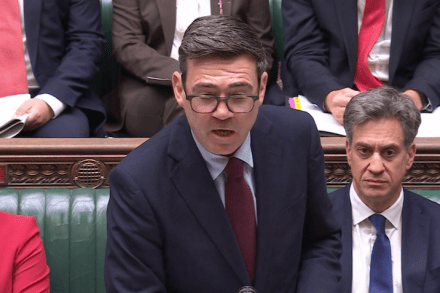
It’s amazing how far a prime minister can get just by not being Keir Starmer. There’s considerable political success to be had in simply reversing his stupidest policies, from digital ID to scrapping jury trials, and today, for now at least – assisted suicide – which Mr Burnham announced he wouldn’t be taking forward until social care is in better shape.  The most kamikaze-shaped policy of the Starmer government, the Chagos surrender, still technically remains on the books. Whether Burnham will have the balls or nous to do a full-scale scrapping of his predecessor’s deranged programme remains to be seen.  Burnham is helped by the contrast in his tone – Starmer invariably sounded like an impatient undertaker when announcing policy.

It’s the ideology, stupid

From our UK edition

What do Nigel Farage, gender-critical feminism, masculinity, generalised homophobia and GB News have in common? All have been blamed in the past week or so for the pair of terror attacks in Berlin and Paris which left one dead and dozens wounded. Labour MPs (including the cabinet minister Chris Bryant), left-wing commentators and journalists have rushed to point the finger at a variety of bizarre targets. It must be hard being an Islamist. Imagine, you’ve gone to a great deal of planning and effort to commit an atrocity and make clear to the world that your motivations for doing so are your murderous religio-political creed.

I’m so glad that Big Ange is back

From our UK edition

Big Ange is back. From a sketchwriter’s point of view I have to say that this is marvellous news. Rayner is actually an exceptionally old-fashioned politician. She’s akin to the union barons of the past, or perhaps even more accurately, to the Democrat mob bosses who ran Chicago or New York from the middle of the 19th century. I can picture her turning No. 10 North into a sort of Tammany Hall operation where she dishes out service contracts to choice clients with gay abandon.  Rayner’s way of conducting herself might echo the ‘beer and sandwiches’ sleaze of the past, but it has a more grating side.

What is the point of the Lib Dems?

From our UK edition

The Liberal Democrat party of Russia and the Liberal Democrat party of the United Kingdom are not, on the face of it, natural bedfellows. Google declares that the latter’s main policies are ‘healthcare reform, the replacement of Ofwat and closer integration with Europe’. The former’s main policies are the shooting of political opponents, the deportation of all Chechens and something they ominously term ‘imperial reconquest’. However, as unlikely as it may seem, they are not without their similarities. Both have been accused – not without some justification – of being neither liberal nor democratic.

Put on a suit and tie, Prime Minister

A brass fanfare; a wide establishing shot of five men in three-piece suits, seated in a library of leather-bound tomes – this is Harold Macmillan doing informal. The scene is from a 1959 party political broadcast, which purports to show a ‘relaxed chat’ between Macmillan and four of his ministers, all of whom he refers to by their cabinet titles. Almost everything about it is artificial (including quite possibly the claim that it took place the day after the parliamentary recess). Watching it now is a reminder of two things, perhaps contradictory. First, that prime ministers have always played a clever and not entirely authentic game when it comes to informality; second, how far we’ve fallen. Can you imagine the equivalent today?

‘He’s made enemies’ – inside Burnham’s brutal Labour takeover

From our UK edition

50 min listen

Andy Burnham has begun his premiership with a sweeping reshuffle, purging many of Keir Starmer’s closest allies and installing a cabinet in his own image. Has he ended Labour factionalism – or simply created a new faction of enemies? And does the appointment of John Healey as Chancellor suggest that Burnham wants a safe pair of hands rather than a rival power base? Michael and Maddie also ask whether Burnham’s early promises can survive contact with economic reality. With billions already pledged on defence, energy bills, transport and public ownership, where will the money come from – and what is his plan for growth? Plus: will Shabana Mahmood be allowed to get a grip on immigration? Can Ed Miliband be trusted at the Foreign Office?

Burnham’s coronation speech was sub-Disney schmaltz

From our UK edition

As coronations go, this was a particularly flat one. Instead of Zadok the Priest we were treated to New Order. To nobody’s surprise Andy Burnham was unveiled this afternoon as Leader of the Labour party to a select audience of lanyard-wearing goons, cronies and Neil Kinnock.  First we were subjected to Lucy Powell, who had the distinction of being sacked by Keir Starmer for being too incompetent. In a cabinet which includes Rachel Reeves that’s no mean feat. ‘It’s kinda non-uniform day,’ babbled Powell, who is astonishingly the Deputy Leader of the governing party of a G7 power and not Deputy Idiot of a village somewhere. The Russians and the Chinese must be crapping themselves.

Keir Starmer’s biggest problem was always right behind him at PMQs

From our UK edition

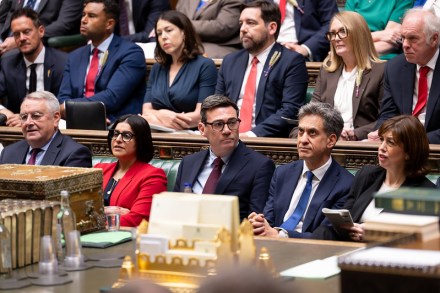
‘You’ll miss him when he’s gone!’ Lots of people have said this to me. It’s true I have had the dubious privilege of sketching Sir Keir Starmer for almost the whole of his career as leader of the opposition and Prime Minister. He has grown to be a constant feature of my life, a sort of perma-presence in the background, the person round which my week necessarily has to gravitate. And now, the moment for his departure has finally arrived: today was the final PMQs for Sir Keir Rodney Starmer. It was the final gentle squeal of that good Knight. Starmergeddon. Good afternoon, good evening and Meep Meep.

Parliament’s greatest speeches – and Labour’s women problem

From our UK edition

35 min listen

In this week’s Q&A: does Labour have a women problem? Michael and Maddie discuss why the party has never had a female leader, whether its embrace of identity politics has created a rod for its own back, and why gender-critical feminists on the left have found themselves in exile. Also this week: why won’t any party touch the triple lock? Michael argues that the state pension has become an unsustainable transfer to the section of the electorate most likely to vote – but can any politician make the case for reform without being accused of ‘mugging granny’? Plus: Parliament at its best and worst. From Danny Kruger and William Hague to Hilary Benn, George Galloway and Tom Tugendhat – what makes a truly great Commons speech? Produced by Oscar Edmondson.

The terminally mediocre were on full display at DPMQs

From our UK edition

Sir Keir Starmer was away this week. Nothing new there of course; indeed, it seems the thing which will change least when he finally leaves No 10 will be his presence in Parliament. So today we had what might well be David Lammy’s final outing as Deputy Prime Minister. The Tories had done their customary rummage down the back of the sofa for someone to face him and pulled out James Cleverly. With attention diverted away from the party leaders, these are always good occasions for Members of the House of Commons to demonstrate just how crashingly unimpressive many of them are. Today’s offering was a veritable casserole of mediocrity.  Lammy and Cleverly were unimpressive themselves, clattering at each other in lumbering fight about early release of prisoners.

Farage’s gamble: is ‘the establishment’ out to destroy him?

From our UK edition

48 min listen

Nigel Farage has resigned as MP for Clacton and will fight a by-election in an attempt to turn questions over his finances into a referendum on ‘the people vs the establishment’. Is this a political masterstroke or a mistake? Has Farage taken back control of the narrative, or will the row over undeclared money continue to plague Reform? Michael and Maddie also discuss whether Dominic Cummings’s prophecy – that the establishment would try to destroy Farage by fair means or foul – has come true. Plus: Prince Harry has suffered a bruising defeat in court against the Mail. What does the ruling tell us about press freedom? Produced by Oscar Edmondson.

Farage versus the world

From our UK edition

He probably won’t want to hear this but there is an air of General De Gaulle about Nigel Farage. De Gaulle came to define French politics through a mix of deliberate play-acting as being anti-establishment, a narrative of his own sacrifice and a series of exceptionally well-coordinated tantrums. Now, if that doesn’t sound familiar, I don’t know what does. Nobody could ever accuse Mr Farage of being under-dramatic Farage possibly hoped today was a ‘De Gaulle’s style moment. As the General was wont to do, Farage decided to circumnavigate the official investigations and the media and instead to broadcast directly to the general public.

Did anyone vet Big Ange’s LBC love-in?

From our UK edition

‘What’s Big Ange up to?’ was a question Sir Keir Starmer had to ask himself basically every day of his premiership. The fact that the bigger threat came from a totally different Mancunian doesn’t mean that tracking Ange’s manoeuvres was a bad idea. Inevitably, having helped defenestrate her former boss, she’s now angling to work out the next job she’s going to be sacked from. In aid of this, she’d taken to the airwaves, standing in for the cursed James O’Brien slot on LBC.  This was Big Ange’s sunshine radio roadshow – it being her stated aim to be ‘really optimistic’, to shine a light on some ‘good news stories’ (for which read: policies she’d come up with). This was not an even-handed radio session.