Richard Bratby

Richard Bratby is the chief classical music critic of The Spectator

A much-deserved revival of a formidable British composer

From our UK edition

Grade: B+ ‘Cheltenham Symphonies’, they used to call them – a catch-all term for the kind of large-scale, traditionally inclined postwar works that found a natural home at the Cheltenham Music Festival. But it was also a sneer: a dig at the supposedly parochial nature of British music in the 1960s and 1970s. Over in Europe, the avant-garde was doing whizzy things with Marxism and electronics. British music, went the narrative, was suburban, outdated and drab. Now listen to John McCabe’s Third Symphony of 1978. McCabe’s orchestration is as gorgeous as a bird of paradise; it shimmers like the colours on the surface of a bubble. Not that there’s anything fragile about McCabe’s musical engineering.

A triumphant adaptation of Game of Thrones

From our UK edition

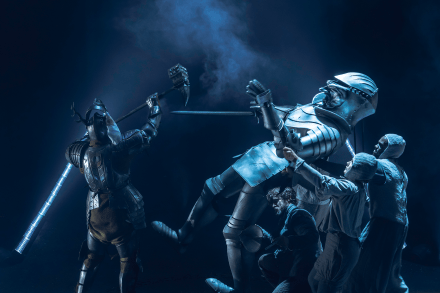
Wasn’t it Philomena Cunk who first observed that Shakespeare’s greatest work is Game of Thrones? She had a point. When I told friends that the Royal Shakespeare Company was adapting George R.R. Martin’s saga for the stage, the GoT fans lit up. The non-fans were incredulous, and not in a good way. Now Game of Thrones: The Mad King has landed, nearly four hours of it, and it represents a gamble for the RSC. Nearly a decade after peak Thrones, a vast inbuilt audience can no longer be assumed. This new stage version needs to please both camps if it’s to become the money-spinner that the company clearly (and justifiably) intends it to be. I’d like to imagine that I’m the target audience.

Don’t miss this dark Hansel and Gretel

From our UK edition

The Three Choirs Festival always feels so nourishing, so eternally English, that you sometimes forget how much history has been made there. It was in Gloucester in 1910 that the young Herbert Howells and Ivor Gurney heard the world première of Vaughan Williams’s Tallis Fantasia while Elgar, in rented digs, tried out his Violin Concerto with Fritz Kreisler. Three years later you’ve got Sibelius despatching Aino Ackte to première Luonnotar, and Saint-Saëns, at 77, playing Mozart by day, then cracking out his celebrated musical impersonations at the post-show party. Apparently his Cosima Wagner was quite the knockout. The point is that there have been moments when the musical universe pivoted around this quiet cathedral close.

The concert of the year

From our UK edition

Ah, so that’s where the kangaroo comes in! Garsington Opera produces a souvenir mug each summer decorated with cartoons of that year’s operas. Buy yours early enough, and you get a ceramic preview of the season – in the case of Gerald Barry’s The Importance of Being Earnest, a drawing of a kangaroo. True, Barry’s operas are famously anarchic. But quite where a marsupial was supposed to fit into Oscar Wilde’s comedy was unclear until halfway through Act One. Suddenly, there it was: fuzzy and large as life, lolloping dolefully across the stage. Because? Well, because someone said ‘Australia’, silly. That’s how it works.

A Sound of Music with brains as well as heart

From our UK edition

If you’re interested in how words work with music, the collected lyrics of Stephen Sondheim are an investment you’ll never regret. But Sondheim isn’t infallible, and when he writes about his mentor Oscar Hammerstein II he’s often plain wrong. Sondheim mocks one particular lyric from The Sound of Music: ‘Like a lark that is learning to pray.’ ‘Wait a minute – a lark praying?’ he snarks. But the character who sings those words is a devout young Austrian woman with a head full of Schubert and folksongs. Hammerstein is writing as Maria, not himself. It’s an art that Sondheim never quite mastered, which is why his characters – whether Swedish aristocrats or East End cannibals – all sound like New Yorkers in therapy.

The finest music ever composed by a Breton naval officer

From our UK edition

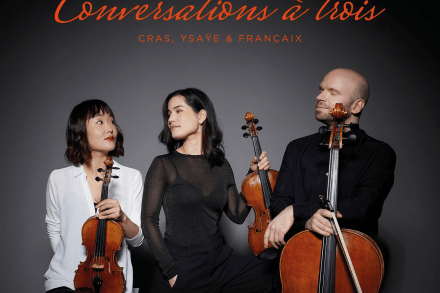
Grade: B+ There’s a special art in making something difficult appear effortless, and the string trio is a supreme test. It’s the smallest viable unit for string chamber music: with one each of violin, viola and cello, there’s no fat, no redundancy, and nowhere to hide for composer and performer alike. And yet its greatest masters – Mozart, Schubert and Beethoven (Schoenberg is a special case, as he usually is) – make it sound like a trifle, a recreation. They’re on a tightrope, but they can’t stop dancing.

Lisette Oropesa triumphs in I puritani

From our UK edition

Vincenzo Bellini realised early on that as titles go, Le teste rotonde ed i cavalieri (The Roundheads and the Cavaliers) doesn’t exactly trip off the tongue. He settled for I puritani instead, though he’d have been equally happy (or so he told friends) to name the whole opera after its lovestruck heroine Elvira. He admitted that the plot catches fire only after she loses her mind: the soprano who plays her has to be able to act, and she really has to be able to sing. ‘In opera, it is the singing that moves one to tears, that causes horror, that inspires death,’ as Bellini put it, and he practised what he preached.

A spectacular new staging of L’Orfeo

From our UK edition

Say what you like about Monteverdi, but he knew how to get his audience on side. ‘I greet you, heroes, princes,’ declares the personification of Music in the opening scene of L’Orfeo, and if you’re a Glyndebourne regular you’ll feel at home right away. ‘Many singers have celebrated you – and fallen short of the truth, which is too exalted for mortal vision.’ Why, thank you; and how true, how very true. Now, when’s the picnic? But seduction is what opera does. It’s what opera has done since the very beginning – and L’Orfeo, premièred in 1607 at the court of Mantua, is almost as close to the beginning as we can get.

An entertaining Rheingold from Grange Park Opera

From our UK edition

Grange Park Opera has acquired a new chandelier for its theatre at West Horsley; a jumble of foliage and fairy lights that ascends into the roof pre-curtain, like in The Phantom of the Opera. It’s a fun addition, and very on-brand. This stockbroker-belt festival knows its audience. It raises and splashes cash with equal gusto, and it doesn’t overthink things. A Ring cycle – opera’s ultimate status symbol – has been on the cards at GPO for a few years. Now it’s arrived and the opening gambit, Das Rheingold, looks and sounds impeccably high-spec. It’s designed and directed by Charlie Edwards, and the visuals are familiar but effective.

Fresh, original Mozart

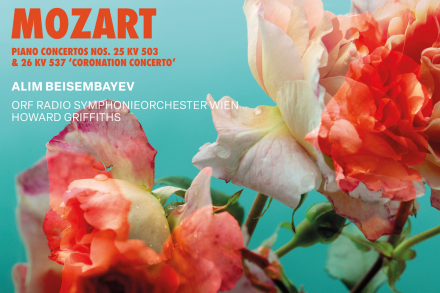
Grade: A It’s spring in Vienna; well, OK, it’s early summer but it’s a grey day when Mozart doesn’t make you feel younger and I reckon this new release from Alim Beisembayev will do just that. In a world of infinite entertainment possibilities, Beisembayev has done the hard bit – the choosing – for you. Here we have two late piano concertos (Mozart wrote them between the ages of 30 and 32, as his own solo career wound down) charged with a grandeur, a playfulness and an endless smiling compassion that will come as a glorious corrective to anyone whose last experience of Mozart involved bodily fluids and confectionery in Sky’s hellish remake of Amadeus.

Delightful Rossini at Glyndebourne

From our UK edition

It’s impossible to say what Rossini would have made of Glyndebourne’s production of Il turco in Italia, but you can bet on one thing – he’d have brought the mother of all picnics. His love of food and drink was heroic; it’s believed that more recipes have been named after Rossini than any other musician. He didn’t mess about, either, berating his Paris grocer when a promised consignment of Neapolitan macaroni turned out to be an inferior Genoese product. ‘If he knows as much about music as he does about pasta, he must be a great composer,’ commented the oblivious shopkeeper. Well, that’s the story, anyway (I thought the source was Stendhal but it turns out to be Ben Trovato).

A first-class production of Puccini’s Western

From our UK edition

Nature smiled on the opening week of Opera Holland Park’s new season. There’s no better advertisement for semi-outdoor opera than an unseasonal heatwave, and it brought its own authenticity to Puccini’s La fanciulla del West, in a new production by Martin Lloyd-Evans. The wooden cabins and trestle tables of the set had a parched look and you could imagine the smell of pines and sagebrush as the evening grew dark in real time. And never more so than in the final scenes, where Puccini’s gunslinging heroine Minnie gets her man and the world flushes red and gold as they venture off into the sunset. True, you needed to factor out the squawking of the Holland Park peacocks – and the blizzard that Puccini specifies in Act Two – but the point stands.

The joy of Martinu’s symphonies

From our UK edition

Grade: A– What, more Martinu? It feels like no time since the Pavel Haas Quartet was persuading us that there might, after all, be more than we’d suspected in the chamber music of this patchy but fascinating Czech composer. Now here’s the chief of the Royal Opera, Jakub Hrusa, with a symphony cycle, and it’s starting to look as if Martinu is having a moment. To older record collectors, there’s still something oddly authoritative about seeing the yellow Deutsche Grammophon cartouche above an earnest conductor photo. Stand up straight: it’s on DG. This is serious. Hrusa is certainly serious; very much the thinking man’s maestro, he’s even published a collection of essays on Martinu.

The Arts Council’s awful vision for the future of opera 

English National Opera’s first production created in Manchester is Angel’s Bone, a one-act opera by Du Yun and the librettist Royce Vavrek. It was premièred in 2016 in New York and subsequently won the Pulitzer Prize, but we shouldn’t hold that against it. Musically, at least, it’s certainly more interesting than recent US imports like Jeanine Tesori’s Blue – worthy, sub-minimalist Yankslop addressing the fashionable issues of the day. (It’s funny how the classical music world imagines that the way to reach British audiences in 2026 is to programme stuff that was relevant to Americans in 2016.) It was a pretty horrible experience nonetheless. Daytime TV-fixated suburbanites Mr and Mrs X.E.

In defence of Hindemith

From our UK edition

There’s a photo of Paul Hindemith with the pianist Artur Schnabel on hands and knees, surrounded by model railway track. Huge railway enthusiast, Hindemith, you see: he laid sprawling networks through the rooms of his Berlin apartment (before the Nazis drove him out), and organised marathon operating sessions with friends. Anyway, for various reasons, this knowledge makes me warm to him in a way that his music only erratically manages. It’s not that it’s impossible to like (although this is a man whose idea of a crowd-pleaser is called Symphonic Metamorphoses of Themes by Carl Maria von Weber). But there can be few composers whose effect is so hard to anticipate.

A spring mood lifter: Tales of Love and Loss at the Linbury Theatre reviewed

This year’s Jette Parker Artists showcase is a triple bill of modern-ish operas; a cleverly assembled trittico of one-acters, linked by a theme of bereavement. That sounds bleak until you consider that Puccini’s Trittico was originally inspired by The Divine Comedy, and who bothers about that today? Anyway, the three operas that make up Tales of Love and Loss are far from dispiriting in their overall effect. Like Puccini, Talia Stern – who directs all three – has gone for two tragedies plus a raucous, palate-cleansing comedy. And like Gianni Schicchi, the final laugh-fest (Elena Langer’s Four Sisters) plays out around a barely cold corpse and sends you into the night feeling uneasy, but undeniably entertained. The Puccini parallels stop there.

Is this the missing link between Bach and Haydn?

From our UK edition

Grade: B ‘Is that Haydn or Mozart? One can’t always be sure,’ remarks Kenneth Clark in the 18th-century episode of Civilisation, and there’s the British intelligentsia’s relationship with music, right there. Imagine saying that about any other art form, and still passing as a connoisseur. ‘Rembrandt or Poussin? Not much in it, really.’ ‘Michelangelo or Raphael? I can’t honestly tell.’ Don’t be like Kenneth. Brush up on your 18th-century idioms, and rediscover the qualities that make Mozart and Haydn so great – with regular dips into the also-rans of the classical era.

The artistic collapse of Welsh National Opera

From our UK edition

On the first night of Welsh National Opera’s new Flying Dutchman, the company’s co-directors walked on stage to salute their departing music director Tomas Hanus. There were cheers, of course; Hanus has been a courageous MD and his Wagner was thrilling. But no one has been appointed to succeed him, and that morning WNO had announced a 2026-27 season that amounts to a near-total artistic collapse, with just two full-scale operas. A major international company has been reduced to a community arts provider, and a Pollyanna press release announcing ‘a powerful statement of renewal’ did nothing to quell the feeling that the lights are going out on Cardiff Bay. It’s not just Cardiff, either.

Heart-melting loveliness from John Rutter

From our UK edition

Anyone for a spot of acoustic science? Apparently the distinctive colour of a musical note is concentrated almost wholly in the attack: the first split-second; the beginning of the sound wave. Obscure or somehow cut off, that first bite of a note or chord and what’s left sounds – well, not the same as everything else, exactly, but a great deal more samey. It’s like wine-tasting while holding your nose. Everything becomes neutral, and suddenly it’s remarkably easy to fool the senses. The Italian composer Salvatore Sciarrino seems to enjoy playing these games. In Le voci sottevetro (1999) – four arrangements of works by the homicidal madrigalist Carlo Gesualdo – a quick splash of tuned percussion does the job of hiding the start of a line.

An outstanding Turn of the Screw

From our UK edition

Never let it be said that The Spectator fails to follow up an arts story. Long-term readers will recall that in the edition of 6 March 1711 Joseph Addison investigated the supply of live sparrows for the first production of Handel’s Rinaldo. ‘What, are they to be roasted?’ he asked, reasonably enough. No, they were ‘to enter towards the end of the first Act and to fly about the Stage’. Still, you need to keep an eye on these theatrical types and although there was certainly birdsong in the latest revival of Rinaldo – the end-of-term opera at the Royal Academy of Music – I can report it was recorded. No sparrows were cooked in the making of this opera. Mind you, Handel purists took a bit of a battering.