Stephen Daisley

Stephen Daisley

Stephen Daisley is a Spectator regular and a columnist for the Scottish Daily Mail

The two lessons from Farage’s Clacton win

From our UK edition

The result in Clacton is more evidence for my thesis that voters are so entrenched in their attitudes towards Nigel Farage that his chances of reaching No. 10 are slim. Reform is spinning the 17 per cent jump in its leader’s vote share as a triumph – and it might have been if it weren’t for the circumstances. This is a man we’re told wants to be the next prime minister, but just look at that result for Count Binface, the alleged comedy candidate.  A vote share of 27 per cent for an establishment progressive in Clacton of all places is a pretty significant data point. It’s no good blaming the other parties for dingying the contest or the media for being out to get Farage.

Bribing Scots to stay in the UK won’t work forever

From our UK edition

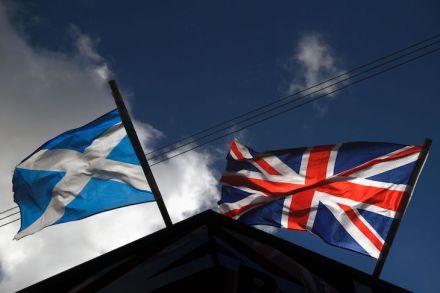
A country is not a fiscal transfer. It can be many things – a loose federation of diverging cultures, a constitutional shotgun wedding, an unattractive compromise of history – but it cannot be a cash transaction. There is no history in a debit made, no loyalty in a credit received. Peoples are bound together by heritage, creed, shared sacrifice, and common purpose, but not by block grants or spending allocations. Opponents of Scottish independence still cannot grasp this plainest of truths Opponents of Scottish independence still cannot grasp this plainest of truths. Twelve years on from the referendum on secession, they remain in campaigning mode, incapable of offering the electorate anything more than a bribe.

Why can’t Britain deport all our foreign prisoners?

From our UK edition

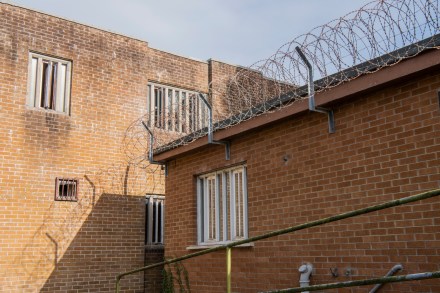
The great civic crisis of our times is state capacity. When policies favoured by voters are repeatedly met with a bureaucratic 403 error – the action you requested is forbidden by our servers – dissatisfaction with the established order grows, as does the appeal of those outside the mainstream who wish to topple that order.

What happened to the Democrats?

From our UK edition

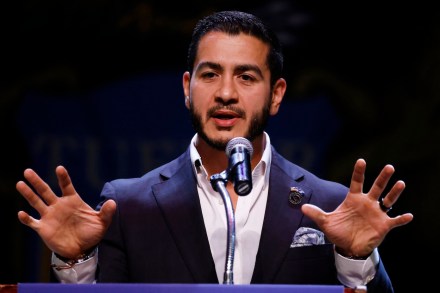
Whatever happened to the Democrats? Party of FDR, Kennedy and Clinton. Idealistic, moderate, gave a vague impression of actually liking the United States. That pragmatic, patriotic party is scarcely discernible from the hideous creature that stands before us. The far left has hollowed out the Democrats and now parades in their freshly flayed skin, like a keffiyeh-clad Buffalo Bill.  Overnight results from the Michigan senate primary are still coming in, but Congresswoman Haley Stevens, a mainstream liberal, is trailing Abdul El-Sayed, an epidemiologist and part of the leftist insurgency taking over the Democratic party.

Britain has made its mind up about Nigel Farage

From our UK edition

No. 10 (North and South alike) will be heartened by polling suggesting that the more the British public sees of Andy Burnham, the more they like him. Leader approval research by More in Common shows Burnham on a rating of plus 19 after just over a week in the job – almost double Keir Starmer’s high point at the end of 2024. That these numbers are soft should not need saying. The metric that matters is not the public mood during the Prime Minister’s honeymoon but what they think of him once he’s a known quantity, has had to make hard decisions, and is asking for another five years in his own right. That is when we will learn how much of an electoral asset Burnham is to the Labour party.  I write here to make another point entirely: just look at those Nigel Farage numbers.

What is the point of Scottish Labour?

From our UK edition

The Scottish Labour party is a bit like cigarette-smoking or the Church of Scotland: it used to be everywhere you looked, but now you can’t remember the last time you saw it. We have been reminded of the party’s existence thanks to the abrupt exit of its leader Anas Sarwar, who was given a peerage and ministerial gig by Andy Burnham for reasons having absolutely nothing to do with his February statement calling on Keir Starmer to resign. That leaves a vacancy at the top of Scottish Labour, and today North East Scotland MSP Michael Marra has followed his Glasgow colleague Monica Lennon in announcing his candidacy.

Is it any wonder Anas Sarwar is fleeing Holyrood?

From our UK edition

The leadership of the Scottish Labour party isn’t worth the price of a cold cup of tea. Anas Sarwar has confirmed this by jumping ship to a seat in the Lords and a billeting in Andy Burnham’s new government, reportedly as a business minister. The appointment – no, let’s be candid: the promotion – will involve Sarwar quitting as Scottish Labour leader and giving up his seat at Holyrood.I doubt either will prompt from him much in the way of farewell tears. Westminster is always where he has wanted to be because Westminster is where the power is. His decade at Holyrood was preceded by five years as MP for Glasgow Central, a seat he inherited from his father Chaudhry Mohammad Sarwar, who renounced his British citizenship, returned to Pakistan and was elected governor of Punjab.

Israel’s support for Argentina shouldn’t be a surprise

From our UK edition

Israel’s foreign minister Gideon Sa’ar has raised eyebrows with a late-night tweet mocking England’s defeat in the World Cup semifinals. Even if we allow for the fact that Sa’ar’s father was from Argentina, his taunting X post is unlikely to be taught as an example of best practice on any training courses for diplomats. ‘How does the song go?’ he began. ‘It’s coming home. Yes it is. It’s coming home to Argentina. Vamos Argentina!’ This slur on England’s honour will be avenged. The next time Israel is knocked out of a World Cup, our great-great-grandchildren will troll them with something awful. While Sa’ar’s family background probably plays a part, his comments reflect a new diplomatic froideur between Jerusalem and London.

The mass appeal of Ann Widdecombe

From our UK edition

The death of Ann Widdecombe calls to mind the song of the same name by Victoria Wood. The festive ditty describes the then-shadow home secretary, as ‘our favourite Tory biddy’ with Wood, done up to resemble the no-nonsense Conservative, emerging from behind a curtain crooning: ‘Ann Widdecombe! Ann Widdecombe! I sing, I dance, I lean to the right/ I’m truculent, I’m succulent, I am a star.

There’s no place for schismatics in the Catholic Church

From our UK edition

There is probably limited reader appetite for a dispute between two Catholic journalists over internal Church intrigue, but I must take issue with Jane Stannus’s Coffee House hagiography of the Society of Saint Pius X (SSPX). If you’re unfortunate enough to be a Protestant, you’re probably wondering what in the name of unholy Romish papism this is all about. Allow me to explain. The SSPX is a traditionalist sect which rejects key reforms of Vatican II and has a hokey-cokey relationship with the Catholic Church. It was in and later out under Pope Paul VI, even farther out under John Paul II, then in again when Benedict XVI shook things all about. As of Thursday, they’re back out for appointing their own bishops in direct defiance of Pope Leo XIV. That’s what it’s all about.

Devolution has failed. Try telling Andy Burnham

From our UK edition

There is so little substance to Andy Burnham that it seems almost churlish to attack the one area where he amounts to more than ambition, sentiment and unfathomable vanity, but his big policy idea happens to be one with which I have some familiarity. In his speech this week at the People's History Museum in Manchester, the soon-to-be prime minister pledged ‘new opportunities to extend devolution in Scotland, Wales and Northern Ireland’ and the devolution of employment support to mayors in England.

Who wants to govern Britain?

From our UK edition

As the country prepares for its seventh prime minister in a decade, some are asking: is Britain ungovernable? I’d like to pose a parallel but meaningfully different question: is there a government that wishes to govern Britain?  Every government since at least 1979 has practised one form or another of this politics of abdication. Andy Burnham, if he does indeed become prime minister, will not break with this approach There can be no understanding of our governing crisis without a recognition that it has been in situ for more than half a century. In that time, successive governments have as a matter of policy outsourced decision-making, oftentimes in the name of better governance.

Will the SNP get the message after their thumping defeat in Aberdeen South?

From our UK edition

With all the attention concentrated on Makerfield, it was easy to forget that two other by-elections were taking place yesterday, both in Scotland. In Arbroath and Broughty Ferry, a six per cent swing in their favour allowed the SNP to retain the seat, while in Aberdeen South the Tories recorded a thonking 25 per cent swing to topple the Nationalists. The voters have spoken. God knows what they’re saying. Aberdeen, a city once swimming in oil wealth, had been battered by more than a decade of Net Zero fundamentalism Arbroath is a tale of contentment with the SNP, or rather a willingness on the part of the voters to settle for the devil they know.

Assisted suicide is morally inadmissible

From our UK edition

Harold Shipman wasn’t as keen on bumping off vulnerable people as the average member of Britain’s euthanasia lobby. Not that I’m comparing assisted suicide supporters to a serial killer, though returning to the scene of the crime is textbook psycho behaviour. The lobby is going back to the Commons with the exact same bill that fell in April. Their objective is obvious: get MPs to pass the legislation a second time to neuter scrutiny from the Lords.  The upper house expressed doubts about the previous bill on the grounds that its sponsor was a simpleton and her safeguards were so shonky that even Anatoly Dyatlov would have raised an eyebrow.

Westminster can’t escape blame for the Murrell scandal

From our UK edition

Per Sir Humphrey Appleby: ‘A basic rule of government is never look into anything you don’t have to and never set up an inquiry unless you know in advance what its findings will be.’  It is in this spirit that John Swinney, Scottish First Minister and SNP leader, is resisting calls for a parliamentary inquiry into the SNP finances scandal. Peter Murrell, former chief executive of the Scottish Nationalists and estranged husband of Nicola Sturgeon, recently pleaded guilty to the embezzlement of £400,000 in party funds, which he spent on £2,000 pepper grinders, £4,000 pens, and most famously a £125,000 camper van.

Henry Nowak and the problem with ‘anti-racism’

From our UK edition

To determine the proper response to the murder of Henry Nowak we must first dismiss those courses of action that would be in error. The establishment line, the one voiced by the government, the media and the political left, is that Nowak’s death is about knife crime. New policies or fresh legislation are required as well as interventions to divert young men from ‘toxic masculinity’. This we will call the Adolescence strategy, for like the Netflix-series-cum-moral-panic this perspective can confront a social controversy only by denuding it of those elements that make it controversial, in this case by forgoing discussion of the role of anti-racist policing in the decision of responding officers to handcuff a dying teenager on the strength of a false accusation of racism.

A Blair revival is the only hope for Britain

From our UK edition

Everyone else is thinking it, so I’m just going to say it: we need Tony Blair back in Downing Street. I don’t know by what mechanism and I don’t especially care. A by-election would be ideal, I suppose. They’re all the rage these days. Sedgefield is now known as Newton Aycliffe and Spennymoor (ugh) and Alan Strickland should do the decent thing and step down in the national interest. If for some reason this didn’t work out, there’s always the Lords. I’ve never been keen on this modern convention that prime ministers cannot lead from the upper house. The last PM who did so was, of course, the Marquess of Salisbury. He left office for the third and final time in 1902, and it’s been all downhill ever since.

How was poor Nicola to know about her husband’s embezzling?

From our UK edition

Peter Murrell’s £400,000 spending spree is the biggest, and certainly the most entertaining, political scandal to hit Scotland in years. The former SNP chief executive pleaded guilty to embezzlement at Edinburgh’s High Court on Monday after more than a decade of dipping into party funds to bankroll his fondness for the finer things.  Headline purchases included a succession of vehicles (Niesmann and Bischoff motorhome at £124,550; Jaguar I-Pace at £57,500; Volkswagen Golf at £16,489), coffee machines (Jura GIGA 5 at £3,232; Jura Z8 at £2,595; Jura Bean to Coffee Machine at £1,866), and luxury watches (Bremont Alt-1 in black at £4,795; Bremont Alt-1 in white at £4,555).

Does Andy Burnham know what a woman is?

From our UK edition

Can Andy Burnham define ‘a woman’? The correct answer is ‘an adult human female’, though I would also accept ‘someone with no chance of being elected leader of the Labour party’. Burnham’s position on gender is under scrutiny after the resurfacing of an exchange from 2022 in which he was asked about men who self-identify as women using female toilets. Ordinarily, I dislike this kind of journalism. The formulation ‘after past comments resurfaced’ is usually a dead giveaway that a news story isn’t news. The journalist who wrote it, or the editor who commissioned it, wants it to be news, often because they have an axe to grind. I make an exception in this case because Burnham’s answer undercuts his fatuous branding as a salt-of-the-earth, plain-speaking northerner.

Scotland’s parliament is in thrall to transgender activists

From our UK edition

Mind your language if you want to speak in the Scottish Parliament. Newly elected presiding officer Kenny Gibson has told an interviewer that MSPs must refer to other members using their preferred gender pronouns. Scotland’s devolved elections, held on 7 May alongside England’s local elections, returned two MSPs who express a gender identity at odds with their male sex. Iris Duane considers himself a woman and says his pronouns are she/her. Q Manivannan identifies as ‘non-binary’ and says his pronouns are they/them.