Culture

Culture

The good, the bad and the ugly in books, exhibitions, cinema, TV, dance, music, podcasts and theatre.

Powers of persuasion: how Churchill brought America on side

More from Books

In time for the 50th anniversary of Churchill’s death comes this pacy novel about his attempts to persuade the Americans to join the war. It is January 1941; President Roosevelt’s special envoy Harry Hopkins arrives in Blitz-torn London and is subjected to Churchill’s charm offensive. Hopkins, a chain-smoking, hard-drinking man of principle with a dislike

From classical to post-modern: a beginner’s guide

More from Books

My career at school and after was greatly enhanced by a series of books called The Bluffer’s Guide to….These gave mischievous advice, often on the reliable when-in-doubt-confuse-the-issue lines. A favourite of mine, still in use in emergencies, was: ‘I think Jack Kerouac was more a Franciscan Christian than Buddhist, don’t you?’ Martin Kemp’s Art in

Tony Judt: a man of paradox who made perfect sense

More from Books

Tony Judt was not only a great historian, he was also a great essayist and commentator on international politics. Few in this country will be familiar with his journalism, however, since it was largely published in America by the the New York Review of Books and the New Republic. Thankfully, this situation can now be

The low sculduggery of high Victorian finance

More from Books

The whole idea of capitalism, according to Enlightenment philosophers, was that it created a positive spiral of moral behaviour. ‘Concern for our own happiness recommends us to the virtue of prudence,’ wrote Adam Smith. ‘The profits of commerce,’ according to David Hume, carry us towards a state in which ‘the tempers of men, as well

Why James Elroy Flecker deserves our attention

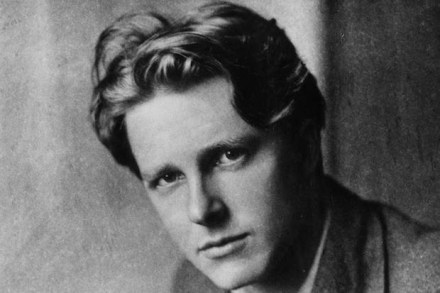
This month sees the Swiss alpine resort of Davos play host to the annual World Economic Forum summit, but it also marks the centenary of the death of one of England’s greatest Edwardian poets. The worship of Mammon and the ascent of Parnassus are traditionally not easy bedfellows, but the two are linked by the

The long ordeal of Mackintosh’s Glasgow School of Art

Notes on...

I was working on the final edit of my book — a fictionalised account of the year Charles Rennie Mackintosh spent in Suffolk — when news came in that his most famous architectural creation, The Glasgow School of Art, was on fire. My heart lurched. This was an unimaginable tragedy, not just for Glasgow, but

Process of elimination: the horrors of Ravensbrück revealed

More from Books

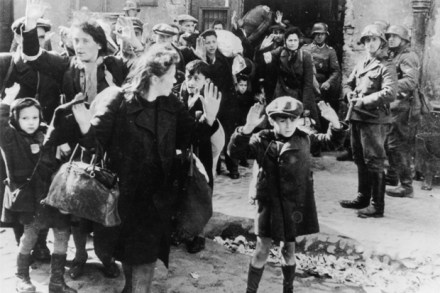
Concentration camps in Nazi Germany were originally set up in 1933 to terrorise Hitler’s political enemies; as war drew near, their function expanded to gratify his obsession (and that of Reichsführer Himmler, as head of the SS which administered them) with ‘purifying the race’ by getting rid of gypsies, Jews, ‘asocials’ — prostitutes, criminals, vagabonds

The Nightwatches of Bonaventura: a masterpiece of German Gothic

More from Books

In the early 19th century, the Romantic movement was in full swing across Europe. You could probably date its birth from the publication in 1775 of Goethe’s The Sorrows of Young Werther, the gloomy novel of unrequited love that led to a spate of suicides among young men in Germany. Coleridge and Wordsworth’s Lyrical Ballads

Robert Harris: BBC’s books coverage is a ‘disgrace’

Lord Hall will be glad that he didn’t attend last night’s Costa Book Awards. Robert Harris, who chaired this year’s judges, took the opportunity to criticise the corporation’s book coverage when announcing the winner. Harris says that it is ‘an absolute disgrace’ that there is ‘no dedicated book programme’ on television. The 57-year-old author urged Tony Hall to do

Page 3 was harmless. Here’s why I’ll miss it

More from life

‘I for one would be sorry to see them go,’ wrote George Orwell. ‘They are a sort of saturnalia, a harmless rebellion against virtue.’ He was writing about the seaside postcards of Donald McGill in 1941, but his defence of them and their ‘enthusiastic indecency’ could equally well apply to Page 3. Orwell’s argument was that

Sophia Duleep Singh: from socialite to socialist

More from Books

Princess Sophia Alexandrovna Duleep Singh (1876–1948) had a heritage as confusing as her name. Her father was a deposed Indian maharajah who had been exiled to England, her mother the Cairo-born illegitimate daughter of a German merchant and an Abyssinian slave. The young princess was brought up in considerable splendour on a vast Suffolk estate

Refugees and resilience: a story of Africa

More from Books

I would love to sit in on a Jonny Steinberg interview. Over the years this South African writer has perfected a form of reverse ventriloquism, in which he becomes the mouthpiece for the Africans whose lives intrigue him. I’d like to know how he does it. The process must require relentless badgering, as interview is

A ghost story without the scary bits

More from Books

Two men walk into an ice cream parlour in Austin, Texas, order the three teenage girls working there to undress, then tie them up and gag them with their own underwear, and set fire to the place. However, See How Small is not interested in the why or the who, but rather in the lives

The best new crime novels (and a rule for enjoying them)

More from Books

I have a rule: to ignore the prologue of a crime novel, especially if it’s printed in italics and written in the present tense. Almost always it will be violent, unnecessary and will give far too much away about coming events. I like to be unsettled. I like a story to build at its own

Lurid & Cute is too true to its title

More from Books

One of the duties of a reviewer is to alert potential readers to the flavour and content of a book, particularly if it comes into the category of ‘not a suitable present for your great-aunt’. I always dislike this duty, since it spoils surprises, which are the essence of enjoyment in reading; but Adam Thirlwell’s

The real mystery is how it got published

More from Books

As a boy I spent quite a lot of my free time trying to fake up ancient-looking documents. This hopeless enterprise involved things like staining paper with tea or vinegar, together with plenty of burning, and creasing, and copying of random texts with a scratchy old inkwell pen. Typical silly small boy stuff. Reading this

David Lodge: confessions of a wrongly modest man

More from Books

This massive first instalment of a memoir starts in the quite good year the author was born, 1935, and ends with his breakthrough novel, Changing Places, in the rather better year, 1975. A master-practitioner of narrative, Lodge chooses to write with an artful flatness which recalls Frank Kermode’s similarly self-depreciative memoir, Not Entitled. Lodge’s career