Nigel Jones

Nigel Jones is a historian and journalist

Matt Brittin won’t save the BBC

From our UK edition

The BBC is in the headlines again – for all the wrong reasons. A TV drama on the fall of Huw Edwards, the corporation’s disgraced former chief news presenter, is due to start tonight. Rather than keep shtum, Edwards has lashed out at Channel 5 for failing to 'check with me the truth', thus ensuring even more bad publicity for the BBC. Yet instead of donning sackcloth and ashes in an effort to atone for its many flaws and follies, the BBC is doubling down on its sins by appointing a new director general who offers more of the same. The appointment of ex-Google boss Matt Brittin as Tim Davie's successor shows that the Beeb is pretending it's business as usual, when only a radical overhaul can save the Corporation.

Has Keir Starmer killed the ‘Special Relationship’?

From our UK edition

Eighty years ago today, Winston Churchill coined the phrase 'Special Relationship' to describe the bond between the United States and Great Britain. That label for the close trans-Atlantic friendship, based on a common history, language and culture, and shared political and economic interests, has been repeatedly invoked ever since. Although it has frequently come under strain – notably during the Suez Crisis in 1956, and the Falklands War in 1982 – the US and UK have remained largely aligned. The two countries have broadly sung in chorus from the same song sheet. But can the 'Special Relationship' survive Donald Trump and Keir Starmer? Is it too much to hope that Sir Keir Starmer will follow Eden’s inglorious example?

Gen Z won’t actually read Wuthering Heights

From our UK edition

When Wuthering Heights (first published in 1847) is splashed across the front page of the Daily Mail as a free offer to readers and sells more than ten thousand copies in a month, you know that this says something significant about our current cultural tastes.  Just as Mr Darcy’s soaking shirt was a pivotal moment for millennial women in the 1990s thanks to the television adaptation of Jane Austen’s Pride and Prejudice, so another screen version of a 19th century novel written by a woman has captured the imagination of young adults, Gen Z.   It is, however, doubtful just how many of those who buy Emily Brontë’s Wuthering Heights as a book will manage to read over 300 pages.

The gentrification of British crime novels

From our UK edition

Eighty years ago this month, in February 1946, the left-wing Tribune magazine published George Orwell’s essay ‘The Decline of the English Murder’ in which the writer identified a certain class of crime as most appealing to the tabloid-reading British public – and contrasted the ‘cosiness’ of this type of early 20th-century domestic murder with the brutal sadism of killings committed in Britain during the second world war.  Two years previously, in 1944, while war still raged, in another essay entitled ‘Raffles and Miss Blandish’, Orwell specifically contrasted the ‘hard-boiled’ school of crime fiction with the gentlemanly Raffles stories of E.W. Hornung, featuring a well-mannered upper-crust jewel thief.

What happened to the National Portrait Gallery?

From our UK edition

When did you last visit the National Portrait Gallery? If, like me, you haven’t darkened its doors since it reopened following a £43 million makeover and expansion in 2023, stand by for a shock. Instead of being just a selection of the famous faces featuring in our island story – the politicians, poets, scientists and showbiz giants who did their bit to make Britain great – the NPG’s collection is being deliberately diluted to provide a portrait of ‘ordinary people’ who make up the tattered fabric of the nation today. I made my first visit to the gallery since it reopened this week.

John le Carré was boring and unpleasant

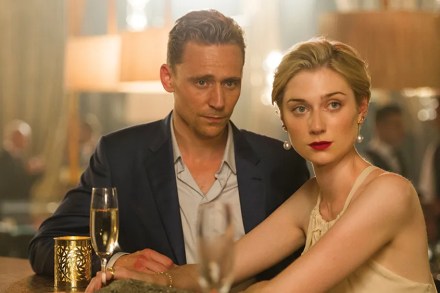
I have been having a John le Carré holiday. Five years after the great master of the spy thriller went to his final safe house in the sky, I spent chunks of the festive season watching two of his series on TV, and reading a slim volume called The Secret Life of John le Carré by his biographer Adam Sisman. BBC1 and Amazon Prime’s big New Year drama offering is The Night Manager, a sequel series to one of le Carré’s later stories, and simultaneously BBC4 has been re-running le Carré’s 1970s masterpiece, the seven-part mole hunt Tinker, Tailor, Soldier, Spy, starring the late, great Alec Guinness as spymaster George Smiley. Sadly, on two successive nights I found myself falling asleep in front of the dramas.

What are Trump’s post-Maduro plans for Venezuela?

From our UK edition

Donald Trump likes to keep both his friends and enemies guessing. It's no surprise then that his plans for Venezuela’s future after his typically bold and reckless abduction of dictator Nicolas Maduro are a mystery. Trump has awarded the plum of power in Caracas not to Machado but to Maduro’s vice-president and oil minister Delcy Rodriguez In his Mar-a-Largo news conference after the bombing and special forces raid on Caracas that caught the mustachioed Marxist napping, and delivered him to US custody, the US president begged as many questions as he answered.

Trump says the US has ‘captured’ Venezuela’s Maduro

Donald Trump's undeclared war in Venezuela against the Marxist regime of President Nicolas Maduro has erupted into the open. Trump says the US has captured Venezuela's leader and his wife. In a statement on Truth Social, Trump wrote: 'The United States of America has successfully carried out a large scale strike against Venezuela and its leader, President Nicolas Maduro, who has been, along with his wife, captured and flown out of the Country. This operation was done in conjunction with U.S. Law Enforcement. Details to follow. There will be a News Conference today at 11 A.M., at Mar-a-Lago. Thank you for your attention to this matter! President DONALD J. TRUMP.

Why did so many luvvies fall for el-Fattah?

From our UK edition

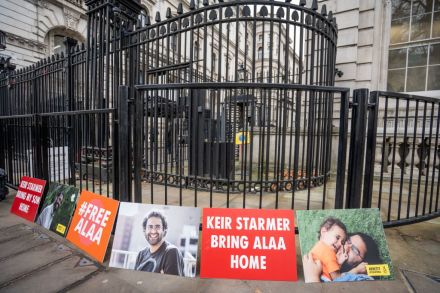
It is not only our hapless Prime Minister who supported the release of Alaa Abd el-Fattah from an Egyptian prison, with the PM on Friday saying he was ‘delighted’ to be able to welcome him to Britain. Our luvvie community have also long campaigned for el-Fattah’s freedom. A lengthy list of actors – including Stephen Fry, Olivia Colman, Dame Judi Dench, Carey Mulligan, Bill Nighy, Neil Gaiman and Brian Cox – praised el-Fattah and called for his release from the Egyptian jail where he languished for more than ten years for criticising the authoritarian regime of President Sisi.

Did Oliver Cromwell really ‘cancel’ Christmas?

From our UK edition

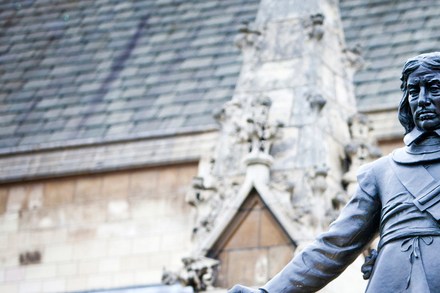
It is a cherished myth among Oliver Cromwell’s many critics that our only home-grown military dictator ‘cancelled Christmas’. It gives the Ollie haters yet another reason to loathe the warty-faced old brute, alongside his notorious Irish massacres (of which more later) – but is it true? In fact, there is no evidence that Cromwell initiated or played any personal part in the series of measures clamping down on traditional Yuletide festivities. These were introduced by an increasingly Puritan-dominated parliament between 1647 in the immediate wake of the English civil war, and 1656 – when Cromwell was firmly in the saddle as Lord Protector – though as a strict Puritan himself, he would doubtless have approved.

Chile turns rightward

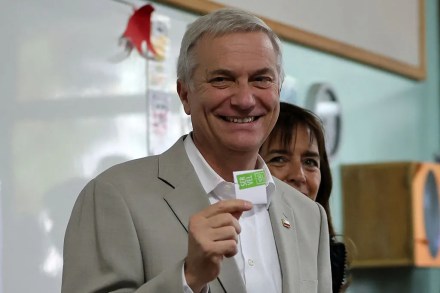
Chile has joined the right-wing trend sweeping Latin America by electing the ultra-conservative candidate Jose Antonio Kast as its first rightist president since the demise of Pinochet's military dictatorship in 1990. Kast, 59, leader of the Republican party, trounced Jeannette Jara, a communist party member, and the candidate of Chile’s current ruling left-wing coalition, winning almost 58 percent of the vote in Sunday’s poll. Jara, a former Labor minister, conceded victory to Kast, saying “Democracy has spoken loud and clear” and wishing her opponent success “for the good of Chile.

Kast Chile

The teenage Farage story misses the point

From our UK edition

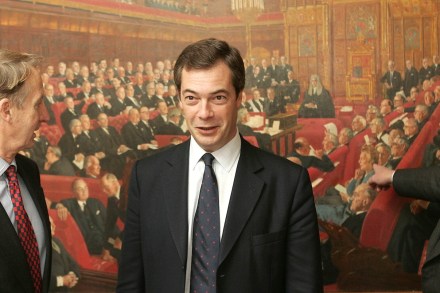
In Terence Rattigan’s 1948 play The Browning Version (filmed in 1951 starring Michael Redgrave), a public-school classics teacher called Arthur Crocker-Harris is appalled to discover that he is known to his pupils as ‘the Himmler of the Fifth’. According to the Guardian and the BBC, the Reform UK leader Nigel Farage was a fan of Himmler’s boss, Adolf Hitler, when he was a student at Dulwich public school half a century ago. I suspect that those who are enthusiastically mining this story for its anti-Farage political potential did not attend single-sex male boarding schools in the 1970s. Given the war had ended just a few decades before, it was scarcely surprising that it was the common currency of schoolboy playground conversation.

Hitler and Churchill: the artists at war

From our UK edition

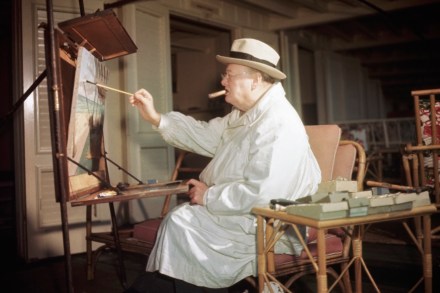
Winston Churchill and his arch enemy Adolf Hitler didn’t have a lot in common, but one passion they did share was painting: both the heroic wartime prime minister and the genocidal Nazi dictator were keen amateur artists. While auction houses are reluctant to handle or sell Hitler’s landscapes for obvious reasons, Churchill’s pictures have vastly increased in value since his death. One study of a Moroccan mosque, which the great man painted after the Casablanca conference in 1943, was acquired by actors Angelina Jolie and Brad Pitt when they married. After they divorced, Jolie sold the picture in 2021 for £7 million.

We’ll miss juries when they’re gone

From our UK edition

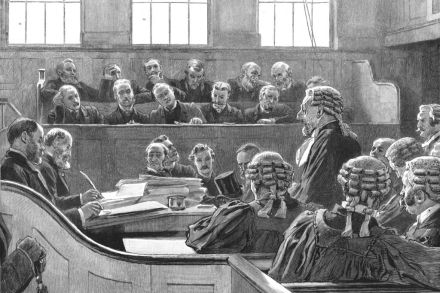
At the dawn of my stellar journalistic career I served for two years as Crown Court correspondent of the Cambridge Evening News, and every working day would dutifully cycle to the city’s Guildhall to witness juries deciding the fate of the unfortunates who appeared before them. With that experience, I have more than an amateur interest in Justice Secretary David Lammy’s reported plan to scrap jury trials in all but the most serious cases, such as murder, manslaughter and rape, and replace juries with courts presided over by judges. Lammy’s motive is said to be the need to clear the vast backlog of 80,000 cases currently awaiting trial, as justice delayed is famously justice denied, and the legal system is notoriously slow moving and cumbersome anyway.

Comparing Reform to the Nazis is no joke

From our UK edition

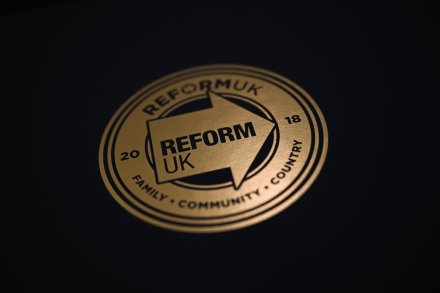
It is a well known axiom of politics that once you compare your opponents to Hitler’s Nazis you have well and truly lost the argument. But that golden rule seems to have been lost on Tory party chairman Kevin Hollinrake who has rightly come under heavy fire for comparing Reform UK to the Nazis. Hollinrake’s gaffe is a measure of just how worried the Tories are about the rise of Reform Hollinrake posted two images on X showing a black and gold Reform logo promoting the populist party on a football shirt next to a picture of the Nazis’ golden party badge – a special award instituted by Hitler on becoming German Chancellor in 1933 to honour the party ‘alte kampfer’ (old fighters), the first 100,000 loyal Nazi members who joined after the party’s foundation in 1919.

Did Hitler really have only ‘one ball’?

From our UK edition

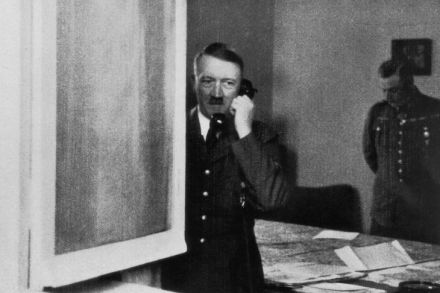
Everyone knows the rhyme about Adolf Hitler. The popular ribald wartime song, beloved of school children, has it that: 'Hitler has only got one ball/ The other is in the Albert Hall/ Himmler is very similar/ And poor old Goebbels has no balls at all!'. The rhyme works, but is it right? A two-part Channel 4 documentary airing tonight suggests the verse about the Nazi dictator might not be entirely fictitious. Now that same science has been deployed to help explain the deeds of the biggest criminal of them all: Adolf Hitler Hitler’s DNA: Blueprint of a Dictator uses an analysis of his DNA to suggest he suffered from Kallmann Syndrome, which can affect the development of sexual organs.

Am I being haunted?

From our UK edition

Asked if he actually believed in ghosts, M.R. James, author of the greatest ghost stories in the English language, answered equivocally that he was prepared to consider anything for which there was sufficient evidence. It’s the time of year when Monty James used to invite students to his rooms at King’s College, Cambridge, and turn down the lights. The students would listen to him read the terrifyingly chilly tales that he created every winter, set in the sedate surroundings of cathedral cloisters, country houses and East Anglian seaside towns. Now that I too live in an ancient cathedral city, I also want to see a ghost.

James Watson deserved better

From our UK edition

James Watson has died at the great age of 97. Obituaries of the American scientist, who, with his late British collaborator Francis Crick, first proposed the double helix structure of the DNA molecule, after paying due tribute to his earth-shattering discovery, inevitably included the information that his later years were clouded by his ‘controversial’ views on race and intelligence. The Nobel Prize-winning biologist was in fact one of the earliest victims of cancel culture in 2007, when, in an interview with the Times, he stated that he was ‘pessimistic’ about the future of sub-Saharan Africa because its inhabitants were genetically less intelligent than white Europeans.

Why the authorities hate Lewes bonfire night

From our UK edition

One of the first articles I wrote for The Spectator back in 2011 described the explosive celebration of Bonfire Night in Lewes, the ancient county town of East Sussex where I then lived. Today, such is the relentless march of purse-lipped Wokedom, it is necessary – in writing about this eccentric folk festival – to defend its very existence as well. The simple survival of ‘Bonfire’ (as it is known to Lewesians) every 5 November is in fact something of a miracle in our painfully politically correct age.

Do black lives still matter?

It was an ethnic massacre so bad that it could be seen from space. Satellites picked up bloodied patches of soil in North Darfur’s capital, El Fasher, after Sudan’s Rapid Support Forces (RSF) swept into the besieged city. Pools of blood and piles of bodies were identified. Thousands of people are feared to have died in the appalling violence. Many thousands more have fled for their lives. Others remain trapped in the city. Satellites picked up bloodied patches of soil in North Darfur’s capital, El Fasher The scenes of slaughter were so blatant that it should have brought marchers out on to the streets of London in passionate protest. But there wasn’t a peep from the usual suspects.