Jeff Noon

The mean streets of 1960s Soho: Bent, by Joe Thomas, and other crime fiction reviewed

From our UK edition

Brian De Palma brings his film director’s eye to Are Snakes Necessary? (Hard Case, £16.99), written in collaboration with the author Susan Lehman. The novel merges fierce political satire with the tale of a corrupt senator happy to cheat on his wife, despite her suffering from Parkinson’s disease. The latest object of his lust is a young videographer hired to record his campaign. Of course, things go from bad to worse and the senator is forced to call in a fixer to sort out the trouble. Terrible consequences ensue, all the way from Washington to Las Vegas to Paris. A globe-trotting sleaze-fest. The story is pushed forward by the three drives of classic noir — sex, money and power, with the first two only seen as stepping stones on the way to the third.


Making Brexit thrilling

From our UK edition

The long gestation period of Brexit has allowed authors to plan and write and publish novels in time for the big day. Alan Judd’s Accidental Agent (Simon & Schuster, £12.99) is a spy thriller set during the EU negotiations. Charles Thoroughgood is the head of MI6. The secret service is forbidden from spying on the EU, but when an EU official volunteers information about the negotiations, it seems too good an opportunity to miss. The trouble is, the mole — known only by the code name Timber Wolf — might not actually be real. Thoroughgood investigates the veracity of the source, taking the place of Timber Wolf’s usual contact, and what he discovers unsettles and surprises him.

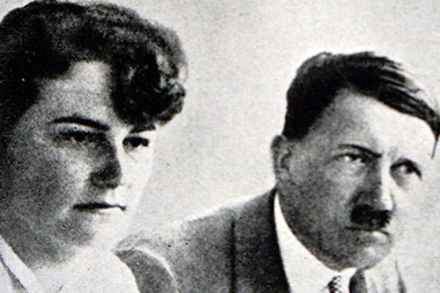
Hitler’s affair with his niece — and a failed attempt on his life — make for a sizzling thriller

From our UK edition

The journalist Deepa Anappara turns to crime with her debut novel, Djinn Patrol on the Purple Line (Chatto & Windus, £14.99). First off: great title. I really wanted to love this book, expecting, well, djinns on the purple line. The results are somewhat different. The purple line refers to a train line that runs through an area of an Indian city filled with slums and rubbish tips. Nine-year-old Jai is obsessed with TV cop shows. When young children start to go missing, Jai sets out to track down the people responsible. The hours he’s spent watching programmes such as Police Patrol will now come to good use, as he works a case the real police have little interest in. As many as 180 children go missing in India every day. This fact prompted Anappara to write the novel.

Death at close quarters

From our UK edition

Alex Jackson is buried alive inside his own body, a body which lies in a long-term coma following a climbing accident. He can’t see, he can’t move, he can’t speak. This is the terrifying fate of the protagonist of Emily Koch’s debut novel If I Die Before I Wake (Harvill Secker, £12.99). The doctors believe that Alex has no awareness of his surroundings, but he can still think and feel, and he can hear people speaking. His family debate withdrawing life support, and his friends talk about his girlfriend Bea moving on, finding someone new. And from these fragments of speech he starts to piece together a shocking truth: that his fall wasn’t in fact an accident.

Crime fiction: a sole survivor is haunted by a family tragedy on a remote Scottish island

From our UK edition

James Sallis has a modus operandi: never to waste a word. Sarah Jane (No Exit Press, £8.99) follows this stricture well, using a sparse yet poetic style to tell the story of a woman born on the wrong side of town to bad parents, who wanders from one lowly job to another, one unsavoury man to another, one trouble to another, living a life of chaos, until, led by some curiously twisted route, she takes a chance and decides to join the police, working small cases in a small town. When the local sheriff, Cal Phillips, disappears, Sarah Jane Pullman assumes the task of tracing his whereabouts, an undertaking that leads to unpleasant truths, both for herself and her late friend and mentor.

Crazy nannies and missing children: the latest crime fiction reviewed

From our UK edition

Madeline Stevens’s debut thriller, Devotion (Faber, £12.99), might more appropriately have been titled ‘Desire’. It’s a riff on that old standby: the crazy nanny story. Except, in this case, both the nanny and the mother of the children are equal contestants in the madness stakes. Ella is poor and adrift in the city. It seems like a golden opportunity when she’s hired to look after the offspring of the rich and very beguiling Lonnie and James. Cue temptation. Ella is soon obsessing over Lonnie, trying on her clothes, rifling through her personal hygiene products. Does she love her employer, or does she want to kill her? This is a New York state of mind novel, very much in love with its own kinkiness.

Secrets and suspense

From our UK edition

Andrew Martin continues his quest to create uniquely interesting crime novels in The Winker (Corsair, £16.99). Lee Jones is a rock musician facing cultural extinction as the punks take over. It’s 1976. He wanders around London dressed to the nines, living his fantasies. His trademark move on stage was to wink at a member of the audience. He’s still doing that to people on the street, but what follows these days is anything but mutual admiration. And so begins the career of the winking killer. (The author has fun with vowels.) Charles Underhill, a wealthy Englishman living in Paris, has his own reasons for being obsessed with the Winker’s killing spree. He sets out to uncover the identity of the murderer.

Mad, bad and dangerous

From our UK edition

Mr Todd is a lonely man, out of work, nursing a thousand grudges while he ekes out a living with his grown-up son, Adrian. He believes Adrian is dangerous, a threat to other people. But the real evil might be living inside Mr Todd’s head. This is the squalid battleground set out by Iain Maitland in Mr Todd’s Reckoning (Contraband, £8.99). Skirmishes take place in a rundown bungalow, giving father and son few places to hide. There is no relief from intimate noises and petty arguments. When Adrian brings home a girlfriend and her young child, Mr Todd’s world crumbles at the seams. The consequences are horrible. Maitland conjures madness from the inside, looking out.

The journalist as sleuth

From our UK edition

Despite being well-travelled as the BBC’s world affairs editor, John Simpson doesn’t roam far from home in his spy thriller, Moscow, Midnight (John Murray, £20). Life and art intermingle, in both subject matter and character. The hero is named Jon Swift, a veteran journalist bristling under new media regimes. When government minister Patrick Macready is found dead — presumably from a solo sex game gone wrong — Swift takes it upon himself to clear up a few loose ends. Soon he’s under investigation himself, ostracised, and journeying to Moscow to work a connection to a number of Russians who have met similar ‘accidental’ fates. Swift is cynical, unreconstructed in his view of women, a bit snobbish at times.

Bodies pile up

From our UK edition

A young girl finds the body of her nanny, brutally murdered, and the barely moving form of her mother, a second victim of the attack. The perpetrator of these deeds is the child’s father, who manages to flee the country and has never been seen since. This is the wound at the heart of Flynn Berry’s A Double Life (Weidenfeld, £14.99). Adulthood has given Claire Spenser no respite from her pain. Haunted by the horror she witnessed as a child, she now obsesses over every scrap of information about her father. She investigates his close friends and family, suspecting them of helping him to escape trial. But this isn’t a quest for revenge, more a personal search for justice, and above all, understanding.

Family mysteries

From our UK edition

Maggie is sitting alone in the park when she’s approached by Harvey, who introduces himself as a recruiter for MI5. This is the starting point of Mick Herron’s This is What Happened (John Murray, £16.99). The company Maggie works for is under investigation as a possible threat to national security. She takes on a task, to feed a virus into the company’s computer network, but during this operation she accidentally kills a security guard. Harvey places her in a safe house. No windows, a locked door, no television, no internet, no way of knowing what’s going on beyond her room. Years pass. Harvey visits now and then, telling her the country has descended into anarchy. They have sex.

Strewn with foreign bodies

From our UK edition

Ghosts of the Past by Marco Vichi (Hodder, £18.99) is unashamedly nostalgic in tone. The title could not be more apposite. The action takes place in 1967, when Inspector Bordelli of the Florence police force is called to a house where a wealthy industrialist has been run through with a sword. Each member of the family is acting suspiciously, as are the various colleagues and associates of the deceased. Bordelli’s life is further complicated when an old friend, Colonel Arcieri, turns up in dire trouble and needing protection. The case unfolds in a slow haze of interviews and recollections. Vichi takes his time to explore Bordelli’s mind, his thoughts and his feelings, especially concerning the past and love lost. The book yearns for a bygone age.

The murderous past

From our UK edition

How can you defend a man you hate? John Fairfax, in his Blind Defence (Little Brown, £16.99), explores this dilemma. Diane Heybridge is found dead in her London flat. She was poor, working-class, without much of a future to look forward to. But did she take her own life, or was she murdered by her callous, jilted partner, Brent Stainsby? Into the fray steps William Benson, an ex-con, a murderer himself, now turned maverick barrister, a person the press and the public love to hate. With his legal partner Tess de Vere, he takes on Stainsby’s case and finds himself defending a man that nobody likes, and that Benson himself despises. As the true and hidden nature of the victim’s life is uncovered, the moral fog turns even murkier.

Unusual motives for murder

From our UK edition

Donald E. Westlake wrote crime books that were funny, light and intricate. Help I Am Being Held Prisoner (Hard Case Crime, £7.99) was first published in 1974. The protagonist is Harold Künt. (That umlaut, as you can imagine, is very, very important.) In reaction against his name, he’s become a serial prankster. After one of his jokes goes badly wrong, he ends up in prison. Here he falls in with the Tunnel Gang, a group of inmates who use a secret tunnel to escape into the nearby town. But they only go there for a few hours at a time before returning to prison to serve out their sentences. Künt strolls around town, chats to locals, even falls in love, and then heads back to his cell. It’s a perfect life.

Close up and far away

From our UK edition

It’s difficult to keep a crime series going after 11 books but Boris Akunin manages it well in All the World’s a Stage (Weidenfeld, £20). His hero, Erast Fandorin, is now in his fifties. It’s 1911 in Russia, and while the Bolsheviks gather their power, another revolution is taking place in the theatre, and the Noah’s Ark Company are at the forefront of this new expression. When their star actress Eliza Altairsky-Lointaine’s life is threatened during a performance, Fandorin is called in to investigate. He’s working undercover as, of all things, the writer of their next production. This is a traditional crime drama in which members of the company are killed off one by one in ever more mysterious circumstances.

Recent crime fiction | 12 October 2017

From our UK edition

Gabriel Tallent’s My Absolute Darling (4th Estate, £12.99) has the word masterpiece emblazoned on the cover, alongside quotes from several famous authors telling us how brilliant it is. It can be difficult to see through this hype and find the true novel, but let’s try. Fourteen-year-old Turtle Alveston lives with her father, Martin, a survivalist type who’s taught her how to fire a gun and use a hunting knife from an early age. He abuses his daughter, trapping her in a circle of love and pain. When Martin brings home another young girl, Turtle at last finds the courage to confront the man who has so dominated and controlled her life. This is a bloodstained book, etched with violence, with unflinching depictions of abusive sex and desperate love.

Latest crime fiction

From our UK edition

Wolfgang Herrndorf’s Sand (Pushkin Press, £14.99) is set in 1972 and moves back and forth between a North African city and a small unruly town surrounding an oasis. One man is on the run through the desert regions: he has no name, no memory and no clue as to why he’s being pursued by at least three different parties, all intent on doing him harm. Other characters inter-mingle with this tale of woe: ineffectual detectives, a glamorous sales agent, a commune of hippies, and a paranoid spy whose sense of purpose evaporates in the midday heat. The sun bakes the streets, the sand, people’s faces. And their minds. The amnesiac really does suffer, painfully at times, running blindly from one problem to the next.

A choice of recent thrillers | 30 March 2017

From our UK edition

A young Norwegian police officer finds a rusting vintage car inside a locked and disused barn, and the presence of bullet holes in the bodywork intrigues him enough to start an investigation in his spare time. This is the central puzzle of Jorn Lier Horst’s When It Grows Dark (Sandstone Press, £7.99), and it offers a perfect introduction to his Detective Wisting series. Who owned the vehicle? Why was it abandoned? Was somebody murdered in the car? This is a case without a corpse, without suspects, and Wisting has to piece it together from the tiniest scraps of information, uncovering secrets and emotions kept hidden for decades. He can ill afford the time: his wife has just given birth to twins, and he tries his best to help around the house.

Recent crime fiction | 9 February 2017

From our UK edition

There isn’t a clear line separating crime and literary fiction, but a border zone where ideas are passed from one genre to another. Flynn Berry’s debut Under the Harrow (Weidenfeld, £12.99) is set well to the literary side of this border, but doesn’t shirk on the thrills of a psychological mystery. Nora Lawrence expects to spend a few peaceful days in the countryside, staying at her sister Rachel’s house. Instead she finds Rachel dead, the victim of a brutal murder. A previous, unsolved attack on her sister has left Nora with very little faith in the police, and she is forced to undertake her own investigation. But is she driven by justice or revenge?

Crime fiction for Christmas

From our UK edition

Imagine receiving an anonymous suicide note addressed to you by mistake. Would you try to find that person, to help them in some way? This is the opening dilemma in Bernard Minier’s Don’t Turn Out the Lights (Mulholland Books, £14.99), and Christine Steinmeyer’s failure to locate the letter’s sender turns her life in Toulouse upside down. Her dog disappears, she’s accused of harassment at work and her fiancé walks out on her. She believes that someone — some unknown person — is to blame for her misfortunes; but are the threats real, or is Christine losing her mind? This is a super-accelerated version of a Hitchcock thriller, with thrills and shocks on nearly every page.