Tim Bouverie

Far from ideal

From our UK edition

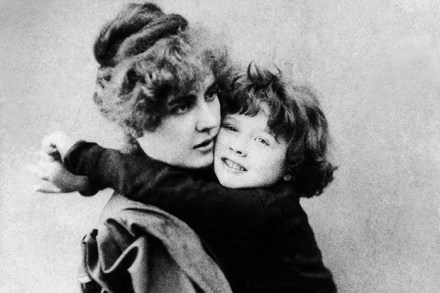
There were few subjects which escaped Oscar Wilde’s barbed wit: dentists, cynics, Americans, literary critics, democracy, the working classes, the middle classes, the upper classes and Bernard Shaw were all prey for his cutting paradoxes. Family, however, got off lightly. Not for Wilde the sinister or cruel depictions of relations which permeate the novels of Evelyn Waugh and find their dysfunctional climax in Brideshead. On the contrary, family is an affectionate theme running through most of Wilde’s work and is at the very heart of his masterpiece, The Importance of Being Earnest — a play whose plot rests on the fact that the leading protagonist has lost his parents. This does not mean that Wilde was always dutiful towards his family.
Rab Butler was too indecisive (and badly dressed) to be Prime Minister

From our UK edition

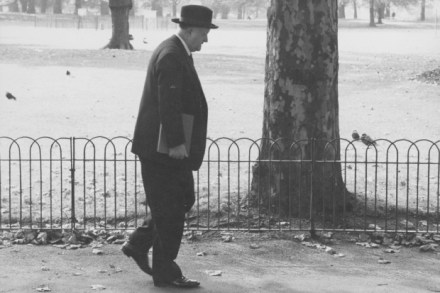
‘The best prime minister we never had’ is not an epithet exclusive to Rab Butler. Widely applied to the late Denis Healey, it was also said of Hugh Gaitskell, Iain Macleod and Roy Jenkins. (More recent candidates would include Michael Heseltine and Kenneth Clarke.) All had arguably greater intellects than the prime ministers they ended up serving, all enjoyed significant popularity in the country and all were committed to the centre-ground of British politics. Yet while ‘The best PM we’ve never had’ is a club rather than a solitary designation, Rab Butler is pre-eminent among its members.

Passionate pioneers

From our UK edition

If Mary Wollstonecraft, as she once declared, ‘was not born to tred in the beaten track’, the same with even greater reason could be said of her daughter Mary Shelley. Not only was she the child of the author of A Vindication of the Rights of Woman, she was also the daughter of William Godwin, the radical political philosopher. Given this auspicious pedigree, it is perhaps not surprising that Shelley would lead a life every bit as daring as her mother, and in Frankenstein produce a masterpiece of equal fame. A joint biography of this most famous mother/daughter combination is, therefore, a good idea.

Tony Judt: a man of paradox who made perfect sense

From our UK edition

Tony Judt was not only a great historian, he was also a great essayist and commentator on international politics. Few in this country will be familiar with his journalism, however, since it was largely published in America by the the New York Review of Books and the New Republic. Thankfully, this situation can now be remedied through this collection of his writings, ranging from 1995 to his untimely death in 2010 from motor-neurone disease. As was often observed during his life, Judt was a man of apparent paradoxes. A secular Jew, who as a teenager had been a left-wing Zionist, he was castigated for criticising the actions of Israel. A historian of Europe, he spent most of his career teaching in America.

What’s that I hear? Francis Fukuyama back-pedalling frantically

From our UK edition

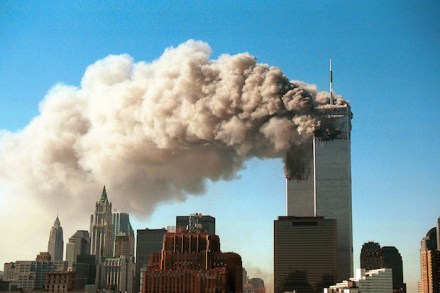
The problem with a futuristic thesis — particularly when summarised by a futuristic title — is that it is likely to be thrown back at you in the future. This is the problem that Francis Fukuyama has faced ever since he published his daring and now much derided book, The End of History and the Last Man, in 1992. In it, Fukuyama argued that history had been buried beneath the rubble of the former Berlin Wall and that the teleological process was now at an end: ‘What we may be witnessing... is the end point of mankind’s ideological evolution and the universalisation of Western liberal democracy as the final form of government.’ To many, this theory was literally exploded when the first plane hit the World Trade Center.