Wynn Wheldon

Alone and defenceless: the tragic death of Captain Cook

From our UK edition

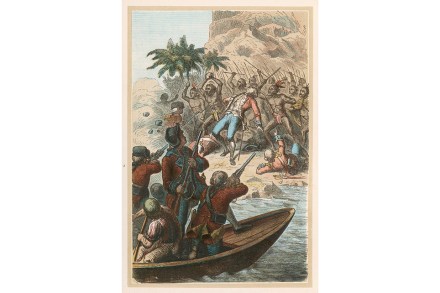
The principal purpose of Captain James Cook’s last voyage, which began in Plymouth on 12 July 1776, was to discover the elusive Northwest Passage. Attempts had been made before, in vain, from the Atlantic, but this time it would be from the west, from the Pacific.  On the way, Cook was to return an Anglicised Polynesian named Mai to Raiatea, ‘a ragged volcanic island’ about 130 miles north west of Tahiti. Mai takes up much of Hampton Sides’s narrative, offering ‘a poignant allegory of first contact’, before being deposited home with his cargo of English domestic farm animals and his suits.  Prior to that, Cook had investigated, in New Zealand, the massacre of ten crew members of the Adventure, the Resolution’s sister ship on his previous voyage.
A tribute to Alf Ramsey, football’s forgotten hero

From our UK edition

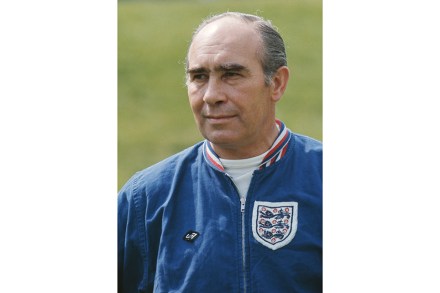
No better book about England’s victory in the football World Cup of 1966 and what followed it has ever been written. Duncan Hamilton’s Answered Prayers has the authority of a work of history and pulses with the narrative power of fiction. Its unlikely hero is Alf Ramsey. He emerges as a curiously complicated character through whom Hamilton tells his story. The men in charge of the FA were regarded as a vengeful, ungrateful bunch of heartless incompetents This is not a tale of the glory of that sunny day. It is instead a kind of melancholy eulogy.

Why is the barleycorn still the basis for shoe measurement?

From our UK edition

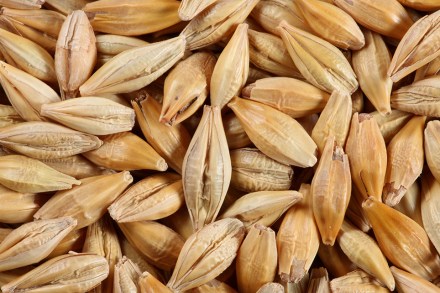
This is not really a history book – and even if it were, its particular charm would be better expressed by the use of an indefinite article in the title. Or perhaps ‘Histories’ might have been more appropriate. Calling things what they are, being precise, is one of the difficulties it so enjoyably demonstrates.  Some anthropocentricity remains: shoes sizes in the UK and America are still measured in barleycorns You would have thought, for example, that a kilogram has always been a kilogram. But no: the original kilogram, a cylinder known as ‘Le Grand K’, kept in a bell jar in Sèvres, from which replicas had been made for distribution throughout the world, was discovered to have lost its weight in relation to those replicas.

More stirring stories of little ships

From our UK edition

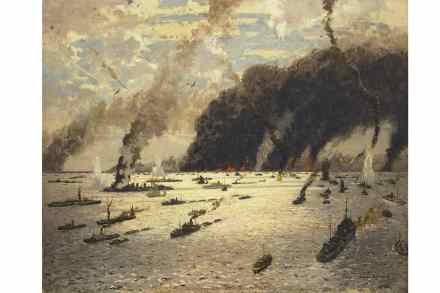
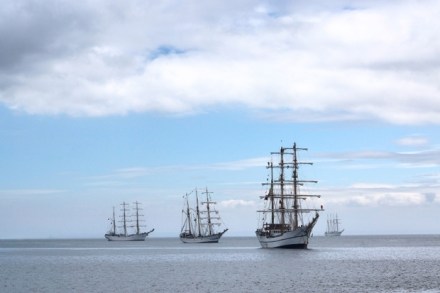
‘I found this story by accident,’ begins Julia Jones’s Uncommon Courage, referring to documents belonging to her late father that she discovered in a far corner of her attic. True, but also false. This is not one story: it is a tsunami of stories. Sometimes it’s hard going, as you try to shelve the curiosity aroused by each tale. But the author writes with vim and vigour and with her own curiosity to the fore. It is all, appropriately, as far from dry as one could wish. The imagination finds it difficult to yoke yachting with war – the one solitary and pacific, the other dense with people and mayhem – but the initial supposition that we shall be subjected to booms and topsails and rigging is soon scuppered.

The Georgians feel closer to us now than the Victorians

From our UK edition

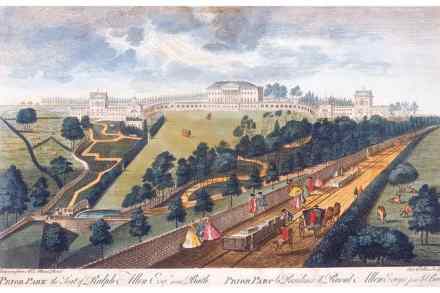
‘The two most fascinating subjects in the universe are sex and the 18th century,’ declared the novelist Brigid Brophy when the ban on Fanny Hill was lifted in 1963. Penelope Corfield’s big, handsome, enjoyable book goes a good way to illustrating Brophy’s assertion. Part source book, part interpretive history of the long 18th century (1688-1837), it is also a guide and gazetteer to the continuing presence of Georgian England in our towns and minds. The world before 1688 is largely unfamiliar to us. The 18th century, however, with its lovable rogues, its introduction of constitutional monarchy, its rights of man and its sexual libertines, is akin to ours.

The Great War was enough to make grown men weep

From our UK edition

Following the assassination of Archduke Franz Ferdinand in Sarajevo it took a mere six weeks for the diplomats of Europe’s Great Powers to plunge the continent into cataclysmic war. Austria-Hungary wanted Serbia, which was protected by Russia, which was in an entente cordiale with Great Britain and France. Germany was the ally of Austria-Hungary. For good measure, Turkey was the ally of Germany. Simon Heffer straightforwardly follows the messaging and the meeting that resulted in catastrophe. There are no forces or movements here, but rather individuals trying to serve their nations’ best interests, and with generally good intentions all round. The road to hell.

Shaggy dog stories

From our UK edition

What is it that distinguishes humans from other animals? The default answer nowadays is tediously misanthropic, but a more interesting distinction is that humans keep pets. Why this should be is the subject of this book. Jacky Colliss Harvey investigates the men and women who have owned, doted on, and in some cases mistreated their pets, in literature, painting, the movies and history. This begins 26,000 years ago, when a boy and his dog went exploring in bear caves in the south of France. The evidence was discovered in petrified tracks at Chauvet in the Ardèche in 1994.

Curiosity – and cats

From our UK edition

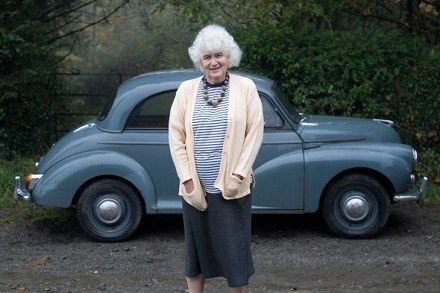
To Jan Morris, I am anathema. That goes, too, for David Attenborough. It is a word that this unarguably great writer likes: ‘It rolls well off the tongue.’ Why are your reviewer and the great broadcaster anathema, you ask. Well, we have been to the zoo. In this almost entirely enjoyable book no-one comes in for quite so much disapproval as those of us who have been to the zoo.I mention David because, when I was young, he took me to the zoo. However, despite this sinfulness, I would be surprised if Morris, who is a year older than Attenborough, does not recognise in David a confrère in the war for niceness against nastiness, kindness against cruelty. This book, apparently written because Morris has ‘nothing much else to write’, is more weighty than it seems.

High stakes and chips

From our UK edition

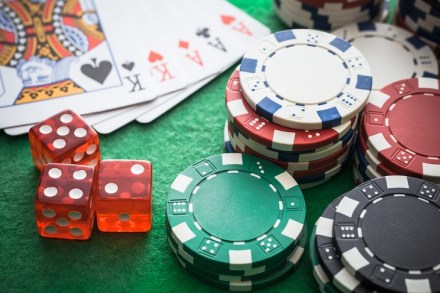
According to the subtitle, this is a collection of ‘short stories of long nights at the poker table’. Were that the case, this would be a more enjoyable book, but there are too many stories here that stray from the baize. As a game, poker is relatively simple. The deal gives you your ‘hole’ cards, the ones you and no one else can see. They determine whether you play the hand or not. The betting follows as cards are further distributed. One by one players drop out, hopes dashed. Finally someone wins, not necessarily with the best hand. Beginning, middle, end. Poker has a richer literature than any other card game. Its attraction to writers is in its inherent suspense and the tension that creates. An old poker saw maintains that you play the players, not the cards.

Pets in the Blitz

From our UK edition

War Horse, by way of book and play and film, has brought the role of horses in war into the public consciousness. Even before it, there was the erection of an Animals in War Memorial on Park Lane, paid for by an impressive list of aristocrats under the leadership of commoner Jilly Cooper. But what of pets, or what Professor Hilda Kean prefers to call ‘companion animals’? Not long ago, in Paddington, I was walking my own dog when accosted by an incredibly old man who said that he had lost his dog during the war. ‘Oh,’ said I, with my eyebrows raised. ‘Yes, we lived on the Wirral peninsula, and since we were close to Ireland, which was neutral, there was a fear that the Nazis would invade from there, so the beaches were mined. My dog was blown up by one.

An apologia for adultery

From our UK edition

What to make of this unexpectedly startling novel? Though you may be lured into a false sense of familiarity by mentions in the blurb of Trollopes J and A, and the comfortable middle-class settings (Sussex, Notting Hill), it turns out to be a diatribe against male selfishness, a meditation on approaching death, and an apologia for adultery. And that’s among other things. Set in the week beginning 6 May 2015 — the day before David Cameron’s unexpected general election triumph — it concerns three marriages well into maturity, each requiring a reappraisal of its sexual politics. Some of this, reading as a middle-aged male nearing 60, as is one of the characters, is close to the bone, if I may so put it.

My mother, my self

From our UK edition

To tell this story of his search for a mother lost to mystery in early infancy, its author uses the techniques of documentary drama. He describes past scenes and conversations in extreme, atmospheric detail: a particular dream on a particular night in the 1940s, a conversation in the 1950s. Perhaps his work as a screenwriter has helped in this, but it is the clarity of his prose and the emotional significance of his search that ensure an entirely plausible imaginative reconstruction. As one would in reviewing a novel, the characters may be described in the present tense.

Scarred by the past

From our UK edition

In Indonesia in 1965–6 half a million communists and supposed communist sympathisers were murdered by a range of civilian and paramilitary organisations under the direction of the army. This is the setting for Louise Doughty’s grim, ambitious novel. John Harper is a young operative in Jakarta, working for a Dutch private intelligence operation, providing information for corporations and doing covert work for various governments, chiefly the American. The title refers to the polluted water of Jakarta’s canals, but also to the water of the country’s paddy fields. To the news-attentive reader there is also the echo of the Blackwater private security operation that got into trouble in Iraq.

A disarming heroine

From our UK edition

The name Freya is derived from the old Norse word for ‘spouse’, perhaps Odin’s. As a goddess she is variously responsible for birth, death, war and beauty, which seems to cover a fairly wide range of human endeavour. It is a name befitting the ardent heroine of this old-fashioned novel with a distinctly contemporary bearing. An initial irritation at the use of a literary pun (the first of the three parts of the book is called ‘At Swim, Two Birds’ for no very obvious reason) and a sprinkling of period props (powdered eggs always pop up in the late 1940s) soon gives way to the pleasurable anticipation of a long tale well told.

Spectator books of the year: Wynn Wheldon enjoys a new history of the BBC

From our UK edition

A long time ago the novelist Marghanita Laski opined that the BBC had been the greatest single influence for good upon the life of the nation since the decline of the churches. A little later my father, Huw Wheldon, called it ‘one of the great institutions of the western world’. Charlotte Higgins regards the corporation as ‘the most powerful British institution of them all’. Her history of the BBC, This New Noise (Guardian/Faber, £12.99) is intellectually coherent and a pleasure to read. It gives proper credit to the ‘pioneer of TV current affairs’, Grace Wyndham Goldie. Bernard Cornwell’s Waterloo (Collins, £8.

To the ends of the earth

From our UK edition

What’s in a name? The identity of the author offers a clue to one of the themes of this intriguing novel: Naomi, a good Hebrew name; Williams, a stout Welsh name; born in Japan; lives in California. The earth is spanned. Landfalls charts the voyage of two French frigates exploring the world at the end of the 18th century, after Cook but before the Revolution. Based on true events, the story unfolds in discrete episodes, short stories indeed, told from a variety of points of view, in changing cases and in differing person. The dramatis personae remain more or less constant; they cross-inform each others’ stories. In its work as historical fiction, Williams subtly outlines the cusp between ancien regime and republic.

‘It’s always wrong to starve’

From our UK edition

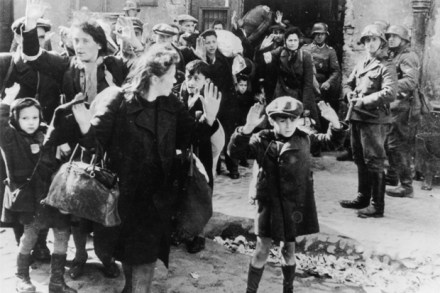
‘My mother and father named me Aron, but my father said they should have named me What Have You Done, and my uncle told everyone they should have called me What Were You Thinking.’ So begins, with bitter Jewish humour, this involving book set largely in the Warsaw ghetto. There is a hint of unnerving pastiche in this, but it is a sentence that finds an echo in the compassionate words of Jim Shepard’s hero, Janusz Korczak, in the final sentence of the book. Korczak was a real figure, a paediatrician who ran an orphanage in Warsaw, moved with it into the ghetto and, despite being offered several chances of escape, stayed with his charges when transported to the extermination camp at Treblinka.

All change: everything metamorphoses in Aquarium, including its author, who takes on the persona of a 12-year-old girl

From our UK edition

Books ought to be able to stand on their own, but perhaps it is important to know this about David Vann: a year after his stepmother’s mother had shot her husband and herself, his father also shot himself. Vann was 13 years old. The reason it’s important to know this is that what might seem implausible in the author’s new novel, Aquarium, probably does not at all seem like that to him. Vann has mined these events for his writing. The second tragedy he treated in his first, much acclaimed, book, Legend of a Suicide (2008), a hybrid work containing bits of all sorts of genre, but concerned chiefly with a son’s relationship with his father.

A ghost story without the scary bits

From our UK edition

Two men walk into an ice cream parlour in Austin, Texas, order the three teenage girls working there to undress, then tie them up and gag them with their own underwear, and set fire to the place. However, See How Small is not interested in the why or the who, but rather in the lives of a group of characters affected by the incident. We learn about these lives both before and after the murders, mostly after. This book is a kind of modern ghost story, without the frightening bits. Kate Ulrich is the mother of two of the girls. She is haunted by them. Jack Dewey is the firefighter who discovers their bodies. He too is haunted by them.

A big literary beast’s descent into incoherence

From our UK edition

Something odd happened between the advance publicity for this book and its printed appearance. Trailed as addressing the troubled history of Australia’s relationship with the USA, it is actually about the troubled relationships between a cat’s cradle of everyday radical folk and set almost entirely in the suburbs of Melbourne. A washed-up old left-wing journalist, Felix Moore (keep an eye on the names), is employed to write an account of how and why Gabrielle Baillieux, a rebellious young computer hacker-cum-ecowarrior, devised and hatched a virus — or ‘worm’ — to open all the prison cells in the United States and Australia. She has been arrested and bailed and gone on the run. Gaby is supposed to help Felix by making herself available.