Culture

Culture

The good, the bad and the ugly in books, exhibitions, cinema, TV, dance, music, podcasts and theatre.

How to win MasterChef

Television

‘Warmer, sharper and funnier than ever,’ claims one reviewer of ‘the BBC’s disgraced cookery show’ MasterChef. But this is nonsense. First, MasterChef was never ‘disgraced’. It was just the victim of some desperate sub-#MeToo media insinuations about the mildly laddish shenanigans of its two ex-presenters John Torode and Gregg Wallace. These insinuations were likely not

The art of noise

Classical

I’m bullish about AI. All aesthetic snobs should be. In the war on man-made slop – still the most pressing threat – algorithms are an ally. After all, how much of the output of Netflix, Hollywood or Sony will retain its allure once AI is ventriloquising it to perfection? The qualities that have made popular

Compelling: Cowboy Junkies at Queen’s Hall, Edinburgh, reviewed

Pop

Anyone who was listening to independent music back in the 1980s and 1990s might find it surprising to learn which determinedly non-mainstream bands from that era resonate with the youth of 2026. My Bloody Valentine are selling out arenas. Cocteau Twins have influenced everyone from Chappell Roan to Wolf Alice. Mazzy Star’s dolorous ‘Fade Into

How to dress a queen

Exhibitions

The problem with exhibiting costumes is well known. Should the mannequins be lifelike with human features, or faceless? What about trying a more surreal approach with Perspex or metals? This show of her late Majesty’s wardrobe opts for something more ghostly: hundreds of shoulderless, neckless, wristless, legless figures, floating magically in space, presented in cases

The art of flowers

Arts feature

Multi-sensory exhibitions are old hat, but in the case of In Bloom – How Plants Changed Our World at Oxford’s Ashmolean Museum, it feels just right to sit in a space given over to flowers with the sound of gurgling water in the background, mingled with the cries and chirrups of birds. At intervals there

Would W.G. Grace recognise the game of cricket today?

More from Books

There’s a fascinating thought that the authors of Full Circle pursue for just a couple of pages, then leave hanging: ‘Association football offers an alternative history by which to consider the course cricket might have taken.’ In fact, the book demonstrates that cricket has followed football’s course, albeit about a century late. In cricket, too,

Lean and mean: Mick Jagger was always a tightwad

More from Books

This book got glowing reviews when it was published in the US a few months ago: ‘Irresistible’ (New York Times); ‘Riveting’ (Boston Globe); ‘Energetic and engaging’ (Washington Post). I kept wondering if I was reading the same book. You wouldn’t have thought it possible to make the Rolling Stones boring, but Bob Spitz somehow manages

Marvels of the masked ball: dressing up in Georgian London

More from Books

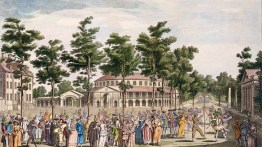
In the satirical print ‘Remarkable Characters at Mrs Cornely’s Masquerade’ from February 1771, the Georgian craze for dressing up as fantastical characters is shown in all its theatricality and wild invention. The harlequin was always popular, as was the domino, but here we also have a ‘Savoyard’ (supposedly from Savoy) playing a hurdy-gurdy with his

Is coffee-drinking the new secular religion?

More from Books

A lot of books, obviously depending on what mood you’re in and viewed from a certain angle, slantwise or squintlike, hover on the edge of self-parody: the Bible; poetry, particularly if American; pretty much everything on a Booker shortlist; Wittgenstein’s Tractatus; Ottolenghi’s cookbooks. Like most things, the best approach to books is to view them

They shoot horses: Boyhood, by David Keenan, reviewed

More from Books

David Keenan’s seventh novel is quite the ride, but its plot is not always easy to disentangle. The author has said that its title is his favourite word, and the book’s clearest narrative thread concerns the abduction of a young boy outside a Glasgow football ground in 1979. The boy’s older brother, Aaron, is subsequently

The exquisitely dull life of Elizabeth II, expert on cap badges

More from Books

The dogs, horses, diamonds, furs, full-length evening gowns of lace and pearls; private jets and limousines; the ever-present jostling retinue; the push and shove of photographers and the clamour of crowds – Elizabeth Taylor and Elizabeth II had a lot in common, each taking themselves very seriously and needing to be seen to be believed.

All the gossip about Lady Chatterley’s Lover

Lead book review

Lady Chatterley’s Lover was written in a villa outside Florence during the winter of 1927-28, two years after D.H. Lawrence was diagnosed with TB. Described by him as ‘a phallic novel, but good and sun-wards, truly sun-wards’, the tale is set in his native Nottinghamshire, which he left in 1912 when he eloped with his

Were Britain’s postwar dons just having too much fun?

More from Books

A history of academic life stands and falls by the number and quality of its anecdotes. On this count, Colin Kidd’s Twilight of the Dons unquestionably delivers. Did you know that the biologist Francis Crick wrote to Winston Churchill suggesting that an educational institution named after the statesman would be better off with a college

How Syria’s dream of freedom ended in further repression

More from Books

Anand Gopal has form when it comes to war. In Afghanistan, distrustful of President Bush’s ‘good vs evil’ and ‘you’re either with us or against us’ narrative, he did what every good reporter does: ‘I learned the language, grew a beard and hit the road like a local.’ The result was No Good Men Among

The doyen of the France’s culinary scene is unmasked

More from Books

For some reason it took nearly a decade for the news of a revolution in the restaurants of France to reach the British media. The Americans were much quicker off the mark. In March 1972, Raymond Sokolov reported in the New York Times that a chef near Lyon named Paul Bocuse, along with several of

A foolproof way of predicting the future

More from Books

A peek at the horoscope, puzzling the meaning of dreams, wearing lucky socks, having a method for choosing lottery numbers – many otherwise rational people retain a vestigial interest in prediction to ensure favourable outcomes. I’ll happily admit to a fascination with Tarot cards – and I do seem to be an archetypal bossy Aries.

The art of printmaking in all its glorious complexity

More from Books

Do you know your aquatint from your drypoint? Your intaglio from your lithograph? The appearance of any one finished print can vary so much from another – the feathery delicacy of etching replaced by the bold forms of linocut or the carved sinews of a woodblock – that it can be difficult to believe they

A meditation on reality: Transcription, by Ben Lerner, reviewed

More from Books

Near the beginning of Ben Lerner’s new novel the unnamed narrator recalls visiting an exhibition of botanical models made by the father-and-son glass artists Leopold and Rudolf Blashka in Dresden in the 19th century. Like Zeuxis’s grapes, so lifelike that birds would come and peck at them, the models, ‘impossibly delicate things’, challenge the narrator’s

Weeds, bugs and lichens must now thrill the imagination

More from Books

In the summer of 1992, the Times sent me to Orkney to interview the poet George Mackay Brown. He was notoriously wary of media interest – perhaps the only author ever to have asked his doctor for anti-depressants when shortlisted for the Booker prize – and I could hardly get a word out of him.

How interwar Germany became a breeding ground for evil

Lead book review

Did no one who lived through the Weimar Republic of 1918-33 see what was coming, asks Victor Sebestyen in his impressive new book. The politicians, the intellectuals, the foreign visitors who converged on Berlin in the wake of the first world war all wrote about the anti-Semitism and violence they witnessed, but virtually no one

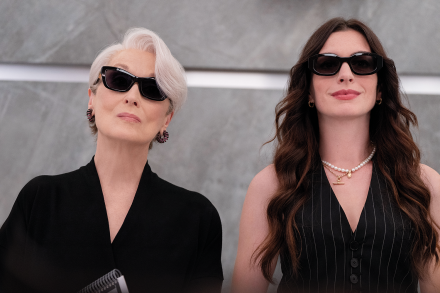
What have they done to The Devil Wears Prada?

Cinema

The Devil Wears Prada (2006) is one of those films which, if chanced upon when flicking television channels, I will always stick with for a bit. It has zing. It has bite. It has memorable lines that I can remember without having to look them up. (‘Are we going to a hideous skirt convention?’) But