Caroline Moore

A passion for moths – and the thrill of the chase

From our UK edition

Over the years, I too have regularly been meeting with moths. So far, I have encountered 891 species just in my own garden in Sussex. But most of these moths came to me: I have an ancient metal Robinson trap, inherited from my grandfather, which lures them to a mercury vapour bulb. Katty Baird, how-ever, despises ‘all-too-easy light traps’. (‘One of my most rewarding experiences with a moth trap was at an old people’s home...’) She is proactive, even hyperactive, in seeking out her quarry across East Lothian, ranging from moorland cliffs and caves to the ‘car park toilet block near my children’s primary school’. Meetings with Moths, by an ‘extreme moth-er’, makes me feel like a decadent southerner, bloated on the relatively huge hauls in my part of the world.

Isabel Hardman, Matthew Parris, Graeme Thomson and Caroline Moore

From our UK edition

21 min listen

This week: Isabel Hardman asks how Ed Miliband is the power behind Kier Starmer's Labour (00:57), Matthew Parris says we've lost interest in our dependencies (05:03), Graeme Thomson mourns the loss of the B-side (11:57), and Caroline Moore reads her Notes on... war memorials (16:51).  Produced and presented by Oscar Edmondson.

The enduring power of war memorials

From our UK edition

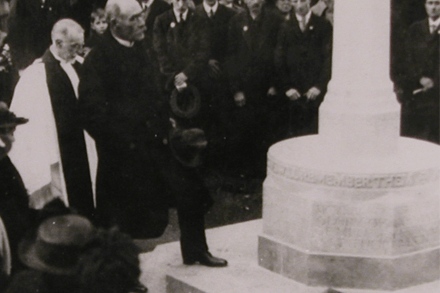
This Sunday, in my village of Etchingham, East Sussex, we will gather around our war memorial. It is a fine monument, designed by Sir Herbert Baker, with the names of the dead inscribed around an octagonal base. There are no famous names upon it: indeed, there is only one commissioned officer, a Second Lieutenant (who had once been a commercial clerk, working from the age of 14). The rest were mostly young farm labourers: the oldest, aged 44, had been a ‘domestic chauffeur’. The rural working classes leave little in the way of records. These men left no ‘voices of the Great War’. But though mute, they are not inglorious; and one of the most eloquent writers of the era spoke on their behalf.

Lara Prendergast, Christopher Howse, Lionel Shriver, Peter Hitchens, Joanna Lumley and Caroline Moore

From our UK edition

55 min listen

On this week's very special Christmas episode, we'll hear from Lara Prendergast on why she’s planning to party hard this Christmas. (00:57)Next, Christopher Howse on those helping to preserve the UK’s medieval churches. (06:31)Then it's, Lionel Shriver on the Covid heretics she admires most. (16:41)Followed by, Peter Hitchens on Christmas in Russia during the last days of the Soviet Union. (25:23)Penultimately, we have Joanna Lumley on getting the key to the Sistine Chapel. (35:69)And finally, Caroline Moore on how ghost stories became a British Christmas tradition.(41:51)Produced and presented by Sam HolmesSubscribe to The Spectator magazine this Christmas and get the next 12 issues – in print and online – for just £12.

How chilling ghost stories became a Christmas tradition

From our UK edition

‘A sad tale’s best for winter,’ says little Mamillius in The Winter’s Tale: ‘I have one/ Of sprites and goblins…’ (He is dead by Act III.) Ghost stories have always been best told on a midwinter night — preferably aloud, in a group drawn close together around a blazing fire. Pleasure comes from awareness of the icy cold and dark, hemming our small convivial light: there is a particular frisson in the contrast between ‘in here’ and ‘out there’, between the snug ‘us’ and a possibly malign ‘them’, the known and the unknown.

There is nothing cosy about Penelope Lively

From our UK edition

At one time, Penelope Lively was routinely shortchanged by critics. Her protagonists are often middle-class professionals — historians, archeologists, scriptwriters and the like — and her Booker-prizewinning Moon Tiger was notoriously dismissed as the ‘housewife’s choice’. Now, gods, stand up for housewives! Lively is not a cosy read. The word which keeps coming to mind to describe these stories is ‘beady’ — though I may be influenced by ‘The Purple Swamp Hen’, in which the narrator is a wise old bird in the garden of a household in Pompeii (AD 79). A bird’s gaze is bright, speculative and disconcertingly dispassionate.

Working remotely: five formidable female anthropologists

From our UK edition

I was first sent a version of Undreamed Shores: The Hidden Heroines of British Anthropology in June last year. I started my review; but publication was delayed. So I tore up my opening paragraphs, which began with the remark that only armchair travel was possible at present. By 2021, I imagined, that would be out of date. How wrong I was. Ten months later, and the book engages even more urgently. We can all sympathise even more sharply with those female would-be explorers who longed to escape from the restrictions of their lives — though an Edwardian tea party now seems to us like unimaginable freedom. The past is a foreign country; so there are two layers of escape here.

The sex life of the Monarch butterfly is positively wild

From our UK edition

Wendy Williams is an enthusiast, and enthusiasm is infectious. Lepidoptery is for her a new fascination, and it shows. On the plus side, her excitement shimmers as freshly as a newly-hatched Adonis Blue. She marvels, and makes us marvel, at the miracles she discovers. She wonders at the strangeness of a butterfly’s proboscis, which is not, as it appears, a drinking straw (even butterflies cannot suck through a straw longer than their own bodies), but works by capillary action, blotting up fluids and sending saliva down to dissolve sticky or solid secretions.

Time is the essence

From our UK edition

Tessa Hadley is not the sort of writer to land the Booker Prize, which tends to reward writers from ‘anywhere’ rather than ‘somewhere’. Hadley labours under perceived limitations: she is distinctively British, writes about the middle classes, and turns out, as the puff on the back rightly says, ‘the quintessential domestic novel’. Those who are put off by this description — probably mostly men — miss out on a vast range of female authors, from Jane Austen to Anne Tyler.

Making the foreign familiar

From our UK edition

Boyd Tonkin is superbly qualified to compile this volume. As literary editor of the Independent, he revived that newspaper’s foreign fiction prize, first won by Orhan Pamuk and his translator Victoria Holbrook. Translators are routinely undervalued. As with stage-lighting technicians, one is apt consciously to notice only glaring blunders; so it is good to know that the Independent’s prize is shared between author and translator. I nevertheless approached this book with some scepticism. I couldn’t quite see the point of it. If one has read a novel already, what would one gain from a three-page essay?

Distant neighbours

From our UK edition

Readers should skim past the blurb of The Friendly Ones. The novel is about prejudice, of many different kinds; but this description might prejudice one’s reading: The Friendly Ones is about two families. In it, people with very different histories can fit together, and redeem each other… by the decision to know something about people who are not like us. That might suggest a saccharine narrative arc. A Bangladeshi academic and his family move in next door to a retired doctor in Sheffield, and prejudices are overcome, with various members of both families ‘making their different ways towards lives that make sense’ — a trite, Hollywood-style epiphany. There is certainly something of this movement in the novel.

Well of sorrows

From our UK edition

The Red-haired Woman is shorter than Orhan Pamuk’s best-known novels, and is, in comparison, pared down, written with deliberate simplicity — ostensibly by a narrator who knows that he is not a writer, but only a building contractor. Polyphonic narratives are replaced by a powerful, engaging clarity. This simplicity is the novel’s greatest strength, yet at certain points seems as if it might become a weakness. Part one, which takes up the first half of the book, is superbly concentrated. It describes one summer in 1986 in the life of Cem, a middle-class 16-year-old boy who takes on a summer job 30 miles outside Istanbul to earn money before cramming for university entrance exams.

Too much of everything

From our UK edition

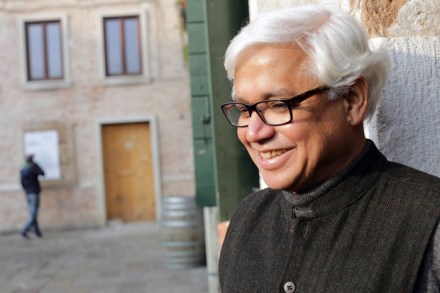
Arundhati Roy has published only one previous novel, but that one, The God of Small Things, won the Booker Prize. That was 20 years ago. Early success did not, however, block Roy into neurotic silence: instead, it offered her a platform for verbally intemperate political activism. She is an impassioned campaigner against globalisation, industrialisation and all forms of the arch-enemy capitalism, and a critic of US foreign policy, Israel and the government of Sri Lanka. Her Booker prize money was donated to the campaign against the Narmada Dam project. To Indian critics who condemn her hyperbole as ‘hysterical’ she retorted: ‘I am hysterical, I’m screaming from the bloody roof tops.

Speckled Footman and Maiden’s Blush

From our UK edition

Last year, I attempted to pass through security in an American airport carrying a small black box, containing eight batteries and a visible circuit board. If the switch was flipped, the display counted down in red flashing numbers. Unsuprisingly, the officer in Salt Lake City pulled it out of my hand baggage. ‘What’s this?’ ‘It’s to attract moths,’ I said; then, thinking this sounded feeble, added rather grandly, ‘I’m a lepidopterist.’ ‘Say that again.’ So I did, and a huge grin lit up the face of my interrogator. ‘Hey, y’all,’ he called out to his colleagues. ‘C’mon on over, listen to this… Say it again.

A study in alienation

From our UK edition

Looking for the Outsider is the biography of a novel, from conception through publication to critical reception. Alice Kaplan’s life-story of L’Étranger (The Outsider in English translations, The Stranger in American) is a lovely work, lucid and thought-provoking. It makes one feel afresh the sheer strangeness of Albert Camus’s imagination. All genius is, perhaps, freakish; but Camus’s sprang from peculiarly unpromising soil. He was born in a white working-class area of Algiers. His father was killed in the battle of the Marne before he was one. His mother was deaf and illiterate, with a vocabulary of about 400 words; she worked as a cleaner. His uncle was also deaf and nearly mute, and made barrels.

The great Dadaist novel

From our UK edition

Anicet is, as its cover proclaims, a Dadaist novel, reissued on the centenary of its composition. Louis Aragon would doubtless have been delighted to learn that it is almost impossible to review. An art critic, with his ‘little gadgets… called criteria’, is satirised in these pages as a kind of ‘policeman’, whose mission is in fact to seek out artists whose theories and works might disturb the peace… At the slightest threat of disorder the critic must set things right by exposing fraud and anarchy. Here, in pre-emptive defiance, is a ‘novel’ which is nothing but ‘fraud and anarchy’: a work in which there is no coherent plot, no illusion of character, written in a style riddled with self-mockery.

Sins of omission | 23 March 2016

From our UK edition

My last review for The Spectator was of Julian Barnes’s biographical novel about Shostakovitch. A Girl in Exile also depicts the life of an artist favoured by a brutally oppressive regime, this time written by one who was there. Ismail Kadare survived the rule of that isolationist tyrant Enver Hoxha. In some quarters, Kadare has been criticised for surviving. Like Shostokovitch, indeed, he has been accused of collaborating with the regime within which he worked, joining the party and accepting public appointments. It is not the business of a book review to enter into such arguments; but some of the criticisms, made by armchair freedom fighters insisting that others should stand up for uncompromising heroism, are obviously, cruelly and merely naive.

A pitiful wreck

From our UK edition

When I look at the black-and-white photograph of Julian Barnes on the flap of his latest book, the voice of Kenneth Clark floats up from memories of the black-and-white television of my childhood: ‘He is smiling — the smile of reason.’ Supremely ‘civilised’, thin-lipped, faintly superior, temperamentally given to aphorism, it is no surprise to discover that Julian Barnes is a Chevalier de l’Ordre des Arts et des Lettres. Yet Barnes in his fiction is unlike the simplified Voltaire of Clark’s Civilisation. His novels never proclaim the triumph of reason: instead, they explore the dark and disruptive, uncivilised emotions on the edge of words — love, certainly, but also jealousy, paranoia, inconsolable grief and the fear of dying.

Complicated, but unfussy

From our UK edition

Amory Clay, photographer and photo-journalist, was born in 1908, only two years after Logan Mountstuart, writer, poseur and ‘scribivelard’. Amory died in 1983; Logan in 1991. Though shaped by the same era, their accounts of their lives are tonally worlds apart. Logan is flamboyant, self-regarding, lyrical, self-pitying; Amory plainer, braver, yet less self-revealing. Both, of course, are fictional, and both are protagonists woven by William Boyd into novels where they rub shoulders with historical characters. Amory, however, born into an era in which Vivians, Evelyns and Beverleys could be of either sex, is female. Boyd’s representation of a certain sort of female voice is pitch-perfect, chiefly because he is not trying too hard to signal Amory’s femininity.

God help me shippies!

From our UK edition

T.H. White complained that the characters in Walter Scott’s historical novels talked ‘like imitation warming pans’: those in Amitav Ghosh’s Ibis trilogy, of which Flood of Fire is the final volume, talk like a whole Benares brass bazaar. As an avid reader of both Hobson-Jobson (the dictionary of Anglo-Indian slang) and Patrick O’Brian, I thought that the trilogy, set in the First Opium War, would combine the delights of both. And so it does; but one can have too much of a good thing. The linguistic pudding is often so over-egged that it clogs the arteries of the narrative.