Tom Hodgkinson

Tom Hodgkinson is editor of the Idler

The important business of idle loafing

From our UK edition

In our godless, post-industrial, hyper-competitive world, rest is seen merely as recuperation: it’s when we man-machines ‘recharge our batteries’, as the cliché goes, before dashing back to the factory or work-station. It’s a negative concept. You rest for a reason, which is to avoid burnout. All you should really do to be happy is read light novels or self-help books, advises Montaigne But as this charming and subtle meditation on the subject from a grand French historian shows, rest used to be far more than just taking time off. It is a religious concept. Take the rest enjoyed by Adam and Eve in Milton’s Paradise Lost.

All work and no play is dulling our senses

From our UK edition

Free Time is an academic journey through two-and-half millennia of leisure options. The central question put by the historian Gary Cross, is: why do we not have more free time, and when we do, why do we waste it, like Sir Andrew Aguecheek in Twelfth Night, on ‘fencing, dancing and bear-baiting’ or their modern equivalents? We start with ancient Greek philosophers, including Socrates and Aristotle, who reckoned that life was all about free time. We should work to fulfil our basic needs and then use our leisure for scholé (self-improvement): for culture and reflection. The vita contemplativa was superior to the vita activa (though Socrates was also fond of a boogie – a fact Cross does not mention). People spent their free time at festivals and religious rituals.

What Jacob Rees-Mogg gets wrong about the four day week

From our UK edition

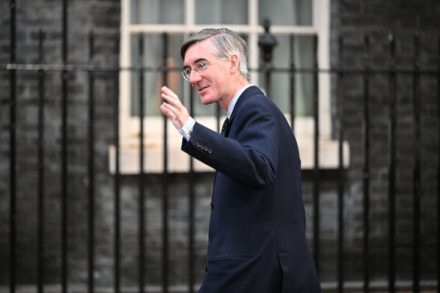
Jacob Rees-Mogg, the former business secretary, has attacked the good people of South Cambridgeshire District Council for introducing a four day work week following a trial. The MP for North East Somerset labelled the idea an 'idler’s charter'. He added, somewhat slow-wittedly: 'Councils need to remember they are providing a public service and the public expect it to be provided five days a week.' There’s always a mean-spirited Rees-Mogg waiting in the wings to carp when progressive ideas approach reality He doesn’t appear to realise that a four day week doesn’t mean that every council worker will now spend the whole of Friday tippling in the alehouse and playing shove ha’penny. What it means in practise is that a shift system is put in place. Efficiencies result.

Don’t listen to Johann Hari to help your attention span

From our UK edition

In 1887, Friedrich Nietzsche made a complaint about the modern world, writing in The Gay Science: Even now one is ashamed of resting, and prolonged reflection almost gives one a bad conscience. One thinks with a watch in one’s hand, even as one eats one’s midday meal while reading the latest news on the stock market; one lives as if one always ‘might miss out on something’. Johann Hari’s Stolen Focus rehearses this complaint. We fill our lives with distractions, he says, and have no time to think.

The beauty of the ampersand and other keyboard symbols

From our UK edition

This is such a great idea: a book with one short essay per punctuation mark or typographical symbol. Of course, our commas, ampersands and exclamation marks all come from somewhere; all were invented at some point or another and their stories are ever-changing. Computer coders, for example, have recently moved previously unsung but elegant marks such as the hashtag and the ‘at’ sign back to centre stage. Claire Cock-Starkey is a confident and likeable host and makes a witty crack about her own surname in her essay on the hyphen. She somehow elevates what could have been a nerdy primer into something grander, and at various moments the book becomes meditative, poetic, philosophical and funny, as well as scholarly.

Of course Boris Johnson should take an afternoon nap

From our UK edition

Does Boris Johnson take an afternoon nap? Yes, according to a Downing Street insider who told the Times today that a post-lunch slumber was not unusual. Boris's press secretary took a different view: 'The Prime Minister does not have a nap. Those reports are untrue', she said. Well, he should. For one, Boris would be delighted with the inevitable comparison with Churchill that springs to mind. Winston slept deeply every afternoon during the war. 'Take off your clothes and get into bed,' he advised in a letter to his nephew. 'Don’t think you will be doing less work because you sleep during the day. That’s a foolish notion held by people who have no imagination. You will be able to accomplish more. You get two days in one.

Gazing heavenwards: the medieval monks who mapped the planetary motions

From our UK edition

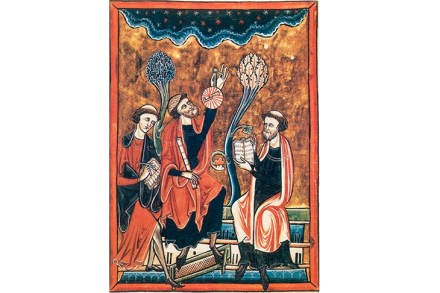
We can probably blame George and Ira Gershwin. It was that brilliant duo who, in 1937, penned the memorable lyric ‘They all laughed at Christopher Columbus when he said the world was round’. The song has been recorded by at least 15 artists over the years, from Fred Astaire to Lady Gaga, and is embedded in the consciousness of the West. But its headline message — medieval people are stupid — is total nonsense. No one, as Professor Seb Falk points out in this brilliant study of medieval astronomy and learning, ever disbelieved the world was round, and medieval people were far cleverer than they get credit for. Half the population, for one thing, he says, were literate.

John McDonnell and the importance of being idle

From our UK edition

Amid the headline-grabbing antics of the Prime Minister this week, some stories coming out of Labour party conference got buried. The most significant of these was shadow chancellor John McDonnell’s surprising promotion of idling. McDonnell said that a 32 hour working week should become the norm in ten years and that we should “work to live, not live to work”. In heralding the joys of doing nothing in particular, he has resurrected a forgotten tradition in the socialist movement. McDonnell’s praise of idleness comes as a welcome rejoinder to the assumption that hard toil is at the centre of life. We all remember David Cameron’s praise of “hard-working families”.

Nothing doing

There is a long and noble history of books about doing nothing. In the 5th century bc the sage Lao Tzu argued that the wise man should refrain from action, and Christ’s Sermon on the Mount also told us not to bother ourselves overmuch: ‘Consider the lilies of the field, they toil not.’ For Christ, idling was a spiritual and political position: he taught us to live in the moment and reject riches and status as a source of enlightenment or happiness. Now the self-help industry has taken idling and converted it into, paradoxically, a tool for productivity, i.e. getting ahead and making money, which is not what Christ had in mind.

The Nightwatches of Bonaventura: a masterpiece of German Gothic

From our UK edition

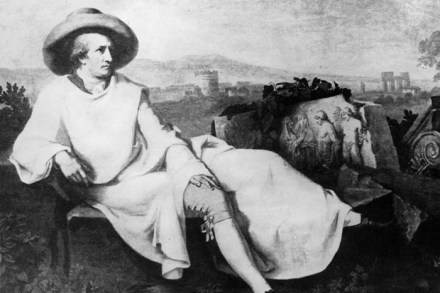
In the early 19th century, the Romantic movement was in full swing across Europe. You could probably date its birth from the publication in 1775 of Goethe’s The Sorrows of Young Werther, the gloomy novel of unrequited love that led to a spate of suicides among young men in Germany. Coleridge and Wordsworth’s Lyrical Ballads appeared in 1798, with its Taoist argument for simplicity and the importance of contemplating nature. Kant’s Critique of Pure Reason was published in 1781, William Godwin’s Caleb Williams in 1794 and his daughter Mary Shelley’s extravagant Gothic novel Frankenstein in 1816. The Romantics attacked the new numbers-based utilitarian philosophy which underpinned the Industrial Revolution.

Tolstoy’s favourite novel is a guide to being idle

From our UK edition

Oblomov, first published in 1859, is the charming tale of a lazy but lovable aristocrat in 19th-century Russia. The novel’s eponymous hero cannot see the point of doing anything at all, and spends his time lying in bed or wandering around his St Petersburg flat in his beloved oriental dressing gown, bickering about the dusting with his manservant. The newspaper on the desk is a year old; flies buzz from the inkwell. Oblomov broods; he worries; he thinks. The book’s author, Ivan Goncharov, is perhaps little-known now, but in its time Oblomov was hugely popular in Russia. Tolstoy, that venerable, saintly moralist, was deeply in love with it, writing: ‘Oblomov is a truly great work, the likes of which one has not seen for a long, long time.