Culture

Culture

The good, the bad and the ugly in books, exhibitions, cinema, TV, dance, music, podcasts and theatre.

That unmistakable touch of Glass

Lead book review

Philip Glass is by now surely up there in the Telemann class among the most prolific composers in history. There must be an explanation, preferably a non-defamatory one, for how his technique has enabled him to produce such an enormous quantity of music. A glance at my iPod shows that Varese’s collected works are over in 150 minutes: Berg, Ravel and Debussy each managed to produce between ten and 15 hours of music at most. Glass’s style, which has been called ‘minimalist’, though he doesn’t accept the label, works on a bigger scale. He has written 25 operas, some, like Einstein on the Beach, as long as Die Meistersinger. He owns up to 30 film scores, although the internet movie database connects him with more than a hundred different films.

Salman Rushdie sets the record straight on the classics

Salman Rushdie became embroiled in a literary row over the weekend after he rated a number of books on the website Goodreads thinking these would be private when in fact the information was viewable to the public. The Satanic Verses author's list soon began to circulate online with many viewers aghast to read his mediocre three star rating of Harper Lee’s To Kill a Mockingbird alongside the singular star given to Kingsley Amis’ Lucky Jim. Other critically acclaimed books that ranked low include Elizabeth Bowen's The Death of the Heart and Max Beerbohm's Zuleika Dobson. F Scott Fitzgerald's The Great Gatsby did at least manage to make the grade with a full five star rating.

The self-taught maritime artist who transcends ‘naïve’ cliché

More from Books

In the manner of Richard Holmes’s Footsteps, Julia Blackburn’s story of John Craske is as much autobiography as biography, as much about the hunt for information as the processed results of the search. The facts of John Craske’s life are briefly told: born in Norfolk in 1881 into a fishing family, he suffered some sort of mental and physical breakdown while training with the army in 1917 and for the remaining 25 or so years of his life dodged in and out of invalidism, sometimes bedridden for long periods, sometimes out fishing with his brothers, sometimes working as a fish merchant and perpetually supported and nursed by his devoted wife, Laura.

Justin Cartwright on redheads, anti-Semitism and the betrayal of Christ

More from Books

Peter Stanford is a writer on religious and ethical matters. He was for four years editor of the Catholic Herald. Writing Judas: The Troubling History of the Renegade Apostle must have been a difficult task because there are no facts. Judas may quite possibly never have existed at all, and if he did, the Judas kiss may not have happened. Also, he may not have hanged himself. This is a fascinating story of febrile myth-making over two millennia, with very little historical fact. Stanford starts his pursuit of Judas with a visit to gloomy Hakeldama in Jerusalem, the place where Judas is traditionally said to have hanged himself — if he did hang himself.

Melissa Kite comes out fighting. Again

More from Books

Madison Flight is a divorce lawyer, nicknamed ‘the Chair-Scraper’ for the number of times she leaps to her feet arguing in court. She has been contrary since birth, putting her mother through six days of labour before eventually being pulled out by forceps. ‘Is she saying no?’ asks the doctor, perplexed by the distinctive ‘Naaaaaaaaah!’ sound of her new-born wail. Madison’s life begins with her voicing dissent and argument fills every moment of her adult life.

The secret life of the short story

More from Books

The short story likes to play the underdog. Famously unfavoured by publishers, it has none of the commercial clout of the novel. Denying itself the luxury of length, it is a martyr to the cause of shortness. When the short story writer Alice Munro was awarded the 2013 Nobel prize for literature, she seemed to personify the supposed modesty of her craft. With the blessing of the Swedish Academy, the short story had finally gained the status of a standalone art form: no longer, to quote Munro, ‘just something you played around with until you got a novel’. All this modesty seems at odds with the idea of an ‘epiphany’ — a device associated with the stories of Joyce, and the hallmark of two new collections by D.J. Taylor and Salley Vickers.

When Rex met Edith: a meeting of minds in interwar England

More from Books

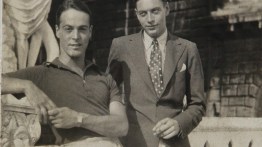
Rex Whistler — this book’s ‘bright young thing’ — was an artist of the 1920s and 1930s, and Edith Olivier, the ‘bluestocking’, was a novelist. They both deserve to be more famous than they are, and Anna Thomasson’s absorbing joint biography will doubtless make them so. They met through Stephen Tennant in 1924, when Olivier was 51 and Whistler was a 19-year-old student at what he called ‘the darling Slade’. She was snobbish and he was talented; liking one another from the start, they bonded over hair. Once Rex persuaded Edith to exchange her spinsterish bun for a ‘bingle’ — a daring combination of a shingle and a bob — she never looked back. Suitably attired, Olivier invited Whistler to her home, the Daye House in the grounds of Wilton.

The other trenches: the Dardanelles, 100 years on

Lead book review

In August 1915, in his tent at GHQ on the Aegean island of Imbros, General Sir Ian Hamilton, commander-in-chief of the Gallipoli expedition, woke from a dream in which someone was attempting to drown him in the Hellespont. ‘For hours afterwards,’ he wrote in his diary, ‘I was haunted by the thought that the Dardanelles were fatal: that something sinister was afoot: that we, all of us, were pre-doomed.’ This was not how it had seemed when what had been confidently designated ‘the Constantinople expedition’ set out for the distant and largely unknown Turkish peninsula.

Spectator competition: laments for lost newspapers (plus: historical characters’ desert island discs)

In his 2004 book The Vanishing Newspaper Philip Meyer predicted that the final hard-copy newspaper will plop through someone’s letterbox in 2043. So who’ll be the first to go? In the latest competition you were invited to imagine that one of the major newspapers has ceased publication and provide a verse lament for it. A couple of you submitted entertaining entries in the style of William McGonagall, poet and tragedian — take a bow, David Silverman and Carolyn Thomas-Coxhead — and my head was also turned by Brian Murdoch, who didn’t seem overly sad about the demise of the Guardian. Over to D.A. Prince, who pockets £30 and her fellow prize-winners, who earn £25 each. D.A.

Things fall apart in Denis Johnson’s latest novel of madness and anarchy in Sierra Leone

More from Books

‘I’ve come back because I love the mess. Anarchy. Madness. Things falling apart.’ The lines belong to Roland Nair, one of the morally bankrupt spies who careers around Africa in Denis Johnson’s tenth novel, but they might equally well describe Johnson himself, a writer always happiest in his work when the wheels come off and the world breaks down. His novels vary in setting (Prohibition America in Train Dreams, the Vietnam war in Tree of Smoke, a future post-apocalypse in Fiskadoro) but they share a mixture of gravitas and derangement, sarcasm and lyricism, comic danger and dangerous comedy that makes them reliably fascinating — and reliably peculiar. You certainly wouldn’t confuse Johnson’s dialogue with anyone else’s.

Miranda July may be a film director, performance artist, sculptor and designer — but she is no novelist

More from Books

Miranda July is a funny and brilliant film director, performance artist, sculptor and smartphone app designer. In 2005, she won the Best First Feature award at Cannes for her debut film, Me and You and Everyone We Know. Two years later, she picked up the Frank O’Connor short story award for her debut collection No One Belongs Here More Than You. She has been feted at the Venice Biennale for her artworks and last year released an app called Somebody, which encourages users to deliver messages verbally to strangers. Now, she has published The First Bad Man, her debut novel. I know: a novel. After conquering every arthouse peak imaginable, it seems surprising that July should give a fig about such a retrograde form. But the novel exerts a spooky influence over art makers.

Lesley Blanch: a true original on the wilder shores of exoticism

More from Books

Lesley Blanch (1904–2007) will be remembered chiefly for her gloriously extravagant The Wilder Shores of Love, the story of four upper-class European ladies who abandoned their natural habitat to seek and find romance in the Middle East. If one had to pick only one of Blanch’s books to read there could be no better choice than this; but, as this exotic potpourri reminds one, she was incapable of writing boringly or badly. The most substantial part of Lesley Blanch: On the Wilder Shores of Love (a title which seems designed to deceive putative readers into thinking that they have read it all before) is Blanch’s record of her youth — the opening chapters of a book which she did not live to complete.

A mad menage — and menagerie – in Mexico: the life of Leonora Carrington in fictional form

More from Books

Leonora Carrington is one of those jack-in-the-boxes who languish forgotten in the cultural toy cupboard and then pop up every few years to a small flurry of excitement. Born in 1917, the child of a rich Lancastrian industrialist, she ran away to Paris to paint and there became the lover of Max Ernst. She lived at the heart of the Surrealist group, fleeing war-torn Europe with a gaggle of artists to sail to New York, where she kept company with Peggy Guggenheim, Dalí, André Breton, Marcel Duchamp et al. Raven-haired and chain-smoking, she spent time in a Spanish lunatic asylum, married a Mexican, painted and wrote. There were lovers, a second husband — this one a Hungarian photographer — children and a menagerie of animals.

Baiting the trap with CHEESE: how we fooled the Germans in the second world war

More from Books

Second world war deception operations are now widely known, particularly those which misled the Germans into thinking that the D-Day Normandy landings were merely a diversion. Great use was made of captured German agents in Britain who sent disinformation about invented army divisions and ships allocated to the supposedly ‘real’ landings still to come. Much less well known, though of arguably equal consequence, was a similar deception operation in the Middle East, based on an MI6 agent known as CHEESE.

John Maynard Keynes: transforming global economy while reading Virginia Woolf

More from Books

To the 21st-century right, especially in the United States, John Maynard Keynes has become a much-hated figure whose name is synonymous with bogus spending on public works, insouciance in the face of mounting debt and, of course, homosexual promiscuity. It’s a virtue of Richard Davenport-Hines’s new biography that it makes clear how much this under-reads him. So far from being the flippant old queer calumniated by Niall Ferguson, Keynes worried himself sick about inflation and was far more alarmed by budget deficits than George Osborne seems to be. He was essentially a Nonconformist Liberal for whom faith was impossible, and who saw liberalism as something needing saving from itself.

The knives come out of the cabinet in Churchill’s wartime government

More from Books

Coalitions, as David Cameron has discovered, are tricky things to manage. How much more difficult, then, was it for Winston Churchill as he struggled to survive, then win, a world war, while at the same time managing his fractious three-party administration at home. In this scholarly, yet grippingly readable study of the wartime coalition, Jonathan Schneer, an Anglophile American academic, reveals how much of a myth the popular legend of a political class and nation united behind their belligerent war leader truly was.

Leonid Yakobson: the greatest ballet genius you’ve never heard of

More from Books

On YouTube there’s a brief dance video of a Viennese waltz so enchanting that not even Fred and Ginger in ‘Cheek to Cheek’ can outcharm it. A dandy in top hat and a captivatingly pretty girl in bonnet and white frills do ecstatic jumps and twirls in each other’s arms to the seething Rosenkavalier waltz. That it’s Soviet is almost unbelievable — still more so that it dates from the still Stalinist 1954. But this is a gem by Leonid Yakobson, a choreographer who was one of the USSR’s most arresting modern voices, yet of whom you will find rare mention in the West or Soviet ballet histories.

A lost American classic to rival anything by Faulkner

More from Books

It’s rare that granitic and iron-jawed prose is also enveloping and warm, but that’s just one of the many enticing literary paradoxes in the American writer John Ehle’s 1964 novel The Land Breakers. The work was the first of seven volumes that Ehle dubbed his ‘mountain novels’, books which today tend to get tagged as historical, a disservice that has kept Ehle a peg below some of the southern heavies (including even Faulkner) whom he sometimes manages to eclipse. There’s a twinge of something less artful when one tosses in the word ‘historical’, as though the resulting novel relies on borrowings from an earlier era rather than the author’s imagination.

Wolves in the Lake District get everyone’s pheromones going

More from Books

Locate. Stalk. Encounter. Rush. Chase. The pace of Sarah Hall’s fifth novel follows the five stages of a wolf hunt as she imagines a pack of apex predators restored to the British countryside: the thrill of lean, grey flanks streaking through the bracken sending vital adrenalin coursing through an ecosystem grown sluggish. Her fiction is clearly based on the plans of Paul Lister, the heir to the MFI fortune who’s been assembling an ancient wilderness on his 23,000-acre Alladale estate in north eastern Scotland. The deciduous trees, elk and wild boar have already been slotted into place and in 2013 he announced he was conducting feasibility studies for the reintroduction of bears and wolves.

A rebellion among Rugby schoolboys proved perfect training for its ringleader in putting down a Jamaican slave-rising in later life

More from Books

The public schools ought to have gone out of business long ago. The Education Act of 1944, which promised ‘state-aided education of a rapidly improving quality for nothing or next to nothing’, seemed to herald, as the headmaster of Winchester cautioned, the end of fee-paying. Two decades later Roy Hattersley warned the Headmasters’ Conference to have ‘no doubts about our serious intention to reduce and eventually to abolish private education in this country’.Yet David Turner is able to conclude in this well-researched, impeccably fair and refreshingly undogmatic history, that this is their golden age. He takes the unfashionable line that they are now vital contributors to the country’s economic, political and scientific well-being. It was not always so.

Stolen kisses and naked girls: there is much to wonder about in Lewis Carroll’s Wonderland

Lead book review

‘A vision of innocence was not always the same as an innocent vision,’ remarks Robert Douglas-Fairhurst. He is referring to Alice’s discovery in Wonderland that ‘ “I say what I mean” is not the same as “I mean what I say”.’ Douglas-Fairhurst is a subtle expert in doubleness. His new book tells the story of Lewis Carroll, who was also an Oxford mathematician called Charles Dodgson, and Alice Liddell, whom Dodgson photographed naked when she was seven, who married and became Mrs Hargreaves though she liked to use the title Lady Hargreaves, to which she was not entitled.

George Gissing: the last great Victorian novelist?

George Gissing’s The Whirlpool was originally published in 1897. In this shortened version of the foreword to the new Penguin Classics edition, D.J. Taylor argues that its author is ‘the last great Victorian novelist.’ In the early summer of 1896, hard at work on the manuscript of what was to become The Whirlpool, George Gissing struck up a connection with the Jewish novelist Israel Zangwill. A natural solitary, wary of unburdening himself even to the friendliest male associate, Gissing seems to have decided that Zangwill, author of the best-selling Children of the Ghetto, was a suitable repository for his confidence.

Spectator competition: female chauvinist pigs on men behaving badly (plus: when Damon Runyon met John Bunyan…)

There are man-haters everywhere, it seems, from children’s telly to high culture. Charges of sexism have been levelled against the creators of the Daddy Pig character in Peppa Pig — daddy is portrayed as a hopeless bumbling idiot while Mummy Pig is the embodiment of good sense — and the literary critic Harold Bloom argues that there is ‘a strong element’ of misandry in Shakespeare (whereas misogyny, he says, is hard to find). The latest challenge invited you to climb aboard the bandwagon and compose an extract from an imaginary novel written from the perspective of a female chauvinist author.

Ray Davies: part of Swinging Sixties London — and apart from it too

More from Books

As Johnny Rogan notes in this new biography of Ray Davies and the Kinks, it is almost 50 years since the term ‘Swinging London’ was first used by a newspaper to describe ‘the most exciting city in the world … all vibrating with youth’. Those smashing times may not have lasted long but the vibrations carry on to the present day. Happily, many of the protagonists are still with us — David Bailey, Mary Quant — and so is Ray Davies CBE, part of the swinging city scene but apart from it too. The Kinks were a superb proto-rock group but they were also, in the words of George Melly, ‘brilliant piss-takers’.

All in the name of science: three young naturalists go on an Amazonian killing-spree

More from Books

John Hemming is our greatest living scholar-explorer. He is best known for his extraordinary first book The Conquest of the Incas, published in 1970 when he was 35 — a work of vivid, monumental scholarship that is still unsurpassed. His love for the peoples of the Amazon produced a remarkable historical trilogy: Red Gold (1978), Amazon Frontier (1987) and Die If You Must (2004), which together cover the years from 1560 to the end of the 20th century. They are big, magisterial, powerful works, perhaps driven by one intense memory… In 1961 with his friends from Oxford, Richard Mason and Kit Lambert, he mounted an expedition to map the course of the Iriri river.

Stuck at K: we know very little about vitamins except that they’re good for us (in small quantities)

More from Books

Before I read this book about vitamins, I thought I knew what it would be like. It would be vaguely reassuring. It would tell me that I was consuming the right vitamins, but perhaps in the wrong quantities. Medically speaking, I expected it to point me in a certain direction. There would be chapters about scurvy and beriberi, and how these diseases can easily be cured, now we know about vitamins. There would be stuff on cancer. For a while, I would eat a lot of carrots. Well, I was partly right. Catherine Price, a fastidious reporter, has given us the stories of scurvy and beriberi, and how these scourges were cured with vitamins. She also tells us about night-blindness, a condition that can make your eyes develop ulcers, but that can be cured with small doses of vitamin A.