James Yorke

Home at last

From our UK edition

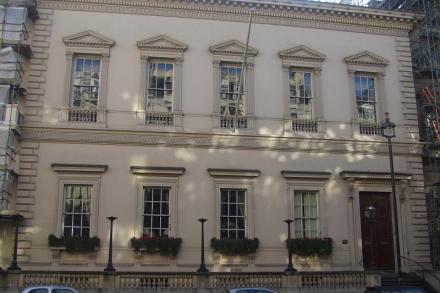
The Travellers Club was founded in 1819 to provide congenial surroundings for those who had ‘travelled outside the British Islands to a distance of 500 miles from London in a direct line’, and opportunities to meet distinguished foreign visitors. As it nears its bicentenary, John Martin Robinson has produced a thorough, scholarly and highly readable biography on an institution that has served among other things as the ‘Foreign Office Canteen’ and a refuge for derring-do adventurers. The Club’s members included royalty, dukes, ambassadors and explorers, not to mention aesthetes, artists and even authors, despite Anthony Powell’s claims to the contrary.
Splendour and squalor

From our UK edition

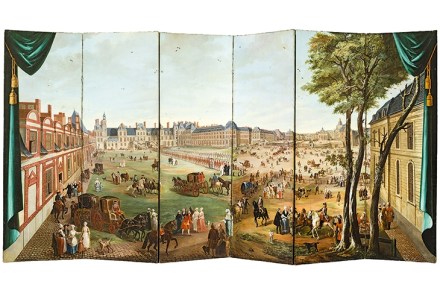
The château at Versailles remained the grandest palace in the whole of Europe from the moment that Louis XIV established his court there in May 1682 until his great grandson Louis XVI was forced to leave by a mob of 30,000 in October 1789. Such was its reputation that Lord Chesterfield earnestly advised his son that ‘an hour at Versailles is now worth more to you than three hours in your closet with the best books that were ever written’. Embassies came from as far afield as Siam and Persia. Leather-bound engravings of the palace served as diplomatic gifts and spread its reputation throughout Europe. Every sovereign, leafing through his copy, simply had to recreate his own Versailles.

The feast before the famine

From our UK edition

If you had the resources, Georgian Ireland must have been a very agreeable place in which to live. It was certainly more prosperous and peaceful than it would be after the 1848 famine. This idyllic world is captured in Patricia McCarthy’s scholarly and highly entertaining work, which stretches from the start of the building of Castletown House, Co. Kildare, in 1722, to the 1848 famine.

Cabinet of curiosity: we do not even know for sure the maker of the Sixtus Cabinet at Stourhead

From our UK edition

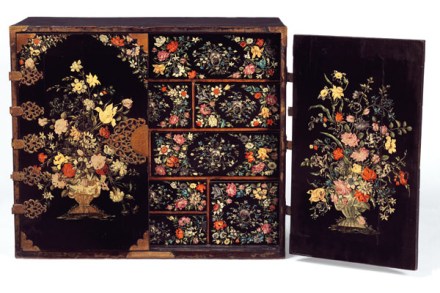
Italian cabinets and tables decorated with inlaid semi-precious stones known as ‘pietre dure’ were a ‘must-have’ for English milords returning from their Grand Tours. The finest example is perhaps the Sixtus V cabinet at Stourhead, in Wiltshire, which has just been written up in a thorough, scholarly way by Simon Swynfen Jervis and Dudley Dodd, two eminent furniture and architectural historians. As well as placing the Sixtus V cabinet within the contexts of Roman manufacture and English collecting, the book brings to life its Roman provenance and its subsequent residence at Stourhead after the banker Henry Hoare bought it in about 1740.

Anne Seymour Damer: the female Bernini?

From our UK edition

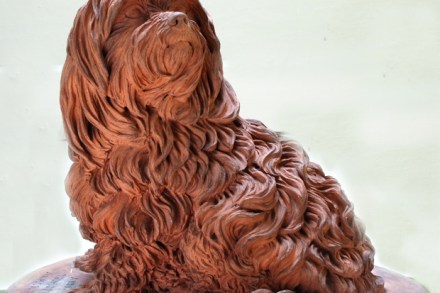
Anne Seymour Damer (1748–1828) was virtually the only female sculptor working in Britain during her lifetime. Contemporary artists may have dismissed her as a well-connected dilettante with curiosity value as a woman. But her most important connection was her uncle, Horace Walpole. He warmly praised his niece’s abilities: her terracotta ‘Shock Dog’ of 1780 (see above) he compared to a work by Bernini. On his death, he bequeathed her his country retreat, Strawberry Hill, Twickenham. This house is a fitting venue for Anne Seymour Damer – Sculpture and Society (until 9 November).

The Coronation Chair and the Stone of Scone, by Warwick Rodwell – review

From our UK edition

The Coronation Chair currently stands all spruced up, following last year’s conservation, under a crimson canopy, by the west entrance to Westminster Abbey. The sovereign has used this throne during the actual ceremony almost continuously since the coronation of Henry IV (1399). The oldest dated piece of English furniture (1297-1300) made by a known artist (Walter of Durham) to survive has been given the comprehensive study it deserves by Warwick Rodwell, with supplementary chapters on its most recent conservation by Marie Louise Sauerberg and its current display by Ptolemy Dean.

Exhibition: What really goes on in a royal bedchamber

From our UK edition

What exactly are the ‘secrets of the royal bedchamber’? That the actual bed was seldom if ever slept in let alone used for romping sex (the latter took place in private bedchambers, often barred off by an ingenious system of locks). But the royal bedchamber was, as the organisers of this exhibition state, ‘the equivalent of the modern-day boardroom’, where government decisions were made and private access to the monarch gained. Those who controlled that access were the most important members of the court. They may have been awarded earldoms, but they vied for jobs that involved serving the monarch at the most intimate (and demeaning) level. The point of the royal state bed was to emphasise the pomp and splendour of the room where you met the monarch in person.

Concealed treasures

From our UK edition

The Holburne Museum of Bath is a delight. Its collections were formed by Sir William Holburne (1793–1874), a naval officer who first saw action at the Battle of Trafalgar at the age of 12 and retired to Bath in 1820 to dedicate his celibate life — he shared his house with his three sisters — mostly to travel and collecting. Since 1912, his collections have been housed in a beautiful neoclassical building, originally built as a hotel in the 1790s and situated at the end of Great Pultney Street. They include Imari porcelain, Maiolica pottery, Augsburg silver and Dutch 17th-century landscapes, as well as curios such as a spur, purportedly used by the Duke of Monmouth at the Battle of Sedgemoor (1685).