Molly Guinness

Agonised questions

From our UK edition

It’s terribly difficult to write a novel about soul-searching, and Elif Shafak has come up with a rather clever device to do so: Peri grows up in Istanbul listening to her parents fighting about religion. Solemn, naive and tortured, she gets a place at Oxford, where she makes friends with Mona, who wears a headscarf and feels persecuted, and Shirin, who enjoys drinking and sex and says things like ‘We Muslims are going through an identity crisis. Especially the women…Eat your heart out Jean-Paul Sartre! Get a load of this! We have an existential crisis like you’ve never seen!’ They all study under the handsome and wayward Professor Azur, who gives seminars about God. The scene is set for a romantic crisis.

Spectator books of the year: Molly Guinness on the inspiring Oliver Sacks

From our UK edition

Oliver Sacks’s autobiography On the Move (Picador, £20) is full of surprising details —for example, the eminent neurologist was a weightlifting champion in his youth who hung out with Hells Angels. Sacks — who died in August — was an inspiring person with an extraordinary breadth of interests and enthusiasms. I also enjoyed Anne Tyler’s family portrait A Spool of Blue Thread (Vintage, £7.99). People have criticised Tyler for being too gentle, but actually she has the rapier wit of a true satirist. You know exactly how awful one character is because she has soft shoes and insists on calling her mother-in-law Mother Whitshank. Monsters by Emerald Fennell (Hot Key Books, £7.99) is absolutely great.

How to grapple with discipline in schools

From our UK edition

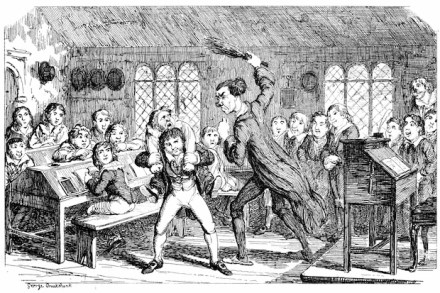
The government’s new school discipline leader Tom Bennett has a difficult brief; he’s in charge of stopping the schoolchildren of the entire nation swinging on their chairs, playing on their telephones, making silly comments and passing notes. Discipline is a problem the Spectator has often grappled with over the years. Writing in 1970, Rhodes Boyson said although there had been incidents in the early19th century when schools had called in troops to put down riots, modern schools weren’t much better at keeping control.

Rolf Harris’ lack of remorse and the psychology of uncomfortable emotions

From our UK edition

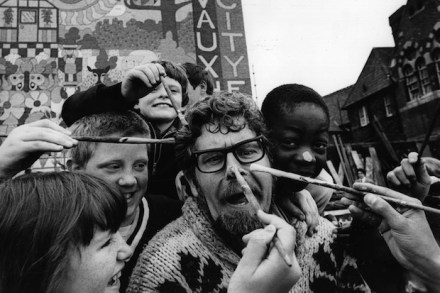
A year into his sentence on 12 counts of indecent assault, it doesn’t look like Rolf Harris has developed much of a sense of remorse. After seeing Mr Harris’s latest foray into song writing, his victims’ lawyer has said he mustn’t be given parole, and she has a point. Theodore Dalrymple (also known as Anthony Daniels), then a prison doctor, described in 1994 the baffling ability of violent criminals to avoid that uncomfortable emotion. A murderer came back from court having been sentenced to life imprisonment. A period of depression is, of course, to be expected after such a sentence, but this man was angry, not depressed. He was red with rage. ‘That wasn't justice,’ he said. ‘It was a kangaroo court…They didn't listen to me.

There’s nothing ‘normal’ about turning down a pay rise

From our UK edition

The MPs grandstanding about how they’ll give any salary increase to charity should all be ashamed of themselves. The entire point of the Independent Parliamentary Standards Authority is to take away self-regulation from politicians. It’s frankly none of their business to decide how much they’re paid, and the cries of protest are specious anyway given that IPSA has said the pay rise won’t cost taxpayers anything because it’s basically just a restructuring of how they’re paid. Politics has a terrible image in this country and rather than chorusing ‘we’re not worth it’, it’s about time someone mounted a robust defence of the whole system.

The battle of St Mary Bourne — and a history of taking the law into your own hands

From our UK edition

It’s tough being a vigilante, as Michael Widen in St Mary Bourne village has discovered to his cost. Mr Widen has been monitoring drivers with his own speed camera, and then reporting them to police. People in the local pub have started calling him a speed Nazi and there are mutterings in the village that he should have taken up bridge like other pensioners, rather than become a grass roots traffic officer. The Spectator has quite often taken the side of people who take the law into their own hands, especially in the early ‘90s, when the police didn’t seem to be able to do much about crime. Paul Johnson argued in 1992 that the public had had enough.

Never marry a lounger, a pleasure-seeker, or a fribble

From our UK edition

It’s good to see that an actual anthropologist is studying the behaviour of some of America’s weirdest women. Wednesday Martin’s book The Primates of Park Avenue describes the exhausting lives of Manhattan’s most full-on wives: sci-fi beauty regimes, frenetic fund-raising, intensive mothering and military household management. In 1832 when a farmer in Lancaster offered up his young wife for sale, he advertised a similarly energetic range of skills.

The next Labour leader should remember the ‘politics of envy’ never work

From our UK edition

Andy Burnham may be the trade unions’ favourite candidate for Labour leader but he is already distancing himself from some of Ed Miliband’s worst populist nonsense. This is what he said in today’s Observer: 'We have got to get away from things that look like symbolism. I am going to put the mansion tax in that category. I am not saying it was necessarily completely the wrong thing to do, but in its name I think it spoke to something that the public don’t particularly like, which is the politics of envy.' In a 1911 article entitled An Unenvious People, The Spectator paid tribute to the nature of Englishmen. The festivities of the Coronation would have set an edge upon envy in England if anything could.

Sensible Tories still believe in One Nation Conservatism

From our UK edition

David Cameron has said the Conservatives will govern as a party of one nation. The phrase was apt at a time when part of the country seems to be pulling away with all its might, and after a bad-tempered election campaign, where class warfare was actively encouraged in some quarters. For a time, the phrase ‘One Nation’ was Conservative code for wanting to spend more, but that’s not what Cameron meant on Friday. This is how he put it: 'We must ensure that we bring our country together…We will govern as a party of one nation, one United Kingdom. That means ensuring this recovery reaches all parts of our country, from north to south, from east to west. And indeed it means rebalancing our economy, building that northern powerhouse.

Possible ways to neutralise the SNP

From our UK edition

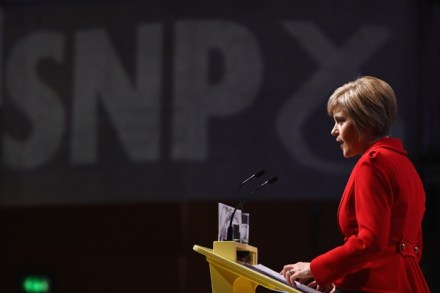
The prospect of government by short-term deals and extortion is so depressing that you can see why Ed Miliband has said he won’t go in for that kind of thing, and why David Cameron and Nick Clegg have finally started laying down some red lines. But there’s no getting away from the electoral mathematics, as Gladstone and Salisbury learnt 130 years ago. Before the 1885 election, the Irish nationalist leader Charles Stewart Parnell worked out that he could hold the balance of power. If this should happen at the next election, he can enable the Conservatives to turn out the present Liberal Government, and then enable the Liberals to turn out the succeeding Conservative Government, and so on ad infinitum. Parliamentary government will have become an impossibility until Mr.

It’s more important than ever for conservatives to appeal to hearts as well as minds

From our UK edition

The Conservatives always do a lot worse than Labour in polls that ask about how proud voters feel of their party. They’re hoping that ‘shy Tories’ might still win them the election, but it’s pretty pathetic that more than 20 years since the phenomenon was first identified, Conservatives still haven’t found a way to remove the stigma and convince the electorate that right-wing politics is about making people’s lives better. Social justice, compassion and coolness are now strictly the domain of the Left in the public consciousness, which makes it all the more baffling that the Tories decided to leave principle and passion out of this election campaign to fight on a dry message of past economic competence.

Duelling advice for Nigel Farage

From our UK edition

A Polish prince this week challenged Nigel Farage to a duel. The prince, Yanek Zylinski, blames Farage and Ukip for anti-Polish sentiment in the UK so he’s suggesting they meet in Hyde Park with their swords one morning. The Spectator of 1838 would be disappointed that 21st century princes are still throwing down gauntlets: The pretence on which duelling has been defended – that it serves to polish society – is untenable. The witty Mr Whistlecraft, indeed, speaking of King Arthur’s Knights, avers that: “Their looks and gestures, eager, sharp, and quick, Showed them prepared, on proper provocation, To give the lie, pull noses, stab and kick, Which is the very reason, it is said, They were so very courteous and well-bred.

Bored teenagers are the last people we should be forcing to vote

From our UK edition

One of the trendy things to worry about these days is political disengagement among young people. A think tank called the Institute for Public Policy Research is so worried it’s suggested people be forced to vote in the first election after their 18th birthday. They say political apathy among the young is undermining democracy, but their solution is rather perverse. People who are so bored by thinking about the future of the country that they can’t be bothered to vote are the last people we should be consulting on the next government; frankly it’s a relief that so many of the least competent voters keep themselves away from the polling stations.

Jeffrey Bernard and Jeremy Clarkson would have understood each other

From our UK edition

A lot of people seem to have confused the fact that Jeremy Clarkson is right wing and amusing (which they believe is at odds with the culture of the BBC) with the fact that he’s shown himself to be a brute (which is why he’s been sacked). The investigation into his attack on Oisin Tymon is pretty unequivocal. It was unprovoked and lasted more than 30 seconds until someone else intervened, and there was a lot of nasty verbal abuse thrown in for good measure. Tymon went to hospital afterwards to get his injuries checked out. Rather magnificently, he didn’t offer any resistance to Clarkson’s assault. The Duke of Cambridge in 1874 showed similar restraint when a disgruntled soldier attacked him in Pall Mall.

Thank goodness we only have to watch one TV debate

From our UK edition

The treasurer of one of Manchester’s Conservative clubs is a lifelong Labour voter who votes only as a mark of respect for his father, who always voted Labour. He’s one of the few club regulars we met who bothers to vote, but he never watches the news and takes pride in knowing nothing about politics. I was in Manchester looking for disaffected voters with the World Service’s political correspondent Rob Watson; Manchester Central had the lowest turnout at the last election. We talked to a lot of people who had a similar attitude – 'I’d rather be a hypocrite than powerless', said one man in Wetherspoon’s. It’s a bit like doing jury service with earplugs in, but the consensus is that disengagement is never the voters’ fault.

Reflections on the importance of Mothering Sunday

From our UK edition

For Mothering Sunday, some advice to mothers from a 1912 edition of The Spectator. Be with him yourself as much as you can… I have no fear of your being a fussy mother, worrying him with continual attentions, but I have just the slightest fear lest you should entertain that silly idea that seeing much of a mother makes a boy unmanly. Kipling says that in nine out of ten cases a man calls on his mother's name at the hour of death. I cannot answer that this is so, but if it be it is of glorious significance for motherhood. After years and years of the world's buffeting it is the one who first knew him, who first clasped him in her arms, who counts.

50 years on, the battle for civil rights continues in America

From our UK edition

Fifty years since the first civil rights march from Selma to Montgomery, America still has huge problems with race. Only this week a federal investigation into the killing of an unarmed black man in Ferguson last year concluded that the police there were racist. They’ve been making millions of dollars by targeting black people and issuing tickets for minor traffic infractions. Across America, black people are still poorer, less educated and more likely to go to gaol than white people. In 1962 The Spectator’s New York correspondent Murray Kempton wrote: In the best of cases, to be a Negro in America is to have a station below your capacities… The American economy sometimes seems almost designed for the care and feeding of incompetent and unproductive white men.

How do you tell a sturdy vagabond from a submissive pauper?

From our UK edition

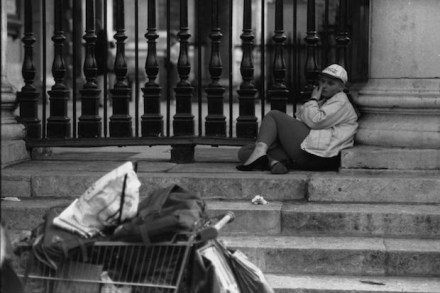
The number of people sleeping on the streets has risen by 55 per cent in the last five years. New statistics show that London had 742 rough sleepers on the streets on an average night last autumn, which is about 200 more than the same period in 2013. Governments have tried various tactics to get people off the streets over the years, but the solutions often sound as bad as the problem. An 1893 article attempted to classify the tramps as a first step to getting rid of aggressive beggars, ‘sodden scoundrels too cowardly to commit real crimes, but willing enough to frighten women into paying them blackmail.

The tragedy of these sex education plans is that five year olds might miss the joke

From our UK edition

Most people look back fondly at their sex education classes, remembering the stammering, red faced teachers, the very silly jokes and the endless, irrepressible giggles. The real tragedy about this week’s proposals to teach five-year-olds about sex is that children that small may not see the funny side of it. Generations of policy makers, teachers and journalists have spent years agonising over the question, while generations of schoolchildren have spent the happy hours of the PSHE classes passing notes, thinking up absurd innuendoes and flirting outrageously, eyes shining with laughter. But perhaps the privilege of having whole lessons given over to such cheerful pastimes was only ever to be a flash in the pan.

The sadistic sport of the hunt saboteurs makes you long for the good old days

From our UK edition

At a recent day’s hunting in Wiltshire, a man in a balaclava trying to pull a rider off his horse and said, 'Some of you will be going home in body bags today'. Later, after the huntsman had put his horse and hounds in the lorry, masked men armed with iron bars set upon him and knocked him out, kicking him repeatedly in the head as hard as they could even after he was unconscious. It’s 10 years since the hunting ban came into force but the sadistic sport of the hunt saboteurs is as popular, and as vicious, as ever.