Jonathan Rugman

A state of terror: Islamic State longs to be left alone to establish its blood-stained utopia

From our UK edition

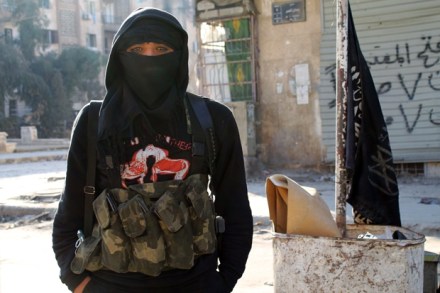
The Sykes-Picot agreement will be 100 years old next year, but there will be no congratulatory telegrams winging their way to the Middle East from London, or from Paris on high alert. The Islamic State, the world’s most powerful jihadist group, has filmed its men bulldozing border posts between Syria and Iraq, dealing perhaps the final blow to those Anglo-French cartological ambitions of a century ago. The ‘Caliphate’ is inhabited by some six million people and is now larger than the United Kingdom. In the words of Patrick Cockburn, ‘a new and terrifying state has been born that will not easily disappear’. Yet far from appearing out of the blue in 2014, IS was fostered for years by those who profess to oppose it, as this book argues convincingly.
From Nasser to Mubarak — Egypt’s modern pharaohs and their phoney myths

From our UK edition

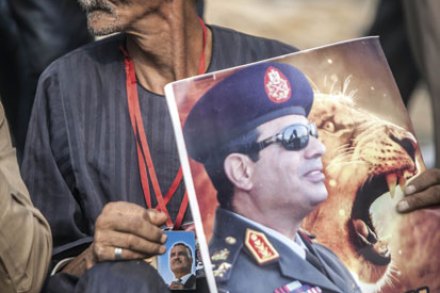
Reporting Egypt’s revolution three years ago, I had a sense of history not so much repeating itself as discharging sparks which seemed eerily familiar. Smoke was billowing into my hotel bedroom from the building next door, the headquarters of the Mubarak dictatorship which protestors had set alight; yet also visible from my balcony in Cairo that night were the flickering lights of Zamalek, the island of privilege in the River Nile where my father grew up before fleeing the flames of the Nasser regime on a flying boat in 1956. At last comes a book which links the coups and revolutions witnessed by father and son. The Cambridge sociologist Hazem Kandil has produced a compelling history of Egypt’s 60-year power struggle.

Peter Oborne is almost right about Iran’s non-existent nukes

From our UK edition

Whether the United States is a force for global peace is not really up for debate in the self-described ‘indispensable nation’, though the question sharply divides opinion almost everywhere else. By focusing on America’s fixation with Iran, this short and angry book argues against. The book’s polemic is built on good foundations: we are often told that Iran is a rogue nuclear state, yet it does not possess nuclear weapons. As a signatory to the NPT, the Non-Proliferation Treaty, Iran is entitled to a peaceful nuclear energy programme as long as it is monitored by UN inspectors. However, ten years of negotiations aimed at persuading Iran to stop have led nowhere.

A visit to Bulgaria with Nigel Farage

From our UK edition

One Sunday evening, while I was trying to avoid ironing my shirts, it occurred to me that it would be a good idea to take Nigel Farage to Bulgaria or Romania. The Ukip leader is convinced that hordes of people from these countries are poised to pour into Britain when the rules are relaxed next year, so why not go there with him to see if he’s right? A few weeks later, I put my proposal to him. ‘But nobody will come here from Romania,’ said Nigel. ‘They’ve eaten all the transport.’ So we went to Bulgaria. ‘I am getting lots of funny looks,’ observed the scourge of open-door immigration as we walked past scores of wide-eyed Bulgarians settling down on the plane to Sofia.

My Venezuelan jail hell

From our UK edition

There are two conditions British foreign correspondents must meet before they can consider themselves old hands. The first is having one’s work savaged by John Pilger; the second is spending time inside a cell somewhere abroad, preferably somewhere exotic and hot. It so happens that it was during a trip to sultry Venezuela that I came of age as a reporter and achieved the rare double. Not only did Mr Pilger describe my television work as a ‘one of the worst, most distorted pieces of journalism I have ever seen’, but I was also locked up, ordered to strip to my underpants, accused by a military prosecutor of espionage and threatened with over 30 years in a Venezuelan jail.

Murderous mullah games

From our UK edition

Montesquieu observed that popular governments are always more vindictive than monarchies. So it proved in Iran in 1979, where the demise of a 2,000-year-old monarchical tradition made most ‘Arab spring’ revolutions seem like child’s play. More than 30 years on, the descent of Ayatollah Khomeini from a jumbo jet, wearing an American bullet-proof vest, also remains arguably more significant. James Buchan concludes that Osama bin Laden was the extreme Sunni response to Khomeini’s clerical dictatorship; and without Khomeini, the Shias’ battle for survival would not have played out across the Middle East as violently as it has, including in Syria today.

A voice that haunts

From our UK edition

One cold evening in the middle of February this year I walked into a smoke-filled room in a town called Saraqib in northern Syria to find Anthony Shadid sitting shoeless on the floor like a Bedouin and conversing in Arabic with a tall, thin school teacher, one of the leaders of the town’s revolution. A cast-iron stove, fuelled by paraffin, heated the room, and Anthony, a bearded, somewhat burly man, seemed to glow with bear-like warmth. Through the cigarette smoke I could see three notebooks proudly stacked in front of the New York Times reporter, evidently bulging with his observations. Anthony had watched rebel fighters attempt to blow up an army tank earlier that day, and he was clearly shaken by the audacity and ferocity of Syria’s violence.