John Sutherland

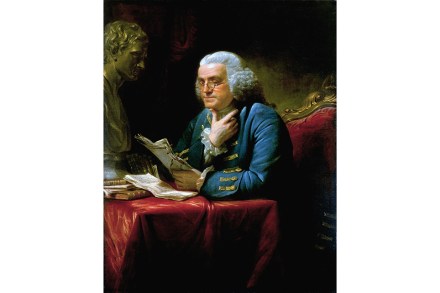
Being a printer was what Benjamin Franklin prided himself on most

From our UK edition

For some readers this book will have the charm of the Antiques Roadshow. Adam Smyth, professor of English Literature and the History of the Book at Balliol College, Oxford, presents with caressing attention to technical detail an array of illustrious book people. They may be unfamiliar names to those who don’t know a colophon from a cauliflower, but he makes his characters wholly accessible. Smyth evidently chose the Bodley Head as his publisher for its connection with the Bodleian Library, in whose rare-books room he researches. As importantly, the Bodley Head was founded with a dedication to fine antiquarian books. The Book-Makers breathes bibliophilia. It recalls Walter Benjamin’s essay ‘Unpacking My Library’. Like Benjamin, Smyth unpacks his contents lovingly.
The sage of age

From our UK edition

Ashton Applewhite is a leading American ‘inspirer’ on how to make the most of being over the hill. She has followers to whom she dispatches her inspiration by blog, YouTube, TED, magazine column and talk-show interview. This Chair Rocks first came into the world, three years ago, as a ‘networked book’. It now presents itself in a form more congenial to ‘olders’ as Applewhite likes to call them. Whether to go large print must have been an option considered by its current publishers. Applewhite’s previous book-qua-book was Cutting Loose: Why Women Who End Their Marriages Do So Well. ‘Upbeat’ is her middle name. There is one passing reference to her ex in This Chair Rocks and we gather she now has a partner, Bob.

Spectator Books of the Year: A T.S. Eliot collection to stand the test of time

From our UK edition

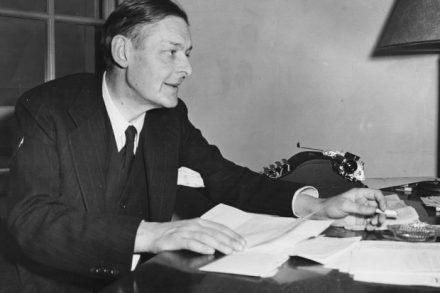
Best novel: no question, Razor Girl by Carl Hiaasen (Atlantic Books, £13.50). A Florida comcrime (I just made that word up) which makes you feel better about the US in a year when that’s been tricky. You can be sexually saucy and inoffensive — a lesson Donald has never learned. It’s been a crowning year for our best living literary critic, Sir Christopher Ricks. His long campaign for Bob Dylan to be taken seriously in a literary way has triumphed. His edition of The Poems of T. S. Eliot with his co-editor Jim McCue, (Faber, two volumes, £26 each) is (literally) monumental and will last for as long as poetry is read. Peter Parker’s Housman Country: Into the Heart of England (Little Brown, £19.99).

Love at first bite

From our UK edition

Legends cling to Bram Stoker’s life. One interesting cluster centres on his wife, Florence. She was judged, in her high years, a supreme London beauty. She preserved her Dresden perfection by denying her husband conjugal access. Bram consoled himself with warmer but more dangerous ladies of the night; such satisfactions came at greater cost than a few sovereigns. According to David J. Skal, a quarter of men of Stoker’s bohemian class (including all of those central to his book) were infected with syphilis. And Bram? Skal thinks so too. Florence Balcombe, when a young Dublin beauty, was courted by Oscar Wilde as well as Bram. Oscar she was not inclined to — because of his ‘curly teeth’ quite possibly.

Burning passions

From our UK edition

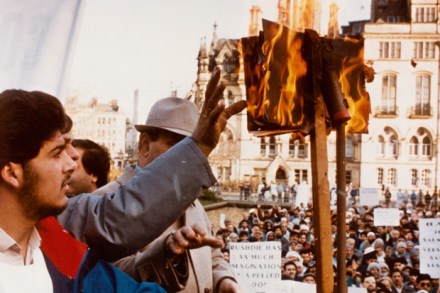
This is a book which, as one eyes its lavish illustrations and dips into its elegant prose, looks as if it ought to come with an option to buy a cut-price John Lewis coffee table. On the Burning of Books is, in fact, much more than that. It wears its scholarship lightly. A weightier treatment of the topic for those interested can be found in Matthew Fishburn’s Burning Books (2008). Kenneth Baker? A name that rings bells. But what did he do? He enjoyed high office in the Thatcher years. At one point he was touted as a contender for Downing Street. His legacy is the National Curriculum. Best forgotten is the Dangerous Dogs Act. Spitting Image caricatured him, spitefully, as a beslimed slug. He was probably the last politician in England seriously to use Brylcreem.

The cavalier Michael

From our UK edition

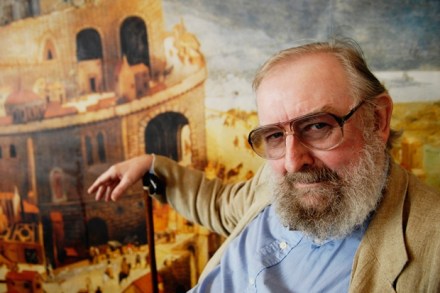
Michael Moorcock has put his name to more books, pamphlets and fanzines than, probably, even Michael Moorcock can count, but nothing ‘major’ over the past ten years. He’s now 75. But not, as this eruption witnesses, extinct. A cult has formed around him — Moorcockians who can discourse knowledgeably on the second aether and the ‘weirdness’ of Elric of Melniboné. Inexhaustibly inventive, Moorcock proudly calls himself a ‘bad writer with big ideas’. He is interested in ‘New Worlds’ (the name of the science fiction journal he edited which injected 1960s postmodernism into the genre, banishing little green men and spaceships); ‘Other Worlds’ (e.g.

No sex, please, in the Detection Club

From our UK edition

‘The crime novel,’ said Bertolt Brecht, ‘like the world itself, is ruled by the English.’ He was thinking of the detective story and the tribute was truest in the ‘golden age’, between the great wars; the period covered, hugely readably, by Martin Edwards. Edwards’s primary subject is the Detection Club, whose members included the giants of the genre — G.K. Chesterton, Agatha Christie, Dorothy L. Sayers, Margery Allingham. Its rules (they loved rules) were given quasi commandment authority by one of the club’s founder-members, Monsignor Ronald Knox, professional churchman, amateur novelist.

David Lodge: confessions of a wrongly modest man

From our UK edition

This massive first instalment of a memoir starts in the quite good year the author was born, 1935, and ends with his breakthrough novel, Changing Places, in the rather better year, 1975. A master-practitioner of narrative, Lodge chooses to write with an artful flatness which recalls Frank Kermode’s similarly self-depreciative memoir, Not Entitled. Lodge’s career was, formatively, in the same provincial, first-generation university orbit. Unlike Kermode (for whom it proved a dubious experience) Lodge never let himself be headhunted into Oxbridge. He turned down the inevitable mid-career offer because, principally, he believed it would be bad for his fiction. And he didn’t think he belonged at high tables. Lodge first saw the world in working-class East Dulwich.

A Beckett fagend rescued from a bin

From our UK edition

Spectator readers of my vintage will remember their first encounter with Beckett as vividly as their first lover’s kiss. For me they happened around the same time, aged 18. The dramatic initiation was a Colchester rep performance of Waiting for Godot, in 1956. Twenty-five years after his first mature work was written Beckett had hit England with the burst of an unexploded wartime bomb. The general response at the time was one of fascinated bafflement. That has dispersed over the last half century but the fascination — as the headlines accompanying the publication of this Beckettian fragment witness — remains undiminished. The story, ‘Echo’s Bones’, is an early work but in no sense juvenile.

The book that Boris should give to all seniors, along with their Freedom Passes

From our UK edition

The Death of Ivan Ilyich is a story for the older reader. One might go so far as to suggest that local authorities should give ‘seniors’ a copy free with their euphemistically named ‘Freedom Pass’ as a reminder of the longest journey they will ever take. Boris’s memento mori. Perversely, because it is short and by a writer whose name is better known than his work is read, The Death of Ivan Ilyich routinely appears on ‘Great Books’ courses for the young — to whom the story manifestly does not speak, since the young know they will never die. The narrative opens with the announcement of the death of a senior public prosecutor, Ivan Ilyich, to his assembled colleagues. Their faces are properly grave on receiving the sad news.

Wilkie Collins by Andrew Lycett – review

From our UK edition

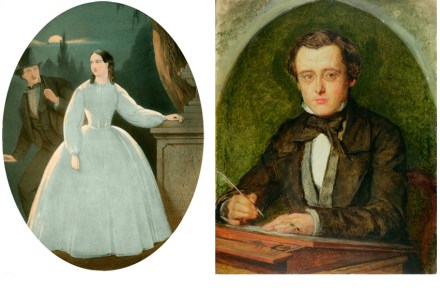
In the outrageous 2010 press hounding of the innocent schoolteacher Christopher Jefferies over the murder of his young female tenant (of which a neighbour, Vincent Tabak, was later convicted and over which the guilty newspapers later shelled out punitive sums), the Sun produced, as suspicious facts, that Jefferies was ‘obsessed by death’, and ‘scared the kids’ in his classroom. He had, for example, exposed his pupils to the ‘Victorian murder novel’ The Moonstone. As an English teacher at a high-ranked school, Jefferies would surely have prescribed my edition of Wilkie Collins’s novel— the only one, if I may toot my trumpet, to make comprehensive use of the manuscript. Pulp the edition, I thought with a shudder, before it kills again.

Looking at Books by John Sutherland – essay

From our UK edition

The sexy thing this summer, as the TV ads tell us, is the e-book. Forget those old 1,000-page blockbusters, two of which would put you over Mr Ryan’s weight limit. Sand, sun, surf — and Kindle. The traditional ‘beach book’ is as obsolete as the Victorian bathing machine. The printed codex has had a long run — it is half a millennium since William Caxton set up his stall around St Paul’s. Few inventions have lasted as long, or done as much good for humanity. But a tipping point has been reached for the ink, paper and board product. More precisely, it will be tipped into the waste-bin of history. Goodbye Gutenberg.

Up

From our UK edition

One of the reprinted reviews which make up the bulk of this book opens: ‘I vividly remember when I first read George Orwell. It was at Eton.’ How would it sound, I mused, if I began a review: ‘I vividly remember when I first read George Orwell. It was at Colchester Grammar School.’ It would lack, I feel, that enviable tone of Etonian ‘assurance’. True, a less self-assured person than James Wood might have slipped his educational credentials in parenthetically — in the style of David Cameron’s casual remark that he is ‘reasonably well off’. And Eton, one notes in passing, has produced many more prime ministers than great literary critics. Connolly, Orwell (at a stretch), and who else? Well, of course, James Wood.

The most inscrutable of poets

From our UK edition

Where our great Victorian writers are concerned we live in an age of rolling biography and contradictory interpretation. I’ve read half a dozen lives of the poet since picking up, as a schoolboy, the Penguin paperback of Harold Nicolson’s Tennyson: Aspects of his Life, Character and Poetry, with its diagnosis of a crippling case of Victorian timidity: ‘Tennyson was afraid of death and sex and God.’ I got the point, and read In Memoriam with knowing condescension. Case settled. But not for long.

Bloomsbury’s twin powerhouses

From our UK edition

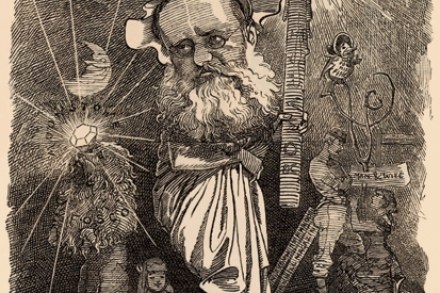
Rosemary Ashton has always been fascinated by the ways in which ideas ‘materialise’. Her first book, The German Idea, tracked the subtle filaments of Germanism in 19th-century British culture. In this, her latest book, she anatomises an area of London where more formative ideas have been conceived, and brought to fruition, than in any other of the metropolitan villages. Covent Garden is theatrical (and, bits of it, louche), Soho is bohemian (even more louche), Kensington is a home to science. In Bloomsbury it is the ‘march of mind’ that gives WC1 its distinctive character. Ashton sees Bloomsbury as a constellation of ‘progressive institutions’ — intellectual structures which have been as formative for Britain as the Revolution was for France.

Man of mysteries

From our UK edition

It was always William Wilkie Collins’s good luck — though in later life something of a humiliation — that he was dragged along on Dickens’s coat-tails — not least in this bicentennial ‘year of Dickens’. In December, the BBC will be showing a dramatisation of The Moonstone. T. S. Eliot (no less) called that tale of theft, somnambulism, Scotland Yard, opium and wily Indian thugs ‘the first and best of detective novels’. That, one imagines, would have elicited a snort of contradiction from the author of Bleak House, but the compliment is not far off the mark. Andrew Lycett is currently at work on a full-length biography and, in the meantime, Peter Ackroyd offers us this elegant extended essay between hard covers.

Among the ghosts

From our UK edition

Does it matter who actually wrote a novel – or a political speech? What’s the most distinguished ghost-written book? John F. Kennedy, while still a postgraduate student, put his name to a book that went on to win the Pulitzer. Decades after his assassination it emerged that it was substantially ghosted. Should not the keepers of the records, as with sportsmen caught out doing their great things on steroids, affix an asterisk to his name? After his death in 2002 the Nobel Prize-winning Spaniard Camilo José Cela was accused of using the services of two (also now dead) ghostwriters. The jury remains out, but another asterisk may be hovering. Two asterisks, perhaps, since Cela is also under suspicion of having been a plagiarist.