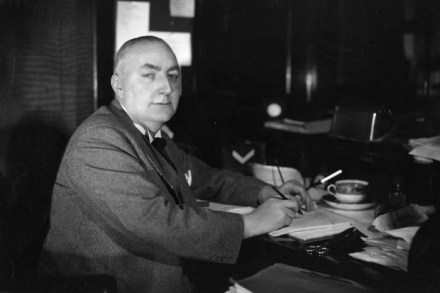
Michael Moorcock

Michael Moorcock’s latest book is The Whispering Swarm (Gollancz).

J.G. Ballard’s surreal fiction continues to resonate through the century

In 1951, when J.G. Ballard was 20, Pandora and the Flying Dutchman premiered in London. Directed by Albert Lewin and starring James Mason, Ava Gardner and a solid cast of English actors, it was filmed on the Catalan coast by Jack Cardiff in lush MGM colour. Man Ray contributed designs based on the work of de Chirico. Set in an Anglo-Spanish colony, it featured a Surrealist painter, a racing car driver and a toreador. All love the mysterious Pandora, who is unable to love anyone until the Dutchman drops anchor. To prove his passion for Pandora one suitor takes poison while another pushes his beloved car over a cliff.
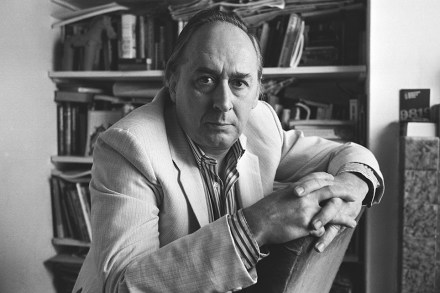
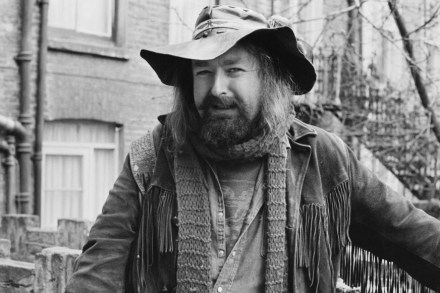
Michael Moorcock: celebrating 60 years of New Worlds

From our UK edition

43 min listen

My guest in this week's Book Club podcast is the writer, musician and editor Michael Moorcock, whose editorship of New Worlds magazine is widely credited with ushering in a 'new wave' of science fiction and developing the careers of writers like J G Ballard, Iain Sinclair, Pamela Zoline, Thomas M Disch and M John Harrison. With the release of a special edition of New Worlds, honouring the 60th anniversary of his editorship, Mike tells me about how he set out to marry the best of literary fiction with the best of the pulp tradition, how he fought off obscenity charges over Norman Spinrad's Bug Jack Barron, about his friendship with Ballard and his enmity with Kingsley Amis – and why he's determined never to lose his vulgarity.

The mystery of Area X: Absolution, by Jeff VanderMeer, reviewed

From our UK edition

I have to confess that I am not a fan of horror fiction. I have a stack of unread H.P. Lovecrafts sent to me by enthusiasts. M.R. James scares me silly. Even Elizabeth Bowen’s ghost stories remain neglected among her other much-loved books. I have, however, been impressed over the years by writers usually identified as belonging to the movement described in the late 1990s by M. John Harrison as the New Weird, which marries chiefly supernatural themes to realism or naturalism. As a stylist, Harrison remains the greatest of these writers. They included Angela Carter, China Miéville and Jeffrey Ford. The movement is naturally associated with the science fiction New Wave, whose best known practitioner was J.G.

The hubris of the great airship designers

From our UK edition

Tribal rivalries have existed from humanity’s beginning and have fuelled the creation of every prestigious monument ever built. By the Age of Science we were building not pyramids but ironclads and submarines fighting for ascendancy at sea, expanding our empires in spite of an ever-growing movement for colonial independence. The Spanish-American war of 1898 added the United States to the list of great nations believing it to be their destiny, even duty, to bring their kind of progress to the world. Many understood that achieving overwhelming technological power as a nation guaranteed that no antagonist would dare attack. Limited by agreements made after the first world war, Britain no longer ruled the waves.

Here in Texas, Hell has frozen over

From our UK edition

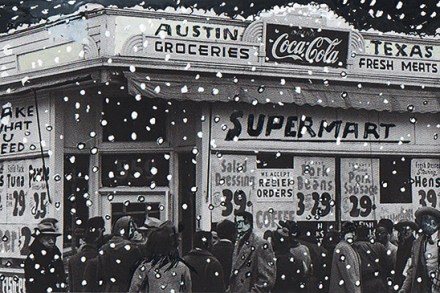
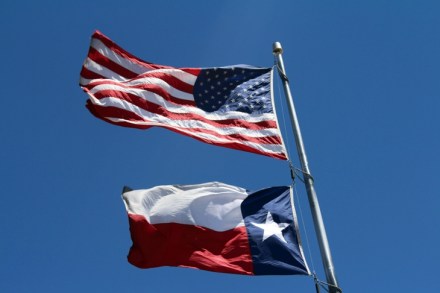
Austin ‘If I owned Texas and Hell,’ General Phil Sheridan famously said, ‘I would rent out Texas and live in Hell.’ Although the weather was unusually warm for the season in central Texas we guessed something was up when, in broad daylight with hawks about, our normally crepuscular attic mice risked running down a porch pillar and gathering the spilled seed from bird feeders. They vanished completely days before the snowstorm struck. Sadly, some of our birds were not so prescient. We watched a bewildered Audubon’s warbler, which could no longer fly, hopping about in the snow. Either it had lost the main flock continuing south, or good weather had persuaded it to stay. Trying not to frighten it, my wife made sure it was fed.

We’re spending lockdown defending a family of mice

From our UK edition

Austin My first Independence Day in the US for many years. Usually I’d be in Paris avoiding Texas heat. My wife and I are self-isolating with much more square feet and wildlife to enjoy. Our garden is lush and green, full of flowers, owls, hawks, possums, squirrels, skunks, armadillos and snakes. Recent wild fires drove more animals into town. Joyously athletic with the recklessness of youth, squirrels and redbirds chase each other through our oaks and pecans and it’s pretty good to sit on the front porch with a cooling drink and the rich scent of magnolias in the evening air. The young hawks are in heaven. They have discovered our bird feeders. We have become very defensive of our bluejays, cardinals, chickadees, wrens, woodpeckers, mockingbirds and others.

Michael Moorcock: I feel I’ve been cheated by the British state

From our UK edition

Back to Texas to prepare for guests arriving for Thanksgiving and Christmas. Once again we left our Paris home not knowing whether we would return as citizens or aliens. As for so many others, the number of uncertainties introduced into our lives by Donald Trump and Brexit are legion. Reaching my 80th birthday I also feel a bit cheated. I religiously paid into social security for some 45 years, now to be told that, because I lived abroad for more than 12 years, I am no longer eligible to claim a UK pension or healthcare. Much as I continue to support the NHS, I doubt a private insurance company could do this. My US insurance refuses to pay for ‘foreign’ healthcare and, being over 75, I can’t get private insurance in Europe.

In a forest dark and deep

From our UK edition

Brian Catling’s great trilogy takes its title from The Vorrh, his first volume. This final book fulfills all the promises of the first two. It has a place beside such modern masters of the imagination as E.R. Eddison, Tolkien or Peake, and it is as completely unlike them as those three-deckers are of each other. Again we visit the Vorrh, the endless forest based on Raymond Roussel’s in Impressions of Africa. Built on its outskirts, Essenwald, a crumbling colonial city, exists because of the timber it cuts with the labour of ‘the Erstwhile’, the forest’s enslaved, semi-human inhabitants.

Lone Star individuality

The subtitle of Lawrence Wright’s splendid God Save Texas (‘A Journey into the Future of America’) would be alarming if I found it entirely convincing. It’s hard to imagine a future where the Catholic Texan spirit of individualism would seriously overwhelm Yankee Puritanism, however mutated. In New England it’s about hard-earned old money shrewdly invested. In Texas it’s about striking it rich on a hunch, and new money rashly spent. There are contradictions in Texas which allow you to select almost any argument you like from her. She is beautiful and she is barren; corrupt and honourable. Whatever you want to say about her, she will supply abundant evidence.

Beware the rise of the officious little Trumps

From our UK edition

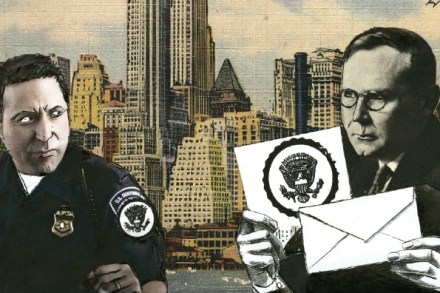
Returning to the United States a short while ago I received a stern talking to from an immigration officer. Why had I been in Paris longer than usual? I’ve lived in the US for nearly 25 years. I originally moved to be closer to my son, who was being educated nearby, and to my American wife’s relatives in Houston. We bought an old house in a small town about an hour from Austin. Built for his new bride by the only Confederate governor of Texas after he came back from the civil war, it’s rather eccentric. We fell in love with it immediately, planning to live there for at least as long as my son was in the US.

Rescuing old Nick

From our UK edition

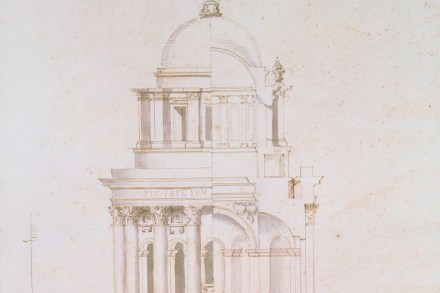
In the conclusion to his very substantial study of England’s least known and most misunderstood Baroque architect, Owen Hopkins discusses some of the modern folklore that has developed around Nicholas Hawksmoor over the past 40 years, showing how swiftly a myth can capture the public imagination. The bulk of this unevenly written, fact-packed book is devoted to discussing Hawksmoor’s life and work. The last chapter considers the myths which recently gained him a large public and, ironically, brought him the critical recognition he failed to receive either in his own lifetime or for almost two centuries afterwards. A yeoman farmer’s son, born in Nottinghamshire in 1661, Hawksmoor joined Wren’s office at the age of 18.

Texas Notebook

Returning to the United States a short while ago I received a stern talking to from an immigration officer. Why had I been in Paris longer than usual? I’ve lived in the US for nearly 25 years. I originally moved to be closer to my son, who was being educated nearby, and to my American wife’s relatives in Houston. We bought an old house in a small town about an hour from Austin. Built for his new bride by the only Confederate governor of Texas after he came back from the civil war, it’s rather eccentric. We fell in love with it immediately, planning to live there for at least as long as my son was in the US.

Cotton Belt Notebook

From our UK edition

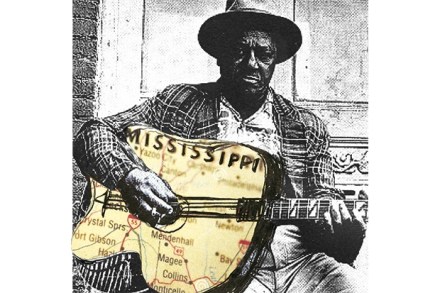
Clarksdale, Mississippi, where Highway 61 crosses 49 and Robert Johnson met the Devil, who taught him the secret of the blues. Out of the blues came Elvis, rock and roll, most of today’s popular music. My wife Linda was born here when Clarksdale was ‘the golden buckle of the Cotton Belt’. At the height of its prosperity the Delta was a magnet for both capital and labour. The labour had names like Muddy Waters, Son House, John Lee Hooker. They created the Delta blues and took it on the train up to Memphis and Chicago with the cotton. When I first came here, the picked cotton was so thick on roads and embankments it looked like snow in summertime. Now we’re shocked to see it all gone.

One vast, blaring cultural circus

From our UK edition

In the late 1980s Peter Ackroyd invited me to meet Iain Sinclair, whose first novel, White Chappell, Scarlet Tracings, I had greatly admired. Ackroyd initially knew Sinclair as a poet, author of Lud Heat, an influence on his own wonderful novel Hawksmoor. Passionately interested in London, the three of us began to meet regularly. Sinclair was an admirer of the French situationist Guy Debord (The Society of the Spectacle) and popularised psychogeography in Britain. In his blending of myth, literature and close social observation, I felt he combined the virtues of Orwell and Pound.

Gunning for freedom

From our UK edition

Like the documentary journalist Iain Overton, author of this book, I was taught to shoot and maintain a gun as a boy. As an adult I joined a campaign to monitor, curb and limit the arms trade. I taught my children good gun protocols and how to shoot. There is an undeniable pleasure in shooting. When I moved to Texas I immediately bought a black powder Navy Colt with which to practise the cowboy spins, rolls and shifts I had learned as a boy. The thing Bible-belt Baptists, Bedouin tribesmen, Brazilian drug-barons and Boer farmers have in common is a love of guns. Guns are in our DNA. Yet statistics prove that, wherever they proliferate, murder and suicide rise and children are killed.

The King Kong of the thriller: the phenomenal output of Edgar Wallace, once the world’s most popular author

From our UK edition

At the time of his death in 1932 Edgar Wallace had published some 200 books, 25 plays, 45 collections of short stories, several volumes of verse, countless newspaper and magazine articles, movie scripts, radio plays and more. His work was dictated, transcribed and sent directly to the publisher. In one year alone (1929) he wrote a dozen books. People joked about getting ‘the weekly Wallace’. Despite their speed of creation, Wallace’s stories were, said The Spectator, written in plain, clear English and ‘read by everyone, from bishops to barmen’. His influence on the thriller genre was extensive, profound and continuous. He inspired a thousand imitators with The Four Just Men, Mr J.G. Reeder, Sanders of the River and Educated Evans.

How I learned to love the Lords

From our UK edition

Lost Pines, Texas When I first moved to America in the early 1990s I arrived as a republican, full of a furious rhetoric about the end of monarchy and the abolition of hereditary privilege. I’d sent a hefty donation to Charter 88, who wanted to see PR, a written constitution and an elected second house. Social justice could not be improved by traditional methods and all the Lords Temporal were good for was raising prize pigs and holding the hands of serial killers whom they visited in jug. The Lords Spiritual were the symbol of an Anglicanism reduced to giving a home to the WI and holding the odd carol service on Christmas Eve.

Why I am becoming an American

From our UK edition

Michael Moorcock writes in praise of the Texan preference for bolshie individualism over social conformity, and hails the true ‘fundamentalism’ of the US Constitution Lost Pines, Texas This year in the US they’re holding an election and I’m planning to become an American citizen. Happily, as a dual national, I can now also remain a loyal subject of the Queen. It’s as if, after the Declaration of Independence, the British shook hands with the colonists and said, ‘Jolly good, chaps. Great idea! Now let’s just beg to differ on a few details and carry on as normal, shall we?

Diary – 30 August 2003

From our UK edition

San Andreas Bay Back from a flying visit to friendly, overheated Britain, we begin the annual migration north. Like thousands of other Texans, we are escaping our terrible weather. Some of us go to Maine, others to Oregon. My wife, Linda, and I go to northern California. It's a radical change of political climate, too, and we have to cross a desert or two to get there. The drive from Texas to California can still stir romantic chords: hundreds of miles of semi-desert relieved by an occasional distant butte. This She Wore a Yellow Ribbon territory was once commanded by fierce Apache tribes, like the Chiricahua, who gave us Cochise and Geronimo.