Daniel Swift

Coming of age in Melbourne: Landscape with Landscape, by Gerald Murnane, reviewed

From our UK edition

Gerald Murnane’s Landscape with Landscape opens with a splendidly disgruntled preface. The book is a collection of six longish stories and was originally published in 1985, when it was panned by a reviewer. ‘Some writers may claim not to be affected by reviews or even not to read them,’ he observes in his preface: ‘I make no such claim.’ And he explains how this brutal notice (‘I call to mind easily some of the nastiest passages’) led to poor sales and the disappearance of the collection, his fourth book. There is some comedy in this alongside the spiky pathos. Murnane is about as close to review-proof as any writer can get. Now 86, he is often mentioned as a likely contender for the Nobel Prize in Literature. He has high-minded admirers (J.M.

Daniel Swift: The Making of William Shakespeare

From our UK edition

50 min listen

My guest in this week’s Book Club podcast is Daniel Swift. Daniel’s new book, The Dream Factory: London’s First Playhouse and the Making of William Shakespeare, tells the fascinating story of a theatrical innovation that transformed Elizabethan drama – and set the stage, as it were, for the rise of our greatest playwright.

Paul Wood, Sean Thomas, Imogen Yates, Books of the Year II, and Alan Steadman

From our UK edition

30 min listen

On this week’s Spectator Out Loud: Paul Wood analyses what a Trump victory could mean for the Middle East (1:16); Sean Thomas gets a glimpse of a childless future while travelling in South Korea (8:39); in search of herself, Imogen Yates takes part in ‘ecstatic dance’ (15:11); a second selection of our books of the year from Peter Parker, Daniel Swift, Andrea Wulf, Claire Lowdon, and Sara Wheeler (20:30); and notes on the speaking clock from the voice himself, Alan Steadman (25:26).  Produced and presented by Patrick Gibbons.

How Wilfred Owen became a poet

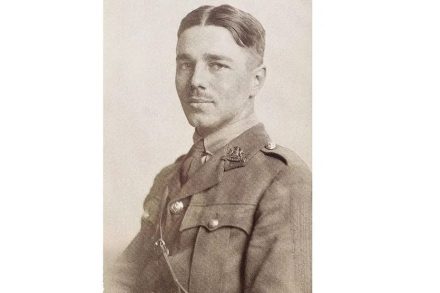
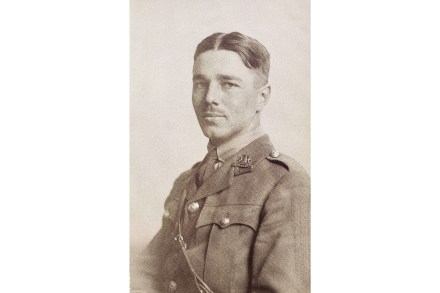
Here is the opening of a sonnet written by Wilfred Owen in the spring of 1911: “Three colors have I known the Deep to wear;/ ’Tis well today that Purple grandeurs gloom.” Owen was eighteen and had just been on a pilgrimage to Teignmouth in England, where his hero John Keats had once stayed. The kindest thing to say about this poem is that it is heavy with the influence of Keats. Six years later, in a seaside hotel requisitioned by the army and waiting to be sent back to the Western Front, he begins a poem like this: “Sit on the bed. I’m blind, and three parts shell.” This looks so simple. The monosyllables carry the meter without fuss; “shell” here means both munitions and protection.

Owen

The making of a poet: Wilfred Owen’s ‘autobiography’ in letters

From our UK edition

Here is the opening of a sonnet written by Wilfred Owen in the spring of 1911: ‘Three colours have I known the Deep to wear;/ ’Tis well today that Purple grandeurs gloom.’ Owen was 18 and had just been on a pilgrimage to Teignmouth in Devon, where his hero John Keats had once stayed. The kindest thing to say about this poem is that it is heavy with the influence of Keats. Six years later, in a seaside hotel requisitioned by the army and waiting to be sent back to the Western Front, he begins a poem like this: ‘Sit on the bed. I’m blind, and three parts shell.’ This looks so simple. The monosyllables carry the meter without fuss; ‘shell’ here means both munitions and protection.

A pure original: the inventive genius of John Donne

From our UK edition

Perhaps it was all because of his name. John Donne: for a poet this must have felt a little like destiny, and even in the most unlikely of moments he couldn’t resist making puns. He sat down to write a letter to the enraged father of the teenage girl he had just married in secret. A lesser man might have chosen to play this fairly straight, but not JD. ‘It is irremediably done,’ he wrote to his new father- in-law, and of course he spells it ‘donne’. His young bride’s family name was More; the jokes pretty much wrote themselves. The couple had 12 children and were, he later said, ‘undone’ by their marriage. It is difficult to read Donne and not to like him, at least some of the time.

Will’s world: Shakespeare as the man in the crowd

From our UK edition

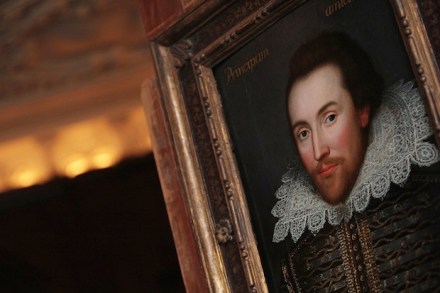
Shakespeare’s first biographer was the gossipy antiquarian John Aubrey, who famously described the playwright as ‘not a company keeper’. It has long been tempting to see him this way: Shakespeare the aloof genius, almost divine. There’s something chilly in this vision, and scholarly work on Shakespeare of the past few decades has increasingly tended to picture him in different kinds of company. Academic studies now routinely investigate Shakespeare as a member of a group of players, or trace his links to patrons, his family and his rivals. By now it is generally accepted that Shakespeare’s plays were collaborative; the scholarly squabbles are over how much and which bits of work his co-writers did.

What the sonnets tell us about Shakespeare

From our UK edition

When Romeo and Juliet first meet at a party, their words to one another fall into the form of a sonnet: an exchange of 14 lines, expressing mutual love and ending with a neat rhyming couplet and a kiss. It is a touching, haunting moment, and like so much in Shakespeare, it also has an opposite. A little earlier in the play, Juliet’s mother Lady Capulet tries to praise Romeo’s rival Paris, and describes the hapless Paris in a horrible string of six rhyming couplets (‘This precious book of love, this unbound lover,/ To beautify him, only lacks a cover’). These 12 lines fail as a sonnet, where Romeo’s and Juliet’s exchange succeeds. One love is complete and perfect, while the other is broken and false.

Killing time: the poetry of Keith Douglas

From our UK edition

Keith Douglas is perhaps the best-known overlooked poet. He died following the D-Day landings in 1944, and his Collected Poems were published in 1951, followed by a Selected Poems in 1964. ‘Now, 20 years after his death,’ wrote Ted Hughes in his slightly puffy introduction to that volume, ‘it is becoming clear that he offers more than just a few poems about the war.’ There was a thorough and clear-sighted biography by Desmond Graham in 1974, followed in turn by further editions: another Collected Poems, prose fragments, a memoir, and his surprisingly boring letters. Yet Douglas continues to be the kind of poet older writers like to present with a flourish as an insider tip: oh, you must read Keith Douglas.

The Dambusters raid was great theatre — but almost entirely pointless

From our UK edition

The great bomber pilot Guy Gibson had a black labrador with a racist name. This shouldn’t matter, except Gibson loved the dog, and its name was used as a codeword during the bombing raid which made Gibson famous, upon the Mohne and Eder dams in Germany in May 1943. The 1955 movie The Dam Busters retells the story of the raid in thrilling melodrama, and inevitably includes repeated mentions of the troubling name. Nowadays, when the film is broadcast, it either features a warning about offensive language or is shown in an edited version, with the dog’s name changed to ‘Trigger’. The raid on the German dams is an old and much loved military episode.

A man for all ages

From our UK edition

The deployment of Shakespeare to describe Brexit is by now a cliché. It might take the form of a quotation, be borrowed in a headline, or involve the name of one of the better-known characters; it might turn up in that most hollow of adjectives, Shakespearean. It has two possible modes. There is triumphalism drawn from the history plays: this sceptred isle, once more unto the breach. And there is tragic calamity: the betrayal by Brutus, Hamlet dithering. Nobody much invokes the comedies, perhaps because negotiations with the EU have not yet descended to cross-dressing.

Moonstruck

From our UK edition

In Shakespeare’s A Midsummer Night’s Dream, a group of slightly ramshackle workmen decide to put on a play. The play they choose — The Most Lamentable Comedy and Most Cruel Death of Pyramus and Thisbe — is famously and funnily terrible, as is their handling of it. Its central scene takes place at night, so they decide to dress up one actor with a lantern and a thorn bush: the idea is that light might shine through the thorns and convey the illusion of moonlight. This is an elegant solution, but Peter Quince, who is directing the scene, adds that the actor must explain to the audience that ‘he comes to disfigure, or to present, the person of Moonshine’.

Daydreams in the outback

From our UK edition

Gerald Murnane is the kind of writer literary critics adore. His novels have little in the way of plot or even character, and it is hard to tell the narrator from the writer, so that all his stories might be essays; his sentences are weirdly flat but interrupted occasionally by wild visions. Try this, for example: There in a room with enormous windows a man with a polka-dotted bow tie broadcasts radio programmes to listeners all over the plains of northern Victoria, telling them about America where people are still celebrating the end of the war. Where are we? Who can see the bow tie on the radio announcer, and did the war end recently or long ago? At the risk of a little racial profiling, this all sounds so odd that it has to be Australia, and Murnane himself is a perfect Australian type.

In a vale of tears

From our UK edition

Shakespeare’s Rape of Lucrece is a puzzling and often terrible poem. Lucrece, the devout wife of Collatine, is raped by Tarquin, the son of the king of Rome. Her suffering inspires a revolution led by Brutus, and this is the beginning of the first Roman republic. It’s a rich myth of sex and politics, and Lucrece’s (or Lucretia’s) story was told by Ovid and painted by Rembrandt. Shakespeare returns to the episode in several plays, notably Cymbeline. But in the poem, written in early 1594, he apparently struggles to find the emotion and drama. Perhaps he was simply young; this was early in his career, and he is still learning. Perhaps it was too pragmatic; the poem is an attempt to secure aristocratic patronage from the Earl of Southampton.

Shakespeare’s eerie genius

From our UK edition

‘What country, friends, is this?’ asks Viola at the start of Twelfth Night. She is shipwrecked and heartbroken; she does not know where she is, nor does she really care. Shakespeare is fascinated by strange places, and by how familiar places may become strange; how the world looks different if we look at it from an unexpected angle. But he also often returns to the opposite idea: that geographical and historical distance is ultimately trivial, and all places are the same. He sets a play in ancient Rome, but mentions a chiming clock. He sets a play in Venice, but none of the characters is aware of the canals. He is uninterested in difference. For Shakespeare, everything is here and now.

The changing face of battle

On War and Writing by Samuel Hynes is hardly about war at all. There is little about combat here, or the actual business of fighting and killing — what Shakespeare wryly called ‘the fire-eyed maid of smoky war/ All hot and bleeding’. Hynes is an august scholar of English literature and particularly the literature of 20th-century warfare. But he also served as a bomber pilot in the Pacific during the second world war, and has written an engaging, plain-spoken memoir of his service called Flights of Passage, published in 1988. His two vocations, he explains in the introduction to his new book, are ‘professor’ and ‘pilot’, and here the professor not the pilot is at the controls.

Telling stories

From our UK edition

John Burnside is the author of an impressive bookshelf of elegant novels and slim, precise volumes of poetry, and like all prolific writers he has certain repeated themes. Nicely, repetition is one of his themes. He writes of the tricks of memory, and the impossibility of perfectly recalling the past. He writes of absent fathers, often, and how they are remembered by their children. His poems sound like hymns, or the blues. ‘Before the songs I sang there were the songs/ they came from,’ begins his poem ‘Death Room Blues’, and ends: ‘I’m half convinced that childhood never happened.’ Burnside’s new novel Ashland & Vine is a story about telling old stories again, and never quite settling the truth of a childhood long past.

A losing streak

From our UK edition

In backgammon, a blot is a single checker, sitting alone and unprotected. This is a sly title for this sly novel (which was published in the US as the more literal A Gambler’s Anatomy). The hero, Alexander Bruno, is a single, exposed man, and a professional backgammon player. He also suffers from an eye condition: there is a floating blank space in his line of vision, which means that he cannot see that which he looks directly at. Lastly, as a term drawn from the specific vocabulary of the game, the title suggests Lethem’s deep interest in the conventions and insider language of obsessions and professions. As the novel opens, Alexander Bruno is on his way to play backgammon with a rich German industrialist in the outskirts of Berlin. On the ferry, he flirts with a German girl.

Fierce indignation

From our UK edition

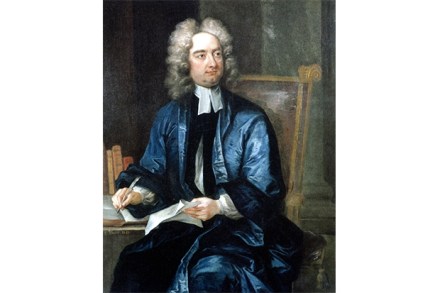
In an autobiographical note written late in his life, Jonathan Swift set down an astonishing anecdote from his childhood. When he was a baby in Dublin, he was put into the care of an English wet nurse, and one day she heard that one of her relatives back in England was close to death. Hoping for an inheritance, the wet nurse jumped on a boat back to Whitehaven in Cumbria, taking the infant Swift with her. ‘When the Matter was discovered,’ Swift wrote, ‘His Mother sent orders by all means not to hazard a second voyage, till he could be better able to bear it.’ So the wet nurse kept Swift in England for two or three years, and by the time he returned home, Swift recalled, he could read the Bible from cover to cover.

Listen with Mother

From our UK edition

Ian McEwan’s novels are drawn to enclosed spaces. There is the squash court upon which the surgeon plays a meticulously described game in Saturday, and the honeymoon suite in a little seaside hotel for the awkward newlyweds in On Chesil Beach. In Atonement, the mother is kept in her bedroom by migraines while her daughter (spoiler alert) dies in a bomb-hit Underground station, and in the famous opening to his early novel Enduring Love a child is carried away in the basket of a hot air balloon. ‘Certain artists in print or paint flourish, like babies-to-be, in confined spaces,’ he writes in his new novel Nutshell, which is — oddly but perhaps logically — narrated by a foetus from inside the womb.