Toby Young

Toby Young

Toby Young is associate editor of The Spectator.

My valiant attempt to defend the monarchy in Scotland

From our UK edition

One of the drawbacks of being a Tory peer is that when I’m asked to give a talk or participate in a debate I’m no longer offered a fee. Before I was ennobled, I could expect some honorarium, even if it was a cursory amount. But as a Conservative ‘politician’, I’m supposed to be grateful for any opportunity to thump the tub. So I almost always say no. But I agreed to speak in a debate at the Edinburgh Union because my youngest son is due to go to the university next year and I thought it would be a good opportunity for a father-and-son trip as well as a chance to introduce him to the city. I also wanted to support the Union, which, in spite of dating back to 1889, stopped prioritising regular debates after becoming the Edinburgh University Students’ Association in the 1970s.

Elon Musk to Clavicular: should we fear the manosphere? with Peter Hitchens & Toby Young

From our UK edition

40 min listen

For this week’s Edition, William Moore is joined by the Spectator’s associate editor and director of the Free Speech Union Toby Young, journalist and author Esther Walker, and Mail on Sunday columnist Peter Hitchens. This week: the men on the spectrum who rule the world. Charles Steel writes in the magazine about the wealthy, obsessive and often unconventional figures who increasingly shape politics and technology – from Elon Musk to the crypto billionaire Ben Delo. Is autism a useful way of understanding these men or has society become too obsessed with diagnosing people?

Elon Musk to Clavicular: should we fear the manosphere? with Peter Hitchens & Toby Young

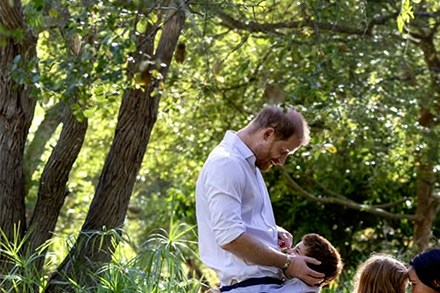
I’ve found the perfect school for Harry and Meghan

As the author of How to Lose Friends and Alienate People, I have to acknowledge that I still have some way to go to match the radioactive negativity Harry and Meghan generate with their every move. The Sussexes’ accumulated expertise in committing increasingly nauseating acts of hypocritical entitlement with every week that passes should qualify them both for a Regius Chair in Blithe Privilege at the University of Self-Regard. The latest episode in their narcissistic odyssey – The Sillyad – has been their agonising over where to send their children, Prince Archie and Princess Lilibet, to school. Harry and Meghan’s decision to educate them in England is, in its way, admirable.

Are you the next Glenda Slagg?

From our UK edition

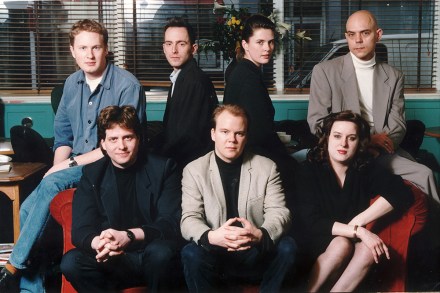
Thirty-five years ago this month, I launched a magazine with Julie Burchill and Cosmo Landesman that, despite going belly up four years later, had quite an impact. The Modern Review, edited by me, published long, scholarly articles about icons of 1990s pop culture like Arnold Schwarzenegger, the Spice Girls and Noel Edmonds – our motto was: ‘Low culture for highbrows.’ Today that doesn’t sound particularly remarkable, but such material was then considered below the salt and insofar as the broadsheets covered it at all, was the object of humorous disdain. The fact that mass culture is now taken more seriously by critics – too seriously, some would say – is partly due to the influence of the Modern Review.

The Jason Arday review already knows who to blame

From our UK edition

In case you were in any doubt that Cambridge University’s ‘independent review’ into the Jason Arday affair will blame the media for his death, the appointment of Nazir Afzal OBE as chair confirms it. The former chief crown prosecutor for north-west England is no friend of press freedom. ‘Hate Speech is NOT Free Speech,’ he tweeted in 2024. It’s a racing certainty that his report will spare the blushes of the Cambridge authorities and call for a public inquiry into Britain’s out-of-control newspapers and magazines. ‘I do not shy away from using the terms “institutional racism”, “institutional misogyny” and “institutional homophobia”,’ he told MPs after his independent review of the London Fire Brigade in 2024.

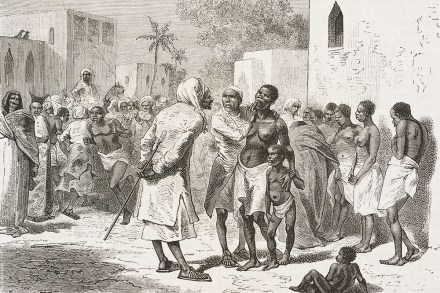
What Zanzibar could teach the C of E about slavery

From our UK edition

I have a suggestion for those opposed to Project Spire, the Church of England’s plan to put £100 million into an investment fund to benefit those communities ‘affected by historic slavery’. Bear in mind that none of the arguments against it has had an impact to date. Suggesting that this money would be better spent repairing roofs and stained-glass windows has left the Church Commissioners unmoved. Trying to assuage their guilt by pointing out that the Church’s financial investment in the transatlantic slave trade was negligible – and yielded a loss, not a profit – also falls on deaf ears. So why not club together and pay for a trip to Zanzibar instead?

Bring back the privileged class

From our UK edition

It has become a summer ritual for the Young family to attend the annual tennis tournament in Hunstanton, a Victorian seaside town in Norfolk. Normally a minor stop on the amateur circuit, it was elevated to number three in the county earlier this year on account of the quality of its grass courts. For some reason, they have suffered less than most from the drought, although they looked pretty threadbare to me. Separately, it is graded 5/6 by the LTA. About ten years ago, Caroline entered the ladies’ doubles and, because she was partnered by her tennis coach, took home a cup. It’s been downhill ever since, with the young Youngs making less progress each year as they’re forced to compete in older categories.

Madeline Grant, Harry Mount, Freddie Heffer & Toby Young

From our UK edition

20 min listen

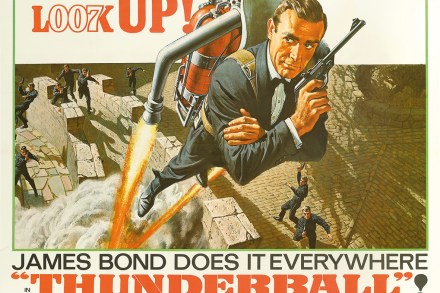
On this week’s Spectator Out Loud: Madeline Grant argues that the debate about the direction of James Bond mirrors Britain’s decline; Harry Mount makes the case for scrapping dinner parties; Freddie Heffer provides his notes on mulberries; and finally, Toby Young says that friendly fire hurts the most, as he reflects on the fallout from the Jason Arday scandal. Produced and presented by Patrick Gibbons.

Madeline Grant, Harry Mount, Freddie Heffer & Toby Young

Ghent university shouldn’t have suspended Nathan Cofnas

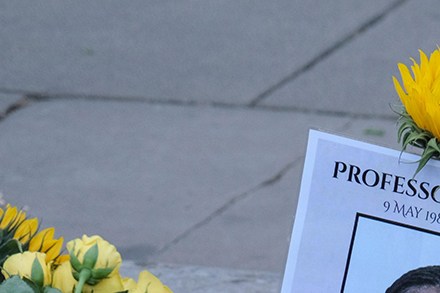
It is ironic that the ‘be kind’ brigade beating their breasts and wailing about the 'lynching' and 'assassination' of Jason Arday think the appropriate response is to whip up hatred against Nathan Cofnas, the scholar who exposed Arday's academic misconduct. At the vigil for Arday at Trafalgar Square on Sunday, several speakers singled out Cofnas for blame, including Diane Abbott MP, who described him as a ‘racist’. Nathan contacted me shortly afterwards worried that he risked being murdered if he set foot in London.

The horror of when your own side turns on you

From our UK edition

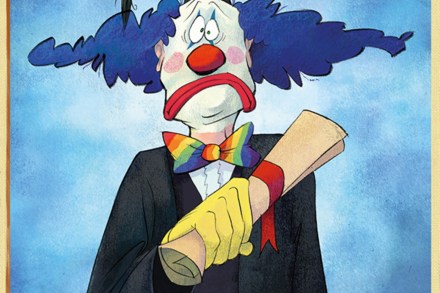
Should I regret writing a satirical piece for this magazine about Jason Arday? Yes, according to those who blame the ‘right-wing media’ for his death. A petition started by Jolyon Maugham this week calling for a public inquiry into the ‘press harassment’ of Arday has gained more than 100,000 signatures. A letter from Dawn Butler MP to Ipso urges the independent press regulator to use ‘every available lever’ to take ‘decisive action’ against the Times, Telegraph, Mail and Spectator. Alan Rusbridger, the former editor of the Guardian, has named me as a particularly egregious offender, while the novelist Will Self has called for the journalists who exposed Arday’s wrongdoing to be prosecuted.

‘It’s a cesspool!’ — What’s going wrong in Britain’s universities?

From our UK edition

52 min listen

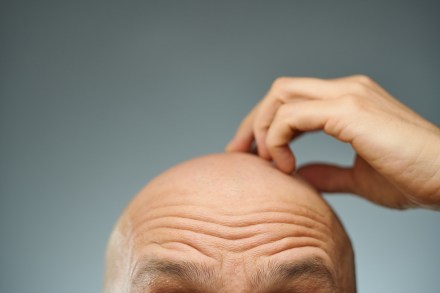
William Moore is joined by The Spectator’s associate editor Toby Young, commissioning editor Lara Brown and newsletter editor and restaurant critic Angus Colwell. This week: What has gone wrong with British universities? Lara unpacks the wider academic crisis in the wake of the Jason Arday scandal, from ‘surviving the apocalypse’ courses at Warwick to maths departments promising to ‘decolonise’ the subject. Has the sector lost its nerve? Also: Balding. Toby explains why he’s trying to talk his three sons out of hair transplants, while Angus and Lara weigh in on whether men vastly overestimate the importance of their hair on the dating market. Plus: is Indian the best cuisine?

‘It’s a cesspool!’ – Jason Arday & the death of Britain’s universities

Is it time for a hair transplant?

From our UK edition

My father, Michael, who was a sociologist among other things, was once asked by a drug company to do some market research into a pill it was developing that could change skin colour from black to white. The company hoped it might go some way to tackling racial prejudice. After Michael interviewed some prospective customers in south London, he concluded there wouldn’t be much demand. The problem, they told him, was that it would leave their features unchanged so they’d end up looking like albinos – and there was no reason to think they’d experience any less racism. On balance, they’d prefer to remain as they were. As a bald man, I’ve always felt the same way about hair transplants.

Lucy Powell is comically misinformed about education

From our UK edition

Lucy Powell was reportedly Andy Burnham’s third choice for Education Secretary after Rachel Reeves and David Miliband turned it down – and judging from her recent intervention in the education debate, it’s not hard to see why. Her claim that a million young people are not in education, employment or training (Neets) as a result of Michael Gove’s ‘one-size-fits-all’ education reforms is almost comically misinformed. To begin with, the reforms she’s referring to – turning the majority of English state schools into academies, increasing their autonomy and, at the same time, making them more accountable – began with the Education Reform Act 1988, which ushered in City Technology Colleges, a forerunner to academies.

I could never dislike Rod – even when he threatened to punch me 

From our UK edition

I remember being in The Spectator’s offices on a Tuesday afternoon not long ago when I noticed a group of staffers clustered round a computer screen. One let out a guffaw of laughter, followed by another, then another. People sitting nearby demanded to know what was so funny and someone started reading it out. Before long, the entire room was roaring with laughter – proper, hysterical, uncontrollable laughter. Rod Liddle had filed his column. I was envious, obviously, but also laughing with everybody else. Rod was one of those writers it was impossible to dislike, however successful he became, because reading him gave you so much pleasure. That was true even if you didn’t share his politics, provided you had a sense of humour.

Professor Arday is the gift that keeps on giving

From our UK edition

Are congratulations in order for Sacha Baron Cohen? The more I read about Jason Arday, the Cambridge sociology professor and DEI poster boy caught up in a plagiarism row, the more convinced I am he’s the comedian's greatest creation.  Arday’s academic career, like his athletic achievements, reads like a fairy tale First, there's the over-the-top back story. He claimed to have been totally mute until the age of 11 – having been diagnosed with autism – and unable to read or write until he was 18. Yet in spite of these disadvantages, he earned a PhD by the time he was 30 – which he managed to complete while suffering from a brain tumour! On the face of it, utterly incredible.

Won’t someone please think of the French wine?

From our UK edition

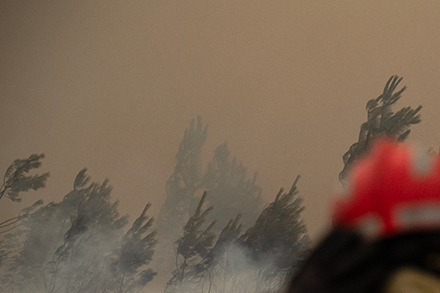
There was something surreal about my visit to La Cité du Vin, Bordeaux’s wine museum, last Saturday. From the top floor, with its panoramic view of the city, you could see the smoke from the Gironde wildfire turning the sky yellow, yet none of the staff seemed remotely concerned. This was in spite of the fact that the conflagration had already triggered France’s largest evacuation since the second world war and was getting closer to Bordeaux every hour. OK, maybe they thought it unlikely they’d be asked to leave their homes, but weren’t they worried about the region’s vineyards? These people worked at a museum dedicated to celebrating wine, for Christ’s sake.

The dangers of policing misinformation

From our UK edition

When Steve Reed, the now ex-communities secretary, unveiled his social cohesion ‘action plan’ earlier this year, he promised to publish an ‘evidence review’ on ‘the impacts of misinformation’. Commissioned by the government’s chief scientific adviser, it would focus on ‘how to measure the problem, assess harms and counter and mitigate these harms’. That report has now been published and the headline finding is that ‘anti-LGBTQ+ narratives’ – such as claiming that state schools and other public authorities have been captured by gender ideology, and questioning whether biological males should be allowed to compete in women’s sports – are examples of misleading and false information that cause harm, alongside climate denial and deepfake images.

I’m sick of ‘plastic’ football fans

From our UK edition

Last week I watched a clip of Ian Wright explaining why it meant so much to him, as a black former player, that Jude Bellingham is uninhibited about revelling in his achievements. In the past, he said, some black players had been criticised for being too cocky, as though they’d forgotten their place. So he was pleased that it is now completely acceptable for a black player to strut around with a bit of swagger. I can see his point, but I also thought: why do you have to racialise this remarkable young player? Can’t we just celebrate him as an Englishman? England’s progress in the World Cup is one of those moments in which we’re supposed to set our differences aside and come together.

Confronting the climate Jeremiahs

The problem with being a well-known climate sceptic is that whenever there’s a heatwave, you get buttonholed by eco-zealots who think it ‘proves’ they’re right and you’re wrong. The first person to confront me during the current sunny spell was a Guardian journalist at a right-wing conference, which the newspaper had clearly identified as a hotbed of ‘denialism’. It didn’t help that the air conditioning wasn’t working and it was approaching 40°C in the main auditorium. ‘I see you’re sweating profusely,’ he began, shoving a microphone in my face. ‘Still think climate change is a hoax?’ I had to patiently explain that few people on my side of this debate deny that climate change is real.