Richard Walker

Richard Walker is a former Financial Times foreign correspondent.

Is private equity secretly running your life?

Did you know that a secretive thing called private equity owns almost 10 per cent of the UK economy? Did you know that it controls the jobs of several million people and may well own your local hospital, water supply, children’s school or even your home? No? Here is a book that aims to straighten you out on all that. Private equity is one of those things that you either know about or don’t. If you are in the finance business you know, because it is the story of the past quarter century. If you are not in that world, if leveraged buyouts and limited partners and debt pushdowns are all just so much business-page noise, then you are in the majority. And it turns out that means you may not know who is really running your life.

Sudan: coup, what coup?

From our UK edition

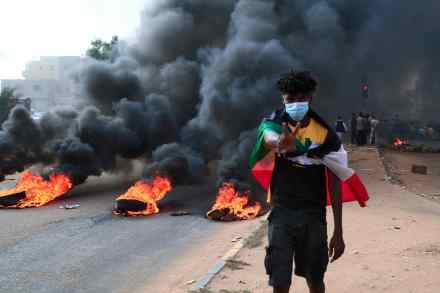
Sudan’s army has just dissolved the government, dismissed the prime minister and declared a state of emergency. That certainly sounds like a coup — but it’s not, unless you count the army taking over from itself as a coup. The two uniformed power brokers who effectively controlled Sudan last week (a regular soldier called General Burhan and an opportunistic warlord lieutenant general Hamdan) still control the country this week. My Oxford English Dictionary defines a coup as a ‘sudden and decisive stroke of state policy’ and also as ‘a finishing stroke.’ Sudan’s coup that is not a coup was neither sudden nor decisive.

Poverty + anarchy + drug dollars = Mexico

From our UK edition

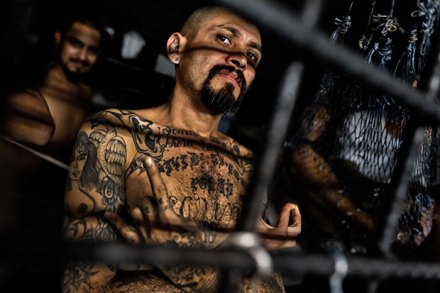
You may not have heard of the Maras. Or Barrio 18. Or the Jalisco New Generation Cartel, or the Zatas, or the Knights Templar, or the Shower Posse. But you should have heard about them, says Ioan Grillo in his new book about transnational drug and crime gangs, because any one of them may have played a profitable and blood-drenched role in bringing you not only your weekend baggie of recreational powder, but also the gold in your earring, the lime in your gin and tonic, the avocado in your salad and even the steel in your Volvo. These ‘gangster warlords’ are the new century’s international mafias. They originate in Central America, Mexico and the Caribbean, although now they have trading subsidiaries everywhere from Bombay to Brixton.

The real mystery is how it got published

From our UK edition

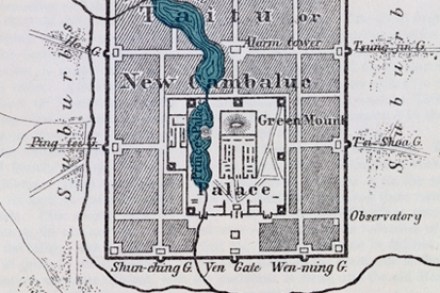
As a boy I spent quite a lot of my free time trying to fake up ancient-looking documents. This hopeless enterprise involved things like staining paper with tea or vinegar, together with plenty of burning, and creasing, and copying of random texts with a scratchy old inkwell pen. Typical silly small boy stuff. Reading this book on a collection of maps supposedly derived from Marco Polo suddenly brought it all back — especially the silliness. Now Marco Polo is a figure wreathed in some mystery. He was known from the 14th century as the first European to report in detail and from personal experience on that fabulous world called ‘Cathay’, the land of the fabled Kublai Khan. But many have asked if what he reported was true. Did Marco Polo really visit China?

Sudan was always an invented country. Maybe we should invent it again

From our UK edition

Sudan — a country that ceased to exist in 2011 — is or was one of the last untouristed wildernesses on earth. And for good reason: while it still existed it was the biggest country in Africa, a mainly flat and uninhabitable wasteland, mostly brown, with barely a mountain or a bosky valley to its name, unbearably hot, unhealthy, poor, and full of every sort of trouble. And yet … The author of this new book on what are now the two Sudans — the country has voluntarily split into two lesser states — says that this is one of the world’s most interesting places. That is true. As anyone who has spent time there will tell you, the Sudans (as we must now call them) both north and south exert a fascination.

Hope for one of the most turbulent, traumatised regions in the world

From our UK edition

John Keay’s excellent new book on the modern history of South Asia plunges the reader head first into some wildly swirling currents. Here are India, Pakistan, Bangladesh, not to mention Sri Lanka and Nepal, and a supporting cast of mini-states present and past that you may not even have heard of, all tumbling, overlapping, in a state of perpetual contradiction and collision, flowing like a tide of crazed tsunami debris down some great tropical floodplain. This is the world’s biggest population zone, and possibly even the world’s coming economic superpower, in full and violent flow. Midnight’s Descendants is primarily about the partition of India, the moment in 1947 that initially created independent India and a new state called Pakistan.

The pirate myth

From our UK edition

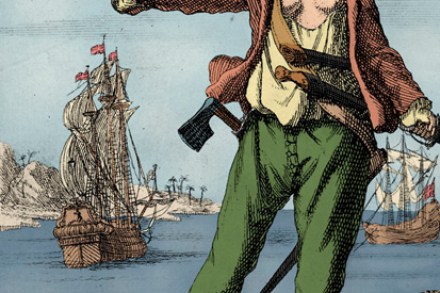
Hear the word ‘pirate’ and what picture springs to your mind? I see a richly-bearded geezer in a tricorne hat and a frock coat, with a notched cutlass and bandolier stuffed with pistols. Never mind the real-life pirates of our present day, the maritime robbery-and-kidnap specialists of Somalia and West Africa — they are all too recent to have generated sufficient fiction for us to draw on. Our common pirate is like the zombie, the vampire, the robot — a creature of the imagination, coming to us via Robert Louis Stevenson, J.M. Barrie and Johnny Depp. But where did he come from, really? He or she, that is.

Bookends: Cycle of pain

From our UK edition

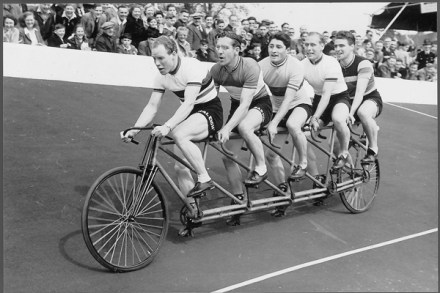
Reg Harris by Robert Dineen (Ebury Press, £16.99) is about a man who was once Britain’s number one athlete: a professional cycle track sprinter who dominated the worldwide sport for 15 years. And what is cycle track sprinting? It is racing on a prepared track with one or more opponents. It is also a form of torture. A great road race held over days or weeks, like the Tour de France, has been described as a Calvary. But track cycling is definitely torture. Like torture, the tools are simple but the variations are infinite. Like torture, it is a psychological contest. Like torture, the inner scars are indelible. The leading exponents of this cruel craft were traditionally French, Belgian, Dutch and Italian.