Culture

Culture

The good, the bad and the ugly in books, exhibitions, cinema, TV, dance, music, podcasts and theatre.

Brother against brother in the English civil war

More from Books

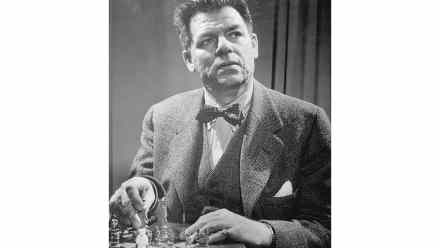
‘The Wars of the Three Kingdoms’ is the best description of the devastating conflict that erupted in England, Ireland and Scotland during the 1640s and 1650s. While Britain lost 2.2 per cent of its population in the first world war, 4 per cent perished during these terrible 17th-century clashes. The kingdoms were, at the outset, Charles I’s. At a time when even a great leader would have struggled to navigate the political, religious and social torrents confronting him, the king was weak and apt to act on the latest advice he received; his only strengths were piety, art patronage and being a loving husband and father. When a ruler of energy and charisma was desperately needed, Charles was happiest reading the Bible or playing chess or lawn bowls.

The real Norfolk: Stewkey Blues, by D.J. Taylor, reviewed

More from Books

D.J. Taylor is a Norfolk native who, un-usually, has stayed put. These stories, written during the pandemic, are all set in that county, though the author is largely uninterested in its more fashionable acreage – the strip of coast so popular with Sunday supplements and London owners of second homes. He writes instead about the ‘other’ Norfolk, which is comparatively unmonied, flat as a map, and barely gets a look-in from the SUVs speeding north. Most of these stories feature men, often young men, though in ‘New Facts Emerge’ a harried City businesswoman finds her Christmas plans imperilled by the obstructions of a sexist superior. She finally snaps when the colleague’s soullessness and the grind of the commute from Diss push her past breaking point.

Reflections on water in the Middle East

More from Books

These Bodies of Water begins dramatically (as befits a book derived from Sabrina Mahfouz’s Royal Court show A History of Water in the Middle East) in a stuffy little room in Whitehall where the author is being interrogated by a man in a beige mac who is vetting her for top security clearance. It all sounds a bit James Bond, except that Mahfouz is more like an ‘Egyptian Guyanese Nancy Drew’, as a boyfriend joked – extremely unusual in the civil service fast stream as a woman, working-class and Middle Eastern (her father is Egyptian, her mother is Guyanese-British). While her peers laugh off questions like ‘Have you ever had sex with an animal?’, Mahfouz finds herself ‘existing purely in opposition’ for the first time in her life.

The lonely genius of Bronislava Nijinska

Lead book review

Even in her lifetime, people had a habit of overlooking the talent of Bronislava Nijinska. Her famous brother Vaslav Nijinsky initially refused to recommend her to his lover Sergei Diaghilev when the impresario was signing up dancers for the 1909 Paris season of Ballets Russes. He didn’t introduce her to his friends, either and – in what can only be seen as an act of cruelty – took away her roles in the ballets she had helped him create. Diaghilev himself, whom she regarded as a father figure, treated her with something like disdain, declaring: ‘I cannot have two geniuses of the dance from one family’, and asked her to dye her hair red ‘and dress more like a ballerina’.

The danger of learning too much from Covid

More from Books

When Ray Bradbury was asked if his dystopian vision in Fahrenheit 451 would become a reality, he replied: ‘I don’t try to predict the future. All I want to do is prevent it.’ In the hot embers of the Covid-19 pandemic, it may not be enough to foresee infectious disease threats if we lack the ability to forestall them. After all, predictions were made about 2019. In a Ted talk four years earlier, Bill Gates warned about what he later called ‘Disease X’, a respiratory disease that would cause millions of fatalities. Devi Sridhar, a professor of public health at the University of Edinburgh, addressed the Hay Festival in 2018 with an uncanny description of a zoonotic virus from China that could spread across the globe.

Is Anna Wintour human?

More from Books

Apparently Anna Wintour wants to be seen as human, and Amy Odell’s biography goes some way to helping her achieve that aim. Nearly all the photographs show her smiling, looking friendly, even girlish. And the text quite often mentions her crying. On 9 November 2016 she cried in front of her entire staff because Hillary Clinton lost the election. But then she immediately set about trying to persuade Melania Trump to do a Vogue shoot. Melania, another tough cookie, refused unless she was guaranteed the cover. Dame Anna has been the editor of American Vogue since 1988 and holds a position of extraordinary power in the fashion world. Designers, photographers, models and celebs tremble to obey her whim.

Operation Chariot succeeded because it was unthinkable

More from Books

Eighty years ago, just after midnight on 28 March 1942, the British destroyer HMS Campbeltown crept up the estuary of the River Loire towards the heavily defended port of St Nazaire. Here lay an immense dry dock, the only facility on the west coast of France that German battleships such as the ferocious Tirpitz could use if they needed repair. Destroy the dock, and Tirpitz would be unable to sortie against the Atlantic convoys supplying Britain. The only way to do that, however, was to wreck the lock gate at the entrance. And that meant filling a ship with explosives, ramming it into the gate and blowing the whole lot up, while commandos jumped ashore to demolish the pumps, the winding gear and anything else they could.

Travels in time and space: Sea of Tranquility, by Emily St. John Mandel, reviewed

More from Books

It’s a bold writer who confronts a major historical moment such as a pandemic before it’s over, but Emily St. John Mandel has a claim to fictionalised outbreaks. Her 2014 novel Station Eleven presciently envisioned a devastating flu. That book was televised by HBO and became a major hit, and this latest touches on the same ground. As J.G. Ballard proved, revisiting a subject – as a painter might – can be a fertile approach in speculative fiction. Sea of Tranquility initially adopts a time-leaping structure reminiscent of David Mitchell’s Cloud Atlas (which itself sprang from Italo Calvino’s masterpiece If On a Winter’s Night a Traveller). In 1912, we meet a young English aristocrat exiled to Canada for his radical views.

The history of Nazism in small objects

More from Books

‘I can’t cook,’ writes the historian Karina Urbach, ‘which is probably why it took me so long to realise that we had two cookbooks on our shelf at home with the same title’ – a 1938 edition by her grandmother Alice and one from the following year attributed to Rudolf Rösch. When she did notice, however, it provided a key to unlocking some fascinating family history and a little known strand of Nazi persecution. In 1920 Alice Urbach was living in her native Vienna, ‘a 34-year-old widow with no money’. Her husband had proved a feckless gambler and her father, disappointed by her lack of ambition, had virtually cut her out of his will. Yet she found a way of turning her life round.

The sad fate of Edna St Vincent Millay – America’s once celebrated poet

More from Books

In June 1957, Robert Lowell attended a poetry reading by E.E. Cummings. Sitting dutifully and deferentially alongside him were Allen Tate, W.S. Merwin and his wife Dido and the classical scholar William Alfred, ‘while Cummings read outrageous and sentimental poems, good and bad of both kinds’. They were not alone: ‘About eight thousand people listened.’ But you can tell from Lowell’s adjectives – ‘outrageous and sentimental’ – that Cummings’s reputation is already on the slide. Edna St Vincent Millay’s diaries record a reading in Waco on 10 January 1930: ‘In spite of icy streets, really dangerous & cold weather, abt. 1500 people present.

The unbearable brutality of the Bolsheviks

Lead book review

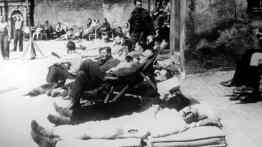
For far too long,’ Sir Antony Beevor writes, ‘we have made the mistake of talking about wars as a single entity.’ In Russia: Revolution and Civil War he sets the record straight for the bitter years between 1917 and 1921, revealing the myriad ways in which individual actions constellated and 12 million people perished. This is not a story about winners and losers. As the war correspondent Martha Gellhorn once wrote about every conflict everywhere: ‘There is neither victory nor defeat; there is only catastrophe.’ It seems wrong to categorise this book as military history. It is like reading a film. Typhus-bearing lice in hospitals at the front are so abundant that they crunch under nurses’ feet ‘like sugar’.

My Sally Rooney conversion

I tried to dislike the writing of Sally Rooney. But I failed. I retain some resistance to Sally Rooney the cultural phenomenon, because this is largely about television adaptations of her books, which can only accentuate the negatives. I have an old-fashioned view of these things: only literature can represent a glamorous world with nuance, real satire, barbed detachment; the interiority of writer and reader is a counterweight to the allure of worldly things.  The adaptation of her first novel, Conversations With Friends, which begins this weekend, is unlikely to challenge my view. It might, for example, attempt to show that Nick is vain and selfish as well as handsome and amazing at sex, but handsome and amazing at sex will win.

Patterns in the grass: The Perfect Golden Circle, by Benjamin Myers, reviewed

More from Books

The Perfect Golden Circle is ostensibly about male friendship. Two men, flotsam of the 1980s – Calvert, a Falklands veteran, and Redbone, a failed punk musician – tramp across the English countryside in 1989 making crop circles. ‘Redburn sees life as a thrilling continuum, Calvert considers it a conundrum that can never be solved, only endured.’ How these outcasts met, or what drew them to each other apart from poor personal hygiene, is never made clear. Like two feral Hobbits, they rattle about the dystopian and degraded shires of an England in the death throes of the Thatcher era, making ever more elaborate crop circles. The reader is informed, not infrequently, that Calvert suffered trauma during the Falklands war.

Fresh air and fascism in the Bavarian Alps

More from Books

The village of Oberstdorf lies in the Bavarian Alps, geographically remote but, as this gripping book demonstrates, deeply etched by the politics and violence of the Third Reich. Julia Boyd and Angelika Patel have used diaries, letters, newspaper reports and the official papers of Oberstdorfers as a lens through which to look at the rise of Nazism in Germany. The result is a fascinating and often surprisingly discordant cacophony of experiences. Oberstdorf was a small village but it had a wide range. By the early 1920s it was a favoured tourist spot: its population of 4,000 was swelled to 9,000 by visitors who came for health cures and winter sports. There were several hotels, a cable car, a cinema and a sanatorium.

Is Donald Trump postmodern?

More from Books

David Shields is an American author who has decided to collate many of the questions he’s been asked in interviews and reprint them – without any of his answers – under themes of Childhood, Art, Envy, Capitalism etc. The idea is that the questions put to him are just as revealing as his responses. This is a gimmick, but not merely that. To map how others interrogate us is an original idea. It follows that the best way of testing whether this works for the length of a book, even one as short as this, would be for the book to be reviewed by someone who had no prior knowledge of Shields. In this, I’m your man. My ignorance of him was immaculate – and I’ve kept it that way, for the duration.

Light and shade in the Holy Land – a century in spectacular images

Lead book review

Roger Hardy is a romantic. That much I deduce from the language he uses to describe how photographers were drawn to the special quality of light in Palestine. Their images, he writes, ‘capture the play of light and shade on the limestone walls of Jerusalem’s Old City, the glistening watermelons on sale at open-air markets, the white apartment blocks of the new metropolis of Tel Aviv, the dusty rubble of houses blown up by soldiers during the rebellion of the 1930s’. The last few words reveal a steely realism, too, a quality developed, no doubt, during the more than 20 years he worked as a Middle East analyst for the BBC World Service.

A botched coup: the desperate Cato Street conspiracy

More from Books

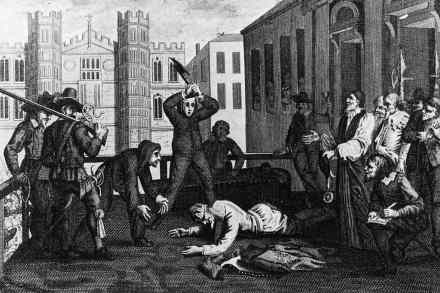
Almost half of the terrorists hadn’t even turned up. Still, on the night of 23 February 1820, 25 men, including a butcher, several shoemakers and a cabinet maker, met in a hayloft on Cato Street, just off the Edgware Road in central London. Led by the semi-respectable son of a tenant farmer, Arthur Thistlewood, their plan was to assassinate the prime minister Lord Liverpool and his cabinet, who were thought to be dining together at the Grosvenor Square mansion of Lord Harrowby, the president of the privy council.

Messy family matters: Bad Relations, by Cressida Connolly, reviewed

More from Books

Cressida Connolly’s new novel begins with a couple of endings. It’s spring 1855, and on the battlefields of the Crimea William Gale is mourning the deaths of his brother Algernon and his friend Mr Lockwood. He writes to his wife Alice, who back home has befriended the progressive Dr Nolan, and asks her to call on Mrs Lockwood in Cheltenham. Upon returning from the war a medalled hero, William isn’t himself, and after meeting the ‘good lady’ widow and her two little girls, Molly and Kitty, he makes a rash decision that reverberates across generations. It’s hard not to play favourites with a novel divided into three fairly distinct parts, and I admit I would happily have spent all 280 pages of Bad Relations in Part Two.

A bitter sectarian divide: Young Mungo, by Douglas Stuart, reviewed

More from Books

Douglas Stuart has a rare gift. The Scottish writer, whose debut novel Shuggie Bain deservedly won the 2020 Booker Prize, creates vivid characters, settings and images without letting his literary skill get in the way of plot. His second novel, Young Mungo, has a similar feel and is in many ways a kind of sequel. The characters are different, as is the Glaswegian housing scheme and the year – we are now in 1993 rather than the 1980s – but the milieu is familiar. The protagonist, Mungo Hamilton, is a frail, fatherless 15-year-old, but appears much younger. His complexion, vocal tic and poor-fitting clothes lead people to think he’s ‘thirteen, tops’.

Snafu at Slough House: Bad Actors, by Mick Herron, reviewed

More from Books

Reviewers who make fancy claims for genre novels tend to sound like needy show-offs or hard-of-thinking dolts. So be it: here’s mine. Anyone who tries to understand modern Britain through its fiction but overlooks Mick Herron’s satirical thrillers merits a punishment posting to the critics’ version of Slough House. That noxious midden of a building opposite the Barbican, its leprous chambers groaning like ‘the internal organs of some giant, diseased beast’, is a sort of landfill site for failed spies. Herron first opened its flaking doors in 2010 with his novel Slow Horses. Seven books later, his squad of borderline sociopath rejects from polite espionage has risen to the dignity of a luxury cast series on Apple TV+.

A meditation on exile and the meaning of home

More from Books

What does home mean? Where your dead are buried, as Zulus believe? Or where you left your heart, as a migrant’s saying goes? In these pages William Atkins melds history, biography and travel into a meditation on exile and the meaning of home. It is a volume for our times, as the author seeks to reveal ‘something about the nature of displacement itself’. Part One introduces the three 19th-century political exiles who form the spine of the book. Louise Michel (1830-1905), the illegitimate daughter of a maid in Haute-Marne, became an anarchist and Communard, who murdered policemen with her Remington carbine. Dinuzulu kaCetshwayo (1868-1913), the young king of the Zulu nation, took up arms to resist southern Africa’s colonial overlords.

What the Marxist Tariq Ali gets wrong about Winston Churchill

More from Books

Tariq Ali, the Marxist writer and activist, believes that a ‘Churchill cult’ is ‘drowning all serious debate’ about the wartime leader, and that ‘an alternative was badly needed’. He has therefore written a book that parrots every earlier revisionist slur about Churchill – war criminal, evil imperialist, mass murderer, pro-fascist – from detractors such as Caroline Elkins, Priya Gopal, Richard Gott, David Irving, Madrushee Mukerji, Clive Ponting, Richard Toye and Geoffrey Wheatcroft. If there were indeed a Churchill cult, it has done a singularly bad job of drowning out criticism of its hero.

Will the bad luck of the Philippines ever turn?

More from Books

The Philippines is the odd man out in Asia, a predominantly Catholic country colonised first by Spain, then the United States. An archipelago with more than 2,000 inhabited islands on the cusp of the Indian and Pacific oceans, its strategic location is obvious. Yet it receives scant coverage in the British media beyond its natural disasters, the flamboyance of its leaders, whether Imelda Marcos or Rodrigo Duterte, and its long-running Marxist and Muslim insurrections. On a more mundane level, our encounter with its people will most likely be through the care they provide within the NHS. Philip Bowring, a former editor of the Far Eastern Economic Review, for many years the outstanding English-language magazine on Asia, provides a much fuller picture. His book divides into two parts.

Gardening’s bad girl: the genius – and malice – of Ellen Willmott

More from Books

In October 1897, the grandees of the Royal Horticultural Society gathered to bestow their highest award, the Victoria Medal of Honour, struck to commemorate the Queen’s Diamond Jubilee, to 60 of gardening’s greatest luminaries. For the first time, these included two women. One was Gertrude Jekyll, known by all as the Queen of Spades; the other was the 39-year-old Ellen Willmott. But Willmott did not turn up. This public snub was the beginning of her reputation as ‘gardening’s bad girl’, as Sandra Lawrence puts it, one that increased exponentially until it exploded in stories of daffodils being booby-trapped to deter bulb thieves.

Disregarded for decades, Jean Rhys stayed true to her vision of life

Lead book review

Jean Rhys, who died at the age of 88 in 1979, lived to be forgotten and rediscovered. Like many readers, I first came across her through her novel Wide Sargasso Sea, which imagines the pre-history of Jane Eyre’s ‘madwoman in the attic’, the Creole heiress married off to Mr Rochester and then incarcerated by him at Thornfield Hall. When it came out to great acclaim in 1966, it marked the rebirth of a writer who hadn’t published a book for more than a quarter of a century and who had even been presumed dead.

The pacifists of the 1930s deserve greater understanding

More from Books

As I’ve occasionally come to think is the case with The Spectator, this book is perhaps best begun at the back. Otherwise it might be taken for niche history – applied historical moral philosophy, say, or an aspect of ‘the people’s war’ usually overshadowed by the manifest imperative to defeat the unparalleled evil of Nazism. That evil, concludes Tobias Kelly, professor of political and legal anthropology at Edinburgh, has indeed ‘become the frame through which we seem to assess all evils’; but ‘the spectre of appeasement has also reared its head too often’.