Oliver Balch

When did you last see your siblings?

From our UK edition

I recently arranged to have dinner with my brother and sister. No big occasion. Just a casual pub meal on a normal weeknight. As the eldest, my sister naturally chose the venue. As the youngest, my brother kept us entertained. Me, the middle child, I mostly sat and listened. It was fun. We caught up on news, reminisced, laughed and, true to form, studiously avoided any old hurts. As Catherine Carr reminds me in this lively and revealing book on the ins and outs of siblinghood, these two people have known me longer than almost anyone on the planet. When my parents pass, no one but them will understand what I mean by ‘guggy’ (a ragged baby blanket that never left my side) nor recall the giddy excitement of spending our sweetie money after Sunday morning swimming.
The wolf as symbol of European anxieties

From our UK edition

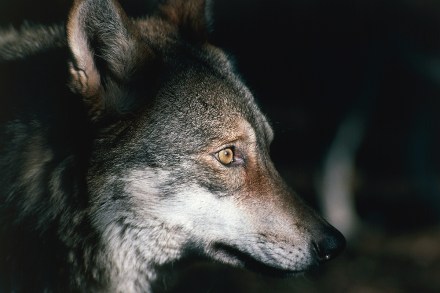
On 19 December 2011, at around 3.30 a.m., a young wolf in the mountains of southern Slovenia trots away from his pack and never looks back. For the next 90 days or so, Slavc (after Slavnik, the mountain of his home) lopes onwards, hardly stopping, fording fast rivers and traversing high passes, until at last, having cut a horseshoe loop through Austria, he crosses into Italy and stops in the picturesque Alpine plateau of Lessinia. More than a decade later, Adam Weymouth follows in the same wolf’s padded footsteps. For Slavc, this is a journey into a landscape of confusing novelties, full of motorways and noise and anti-wolf country folk. Head down, a passing shadow in the night, he moves forwards, like ‘a ship sailing off the world’s edge’.

Freedom fighters of the ‘forgotten continent’

From our UK edition

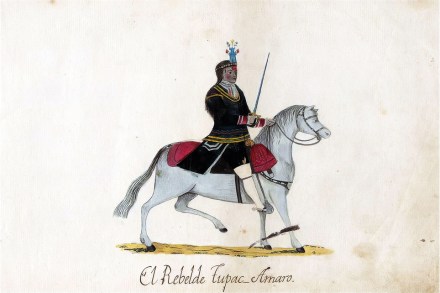
On 18 May 1781, Tupac Amaru II’s rebellion came to an abrupt and grisly end. Seized by Spanish forces, the Peruvian muleteer-turned-popular-revolutionary knew the game was up. Still, he refused to go quietly. After Tupac’s captors’ horses failed to wrench off his limbs, the executioner reached for his axe. ‘You kill only me,’ legend has Tupac shouting as the blade descended. ‘But tomorrow I will return as millions.’ As Laurence Blair’s Patria assiduously demonstrates, death rarely has the last word in the ‘forgotten continent’ of South America. In the case of Tupac, his narrative of a ‘Peru for Peruvians’, free from colonial oppression, would later be resurrected in radical leftist movements from Uruguay to Venezuela.

The immigrant’s experience of Europe

From our UK edition

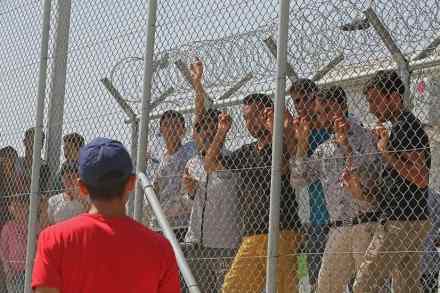
Meet Ibrahim, from Syria. He fled Aleppo just before the bombs began to fall. A clean $4,000 in cash to a smuggler got him a fake passport and, voilà, a ticket to Europe – briefly in Greece, then in Germany (‘the people, they looked different’), now in Spain. Immigrant life was tough at first: the strange language, the alien norms, the overt racism. ‘He was not on their level. Just a refugee.’ Then a lucky break. He starred in a homemade porn video that went viral: ‘100 per cent real Arab bull.’ Next, he’s earning close to a seven-figure salary, owns a flash car and has women dripping off his arm. In Ben Judah’s illuminating depiction of modern-day Europe, almost everyone has a dream.

Cold-blooded murder in Amazonia

From our UK edition

Around dinner time on 21 November 2000, a nervous 19-year-old man knocked on the door of Maria Joel Dias da Costa’s house, located in the backcountry Amazonian town of Vila Rondon. The unknown man asked to see her husband Dezinho, a union leader, but he was out. She invited the visitor to wait, which he did for a while, but then he got up to go. As he was leaving, Dezinho was just arriving home. Seconds later, Maria Joel’s husband was lying dead in a ditch, the life blasted out of him by a .38-caliber revolver. So runs the centrepiece of Masters of the Lost Land, a compelling and forensically researched piece of investigative reporting by the Spanish journalist Heriberto Araujo.

Has Cuba’s revolution finally fizzled out?

From our UK edition

In 1968, the US anthropologist Oscar Lewis arrived in Cuba with a tape recorder and a mission to capture the revolutionary zeal of everyday Cubans. Eighteen months later, he was sent packing. ‘We have nothing to hide,’ Fidel Castro, the leader of the country’s 1959 revolution, had supposedly told him. That wasn’t quite true: production targets were being missed, dissidents were being locked up and the US trade embargo was already beginning to bite. The project briefly – and unsuccessfully – passed into the hands of Boom-era author and friend of Fidel, Gabriel García Márquez. After that, the voices of Cubans vanished from the official record. Lots of vituperative denunciations from Cuban exiles, certainly.

How I narrowly escaped joining Argentina’s ‘disappeared’

From our UK edition

A bully-boy leader. A corrupt, out-of-touch regime. A twisted reading of history. An unprovoked, military-led landgrab. A domestic disinformation blitz. And an enemy that, contrary to all the aggressor’s expectations, fought back. We’ve been here before. Not on the scale of Russia’s attack on Ukraine perhaps, nor with the tragic cost to civilian lives. But wind back 40 years and something akin to Putin’s demented assault played out in the South Atlantic. In the last throes of a desperate government, Argentina’s military dictatorship ordered an assault on the Falkland Islands. When the news broke in early April 1982, the world gaped. Sabre-rattling from Buenos Aires was nothing new. But an actual invasion? Few believed it could ever happen.

A Canadian’s experience of the migrant’s ordeal

From our UK edition

No one boards an overladen dinghy and sets out across a choppy sea without very good reason. Laden into migrant boats go backstories as well as bodies: tales of war-hit homes and bloodied police cells, of empty larders and decrepit schools. But illegal migration is as much about what lies ahead as what’s left behind: the hope of a better life, the chance to start anew. That was certainly the case with Omar, a young Afghan taxi driver and former interpreter. Back when the Canadian-born freelance correspondent Matthieu Aikins first arrived in Kabul, the Corolla-owning Omar had been a single gung-ho guy about town. Seven years later, with foreign troops drastically reduced and dollar contracts hard to find, life was looking far less rosy.

In defence of capitalism – ‘the greatest engine of human progress ever invented’

From our UK edition

For all its faults and foibles, its busts and bailouts, modern market capitalism demonstrates a remarkably bullish resilience. We don’t always love it. We might not even trust it. But, like a cranky old spouse, we doggedly stick with it. It’s not hard to guess why. Look around, and people today in the main are better off. More importantly, the alternatives seem doubtful. As Bill Gates once put it: ‘Anyone who wants to move to North Korea is welcome.’ Even so, there’s a nervousness afoot in the epicentres of free enterprise. Inequality is growing, executive pay is spiralling, high street favourites are disappearing, employment terms are worsening. Forget levelling up; just staying afloat feels like achievement enough. What’s gone wrong?

A scandalous cover-up: the El Bordo mining tragedy of 1920

From our UK edition

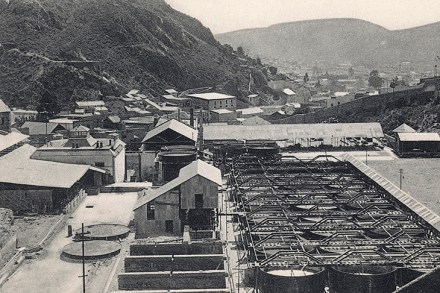
On the morning of 10 March 1920, on the edge of the city of Pachuca in central Mexico, 87 miners died in a subterranean fire. Only no one is quite sure of the exact number because melted corpses are difficult to count. Nor is there any clarity on when the fire started or what caused it. What is certain, however, is that the mine owner was in no way responsible. No way at all. Few today remember the disaster at the El Bordo mine. In Pachuca there’s no statue, no plaque, no explicit commemoration of any kind. All that remains are two brief chronicles by survivors, a handful of press cuttings and some dusty files from the accident investigation. These, and the silent — silenced? — memories of the victims’ families. So, why are we hearing about it now?

Children should get out more — even if it’s for hide and seek in the park

From our UK edition

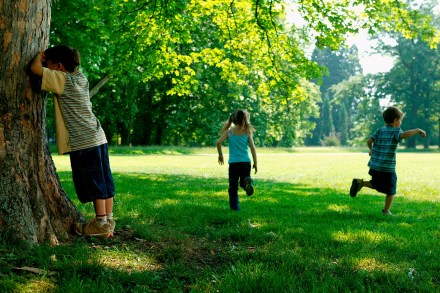
We live in an urban world. It’s a statistical fact. The great outdoors for most of us is a thing of the past — a place, like elderly relatives, to be visited infrequently and preferably with gloves. Metro world, by contrast, is safe, insulated, inviting. No getting wet in the rain, no patchy wifi, no mud on our new Nikes. Little wonder that our education system has gone the same way: safe, sedentary, sterile. Patrick Barkham thinks there might be a better way. Give kids more space, he pleads. Free them up from rules and tests. Climbing trees, prodding roadkill, collecting grubs: hell yes, if they want to, why not? The statistics (that boring, schooly word again) suggest he might be on to something. One in eight British youngsters can’t identify an oak leaf.

It takes a former drug dealer to explain the global narcotics scene

From our UK edition

In the early 2000s, Yekaterinburg was in the grip of a major heroin problem. For Yevgeny Roizman, ‘Russia’s vigilante king’, the solution was simple: first, send in goons to beat up the smack dealers; second, round up the city’s addicts, chain them to radiators, and force them to go cold turkey. The policy, unsurprisingly, failed. For one, Russia’s fourth largest city has swapped its preferred kick: today, it’s spice that is mostly getting Yekaterinburg’s residents smashed. At the same time, the city still counts enough heroine users for their needle-sharing habits to have sparked an official HIV emergency.Still, none of this stopped Roizman — an art collector, champion rally driver and ex-convict — from being elected city mayor.

One of mankind’s great mysteries

From our UK edition

Later this month, a boat builder from Lake Titicaca in Bolivia will fly to the Russian city of Sochi to begin work on a 40-foot craft made from papyrus reeds. A German-led expedition hopes Fermín Limachi’s construction skills will see them safely across the Black Sea and eventually on to Athens. It is a mad idea, but not an entirely novel one. Nearly 50 years ago, Limachi’s father was persuaded by the Norwegian explorer and ethnographer Thor Heyerdahl to embark on something very similar. But the route back then was from Morocco to South America, a journey of some 6,100km. Heyerdahl is one of the dozens of fascinating — and often slightly kooky — characters to fill the pages of this eminently scholarly and ever-surprising book.

Romancing the stone wall

From our UK edition

We all tell stories about ourselves, every one of us. ‘I’m a useless cook.’ ‘Spiders don’t scare me.’ Not all these stories are true, but then self-perception has never held much truck with truth. Our stories are our own,to hold, repeat and believe in. But what if your story isn’t your own? What if you start out on life’s journey and discover that your story is, in fact, someone else’s? This deeply unsettling scenario provides the driving narrative to this confessional, heartfelt, if somewhat scatty memoir. Whitney Brown was, as we’re frequently reminded, an A-star student, a valedictorian. Growing up in small-town South Carolina, she was the kid deemed ‘most likely to succeed’. But at what? There’s the rub.

The incredible journey

From our UK edition

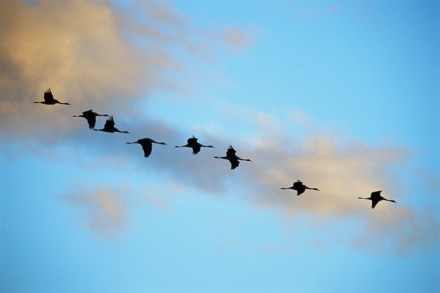
Sweet lovers, Shakespeare reminds us, love the spring. How can they not? All that wonderfully wanton colour, all that sensual fragrancy, all those budding promises of new life. And, lest we forget, all those yummy insects. For birds adore spring as well. Every year, regular as clockwork, hundreds of millions of our feathered friends take flight and head north. To hear their happy birdsong is to know that winter’s lugubrious cloak has lifted and that longer, livelier days lie ahead. No species is more symbolic of the season than the swallow. Before the age of smartphones and calendar apps, we relied on these fork-tailed speedsters to inform us of spring’s arrival. People would stare from their kitchen windows in anticipation.

The Little Matchstick that ignited civil war

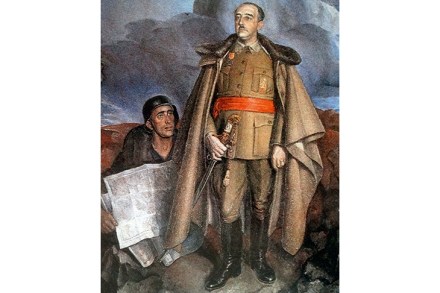
Spanish restaurants in Germany are relatively rare, but not nearly as rare as biographies of General Franco. So when the Spanish-born waiter in Bonn’s Casa Pepe approached my table, it struck me as an opportune moment to solicit his opinion about the former dictator. ‘No sé mucho,’ he shrugged. ‘I don’t know a whole lot.’ Just imagine it: an unexceptional army cadet becomes a general in his mid- thirties, leads the Nationalists to victory in a bloody civil war, wields absolute power for close to three decades, and then, barely a generation later, his memory is reduced to an indifferent shrug. The contrast with Germany’s treatment of its totalitarian past could not be greater. Students are compelled to study every angle of the Third Reich.

Neither green nor pleasant

From our UK edition

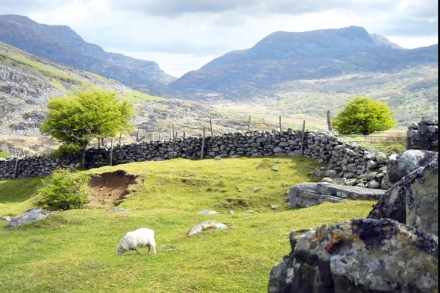
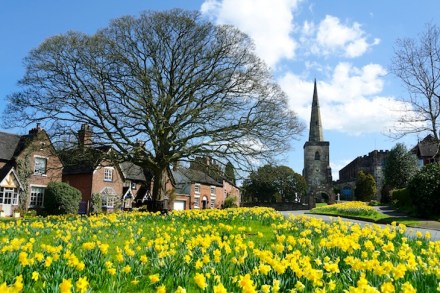
The old coaching inn on the green. The Sunday morning toll of church bells. The ducklings paddling on the pond. The soft sound of leather against willow. Nothing, absolutely nothing, defines England’s idea of itself more than the sleepy rural village. World events can shake our island nation. Population growth can swell our cities. Who knows, climate change could even sink East Anglia beneath the waves. But as long as the country’s villages stand true, then England is safe and we can all put the kettle on for tea. Utter rot, says Tom Fort, in this timely, myth-busting march through English rural history.

Writing on the fly

From our UK edition

Bogotá airport, immigration form in hand. Tourist, migrant, businessman? Andrés Neuman ponders the descriptors, unsure which to tick. He opts for the second. ‘I’d like to be a migrant.’ The decision is telling, and frames much of what follows in this curious, delightful, if disjointed book. Neuman is hot property in contemporary Latin American literary circles. A former winner of Spain’s prestigious Alfaguara Prize and the National Critics Prize, he is tipped (by Roberto Bolaño, no less) to be one of a select ‘handful’ to take up where the ‘boom’ generation of Márquez, Cortázar, Fuentes and Borges left off.