Nikhil Krishnan

Were Britain’s postwar dons just having too much fun?

From our UK edition

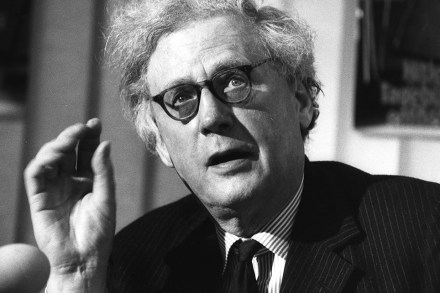
A history of academic life stands and falls by the number and quality of its anecdotes. On this count, Colin Kidd’s Twilight of the Dons unquestionably delivers. Did you know that the biologist Francis Crick wrote to Winston Churchill suggesting that an educational institution named after the statesman would be better off with a college brothel than the proposed chapel? Or that Eleanor Plumer, an early principal of St Anne’s College, Oxford, told the fellows of her fledgling institution that if they simply must have children, could they ‘kindly ensure’ they had them ‘in the University vacation’? At times, the book can seem to be an anthology of such anecdotes, combining, often in the same story, the world-historic and sociologically significant with the gossipy and trivial.
Malice and intrigue in the shadow of Tom Tower

From our UK edition

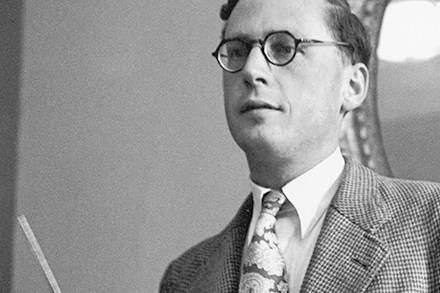
‘The House’ in the title of Richard Davenport-Hines’s engaging new book is Christ Church, by any reckoning the grandest of Oxford’s colleges. The place has always been, he notes, akin ‘to an autonomous duchy within a larger federated kingdom’, and thus ‘a separate realm of memory’. Notoriously, its teachers and researchers are referred to not (in the usual Oxford way) as Fellows but as Students. That fact may be thought as good an illustration of its eccentricity as of its charm. This book isn’t a history of the House, as such, but a more concentrated series of biographical essays about ‘a select and self-regulated group of men who taught modern history’ there in the 19th and 20th centuries.

In search of the peripatetic philosopher Theophrastus

From our UK edition

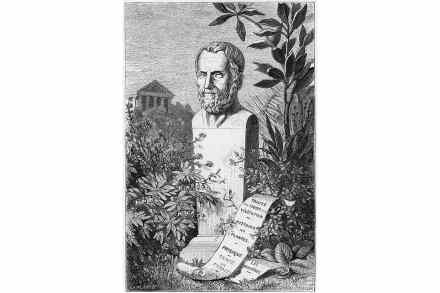
Publishers lately seem to have got the idea that otherwise uncommercial subjects might be rendered sexy if presented with a personal, often confessional, counterpoint. The ostensible subject of Laura Beatty’s book is the pioneering Greek botanist and philosopher Theophrastus. He was a friend of Aristotle’s, and was once thought his intellectual equal, but is now little known except to a few classicists and historians of science. But since no one wants to publish a straight book on Theophrastus, we get instead a book that is at least as much about Laura Beatty, her library researches, her travels in Greece and her kitchen garden. Her publishers describe the book as ‘genre-defying’.

A frictionless history of fieldwork: In Search of Us reviewed

From our UK edition

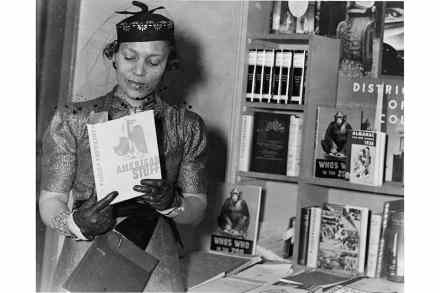
To be an anthropologist today is to understand, as few in the secular modern university can, what it is to be marked by a consciousness of original sin. Contemporary ethnographies are full of passionate mea culpas from scholars concerned that they have inherited the guilt of their discipline’s founding fathers, men who inhabited a world of red-cheeked missionaries and pith-helmeted viceroys. Lucy Moore is not the most natural candidate for a historian of the discipline. Her back-catalogue shows her to be a generalist and belletrist – a book on the Roaring Twenties, one on Indian princesses and another on Georgian rakes. Her prose is fluent and soothing, her narratives informative without being especially taxing, their outlook humane but never subversive.