Boyd Tonkin

An intellectual farce: Rapture of the Deep, by Robert Irwin, reviewed

From our UK edition

If Robert Irwin had not existed, then Dan Brown, or better still Umberto Eco, would surely have had to invent him. In his Memoirs of a Dervish, the roller-blading, pinball-playing polymath reported: ‘It was in my first year in Oxford that I decided that I wanted to become a Muslim saint.’ Irwin, who died in 2024, first pursued that esoteric life goal in a Sufi monastery in Algeria. He returned to become not just a vastly erudite scholar of Arab Muslim culture but a madcap maverick of a novelist as well. As a writer, he loved paradox, surprise and reversal.

A rebellious childhood: Lowest Common Denominator, by Pirkko Saisio, reviewed

From our UK edition

How do you dispose of 48 uniform volumes of the collected works of Lenin and Stalin? Pirkko Saisio and her mother hatch a plan. The books are ‘dumped into the trash bin’ by their apartment block, then coated with ‘a week’s worth of eggshells and fish guts and newspapers’. No one will find them, Mother insists. If anybody did, ‘there’s no way they’ll know they’re ours’. So Pirkko no longer has to hide the embarrassing tomes when friends drop round. Executed during true-believing Father’s absence, Lenin and Stalin’s stinky downfall is one of many bittersweet episodes that make Lowest Common Denominator such a piquant account of a childhood and a time.

Ambition and delusion: The Director, by Daniel Kehlmann, reviewed

From our UK edition

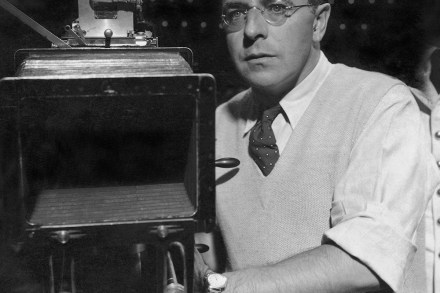
As bombs rain down on Nazi-occupied Prague, Georg Wilhelm Pabst shoots a film – a romantic courtroom drama adapted from a pulp novel by a creepy Third Reich hack, Alfred Karrasch. Although the leading man finds it strange to make any movie ‘in the middle of the apocalypse’, his director insists that ‘art is always out of place’. In retrospect, Pabst assures the star, it will look like ‘the only thing that mattered’. The discoverer of Greta Garbo and Louise Brooks, and the director of The Joyless Street, Lulu, Westfront 1918 and other prewar masterpieces, Pabst really did attempt to film The Molander Case in Prague in 1944-45. The bizarre, chaotic shoot furnishes Daniel Kehlmann with the climactic scenes of this novel, inspired by the great director’s compromised career.

News from a small island: Theft, by Abdulrazak Gurnah, reviewed

From our UK edition

In 2021, the award of the Nobel Prize in Literature made Abdulrazak Gurnah the world’s second-best-known Zanzibari – after a certain Farrokh Bulsara, aka Freddie Mercury. Forgive the flippant comparison, but the pop world’s perplexity over Queen’s vocalist’s origins feels germane to the quest for a coherent self and story undertaken by the Nobel laureate’s chief characters. Born in 1948, in what was still the ancient, British-protected sultanate of Zanzibar, Gurnah has, over 11 novels, done more than explore ‘the fate of the refugee in the gulf between cultures and continents’ (as the Nobel citation primly put it). His fiction shows that the shocks of power and history can make an exile of anyone, even in our home and in our skin.

Murder she imagined: The Dream Hotel by Laila Lalami reviewed

From our UK edition

‘In dreams begins responsibility,’ wrote W.B. Yeats. In the near-future America imagined by Laila Lalami, culpability starts there, too. Charged with the prevention of potential crimes, the Risk Assessment Administration monitors not just every aspect of citizens’ behaviour but, via tiny ‘neuroprosthetics’, the hidden drives revealed in sleep. As an RAA agent insists: ‘Every murder starts with a fantasy.’ If those nocturnal fantasies grow too ‘troublesome’, and your personal ‘risk score’ edges above the key threshold of 500, prepare for at least 21 days of ‘forensic observation’ as an inmate of a ‘retention’ centre. Not quite prison, ‘it’s not not a prison’ either: instead, a ‘kind of a grey area’.

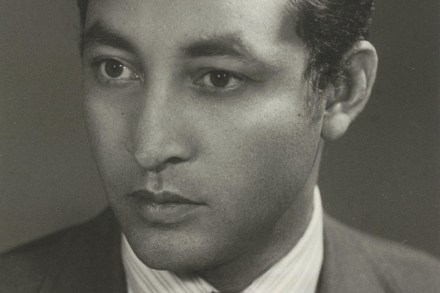
Rebellion and repression: Oromay, by Baalu Girma, reviewed

From our UK edition

‘We don’t want a James Bond adventure here,’ warns a jumpy spymaster as he grapples with an anti-state conspiracy in Oromay. Among other strands, that’s precisely what this fabled Ethiopian novel of 1983 delivers. Which is remarkable, given that Baalu Girma’s semi-autobiographical thriller of rebellion and repression, love and war, has been translated from Amharic. The ancient Semitic tongue of Ethiopia served as that nation’s official language long before English came to rule at court, and in courts. Girma was both a journalist and a novelist, educated in the US and an editor of English-language magazines in Addis Ababa. He evidently relished the various genres adroitly mined in Oromay.

An outcast among outcasts: Katerina, by Aharon Appelfeld, reviewed

From our UK edition

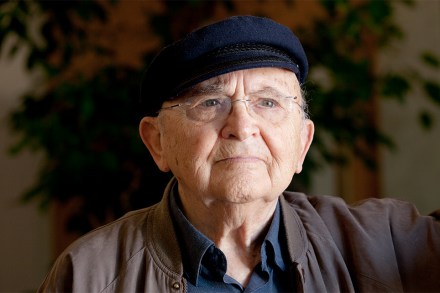
‘Nothing escape’s the wolf’s fangs,’ thinks the narrator of Katerina. Through an outlandish sequence of chances and choices, somehow its author did just that. Aharon Appelfeld, a child of assimilated parents, lived in the old Jewish heartland of Bukovina. In 1940, short-lived Soviet occupation gave way to Nazi control. His mother was murdered and his father disappeared. Young Aharon escaped the Czernowitz ghetto and survived as a wild child in the forests, sheltered by a village prostitute, then as the ‘slave’ of a Ukrainian bandit gang. When the Red Army arrived he cooked for them before, via a peril-strewn route through Italy, he migrated to Mandate Palestine.

Nordic dream or nightmare?: The Mark, by Frida Isberg, reviewed

From our UK edition

Imagine a society, a high-minded psychologist tells his curmudgeonly father, ‘in which people are like cars. They have to go in for inspection once a year’ in order to assess their emotional fitness for the shared highway of life. As for the ‘psychopathic percentage’ whose ‘moral disorders’ lead them to fail this spiritual MoT, never fear: state-funded therapy will get them on the road again. And should they refuse? Surely, as we learn later in The Mark, everyone longs to stand ‘on the right side of history’. The Nordic dream of close-knit, high-trust, mutually supportive welfare societies has always had its internal critics: mavericks, naysayers and backsliders, who prize autonomy beyond, even against, community.

Portrait of an artistic provocateur: Blue Ruin, by Hari Kunzru, reviewed

From our UK edition

Whatever happened to the likely lads and lasses of the East London art scene at the high noon of Cool Britannia? Hari Kunzru’s seventh novel, Blue Ruin, loads much else on to its ideas-rich plate – not least a pandemic yarn set in the panic-stricken spring of 2020. At its core, however, his plot traces contrasting afterlives from the Sensation generation. It reconnects three survivors – two male artists and the woman both loved – from a time when making conceptual art could feel like ‘a kind of social repair’, even a ‘utopian laboratory’. In his earlier career, Kunzru himself seemed to belong in a gilded group of younger British authors.

C.J. Sansom’s Tudor England is a mirror of our divided world

From our UK edition

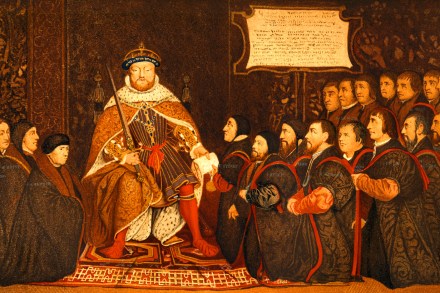
Among the many appreciations of C.J. Sansom, the author of bestselling historical mysteries who died last week aged 71, one of the most eloquent came from Rear Admiral John Lippiett. A friend since Sansom first researched the sinking of Henry VIII’s flagship the Mary Rose (Lippiett headed the Mary Rose Trust in Portsmouth after he retired), the admiral recalled ‘a very remarkable man, private and modest, fascinating in his conversations, caring about individuals, generous in the issues that moved him’. Sansom, he acknowledged, was a ‘card-carrying socialist’ who wobbled during the Corbyn years but ‘remained true to Labour’s overall policies’.

Mediterranean Gothic: The Sleepwalkers, by Scarlett Thomas, reviewed

From our UK edition

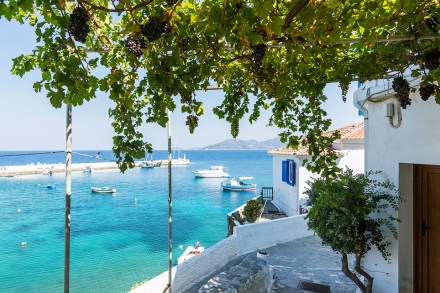
Scarlett Thomas likes islands: either literal sea-girt territories or closed enclaves where this wickedly inventive novelist practises her richly enjoyable experiments in plot and form. If her recent Oligarchy found its sour-sweet spot in a grisly girls’ boarding school, The Sleepwalkers creates another insular possession: the Greek island of ‘Kathos’, which almost resembles Samos. Here, within sight of the Turkish coast, the newlyweds Evelyn and Richard arrive as late-September storms brew to undergo their honeymoon from hell. Ever since novels such as Bright Young Things (also island-set) and PopCo, Thomas has known how to fuse an acidly satirical streak of observation with storytelling artifice that keeps her readers pleasurably unsettled and alert.

The truth one year, heresy the next: The Book of Days, by Francesca Kay, reviewed

From our UK edition

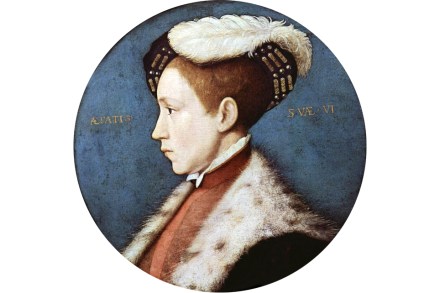
Bad historical novelists assume that people always live at the spearhead of their age. Good ones, like Francesca Kay in her fourth book, know that even when the world spins ‘faster than a weathervane in a gale’, most hearts and minds will tarry in the past, behind events. The Book of Days unfolds in a village north of Oxford in 1546 and 1547, as the unnamed old king dies and the accession of his child heir brings another round of ‘newfanglery’ in faith. The ‘commotion time’ returns with all its frightening convulsions: now, ‘what was truth one year is heresy the next’.

Must we live in perpetual fear of being named and shamed?

From our UK edition

You should feel thoroughly ashamed of reading this infamous rag. Or else you might decide to revel, shamelessly, in its critics’ prim disapproval. From political squalls to global wars, David Keen argues that a ‘spiral of shame’ and shamelessness now traps individuals and societies in arid cycles of pain, rage and revenge. Manipulative actors – ‘advertisers, warmongers, terrorists, tyrants and charlatans’ – sell us ‘magical solutions’ to the anguish of the shame they themselves stoke. But they merely pass the burden to other groups, leaving us with more suffering. Keen writes: ‘Such actors do with shame what the Mafia does with fear.’ The author teaches conflict studies at the LSE.

A tale of cruelty and imposture: The Fraud, by Zadie Smith, reviewed

From our UK edition

‘Is this all that these modern ladies’ novels are to be about? People?’ So asks the bewildered author of Old St Paul’s, The Lancashire Witches, The Tower of London and three dozen other forgotten blockbusters stacked with costumed folderol. In Zadie Smith’s sixth novel, William Harrison Ainsworth disapproves, in 1871, of hiscousin-housekeeper, Eliza Touchet, reading a nameless story of dull village folk with ‘no adventure, no drama, no murder’. It can only be George Eliot’s Middlemarch. The Fraud alights briefly on this quarrel, as it does on many Victorian topics. Yet Smith’s triple-pronged tale of imposture and masquerade, public lies and secret truths, often reverts to fiction’s role either as gaudy stage for the ‘human comedy’ or mirror for the hidden spirit.

A visit from the devil: Russian Gothic, by Aleksandr Skorobogatov, reviewed

From our UK edition

Like light from faraway stars, fiction from outside the Anglosphere may take decades to reach English-language readers. This sinister, indeed sulphurous, novella by a Belarus-born author was first published in Russian in 1991, and won major awards. Ilona Yazhbin Chavasse’s English translation, as creepily compelling as the book deserves, appears long after the contemporary hook that Aleksandr Skorobogatov embeds in his tale has lost its topicality. Recent events, however, make this fable of obsession, madness and violence timelier than ever. It almost vindicates a belief in Russian history and literature as an epic recycling of eternal themes. In a dismal Russian town lives Nikolai, a drifter and drinker on a meagre government pension.

Find the lady: Tomás Nevinson, by Javier Marías, reviewed

From our UK edition

The plot sounds like an airport thriller – or a Netflix mini-series pitch. In a proud and staid riverside town in north-west Spain, where ‘each individual played the role assigned to him’, live three women. One is a merciless terrorist killer: Magdalena Orúe, or Maddy O’Dea, half-Spanish, half-Northern Irish, a warrior on long-term loan from the IRA to the Basque separatists of ETA, but now either retired from the armed struggle or quietly brewing fresh mayhem. A mothballed secret agent, one of those ‘nasty angels’ who ‘never forget what everyone else forgets’, arrives in ‘Ruán’ in 1997 on an off-the-books mission hatched in London and Madrid.

Luminous fables: Night Train to the Stars, by Kenji Miyazawa, reviewed

From our UK edition

Talking animals – as anyone who has watched a Studio Ghibli animated film will know – are big in Japan. But not always cute. The snooty hawk, for instance, looks down on the ugly but peaceable nighthawk (‘quite harmless to other birds’), who half-shares his macho name despite a deplorable lack of raptor credentials. Just to humiliate him, Hawk decides to call Nighthawk ‘Algernon’ instead. In despair, the little creature flies up to the heavens, only to be told: ‘One has to have the proper social status in order to become a star.’ The nighthawk awaits a lonely death in the frozen skies but finds his frail body ‘glowing gently with a beautiful blue light’. He has joined the constellation Cassiopeia, ‘still burning to this day’.

An empire crumbles: Nights of Plague, by Orhan Pamuk, reviewed

From our UK edition

Welcome to Mingheria, ‘pearl of the Levant’. On a spring day, as the 20th century dawns, you disembark at this ‘calm and charming island’ south of Rhodes from a comfortable steamer after sailing from Smyrna, Piraeus or Alexandria. A crew of Greek or Muslim boatmen will row you to the picturesque harbour of Arkaz, flanked by the radiant White Mountain and the gloomy turrets of the medieval castle. The fragrances of honeysuckle, linden trees and the famous Mingherian roses waft over azure seas. Admire the ancient churches and newer mosques, the neo-classical State Hall, the grand buildings funded by the sultan’s government in faraway Istanbul. Savour figs, oil, nuts and cheeses in the bustling markets.

When did cheerfulness get so miserable?

From our UK edition

We’ve all met the sort of facetious oaf who orders any non-giggling woman to ‘Cheer up, love, it might never happen’. As Timothy Hampton grasps, enforced cheeriness feels about as much fun as compulsory games. His invigorating book about the quest for true cheerfulness in literature and philosophy dismantles the various ‘prosthetic or counterfeit’ versions of the real thing that bullies, bosses, self-help gurus and household tyrants inflict on their victims. Jane Austen’s heroines, as he shows, chafe against the elevation of cheerfulness into a ‘social norm’. It suffocates them like stays: ‘Thou shalt be cheerful, at least if thou art woman.’ For sound reasons, the prospect of cheerfulness fails to gladden many modern hearts.

Snafu at Slough House: Bad Actors, by Mick Herron, reviewed

From our UK edition

Reviewers who make fancy claims for genre novels tend to sound like needy show-offs or hard-of-thinking dolts. So be it: here’s mine. Anyone who tries to understand modern Britain through its fiction but overlooks Mick Herron’s satirical thrillers merits a punishment posting to the critics’ version of Slough House. That noxious midden of a building opposite the Barbican, its leprous chambers groaning like ‘the internal organs of some giant, diseased beast’, is a sort of landfill site for failed spies. Herron first opened its flaking doors in 2010 with his novel Slow Horses. Seven books later, his squad of borderline sociopath rejects from polite espionage has risen to the dignity of a luxury cast series on Apple TV+.