Culture

Culture

The good, the bad and the ugly in books, exhibitions, cinema, TV, dance, music, podcasts and theatre.

Berliners were punished twice – by Hitler and by the Allies

More from Books

‘Nationalism is an infantile disease. It is the measles of mankind.’ Albert Einstein’s deft avoidance of the question put to him in 1929 – whether he considered himself a German or a Jew – was prophetic of what would happen to his country in the following decade. He was just one of the many stars of Berlin, Europe’s dazzling, decadent centre of the arts and culture, whose spark would be dimmed or extinguished by Adolf Hitler. Capturing the history, people and spirit of Berlin, arguably the beating heart of Europe, can be a tricky proposition, as I know. Sinclair McKay has wisely kept to analysing the city through the prism of the last century – or at least from the end of the Great War to the end of the Cold War.

What shape is the Treasury in now?

More from Books

Don’t bring a bottle. Your chances of finding a party in full swing down those chilly corridors are close to zero. At most, you might hear the sound of a distant flute playing a courante by Lully. As Sir Howard Davies puts it in this insider’s view, which manages to be both authoritative and quite cheeky: The Treasury does not cultivate a warm and cuddly working environment. You may well not know if your immediate boss has a spouse or partner, and would certainly never meet them if they exist. Social events are at a premium. Yet this notoriously ascetic culture is not in the least hierarchical.

Abolishing slavery was no cause for smugness

More from Books

When the 13 colonies of the United States declared independence in 1776, the first country to recognise the new nation was France. Other leading European powers, such as Britain and Spain, acknowledged its arrival at the Treaty of Paris, two years after a decisive victory by American forces. Yet when Haiti asserted independence in 1804, it was ostracised by Britain, France, Spain and the US. During its first fragile years as a fledgling state, that self-declared guru of liberty Thomas Jefferson even imposed a rigid blockade while president. Washington then took more than half a century to recognise its Caribbean neighbour. The reason for such contrasting attitudes towards the first and second independent nations in the western hemisphere was simple.

Jarvis Cocker measures out his life in attic junk

More from Books

If you were hoping for an autobiography this isn’t it. Jarvis Cocker calls it ‘an inventory’ and insists: ‘This is not a life story. It’s a loft story.’ But anyway it’s as quirky and engaging as you would expect from Cocker and also the most beautifully produced book I’ve seen in years, designed by Julian House. And it does, in its circuitous way, tell us quite a lot about Cocker’s formative years in Sheffield. The MacGuffin is that Cocker is meant to be clearing out a loft where he’s been storing stuff for years and deciding what to ‘cob’ (chuck) and what to keep. Of course he has trouble cobbing anything, which is why he’s accumulated so much junk in the first place. He is a hoarder.

Was Jane Morris a sphinx without a secret?

Lead book review

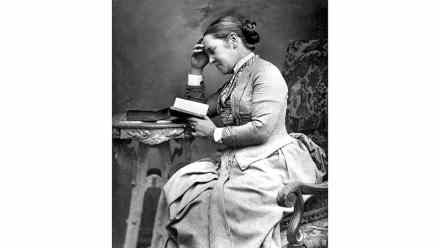
William Morris was the son of a stock-broker and Jane Burden was the daughter of a stablehand. He was raised in a mansion in Walthamstow (now the William Morris Gallery) and she grew up in a hovel in Oxford. Had she not been talent-spotted by Dante Gabriel Rossetti when she was leaving the theatre one night, Jane would have become a college servant rather than an artist’s muse. She married Morris when she was 19, after he had reproduced her as ‘La Belle Iseult’, trapped in a room between a window and a bed, and put her through intensive elocution lessons as well as a crash course in music, art and literature.

How the Treasury maintains its power

Don’t bring a bottle. Your chances of finding a party in full swing down those chilly corridors are close to zero. At most, you might hear the sound of a distant flute playing a courante by Lully. As Sir Howard Davies puts it in this insider’s view, which manages to be both authoritative and quite cheeky: The Treasury does not cultivate a warm and cuddly working environment. You may well not know if your immediate boss has a spouse or partner, and would certainly never meet them if they exist. Social events are at a premium. Yet this notoriously ascetic culture is not in the least hierarchical.

Bisexuality was the Bloomsbury norm

More from Books

It’s been a century since the heyday of the Bloomsbury group, and now Nino Strachey, a descendant of one of the key families, has written a superb, sparky and reflective book charting the doings of the younger members of the artistic and intellectual coterie. While it is easy to identify Old Bloomsbury – familiar names include Lytton and James Strachey, Duncan Grant, David ‘Bunny’ Garnett, Virginia and Leonard Woolf, Vanessa and Clive Bell, Roger Fry, John Maynard Keynes, E.M. Forster and Desmond and Molly MacCarthy – naming the younger ‘Bloomsberries’ is a slippery task. Do we count Dora Carrington, who loved Lytton to distraction, and after his death found she could not live without him?

Sheila Hancock takes pride in her irascibility

More from Books

This book begins with Sheila Hancock wondering why she is being offered a damehood. I must say I slightly wondered too, but it seems that most actresses become dames if they live long enough: vide Joan Collins, Penelope Keith, Joanna Lumley etc. And Hancock, as well as acting and making brilliant appearances on Radio 4’s Just a Minute, also does lots of charity work. She considers refusing the honour because ‘it’s hardly in keeping with my Quaker belief in equality’, but decides ‘no, it would be dreadfully rude and ungracious’. Anyway, she admires the Queen, and also Prince Charles, who left flowers and a handwritten note on her doorstep when her husband John Thaw died in 2002. So Dame Sheila it is.

Women behaving badly: Ghost Lover, by Lisa Taddeo, reviewed

More from Books

Lisa Taddeo’s Three Women established her as a narrator of female desire in all its complexity. Her study of three real women and their sexual choices became a bestseller on both sides of the Atlantic, showing how women sometimes collude in relationships that are destructive, or make decisions they later regret. Power imbalance, coercion and past trauma as well as lust were distilled in the essence of their desires. Of course, sexual relationships can be complex for both sexes, but Taddeo’s project repudiated the easy 1990s stereotypes of ‘ladettes’ as being replicas of sex-without-ties lads. Animal, her fiction follow-up, depicted the raw anger and vengeance that loss and frustration may beget.

From teenage delinquent to man of letters: James Campbell’s remarkable career

More from Books

The great age of the Scottish autodidact must have ended a century ago, but it had a prodigious impact while it lasted. To read John Gross’s The Rise and Fall of the Man of Letters (1969) is to be plunged headfirst into a world of kenspeckle lads studying Nietzsche behind the crankshaft and miners quoting Burns to each other as they were winched up from the Lanarkshire coal face. If James Campbell (born 1951) isn’t quite a figure to rank with James Thompson the Younger (1834-82) or the Rev.

The deep roots of global inequality

More from Books

Thomas Piketty, the French economist who shot to fame for writing a colossal work of economics that many people bought but few actually read, recently received some advice. ‘What you write is interesting,’ a friend told him, ‘but couldn’t you make it a little shorter?’ Piketty has answered the call for brevity with a book which by his standards is the equivalent of a Post-it note. It’s certainly ‘brief”– but is it a ‘history of equality’? Alas, no. What we have instead is an eye-wateringly left-wing manifesto for dismantling economic inequality, both domestically and internationally.

A glimmer of hope for the blue planet

Lead book review

You might think – with its feeding frenzies, vertiginous seamounts, perilous weather and deep history of the monstrous – that the ocean was a wild enough place as it is; but according to the environmentalist Charles Clover it has systematically been ‘de-wilded’ by decades of commercial overfishing, and our seas are now in urgent need of healing. I believe him. When it comes to conservation, fish hold less appeal than terrestrial fauna: they are perceived as cold-blooded, mostly invisible, lacking in charisma, and often delicious – plus, for centuries, there existed the comfortable delusion that their stocks were inexhaustible (even a proof positive of divine benevolence).

The trouble with Thomas Piketty

Thomas Piketty, the French economist who shot to fame for writing a colossal work of economics that many people bought but few actually read, recently received some advice. ‘What you write is interesting,’ a friend told him, ‘but couldn’t you make it a little shorter?’ Piketty has answered the call for brevity with a book which by his standards is the equivalent of a Post-it note. It’s certainly ‘brief’ – but is it a ‘history of equality’? Alas, no. What we have instead is an eye-wateringly left-wing manifesto for dismantling economic inequality, both domestically and internationally.

Alive with innovation: British art between the world wars

More from Books

When I mentioned the subject of this book to someone reasonably well-informed about 20th-century British art, the response was: ‘Isn’t that all portrait and still-life paintings?’ Well, perhaps if you’re looking exclusively at the contents of the Royal Academy Summer Exhibitions – and even there landscape was another popular choice. But actually the period was alive with innovation – with abstraction and surrealism infiltrating and balancing out a new kind of realism. Art was a melting pot of competing attitudes, drawing equally on native traditions and stimulating foreign influences, principally Cézanne and Picasso. In her enjoyable new book Frances Spalding identifies ‘a recurrent tension...

The catastrophe that allowed mammals to reign supreme

More from Books

Humans are so comfortable with their self-declared dominance over the rest of life, appointing themselves titular head of an entire geological age in the ‘Anthropocene’, that we forget how we are party to a much wider evolutionary alliance: the mammals. Steve Brusatte announces that mammals reign supreme upon this planet. One thinks especially of their place as climax predators in almost all regions – the lions, tigers, wolves and bears for example – or the sheer weight of numbers of the megafauna in the African savanna, the herds of wildebeest, antelopes and zebras. Mammals are more widely spread over the planetary surface than all higher organisms, with the possible exception of birds.

Where does brave, stubborn Hungary stand today?

More from Books

‘Deplorable,’ wrote the historian Denis Sinor in 1958 about the state of Hungarian historiography in English. ‘Not only are the interpretations out of date but the facts themselves are all too often erroneous, and a proper name which is not misspelt is received with a sigh of relief by the reader who knows Hungarian.’ That was only two years after the revolution of 1956, when Hungary was on the world’s lips. Today, when the government of Viktor Orbán and the country’s position on Russia and Ukraine makes it equally talked about, this book – from an author born in Budapest in 1956 – is well timed, and its subtitle ‘Between East and West’ pertinently chosen.

A flawed utopia: The Men, by Sandra Newman, reviewed

More from Books

The problem for feminism is men. Not, specifically, in the sense that men are the source of women’s problems, although the statistics do tend to point in that direction. Feminism’s men problem is that, despite all this, women like men. Love men. One of the lessons of second-wave experiments in separatism is that the idealised man-free existence is always fighting against the gravity of affection. Sandra Newman’s novel The Men takes that quandary and does something clever with it. She imagines a world in which all the men and all the boys and all the trans women and all the male non-binaries and all the Y-chromosome-carrying foetuses are mysteriously spirited out of existence in one strange instant.

Too close to home: Nonfiction, by Julie Myerson, reviewed

More from Books

Julie Myerson has, somewhat confusingly, written a novel called Nonfiction. The confusion of course is the point, because this is her squarest attempt so far at auto-biographical fiction. The French author Serge Doubrovsky is widely credited with writing the first ‘autofiction’ when he published Fils in 1977. Autobiographical novels have proliferated ever since, notably by Karl Ove Knausgaard, Rachel Cusk and Edward St Aubyn. Hari Kunzru, when asked to discuss similarities between himself and his protagonist in Red Pill (2020), said: ‘It was just the simplest solution to a set of problems to give him the furniture of my biography.’ Myerson’s narrator is a novelist whose father dies by suicide and who has a child with a drugs problem.

Musings on harmony, melody and rhythm

More from Books

Every Good Boy Does Fine – a banal phrase that also just happens to be the key to limitless wonder. You may have learned it, like Tom Stoppard, as Every Good Boy Deserves Favour, or perhaps as the rather more tension-fraught Every Good Boy Deserves Food (whose sinister implication haunted more of my childhood than I ever confessed to my parents). Whichever it is, this mnemonic for the notes that fall on the lines of the stave in the treble clef is where music begins for most of us: the key that turns hieroglyphs into sound and, eventually, meaning. So it was for Jeremy Denk.

‘It was all a fairy tale’: Lina Heydrich’s description of the Holocaust

More from Books

There have been many biographies of Reinhard Heydrich, the cold, cynical head of the SS in the Third Reich, but none quite like this one. Nancy Dougherty, an American film critic and biographer, died in 2013 before finishing a very large manuscript. The book was put into shape by Christopher Lehmann-Haupt, an old friend of hers, who died in 2018. It now sees the light of day years after the research and writing was carried out, but it is a fine posthumous monument to both author and editor. What makes this biography different is not the life of Reinhard but his wife Lina. Dougherty spent three long sessions in the 1970s and 1980s tape recording interviews with Heydrich’s widow on the Baltic island of Fehmarn, where Lina was born, and where she returned after the end of the war.

After Aberfan, clairvoyants had a field day

More from Books

In the wake of catastrophe, however random or unpredictable, one of the first things people can be relied upon to do is look around for somebody to blame. There isn’t always an obvious candidate, of course, but disaster makes us resourceful, and often the casting process is simply a matter of laying hands on someone who happens to be fairly near by and looks like a good enough fit for the role. Assigning responsibility is an extremely effective therapy, after all, restoring a feeling of control over the capricious environment. Someone should have known, we insist. Someone ought to have seen this coming. John Barker, the central figure of The Premonitions Bureau, took this final claim rather literally.

Is T.S. Eliot’s great aura fading?

Lead book review

For much of his life T.S. Eliot was surrounded by an aura of greatness: people accepted it, and behaved accordingly. That kind of consensus is not helpful for a writer or his works, as Eliot himself clearly saw, observing that nobody had ever written anything significant after winning the Nobel Prize for Literature – true at the time and mostly true since. His work is now in the position of Hamlet when he wrote a famous essay on the play: that the universal agreement of its greatness had hidden an understanding of its failures, its strangeness and what it couldn’t do. We take the greatness of Eliot’s poetry pretty much for granted; but in the centenary of The Waste Land, some cracks are beginning to appear in a once unassailable reputation.

Why are crime writers so weird?

More from Books

What a weird lot crime writers are. I don’t come to this conclusion lightly, since I’m a crime writer myself, but on the evidence of this magisterial but wickedly entertaining book the conclusion is inescapable. As you turn the pages, the evidence mounts up. One crime writer has been considered a serious candidate for sainthood and another has been convicted of murder. Wilkie Collins simultaneously maintained two mistresses and their children but never bothered to marry either. Mary Roberts Rinehart, an early 20th-century queen of American suspense fiction, narrowly escaped being murdered by her chef because she wouldn’t promote him to butler. Agatha Christie famously engineered her own disappearance, and Dorothy L.

What happens to rockers who don’t die young?

More from Books

What do the following individuals have in common: a political activist from Suffolk; a chartered psychologist from Oxfordshire, who enjoys playing golf at weekends; a funeral celebrant from Liverpool; the Birmingham-based chairperson of the Ladder Association Training Committee (‘When it’s right to use a ladder, use the ladder, and get trained to use it safely’); a pop star from LA? The answer is that all of them were pop stars, with the obvious exception of the pop star from LA who still is one. But even Robbie Williams used to be bigger.

A child’s eye view: Fight Night, by Miriam Toews, reviewed

More from Books

Writing from a child’s point of view is a daredevil act that Miriam Toews raises the stakes on in her latest novel. The nine-year-old narrator is meant to have written the words that appear on the page. But then there is something inherently risky about Toews’s whole undertaking as a novelist. She has made her name in fiction that grapples with the restrictive Mennonite community in which she was raised – keeping faith with it and betraying it simultaneously. Her masterly Women Talking confronted the community head on, depicting the secret meetings of a group of women deciding how to respond to pervasive sexual violence.

Life’s great dilemma: Either/Or, by Elif Batuman, reviewed

More from Books

In this delightful sequel to her semi-autobiographical novel The Idiot (2017), which was a finalist for the Pulitzer Prize, Elif Batuman returns to Harvard to follow her protagonist Selin during her sophomore year. Selin has spent the summer of 1996 teaching English in Hungary, trailing her friend Ivan. Her crush on him remains unrequited and unconsummated, but she is determined to make up for lost time by having ‘interesting love experiences’ this year. The Idiot was preceded by The Possessed, a New York Times bestseller about Batuman’s fascination with Russian literature.