Stuart Kelly

I always thought Allan Massie was immortal

From our UK edition

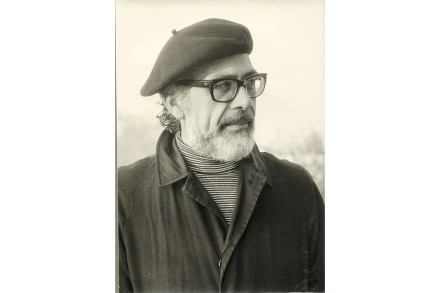
As a late friend once said to me, the expected and the shocking are often the same thing. Allan Massie, an erstwhile contributor to these venerable pages, died yesterday aged 87. I always thought Allan might be immortal. He was the chief literary reviewer for the Scotsman for 50 years, but also a keen-eyed correspondent on rugby (as a loyal follower of Selkirk it must have been quite a melancholy task), and a perceptive columnist, who did not shirk from questioning the status quo. There were times when his byline would appear in the main newspaper pages, the sports pages and the review supplement all at once.

The serious business of games: Seven, by Joanna Kavenna, reviewed

From our UK edition

Joanna Kavenna is very serious about games. Her novels have a certain playful quality, even her debut Inglorious, where the humour and allusions are Mittel-european. More markedly ludic are her Lewis Carroll-esque fantasy about quantum physics, A Field Guide to Getting Lost and the Philip K. Dickish tech-dystopia of Zed. In Seven, however, it’s not just the style but the subject. As if to make clear that games are neither childish nor mere distractions, there is a pointed reference to Johan Huizinga’s study Homo Ludens¸ published on the eve of the second world war. The narrator here is working for a formidable philosopher in Oslo, whose current project is entitled ‘Thinking outside the Box about Thinking outside the Box’. (‘I’m serious,’ the narrator archly notes.

A supernatural western: Tom’s Crossing, by Mark Z. Danielowski, reviewed

From our UK edition

Mark Z. Danielewski is best known for his House of Leaves, a typographically delirious horror novel about a manuscript written by a blind man describing a film which showed an impossible house. It seemed to exhaust a particular kind of postmodernism of footnotes, cryptography, metatexts, pop culture and more, yet remained at heart a story about grief. Tom’s Crossing is more immediately accessible, but it is every bit as clever and even more emotionally devastating. The bulk of the action takes place over five days running up to Halloween in 1982, although with a preface, ‘Some of what happened before’, and a longer epilogue, ‘Some of what happened after’.

Hauntingly re-readable: Autocorrect, by Etgar Keret, reviewed

From our UK edition

How to describe the Israeli writer Etgar Keret’s stories? Sci-fi scenarios, vignettes, thought experiments, fables, parables? They do not have plots so much as premises from which consequences, extrapolations and ironic complications stem. Unfortunately, the joy of these pieces makes them resistant to reviewing. You have to tell not show their ingenuity. For example, the opening piece, ‘A World Without Selfie-Sticks’, starts with the conceit of a man yelling at a woman who is the spit of his former partner. But it turns out she really did emigrate to Australia and this woman is her doppelgänger from a parallel universe. Not-Debbie is taking part in Vive la Différence, a gameshow where the contestant has to discover the absent element from our reality.

A double loss: The Möbius Strip, by Catherine Lacey, reviewed

From our UK edition

The Möbius Book has been variously described as ‘a hybrid work that is both fiction and non-fiction’ and a ‘memoir-cum-novel’. Catherine Lacey herself asserts that it is a work of non-fiction, but with a qualifying ‘however’. It comprises two narratives, first- and third-person, and is published to be flipped 180 degrees. Ali Smith’s How to be Both had a similar format, as did Mark Danielewski’s Only Revolutions. All three force the reader into making a choice and living with the consequences. This is not cosmetic, as The Möbius Book is about decisions and repercussions. Lacey writes in the aftermath of two break-ups: a romantic one with a man referred to as ‘the Reason’, and an earlier one with God.

Out of this world: The Suicides, by Antonio di Benedetto, reviewed

From our UK edition

The NYRB logo is now something my eye leaps to when browsing, and the publisher’s eclectic range has proved consistently rewarding. The Argentine writer Antonio di Benedetto was praised by Borges, Bolaño, Cortázar and Coetzee. He was born in 1922, on 2 November, the Day of the Dead – which he made much of – and was imprisoned and tortured in 1976-77, during Argentina’s Dirty War. His eerie fables of paranoia, impending threat and incomprehension pre-empted his experience of them. Esther Allen deserves great credit for introducing the author to an Anglophone readership. Having read her translation of Benedetto’s Zama, followed by The Silentiary, I foundthe wait for The Suicides excruciating. But it was worth it.

An unlikely comeback: Rare Singles, by Benjamin Myers, reviewed

From our UK edition

Last year, the Proms had a ‘Northern Soul’ special concert; and Benjamin Myers won the Goldsmith’s Prize for Cuddy, his polyphonic novel about St Cuthbert’s afterlife. I do not think he will win the prize again this year for Rare Singles, his novel about Northern Soul. I am glad about the Prom though, since I knew very little about the music; and listening to it did not appreciably deepen my enjoyment of this novel. Sentimentality is not a bad thing per se, but it is a difficult genre to do well, and Myers doesn’t do it half badly. The central figure is Earlon ‘Bucky’ Bronco, an elderly American widower wracked by pain, whose musical career comprised two singles, one barely released and both largely forgotten.

Doomed to immortality: The Book of Elsewhere, by Keanu Reeves and China Miéville, reviewed

From our UK edition

One of the first things I was taught in literary theory was to look for supposed rhetorical rather than logical opposites and unravel them. It works well with ‘the opposite of cat’. Cartoons show this can be either mouse or dog. The Book of Elsewhere, based on the comic BRZRKR, poses something similar with metaphysics. The protagonist, B., or Unute, has a narrative arc quickly summarised as ‘I kill, I die. I come back’. What is the opposite of B.? He is not alive in a way we understand, but he is not dead, or a zombie; he is not undying, and time alone will tell if he is immortal. He feels pain, suffers, ‘dies’ and respawns like a computer game character, bursting out of an egg-like chrysalis, sometime – hence the title – elsewhere B.

Kapows and wisecracks: Fight Me, by Austin Grossman, reviewed

From our UK edition

Superheroes are the trump card of genres. As a rule of thumb, if a novel has a murder, it’s ‘Crime’; if it has a murder on a space station, it’s ‘Science Fiction’; and if it has a murder on a haunted space station, it’s ‘Horror’. But a novel with crimes, robots, faeries, cavemen, magic, cyborgs and time travel can only be ‘Superhero’. It is rarely successful outside the graphic variety, possibly because such strenuous suspension of disbelief is best managed in comics. Yet it can be done. Michael Chabon’s The Amazing Adventures of Kavalier and Klay is one, while Lavie Tidhar’s Our Violent Century and Nick Harkaway’s Titanium Noir are both clever and witty. Perhaps the most recognisable success was Austin Grossman’s smart 2007 Soon I Will Be Invincible.

John Deakin: the perfect anti-hero of the tawdry Soho scene

From our UK edition

During the various lockdowns I found myself wondering how Iain Sinclair was coping with the restrictions. It seemed unthinkable that this unflinching punisher of pavements could be stuck with 30 minutes round the park. But, as it turns out, sequestering, in a fashion that only the Scots word ‘thrawn’ can do justice to, has resulted in the most archetypal Sinclair book yet. John Deakin is the pariah genius of the title. During the ‘brain-dead hibernation’ of the pandemic, Sinclair got a short-term loan of ‘17 albums of John Deakin’s photographs, fresh prints made from recovered contact sheets; a substantial history of his labours, a flickbook parade of the stunned and waxy faces of his time and place’. From this Sinclair tried to create a ‘psycho-biographic fiction’.

Progressives vs. bigots: How I Won a Nobel Prize, by Julius Taranto, reviewed

From our UK edition

This is the kind of comic novel I greatly admire, because it makes me feel so anxious and wrong-footed. I laughed wholeheartedly until an inner voice chided, in a contradictory fashion, ‘that’s not supposed to be funny’ and ‘can’t you see it’s a joke?’ Given that the book is about that very modern set of dilemmas, my admiration for Julius Taranto’s work is even greater. The novel’s protagonist is Helen, a graduate student, who explains her field in the opening sentence: ‘The Rubin Institute had nothing to do with high-temperature superconductors, so I cannot say I had spent much time thinking about it.’ Her supervisor has been offered a position at the prestigious university, the catch being it is known colloquially as Rape Island.

A multicultural microcosm: Brooklyn Crime Novel, by Jonathan Lethem, reviewed

From our UK edition

Would readers approaching this novel (although novel might not be precisely the right word) without any indication as to the authorship recognise it as the work of Jonathan Lethem? It doesn’t have kangaroo gangsters packing heat, or sentient miniature black holes, or marine drills converted into nuclear-powered limos. It is not set on an alien planet, or in a parallel universe, or inside a simulated game. There are a few hints. It is set in Brooklyn and has a vaguely geeky feel to it; but tonally it seems very different to Motherless Brooklyn or The Fortress of Solitude. Instead of vernal exuberance there is autumnal wistfulness, but certainly not sentimentality.

At home in the multiverse: Bridge, by Lauren Beukes, reviewed

From our UK edition

Lauren Beukes is a writer who puts cerebral propositions into breakneck thrillers: structural misogyny in The Shining Girls; the flipside of patriarchy in Afterland. In Bridge, she investigates the depressive’s favourite hypotheticals – could have, should have, would have, might have. The protagonist is Bridget, whose mother, Jo, has recently died from brain cancer. Jo was a scientist, interested in rather eccentric ideas, and has bequeathed Bridget a problematic legacy. It seems as if Jo had found a way, using harmonics, visual stimuli and an odd, worm-like thing (think fungus or parasite or the nematode in a tequila bottle) to access other realities. Through trial and error, Bridget manages to live up to her name and bridge universes.

Ghosts from the past: Beethoven’s Assassins, by Andrew Crumey, reviewed

From our UK edition

In an uncanny way, Andrew Crumey’s Beethoven’s Assassins reminded me of Vanity Fair. It has no epigraphs, but both these quotes nudged into my mind: ‘Come, children, let us shut up the box and the puppets, for our play is played out’; and ‘The world is a looking-glass, and gives back to every man the reflection of his own face’. I have admired Crumey’s work for decades. When I first returned to Scotland, I found it astonishing that there was a writer being talked about as ‘our’ Calvino or Borges when the enthusiasm generally was for Trainspotting. His latest novel is more like Umberto Eco in some regards, but is still quintessentially Crumey. I hope its valedictory tone is a fiction within a fiction.

Postmodernism meets pulp fiction: Dr. No, by Percival Everett, reviewed

From our UK edition

Perhaps Percival Everett’s The Trees, shortlisted for the Booker Prize last year, made readers realise what an astonishing writer he is. But there is certainly a great backlist. I am particularly fond of Erasure, Glyph, I Am Not Sidney Poitier and American Desert in his satirical vein; and Suder, Walk Me to the Distance and Wounded in his more elegiac and contemplative tone. Dr. No seems to be in his Menippean form, until you realise just how seriously he is joking. I have often thought that a joke is not funny until it stops being funny, when it becomes hilarious, and this novel exemplifies that. The central character is not actually called Wala Kitu, two words from Tagalog and Swahili that both mean nothing.

The idealist vs the entrepreneur: Birnam Wood, by Eleanor Catton, reviewed

From our UK edition

I always feel an element of trepidation when approaching a new book by an author whose previous work I have admired. When the novelist in question won the Booker prize in 2013, and I was on the judging panel, the static crackle of anxiety is even more intense. And so the fearful question: is Eleanor Catton’s Birnam Wood a stinker? No, it isn’t. But will it ‘pull a Mantel’ and win the Booker again? I doubt it, though I would not rule out its appearance on other prize shortlists. It is a subtle, sometimes acerbically comic and ultimately tragic novel of great sensitivity.

Close to extinction: Venomous Lumpsucker, by Ned Beauman, reviewed

From our UK edition

Ned Beauman’s novels are like strange attractors for words with the letter ‘Z’. They zip, zing, fizz, dazzle and sizzle. They are a bizarre bazaar of pizzazz. Some readers no doubt might find his form of literary hyperactivity exhausting. Personally, I find it exhilarating. In part this is because the novels do not just have propulsive plotting but the ideas are high-octane as well. Venomous Lumpsucker does not pause for breath, yet simultaneously induces a weary, melancholy exhalation. The venomous lumpsucker in question throws together two very different characters and works as an effective McGuffin for the novel. Mark Halyard is the environmental impact coordinator (Northern Europe) for the Brahmasamudram Mining Company.

At last, a book about James Joyce that makes you laugh

From our UK edition

I do not think I am alone in confessing that I had read critical works on James Joyce before I got around to reading him. As a schoolboy I drew up my own private curriculum, and one influential book was Malcolm Bradbury’s The Modern World, where I first encountered Joyce; and then moved on to Anthony Burgess’s Here Comes Everybody: An Introduction to James Joyce for the Ordinary Reader. Eventually I did read the actual work. All my teachers told me Ulysses was ‘mucky’. When they said that Finnegans Wake was even muckier, it slightly fritzed my brain when I finally got a copy.

Only Iain Sinclair could glimpse Hackney in the wilds of Peru

From our UK edition

It seemed like a preposterous proposition. For decades, Iain Sinclair has been an assiduous psychogeographer of London, an eldritch cartographer mapping ley lines between Hawksmoor churches and Ripper tours, skulking around the torque of the M25 and fulminating about the Millennium Dome and the gentrification (and gerrymandering) around the Olympic Stadium. So when I learned that his new book was about a journey to Peru, I sarcastically imagined he would be attempting to find the grave of Paddington Bear. Not so, and this is vintage Sinclair. His great-grandfather, Arthur, was a botanist and author. After sojourns in Ceylon and Tasmania, he was sent to assess an area by the ‘corporate predators’ of the Peruvian Corporation of London.

The poet with many lives

From our UK edition

This is an ingenious and infuriating book about an ingenious and infuriating writer. I first encountered Fernando Pessoa in the wonderful and lamented Penguin International Poets series, and what intrigued me was that he was more than one person. There was his poetry, but also sections attributed to his heteronyms, or imaginary alter egos. Stylistically they were very different. There was the rustic naïf, Caeiro; the neo-classicist, Reis (later to be a subject for one of Portugal’s other major literary figures, José Saramago); and the loud-mouthed modernist, Alvaro de Campos, a naval engineer who apparently studied in Glasgow. Later, I bought a copy of The Book of Disquiet, a posthumous publication and the stuff of much mythology.