Roy Foster

How can Ireland survive the seismic changes of the past three decades?

From our UK edition

Historians in Ireland occupy a public role – unlike in Britain, where those with an inclination towards the commentariat usually migrate to America. This is perhaps not surprising in a country where public intellectuals are exemplified by Stephen Fry and philosophers by Alain de Botton. Ireland presents a more demanding prospect, where, ever since the days of Conor Cruise O’Brien, historians have colonised the public sphere with influential newspaper columns and regular debates on television. Indeed, when the national TV station began broadcasting in the early 1960s, it featured a discussion programme called The Professors, all of them historians (and one or two usually a bit the worse for wear).

Seamus Heaney’s letters confirm that he really was as nice as he seemed

From our UK edition

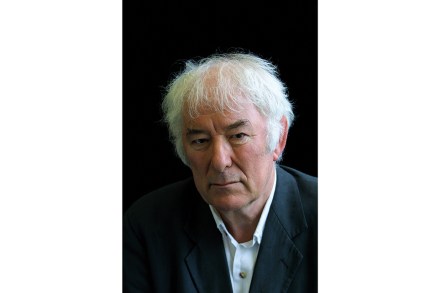
Seamus Heaney wrote letters everywhere – waiting for his car to be repaired at a country garage, sitting over a glass or more of Paddy late at night, and above all in aeroplanes, ‘pacing the pages against the pilot as he takes us in to Heathrow or Shannon’, as he wrote to a friend in 1995. So many eloquent missives were dashed off at high altitude that his editor suggests he might have had notepaper printed with the heading ‘EI 117’, the Aer Lingus flight between Dublin and Washington DC. This airborne activity is significant because it indicates two characteristics illuminated by Christopher Reid’s riveting collection: the pressures of life lived at an exceptional pitch of fame, and Heaney’s powerful need to keep faith with friends and fellow poets.

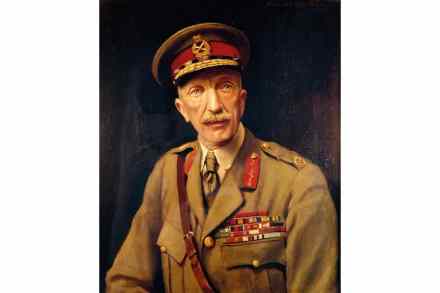
Who planned Field Marshal Sir Henry Wilson’s murder?

From our UK edition

Until very recently, political assassination was a mercifully uncommon occurrence in British politics, though that has changed. Previously when such murders did happen, they were usually associated with Ireland: the 1882 Phoenix Park murders of Lord Frederick Cavendish and Thomas Burke, the killings of Airey Neave and Lord Mountbatten, and numerous unsuccessful plots and near misses. One spectacular example occurred in June 1922, when Field-Marshal Sir Henry Wilson was shot dead outside his Mayfair house by two IRA operatives called Reginald Dunne and Joseph O’Sullivan, who were swiftly captured and hanged, after a trial whose procedures were sharply criticised by George Bernard Shaw among others.

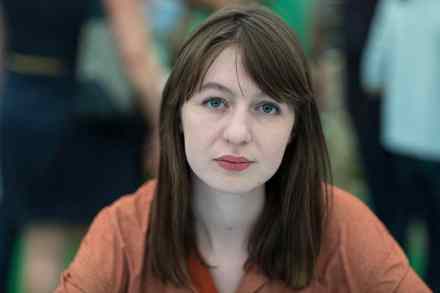
Irish quartet: Beautiful World, Where Are You?, by Sally Rooney, reviewed

From our UK edition

The millennial generation of Irish novelists lays great store by loving relationships. One of the encomia on the cover of Donal Ryan’s Strange Flowers (Irish Book Awards Novel of 2020) declares: ‘You have to truly love people to write like this.’ It’s hard to imagine that being said of Colm Tóibín or Anne Enright (let alone Vladimir Nabokov, Evelyn Waugh or Muriel Spark). But there are new kids on the block, and forensically intense examination of feelings between pairs of friends or lovers have propelled the fictions of Sally Rooney into the stratosphere.

Blindness and betrayal still bedevil Britain’s policy in Ireland

From our UK edition

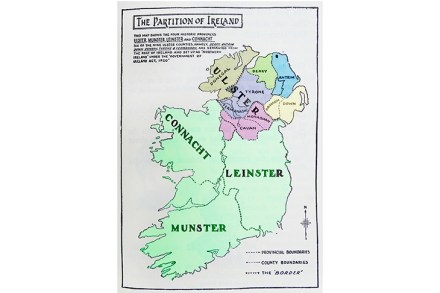
Charles Péguy’s adage that everything begins in mysticism and ends in politics is sharply illustrated by the development of the Irish Revolution. In his previous scintillating studies, Easter 1916: The Irish Rebellion and The Republic: The Fight for Irish Independence 1918–1923, Charles Townshend traced the progress of Ireland’s long-drawn-out severance from Britain. The completion of the trilogy is delivered with his characteristic scholarly panache.

Sins of the fathers | 13 December 2018

From our UK edition

‘To have a father is always big news,’ according to the narrator of Sebastian Barry’s early novel, The Engine of Owl-Light. Stephen Dedalus puts it differently in Ulysses: ‘A father is a necessary evil.’ But later, he qualifies this: ‘Paternity may be a legal fiction. Who is the father of any son that any son should love him or he any son?’ Colm Tóibín has repeatedly squared up to fathers as well as mothers in his own work (a dead father haunts the family in Nora Webster, and fatherhood is a central theme in The Heather Blazing). His new book takes on the theme of fatherhood in relation to three great Irish writers, supplying a scintillating new perspective on each.

Gerry and the peacemakers

From our UK edition

When I recently asked a sardonic Northern Irish friend what historical figures Gerry Adams resembled, the tasteless reply came back: ‘A mixture of Jimmy Savile and Oswald Mosley.’ There are elements of both archetypes in this new unauthorised portrait, but it stops short of going the full distance. Perhaps we should not be surprised. The Savile reference is to the grisly theme of child abuse in Adams’s family, leading to his brother’s conviction for offences against his own daughter, and the revelation that Adams père had also sexually abused his children. Though no such accusation attaches to the Sinn Fein leader, these episodes have affected him politically as well as personally.

He knew he was right

From our UK edition

A highlight of this year’s Dublin Theatre Festival was the Rough Magic Theatre Company’s production of The Train, a musical by Arthur Riordan and Bill Whelan. Political theatre at its wittiest and craziest, it told the story of the fledgling Irish Women’s Liberation Movement’s publicised trip in 1971 to Belfast to buy contraceptives, ostentatiously importing these banned Satanic devices back into the Republic, where the law obeyed the writ of the Catholic church. Watching it, one was reminded of the sheer extent of theocracy in Éamon de Valera’s Ireland (he remained president till 1973, having been Taoiseach for most of the period from 1932 to 1959), and the long journey from those days to this year’s equal marriage referendum.

The blood-dimmed tide is loosed

From our UK edition

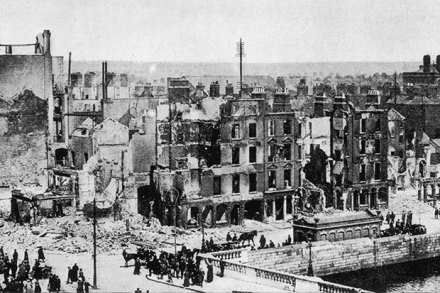
As Lytton Strachey remarked of the Victorian era, writing the history of the Irish revolution is inhibited by the fact that we know too much about it. As the centenary of the 1916 Rising approaches, an avalanche of books, articles and television programmes is bearing inexorably down; even the re-enactments have begun, with Dublin’s city centre taken over last Easter Monday by jolly crowds in period dress, celebrating ‘the Road to the Rising’. No one got shot, no buildings were blown up, and no shops were looted, but it was the thought that counted, and everyone had a good time.

Strong family feelings

From our UK edition

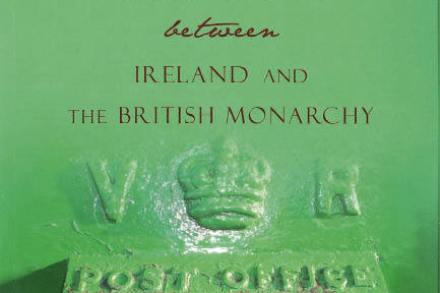
Mary Kenny’s survey of Ireland’s relations with the British monarchy is characteristically breezy, racy and insightful, with a salty strain of anecdote. Mary Kenny’s survey of Ireland’s relations with the British monarchy is characteristically breezy, racy and insightful, with a salty strain of anecdote. This reflects the secret affection of the Irish bourgeoisie for the royal soap opera, even when this addiction has to be concealed as carefully as a taste for alcohol in a fundamentalist Muslim state. Oddly, her account of secret suburban Catholic covens, communing with royal weddings and jubilees via television, rather trumps my memories of royalist interests among the Protestant (though emphatically not Anglo-Irish) circles of my youth.