Michael Arditti

Love and loneliness in the Outer Hebrides: John of John, by Douglas Stuart, reviewed

From our UK edition

For his third novel, Douglas Stuart moves north from the Glasgow tenements of Shuggie Bain and Young Mungo to the island of Harris in the Outer Hebrides. John-Callum, known as Cal, returns to his family croft after spending four years at a mainland textile college, following a call from his father, John, to tell him that his grandmother is dying. John is the precentor of his local church, a congregation of Free Presbyterians, who adhere to an extreme biblical morality. The 26 remaining members attend four services each Sabbath and believe that fathers have authority over children and husbands over wives, since women ‘rarely know what is best for themselves’. Stuart treats this faith, which will be inimical to the majority of his readers, with great respect.

Musical bumps: Discord, by Jeremy Cooper, reviewed

From our UK edition

From skylarks and bumblebees to the changing seasons and the sea, composers have long drawn inspiration from the natural world. In Discord, Jeremy Cooper’s eighth novel, Rebekah Rosen goes a step further, seeking inspiration not in nature itself but in a wartime diary chronicling the annual crops on a Peckham allotment. She intends to use this natural code as the basis of a piece for saxophone and orchestra commissioned for the 2022 BBC Proms.  Her chosen soloist is Evie Bennett, a rising star on the international stage. Cooper’s narrative traces their complex – indeed, discordant – collaboration, through alternating points of view. Though both trained at the Royal College of Music, in other respects they are polar opposites.

Mad, bad and brilliant: Jesus Christ Kinski by Benjamin Myers, reviewed

From our UK edition

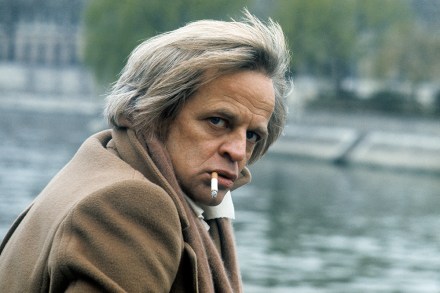
Klaus Kinski was one of Germany’s most celebrated postwar actors. Although he appeared in more than 130 films, including five for the director Werner Herzog, he began his career on the stage, returning in 1971 to perform a monologue, Jesus Christus Erlöser, before an audience of 6,000 in West Berlin. Benjamin Myers has long been fascinated by the surviving footage of Kinski’s performance and, in his latest novel, Jesus Christ Kinski, he attempts to recreate it on the page. He divides the book into two ‘acts’. The first consists of Kinski’s interior monologue as he struggles with both his own demons and an increasingly hostile audience.

A summer romance: Six Weeks by the Sea, by Paula Byrne, reviewed

From our UK edition

After Jane Austen’s death, her sister Cassandra destroyed the majority of her letters.  This act, often interpreted as an attempt to preserve Jane’s reputation, has had the opposite effect of fuelling fervent – at times prurient – speculation about what the letters contained. While Cassandra may simply have wished to shield her relatives from the lash of Jane’s sharp tongue, later writers, drawing on the author’s fiction and family lore, have surmised that the missing correspondence concealed evidence of a love affair. Such an affair formed the basis for Gill Hornby’s fine 2020 novel Miss Austen and now inspires Paula Byrne’s pleasant if unremarkable Six Weeks by the Sea.

A gruesome bohemian upbringing: Days of Light, by Megan Hunter, reviewed

From our UK edition

Ivy, the protagonist of Megan Hunter’s magnificent Days of Light, lives with her family at Cressingdon, a Sussex farmhouse, which is ‘covered with her mother’s fabrics and artworks, every room thick with the breath of her, of Angus’ (her mother Marina’s lover). At weekends, her father Gilbert, a travel writer and notorious womaniser, comes down from London to stay. The clear parallels with Angelica Bell and Charleston extend even further. Ivy develops a tendresse for, and eventually marries, Bear, a man 25 years her senior and Angus’s former lover. Like his prototype Bunny Garnett, Bear worked on the farm to avoid conscription during the first world war. Like Bunny with Angelica, Bear is present at Ivy’s birth and immediately contemplates marrying her.

Escape into fantasy: Stories of Ireland, by Brian Friel, reviewed

From our UK edition

Before Brian Friel earned renown as a dramatist, he wrote short stories, many of which first appeared in the New Yorker. These were later published in two collections, A Saucer of Larks (1962) and The Gold in the Sea (1966). Now ten of the stories, selected by Friel before his death in 2015, along with three chosen by his widow, have been brought together in Stories of Ireland. These are deeply rooted in the counties of Tyrone and Donegal. Friel blends actual locations with fictional ones, such as Ballybeg, the setting for several of his plays, and the splendidly named Mullaghduff. They are home to tightly knit rural communities, where an old woman ventures no further than 52 miles in her life, a boy, who has never seen a ‘coloured’ man, asks ‘Will he attack us?

A satire on the modern art market: The Violet Hour, by James Cahill, reviewed

From our UK edition

In James Cahill’s first novel, Tiepolo Blue, Don Lamb, a Cambridge art historian, expressed outrage when ‘Sick Bed’, a Tracey Emin-like installation, is erected in the college quad. It is tempting to imagine what Lamb would now make of the many artworks on display in The Violet Hour. Here, Cahill steps away from the rarefied world of academia and public galleries to expose the excesses of the international art market. At the centre of the book’s many strands is Thomas Haller, whose violet-coloured panels partially inspire the title. He is a world-renowned artist who, in the words of his erstwhile best friend and dealer, Lorna Bedford, has become ‘the moneyed ghost of his former self’.

The unfulfilled life: Ask Me Again, by Clare Sestanovich, reviewed

From our UK edition

Eva, the protagonist of Clare Sestanovich’s debut novel, is a young woman struggling to find her place in the world. Over an unspecified period, anchored by references to the Occupy Wall Street movement and Donald Trump’s first election victory, we follow her from her adolescence in Brooklyn, through friendships and heartbreak at an ‘excellent college’, to journalism in Washington and nannying in Los Angeles. Despite her probing of everything (it’s no accident that all the chapter headings are questions), Eva receives few answers and doesn’t follow the usual bildungsroman path of self-discovery.

A quest for retribution: Fire, by John Boyne, reviewed

From our UK edition

At the end of John Boyne’s novel Earth, Evan Keogh, a conscience-stricken young footballer, hands evidence of his connivance in a rape to the police. Two years earlier, he and his teammate Robbie had been found innocent of the charge by a jury, whose foreperson was Dr Freya Petrus. Freya, a consultant in a hospital burns unit, becomes the protagonist of Fire, the third of Boyne’s Elements quartet. Like its predecessors, the novel is dominated by issues of aberrant sexuality. As a 12-year-old girl on a summer holiday in Cornwall, Freya was first raped and then buried alive in a sadistic ritual by 14-year-old twins, Arthur and Pascoe.

Doctor in trouble: Time of the Child, by Niall Williams, reviewed

From our UK edition

In the early 1960s, glimmers of change start to appear in the Irish ‘backwater’ parish of Faha. A smuggled copy of Edna O’Brien’s banned The Country Girls is read surreptitiously by the doctor’s daughter, Ronnie Troy; a photograph of John F. Kennedy, the first Catholic president of the USA, hangs proudly on the postmistress’s wall. But in the main the rhythm of life persists much as it has for generations. Like Ronnie, Niall Williams clearly feels that Faha represents ‘the full of humanity, in its ordinary clothes’, since Time of the Child is his third visit to the fictitious County Clare village, following History of the Rain and This is Happiness. Indeed, Noel Crowe, the protagonist of the latter, remains a potent, albeit unseen, presence here.

The tedium of covering ‘the greatest trial in history’

From our UK edition

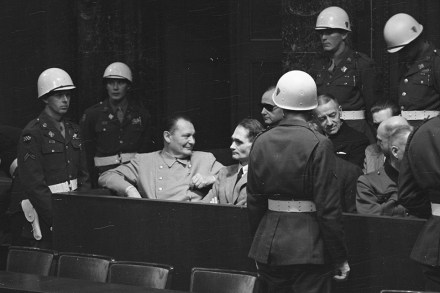
Three-and-a-half miles south-west of Nuremberg in the small town of Stein stands the Schloss Faber-Castell, a 19th-century neo-Renaissance castle built for a dynasty of pencil manufacturers. In October 1945 it became home to hundreds of reporters who were covering the trial of 21 high-ranking Nazis, including Hermann Göring, Rudolph Hess, Joachim von Ribbentrop, Alfred Rosenberg, Julius Streicher and Albert Speer, with Martin Bormann being tried in absentia.

After the Flood: There Are Rivers in the Sky, by Elif Shafak, reviewed

From our UK edition

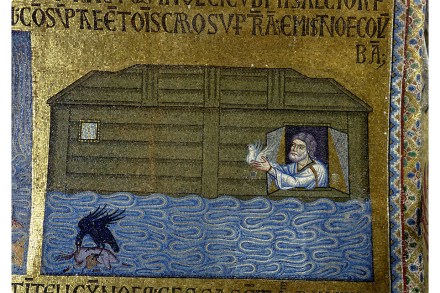
A drop of water falls on the head of Ashur-banal, the erudite but merciless king of Assyria, as he walks through his capital, Nineveh. Having dissolved into the atmosphere, it reappears in 1840 as a snowflake that falls into the mouth of King Arthur of the Sewers and Slums, the fancifully named son of a mudlark, born on the banks of the Thames. After another 174 years that same droplet is found in a bottle in south-eastern Turkey to be used in the baptism of Narin, a nine-year-old Yazidi girl. In Yazidi Creation and Flood myths, humanity descends from Adam alone and the serpent is a saviour Water is both the unifying image and the dominant concern of Elif Shafak’s gloriously expansive and intellectually rich There Are Rivers in the Sky.

In search of kindred spirits: An Absence of Cousins, by Lore Segal, reviewed

From our UK edition

In Lore Segal’s An Absence of Cousins, Nat Cohn, a fellow at the Concordance Institute, a small college in Connecticut, browses through a children’s novel during a staff meeting and exclaims: ‘We don’t write stories like this any more. Chronic plot deficiency is our problem.’ The problem for contemporary novelists is that tightly woven plots of cause and effect belie the way their readers experience the world. Like her compatriot Elizabeth Strout in Olive Kitteridge and Olive Again, Segal addresses it by featuring a single protagonist, Ilka Weisz, a young Austrian émigrée, and various recurring subsidiary characters, in a series of closely interlinked stories.

A timely morality tale: The Spoiled Heart, by Sunjeev Sahota, reviewed

From our UK edition

Who would have thought that the battle between champions of old-school socialism and contemporary identity politics for the post of General Secretary of Unify, a fictitious British trade union, would make for such riveting reading? Nayan Olak and Megha Sharma have little in common save their skin colour. He is the son of corner shopkeepers, who started work on the factory floor at 16 and is now the union’s Head of Workplace Disciplinary Actions. She is the daughter of a non-dom property magnate and recently appointed Head of Diversity, Equity and Inclusion.  Their political priorities are neatly encapsulated in their job titles.

A voyage of literary discovery: Clara Reads Proust, by Stéphane Carlier, reviewed

From our UK edition

Should Alain de Botton ever require fictional evidence of ‘How Proust Can Change Your Life’, he could do worse than to turn to Clara, the protagonist of Stéphane Carlier’s latest delightful novel. Clara is a hairdresser in a rather rundown provincial salon in France. She has a good relationship with her boss, Madame Habib, her colleagues, Nolwenn and Patrick, and her loyal clientele, and a more vexed one with JB, her boyfriend of three years, a muscular firefighter who resembles Flynn Ryder in the Disney cartoon.  One day, a mysterious stranger comes to the salon. He barely speaks while Clara is cutting his hair and leaves her no tip, but she finds that he’s left something far more precious: a paperback copy of Swann’s Way.

Victims of a cruel prejudice: the last two men to be executed for sodomy in England

From our UK edition

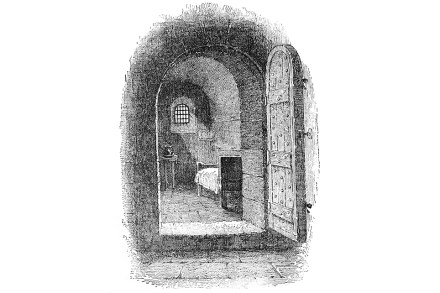
Seventy-three prisoners were condemned to death at the Old Bailey in 1835 at a time when there were more than 200 capital offences on the statute book. Nevertheless, all had their sentences commuted apart from two: James Pratt and John Smith, who were convicted of ‘the detestable and abominable crime’ of sodomy. The indictment stated that the accused had been ‘seduced by the instigation of the devil’ ‘The love that dare not speak its name’ may forever be associated with Alfred Douglas and Oscar Wilde, but the same reticence was clearly evident in the first half of the century.

A redemptive fable: Night Watch, by Jayne Anne Phillips, reviewed

From our UK edition

The Appalachians have become fashionable fictional territory. Following Charles Frazier’s Cold Mountain and Barbara Kingsolver’s Prodigal Summer and Demon Copperhead comes Jayne Anne Phillips’s Night Watch. Like Cold Mountain, it is set largely in the aftermath of the American civil war, but, for all its wealth of detail, it is less a historical account than a redemptive fable. As befits a portrait of a society riven by war, the novel unfolds in a series of discrete episodes. Its dominant consciousness and first-person narrator is 12-year-old ConaLee, who lives in a remote hillside cabin with her mother Eliza, infant brothers and sister and violently abusive ‘Papa’.

Escape into the wild: Run to the Western Shore, by Tim Pears, reviewed

From our UK edition

Quintus, an Ephesian slave, is in attendance on his master, Sextus Julius Frontinus, the Roman governor of Britain, when Cunicatus, the chief of one of many warring tribes in ‘this hideous island at the edge of the world’, seals a marriage alliance between Frontinus and his daughter, Olwen. She, however, rejects the match, escaping from the camp at dead of night and impulsively asking Quintus to accompany her. Despite having seen a recaptured fugitive in Gaul torn apart between four horses, he agrees to go. Tim Pears’s Run to the Western Shore follows the pair as they flee through south Wales, hotly pursued by Frontinus’s legionnaires.

Back-room boys: Family Meal, by Bryan Washington, reviewed

From our UK edition

There are meals galore in Bryan Washington’s latest novel: those that Cam and his lover Kai cook for one another; those that Cam’s childhood friend TJ cooks for his Thai boyfriend’s cousins; those that TJ’s Vietnamese father Jin cooked for his neighbours every weekend; and those that the now bulimic Cam vomits up after Kai’s murder. There is also sex galore. Each of the novel’s three narrators – Cam, Kai and TJ – engages in ‘random hook-ups’, with Cam in particular using them to dull his pain. Working in a Houston gay bar, he takes customers to a back-room every few hours.

The schoolgirl crush that never went away: Absolutely and Forever by Rose Tremain reviewed

From our UK edition

When 15-year-old Marianne Clifford tells her parents that she is in love with 18-year-old Simon Hurst, her mother dismisses it as a schoolgirl crush and her father tells her that she is far too young for a boyfriend and should concentrate on her own life ‘as befits a girl of your age and upbringing’. It is precisely because of her age and upbringing that Marianne meets Simon at one of the Home Counties ‘hops’ that her parents’ circle organises for their adolescent offspring. Ignoring the boys who ‘stood awkwardly in a line sipping cider cup’ and ‘jigged around in an embarrassing way’, she drives off in Simon’s new Morris Minor and loses her virginity on the back seat.